


Search results
Search for "biomass waste" in Full Text gives 4 result(s) in Beilstein Journal of Nanotechnology.
Cellulose as a photocatalyst support material: extraction, structural features, and environmental applications
Beilstein J. Nanotechnol. 2026, 17, 635–652, doi:10.3762/bjnano.17.44
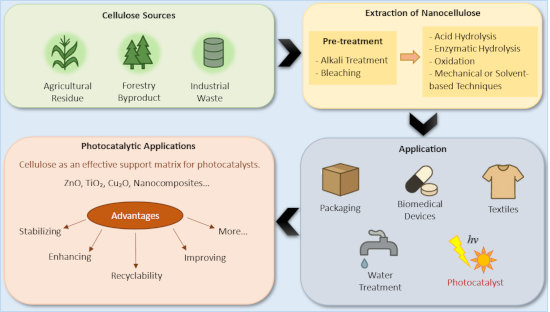
- promising candidate for sustainable material development across various industries. This review focuses on the extraction and isolation of cellulose from different types of biomass waste, including agricultural residues, forestry byproducts, and industrial waste. Several conventional and advanced methods
- technologies. Keywords: biomass waste; cellulose; green technology; photocatalysis; sustainable materials; Introduction The utilization of biomass has gained a lot of interest among researchers; biomass materials for extraction of biopolymers originate from plants, wood, and waste such as fruit peels and


Simultaneous electrochemical determination of uric acid and hypoxanthine at a TiO2/graphene quantum dot-modified electrode
Beilstein J. Nanotechnol. 2024, 15, 719–732, doi:10.3762/bjnano.15.60
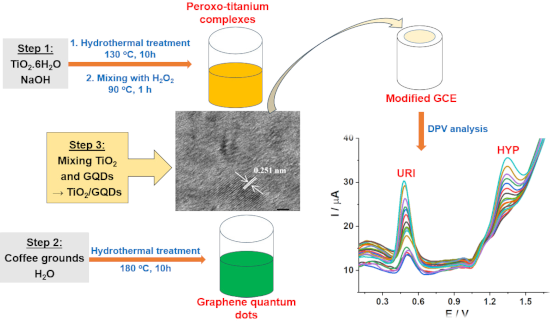
- storage derived from their conjugate structure makes them effectively utilizable over the full light spectrum [13][14]. GQDs can be prepared through solvothermal/hydrothermal processes or carbonization from suitable organic molecules (polymers or biomass) [15]. Biomass waste (e.g., agricultural residues


Recent advances in green carbon dots (2015–2022): synthesis, metal ion sensing, and biological applications
Beilstein J. Nanotechnol. 2022, 13, 1068–1107, doi:10.3762/bjnano.13.93
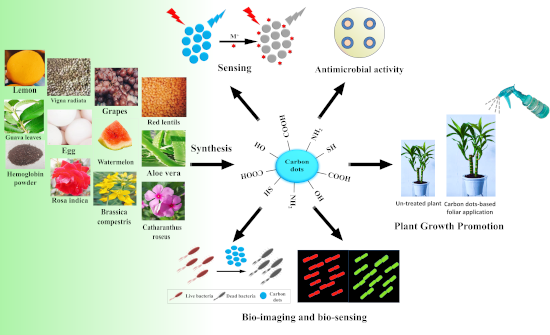
- ordinary biomass waste as carbon source, namely orange peel, ginkgo leaves, paulownia leaves, and magnolia flowers [58]. Water-soluble CDs using Manilkara zapota fruit as a natural source of carbon were reported where sulfuric acid and phosphoric acid were used to regulate the emission of CDs, producing




Upcycling of polyurethane waste by mechanochemistry: synthesis of N-doped porous carbon materials for supercapacitor applications
Beilstein J. Nanotechnol. 2019, 10, 1618–1627, doi:10.3762/bjnano.10.157
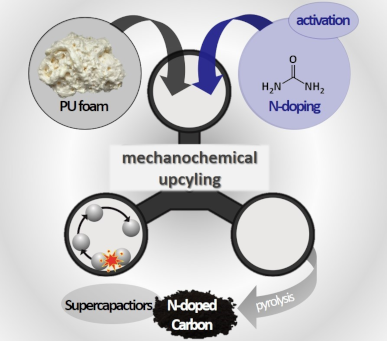
- from coconut shells and other biomass waste [19][20][21]. However, the industrial use of plastics for this purpose has not been established yet. The main properties of porous carbon materials [22][23] such as high specific surface area and high electrical conductivity allow for a variety of


Other Beilstein-Institut Open Science Activities



