


Search results
Search for "breast cancer" in Full Text gives 84 result(s) in Beilstein Journal of Nanotechnology.
Nanocarrier strategies to overcome P-glycoprotein-mediated drug resistance in cancer therapy
Beilstein J. Nanotechnol. 2026, 17, 882–921, doi:10.3762/bjnano.17.64
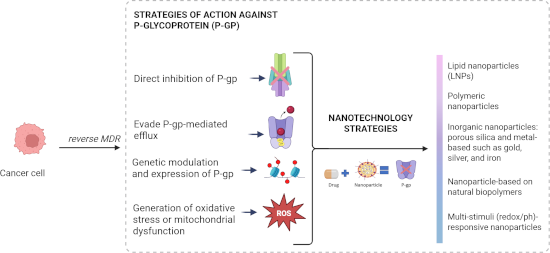
- involved. This review focuses specifically on P-gp-mediated resistance and nanocarrier-based strategies developed to circumvent it. 1.1.1 Breast cancer. Breast cancer is the most often diagnosed cancer in women and the leading cause of cancer-related death in the female population [1]. It is characterized
- by uncontrolled proliferation of breast tissue cells and marked clinical heterogeneity. Among the resistance mechanisms documented in breast cancer, overexpression of P-gp has been studied extensively as a factor that actively exports chemotherapeutic agents from cancer cells, reducing intracellular
- concentration and therapeutic effectiveness [2]. Surmounting P-gp-mediated resistance has therefore emerged as a goal in experimental breast cancer research. 1.1.2 Colorectal cancer. Colorectal cancer, affecting the colon and rectum, ranks among the most prevalent cancers worldwide and significantly contributes


Biomimetic nanoparticles in cancer photodynamic therapy: a review of targeted delivery systems and therapeutic outcomes
Beilstein J. Nanotechnol. 2026, 17, 396–422, doi:10.3762/bjnano.17.27
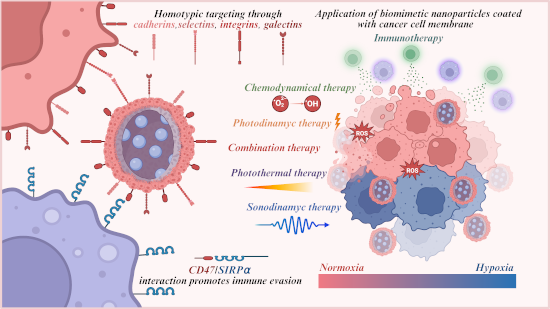
- variety of differentiated cell membranes have been combined to modify biomimetic nanoparticle surfaces, such as cancer cell–erythrocyte [108] and macrophage-–cancer cell [109] hybrids (Figure 4). For combinational therapy of triple-negative breast cancer, BNPs based on tumor cell membranes and PLGA loaded
- coated with SKBR-3 cell membranes. The membrane coating was further functionalized with Herceptin, a monoclonal antibody that selectively binds to HER2 receptors, rendering the platform a promising candidate for the treatment of HER2-positive breast cancer [111]. In vivo experiments demonstrated
- homotypic targeting, significantly enhanced cellular uptake compared to uncoated nanocrystals, and confirmed the system’s ability to induce apoptosis in HER2-positive breast cancer cells. Another study reported the development of a multifunctional biomimetic system coated with erythrocyte membranes for the


From shield to spear: Charge-reversible nanocarriers in overcoming cancer therapy barriers
Beilstein J. Nanotechnol. 2026, 17, 159–175, doi:10.3762/bjnano.17.10
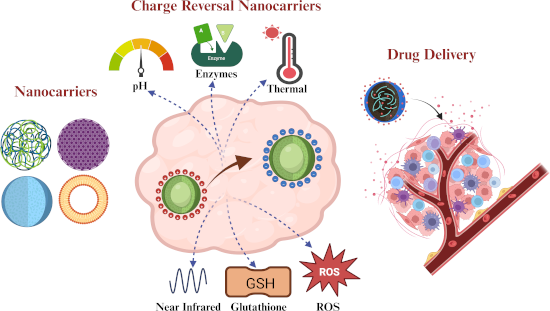
- , and ensuring efficient drug delivery in breast cancer therapy [74]. Yu et al. develop NTZ-DCMMs, charge-reversible nanocarriers with enhanced EGFR-targeted drug delivery, ensuring tumour-specific, redox-triggered DOX release, minimising off-target toxicity, cardiotoxicity, and enabling synergistic
- [88]. Jia et al. reported a dual-responsive shape-transformable charge-reversible nanoparticle (DHP@BPP) combined with chemo-photodynamic immunotherapy for treating breast cancer and lung metastasis [81]. Hu et al. developed a hybrid nanocarrier, UPOE, using stimuli-responsive, charge-reversal metal
- and melatonin to MCF-7 breast cancer cells, achieved efficient cellular uptake and significant cytotoxicity, which led to cell apoptosis in acidic conditions [82]. Guo et al. designed dual-pH-responsive, CRNs DMMA-P-DOX/LAP for co-delivering doxorubicin and lapatinib to breast cancer cells, enabling


Optical bio/chemical sensors for vitamin B12 analysis in food and pharmaceuticals: state of the art, challenges, and future outlooks
Beilstein J. Nanotechnol. 2025, 16, 2207–2244, doi:10.3762/bjnano.16.153


Rapid synthesis of highly monodisperse AgSbS2 nanocrystals: unveiling multifaceted activities in cancer therapy, antibacterial strategies, and antioxidant defense
Beilstein J. Nanotechnol. 2025, 16, 2105–2115, doi:10.3762/bjnano.16.145
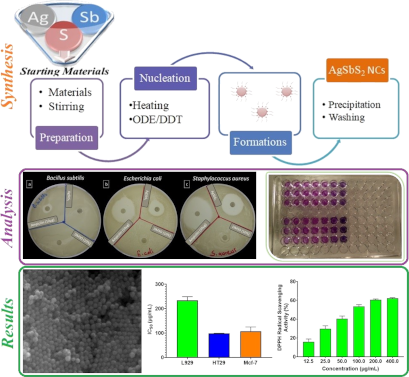
- Humicola sp. in biomedical applications were investigated. Cancer experiments were carried out using breast cancer and Burkitt’s lymphoma cancer cells, while the biocompatibility tests of α-AgS nanoparticles were also conducted using human peripheral blood mononuclear cells (PBMCs) [18]. Additionally
- retaining a blue color, while the MBC was determined by subculturing non-turbid wells onto MHA plates and identifying the lowest concentration that yielded no visible bacteria colonies after 24 h. Cytotoxicity assays Cell culture and Alamar Blue assay HT-29 colon cancer, MCF-7 breast cancer, and L929
- NCs Alamar Blue assay was used to evaluate the cell viability of the synthesized NCs (12.5–400 μg/mL) on HT-29 colon cancer, MCF-7 breast cancer, and L929 fibroblast cells through cellular activity. The cytotoxicity of the synthesized NCs on these cell lines after 24 h of treatment is revealed in


PEGylated lipids in lipid nanoparticle delivery dynamics and therapeutic innovation
Beilstein J. Nanotechnol. 2025, 16, 1914–1930, doi:10.3762/bjnano.16.133
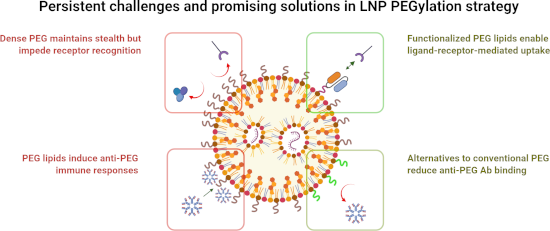
- maleimide groups are effective for ligand attachment to LNP surface and targeted delivery [40][41]. A dual-targeted LNP system composed of two functionalized PEG lipids was created for ligand-mediated targeting of DNA-loaded LNPs to breast cancer cells [42]. DSPE-PEG-folate was directly incorporated into
- the LNP formulation as a targeting ligand for folate receptor-positive breast cancer cells [43]. The other ligand, anti-HER2 monoclonal antibody Herceptin, was first thiolated using N-succinimidyl S-acetylthioacetate and then conjugated to DSPE-PEG-maleimide at a 1:4 molar ratio, with unreacted
- maleimide groups quenched by adding ʟ-cysteine [42][44]. The dual-targeted LNPs exhibited enhanced performance in vitro across breast cancer cell lines including MCF7, MDA-mb453, and SKBR3. In HER2-overexpressing SKBR3 cells, the dual-targeted LNPs achieved 75% transfection efficiency and significantly


Advances of aptamers in esophageal cancer diagnosis, treatment and drug delivery
Beilstein J. Nanotechnol. 2025, 16, 1734–1750, doi:10.3762/bjnano.16.121
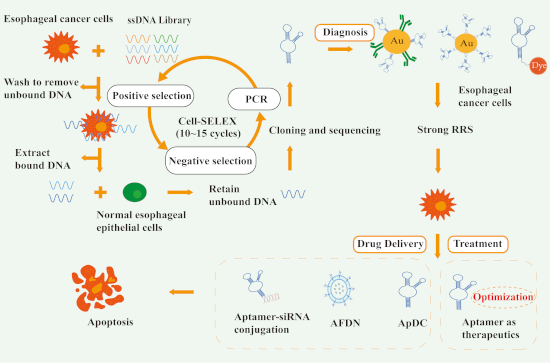
- rigorously validated using samples from breast cancer patients. Li et al. [53] used positively charged gold nanoparticles modified with anti-EGFR aptamer and anti-EGFR antibody (Aptamer-AuNPs-Ab) as an immunosensor to sensitively and specifically detect EGFR concentrations in Eca109 cell lysates and human
- nanostructure has also been verified by other researchers in the treatment of triple negative breast cancer [128]. Scientists are also interested in intelligent drug delivery systems that control drug release by using pH [129], enzymes [130], hypoxia [131], or ATP as triggers to achieve on-demand therapy. Wang


Prospects of nanotechnology and natural products for cancer and immunotherapy
Beilstein J. Nanotechnol. 2025, 16, 1644–1667, doi:10.3762/bjnano.16.116
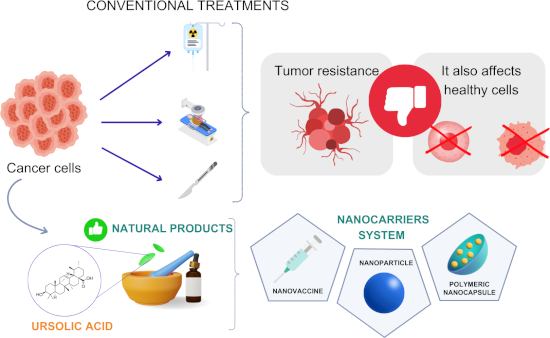
- targeted delivery [72]. Patent CN222367609 (2017) describes targeted amphiphilic nanoparticles composed lecithin, procyanidine, and doxorubicin condensated with epigallocatechin gallate in N-hydroxysuccinimide solution, which were developed to inhibit breast cancer. The procyanidine and epigallocatechin
- inhibition of cancer cell migration, invasion, and metastasis [122][123]. The patent characterizes the NPs through DLS and TEM, confirming a uniform size distribution. Additionally, in vitro studies using MCF-7 breast cancer cells demonstrated inhibition of cell proliferation, with the NP inducing apoptosis
- cytotoxicity. The nanoparticles showed inhibition of the proliferation of breast cancer cells, with lower cytotoxicity to normal liver cells compared to standard drug and free drug. This is due to the nanoparticles’ enhanced permeability and retention, which improves tumor-specific targeting. Mitochondrial


Ferroptosis induction by engineered liposomes for enhanced tumor therapy
Beilstein J. Nanotechnol. 2025, 16, 1325–1349, doi:10.3762/bjnano.16.97
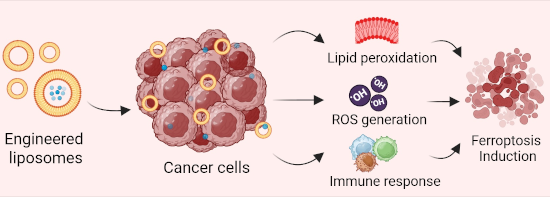
- non-neuroendocrine SCLC cells and their elevated levels of PUFA-ePLs [86]. Additionally, triple-negative breast cancer cells were observed to be sensitive to ferroptosis. This sensitivity has been attributed to various metabolic characteristics of these cells, such as their high levels of
- before, specific cancer types are susceptible to ferroptosis, and leveraging this susceptibility to trigger ferroptosis offers new possibilities for cancer therapy. Importantly, in various cancers, particularly lung and breast cancer, cancer cells exhibit increased susceptibility to ferroptosis compared


Better together: biomimetic nanomedicines for high performance tumor therapy
Beilstein J. Nanotechnol. 2025, 16, 1246–1276, doi:10.3762/bjnano.16.92
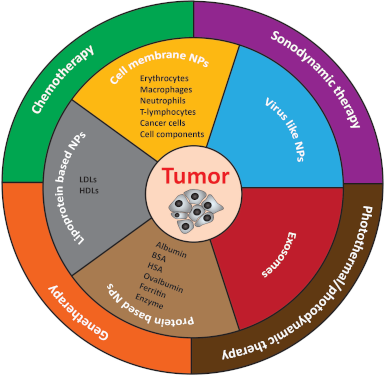
- metastatic breast cancer (Figure 7) [128]. The nanosystem was modified with TAT (T) and RGD (R) peptides for targeted delivery of the chemotherapeutics gamabufotalin (C) and doxorubicin (DOX) in triple-negative breast cancer (TNBC), resulting in potent inhibition of tumor growth and breast cancer metastasis
- holliday junction molecules, was demonstrated [155]. DNA tiles mimicking the holliday junction molecule structure were conjugated with gold nanoparticles and successfully used for the delivery of a neutral antisense oligonucleotide, morpholino, for silencing HER2 and ERα genes in breast cancer. Within gene






Hydrogels and nanogels: effectiveness in dermal applications
Beilstein J. Nanotechnol. 2025, 16, 1216–1233, doi:10.3762/bjnano.16.90
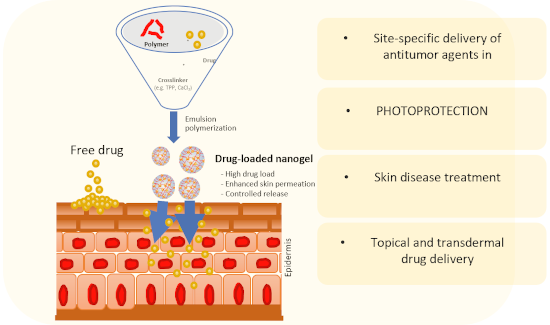
- recent years, such as tissue regeneration or tumor models in vivo. For example, 3D-printed scaffolds have been employed and shown to be effective in bone regeneration [226] and in promoting the restoration of craniofacial cartilage defects [227]. Also, in in vivo breast cancer models, doxorubicin-loaded


Serum heat inactivation diminishes ApoE-mediated uptake of D-Lin-MC3-DMA lipid nanoparticles
Beilstein J. Nanotechnol. 2025, 16, 740–748, doi:10.3762/bjnano.16.57
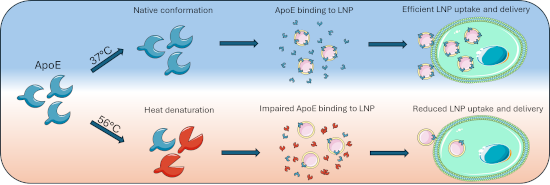
- Integrated DNA Technologies and were annealed in-house for 5 min at 97 °C. siRNA sequence: Sense: ‘5-GGA CGA GGU GCC UAA AGG AdCdG-3’ Antisense: ‘5-UCC UUU AGG CAC CUC GUC CdCdG-3’. FCS was obtained from Gibco, Biowest and Lonza. Cell culture Brain cancer cell line U87-MG (ATCC) and breast cancer cell line


Synthetic-polymer-assisted antisense oligonucleotide delivery: targeted approaches for precision disease treatment
Beilstein J. Nanotechnol. 2025, 16, 435–463, doi:10.3762/bjnano.16.34


Radiosensitizing properties of dual-functionalized carbon nanostructures loaded with temozolomide
Beilstein J. Nanotechnol. 2025, 16, 229–251, doi:10.3762/bjnano.16.18
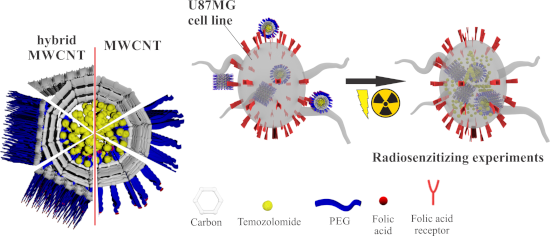
- observed when FA was applied to breast cancer cells through induced oxidative stress as the driver of cytotoxicity, cell cycle arrest in the S and/or G1/G0 phases, and significantly increased apoptosis [94][95]. The mechanisms behind the cancer protection and potential carcinogenic effect of FA are in




Nanocarriers and macrophage interaction: from a potential hurdle to an alternative therapeutic strategy
Beilstein J. Nanotechnol. 2025, 16, 97–118, doi:10.3762/bjnano.16.10
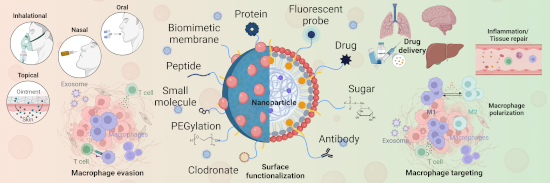
- STAT6 inhibitor AS1517499, zoledronic acid, or muramyl tripeptide (MTP), these liposomes inhibited M2 polarization. In preclinical breast cancer models, PAPC nanoliposomes reduced tumor growth, inhibited the M2 phenotype, and prevented pre-metastatic niche formation, achieving up to a 70% reduction in


Mechanistic insights into endosomal escape by sodium oleate-modified liposomes
Beilstein J. Nanotechnol. 2024, 15, 1667–1685, doi:10.3762/bjnano.15.131
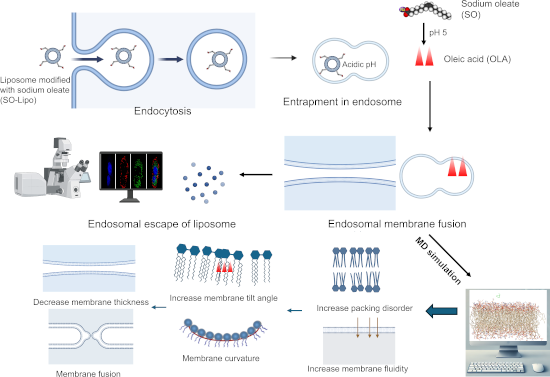
- .15.131 Abstract Endosomal entrapment significantly limits the efficacy of drug delivery systems. This study investigates sodium oleate-modified liposomes (SO-Lipo) as an innovative strategy to enhance endosomal escape and improve cytosolic delivery in 4T1 triple-negative breast cancer cells. We aimed to
- triple-negative breast cancer cell line as our in vitro model, with MD simulations to explore the intricate interactions between SO and the endosomal membrane. This allows us to elucidate the underlying mechanisms by which SO promotes endosomal escape. Additionally, we directly compare the endosomal
- significantly enhance cytosolic delivery in 4T1 triple-negative breast cancer cells, as evidenced by a marked reduction in colocalization with lysosomal markers. The enhanced endosomal escape capability of SO-Lipo is primarily driven by its fusogenic interactions with the endosomal membrane, effectively




Polymer lipid hybrid nanoparticles for phytochemical delivery: challenges, progress, and future prospects
Beilstein J. Nanotechnol. 2024, 15, 1473–1497, doi:10.3762/bjnano.15.118
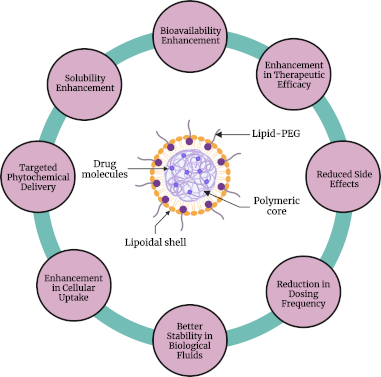
- and synergistic therapeutic efficacy against breast cancer (BC) [63]. The scheme for the development of these ligand-decorated PLHNPs is depicted in Figure 3. The findings suggested that the targeted PLHNPs significantly improved uptake in BC cells by receptor-mediated endocytosis when compared with
- classification, IQN belongs to class II. It shows limited solubility in the GI fluids and very low bioavailability after oral administration [119]. Wang et al. fabricated IQN-encapsulated zein phosphatidylcholine hybrid nanoparticles (IQN-PLHNPs) for improved oral efficacy against triple-negative breast cancer


Realizing active targeting in cancer nanomedicine with ultrasmall nanoparticles
Beilstein J. Nanotechnol. 2024, 15, 1208–1226, doi:10.3762/bjnano.15.98
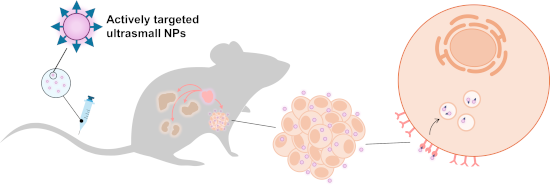
- 4T1 xenograft breast cancer model. Their findings revealed that actively targeted 3 nm NPs produced a sixfold higher level of tumor retention compared to non-targeted counterparts. In contrast, the corresponding improvement in tumor retention was only 1.15-fold in the case of the larger NPs. This
- : one part (Tyr and Cys residues) was responsible for reducing Au3+ into AuNCs, while the other part (RGD sequence) targeted αvβ3 integrin receptors. In murine models, the AuNCs were non-toxic and underwent renal clearance. Upon intravenous administration to 4T1 breast cancer tumor-bearing mice, the
- with AuNC-DOX-cRGD-AS1411. 5.6 Chemokine receptor ligands/chemokine receptors Recently, Zhao et al. reported the development of a chemokine receptor 2 (CCR2)-targeted and renal clearable radiolabeled gold nanocluster, 64Cu-AuNCs-ECL1i, for triple negative breast cancer (TNBC) PET imaging [135] (Figure


Synthesis, characterization and anticancer effect of doxorubicin-loaded dual stimuli-responsive smart nanopolymers
Beilstein J. Nanotechnol. 2024, 15, 1189–1196, doi:10.3762/bjnano.15.96
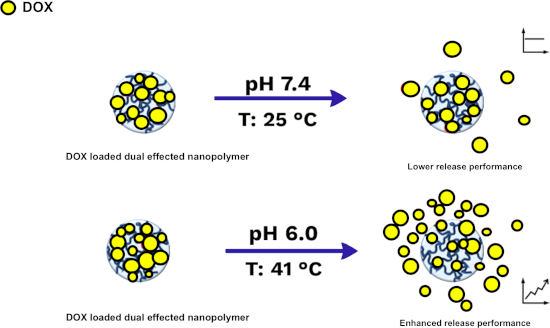
- ” and “Doxil”. The non-pegylated liposomal doxorubicin Myocet liposomal was approved in the European Union and in Canada for the therapy of metastatic breast cancer in combination with cyclophosphamide [5][6]. The FDA approved Doxil [4]. It was found that liposome-encapsulated DOX is less cardiotoxic


AI-assisted models to predict chemotherapy drugs modified with C60 fullerene derivatives
Beilstein J. Nanotechnol. 2024, 15, 1170–1188, doi:10.3762/bjnano.15.95
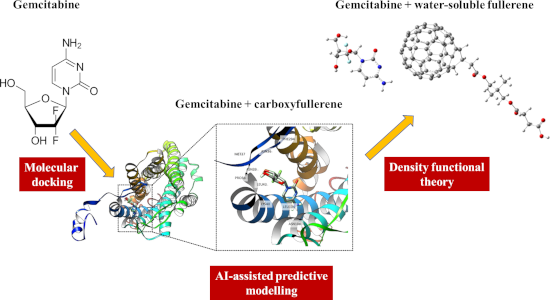
- relationship (QSAR)/ quantitative structure–property relationship (QSPR) models, this study explores the application of fullerene derivatives as nanocarriers for breast cancer chemotherapy drugs. Isolated drugs and two drug–fullerene complexes (i.e., drug–pristine C60 fullerene and drug–carboxyfullerene C60
- to compare results obtained by DFTB3 with a conventional density functional theory approach. These findings promise to enhance breast cancer chemotherapy by leveraging fullerene-based drug nanocarriers. Keywords: breast cancer; CXCR7; drug nanocarriers; QSAR; Introduction Breast cancer is the most
- diagnosed cancer in women and the second leading cause of cancer-related mortality in women [1][2]. Heritage is the most critical risk factor, and 15 to 20% of breast cancer is familiar [3]. One of the characteristics of breast cancer is that it can be wholly cured given an early diagnosis [4]. The


Unveiling the potential of alginate-based nanomaterials in sensing technology and smart delivery applications
Beilstein J. Nanotechnol. 2024, 15, 1077–1104, doi:10.3762/bjnano.15.88


Entry of nanoparticles into cells and tissues: status and challenges
Beilstein J. Nanotechnol. 2024, 15, 1017–1029, doi:10.3762/bjnano.15.83
- therapeutic effect on a human breast cancer xenograft in mice, and discussed if an increased ratio of M1/M2 (anti-tumorigenic/pro-tumorigenic) macrophages was important for the therapeutic effect [93]. We have recently investigated in more detail the changes occurring in tumor-associated myeloid cells in
- another breast cancer xenograft model and found a strong reduction in immunosuppressive function of macrophages [94]. An influence of NPs on macrophage recruitment, differentiation, and polarization has also been reported by others [95][96]. Thus, a combined effect on the tumor cells and the tumor


Therapeutic effect of F127-folate@PLGA/CHL/IR780 nanoparticles on folate receptor-expressing cancer cells
Beilstein J. Nanotechnol. 2024, 15, 954–964, doi:10.3762/bjnano.15.78
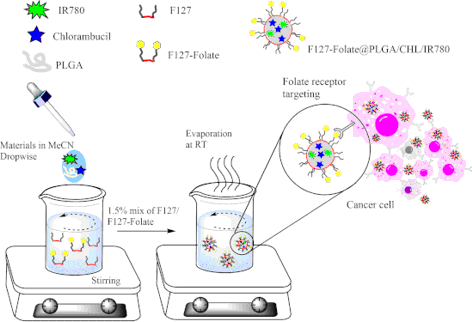
- and non-lymphoma Hodgkin’s [16][17], advanced ovarian and breast cancer [17][18], and some autoimmune illnesses [19]. Like other alkylating drugs, CHL inhibits tumor growth by cross-linking guanine or adenine bases in DNA double helix strands, preventing them from uncoiling and separating, and
- enter cells that express folate receptors, such as breast cancer cell MCF-7 and liver cancer cell HepG2. Cells that express folate negatively, like HEK 293, showed the same level of Cou-6 fluorescence. The F127-folate@PLGA/CHL/IR780 nanoparticles are more toxic to cancer cells than the F127@PLGA/CHL



Vinorelbine-loaded multifunctional magnetic nanoparticles as anticancer drug delivery systems: synthesis, characterization, and in vitro release study
Beilstein J. Nanotechnol. 2024, 15, 256–269, doi:10.3762/bjnano.15.24
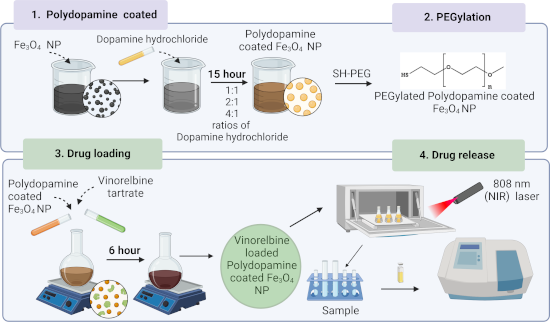
- . Vinorelbine (VNB), a chemotherapeutic agent, has seen significant clinical use in the treatment of lung cancer and advanced breast cancer [30]. VNB affects the continuous mitotic division in cancer cells, thereby impeding uncontrolled growth. By binding to microtubules, VNB exerts an inhibitory effect on


Nanocarrier systems loaded with IR780, iron oxide nanoparticles and chlorambucil for cancer theragnostics
Beilstein J. Nanotechnol. 2024, 15, 180–189, doi:10.3762/bjnano.15.17
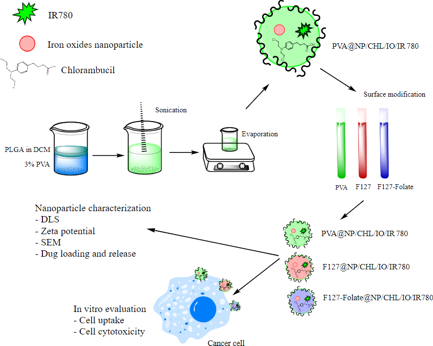
- and IR783 are also promising diagnostic choices. Encapsulation of IR780 in nanoparticles can be used for imaging and photothermal, photodynamic, and combinatorial cancer therapies [20][21][22]. IR780 is also utilized in PEG-PLA nanoparticles for photodynamic therapy of human breast cancer cells [23
- tumor treatment [27], and PLGA-chlorambucil nanoparticles have been developed for the treatment of breast cancer [28]. Due to the efficiency of CHL in cancer treatment, CHL has been used as a drug model in order to evaluate our formulated NPs. Therefore, in this study, we propose to develop a carrier





