


Search results
Search for "camptothecin" in Full Text gives 11 result(s) in Beilstein Journal of Nanotechnology.
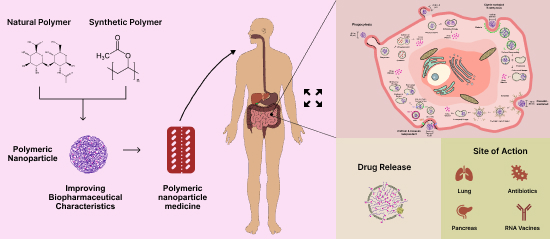
Exploring the potential of polymers: advancements in oral nanocarrier technology
Beilstein J. Nanotechnol. 2025, 16, 1751–1793, doi:10.3762/bjnano.16.122


Prospects of nanotechnology and natural products for cancer and immunotherapy
Beilstein J. Nanotechnol. 2025, 16, 1644–1667, doi:10.3762/bjnano.16.116
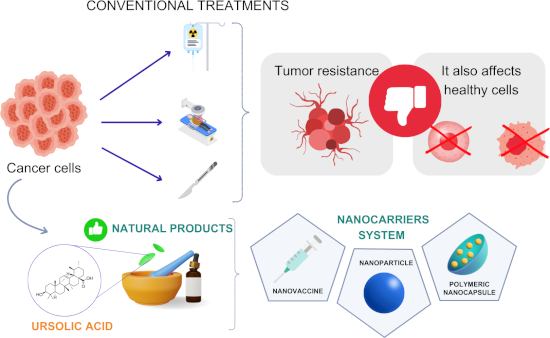
- membrane potential investigation using 2 μg·mL−1 of NPs for 12 h determined that the formulation induced early apoptosis in the targeted cells [70]. Patent CN111202719 (2020) utilized a nanosystem containing ursolic acid and oleanolic acid, paclitaxel, curcumin, camptothecin, and polyvinyl alcohol as APIs


Better together: biomimetic nanomedicines for high performance tumor therapy
Beilstein J. Nanotechnol. 2025, 16, 1246–1276, doi:10.3762/bjnano.16.92
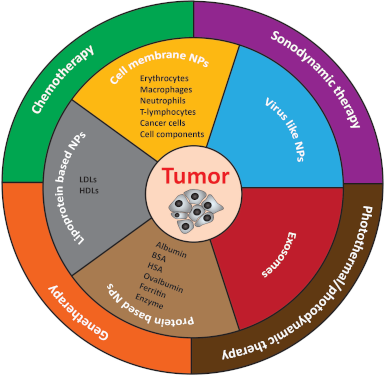
- -DOX to target the glioma cells by homologous targeting and enhanced glioma cells apoptosis [141]. To improve the antitumor efficacy and bioavailability of chemotherapeutics, Gao et al. exploited albumin-mediated transportation and developed a biomimetic prodrug by modifying camptothecin with different


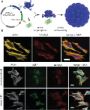
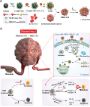


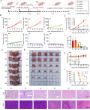

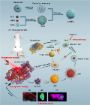

Polymer lipid hybrid nanoparticles for phytochemical delivery: challenges, progress, and future prospects
Beilstein J. Nanotechnol. 2024, 15, 1473–1497, doi:10.3762/bjnano.15.118
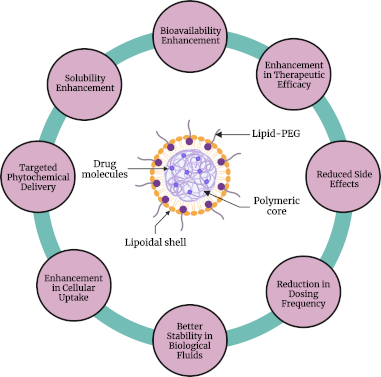
- therapeutic efficiency in mouse models bearing 4T1 breast tumors. Hydroxycamptothecin Hydroxycamptothecin (HCT) is a natural alkaloid derived from the bark and stem of the Chinese tree Camptotheca acuminata, also known as the “happy tree” [122]. It is part of the camptothecin family and is renowned for its


Self-assembly of amino acids toward functional biomaterials
Beilstein J. Nanotechnol. 2021, 12, 1140–1150, doi:10.3762/bjnano.12.85
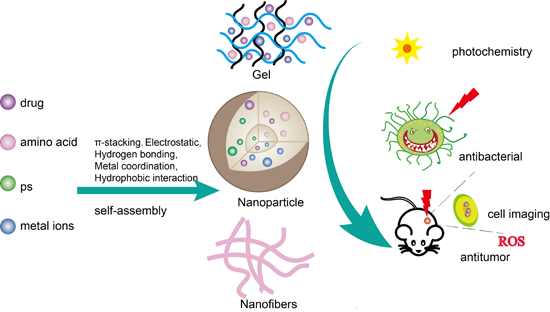
- and pH values [49]. Rizzo et al. studied camptothecin loaded into Fmoc-F hydrogels in the presence of haloalkyl nanotubes. Importantly, this hybrid co-assembly method could not only control the release of camptothecin in the form of active lactone, but also showed significant inhibitory activity on
- photosensitization activity and photostability of phthalocyanine. Camptothecin can induce tumor apoptosis by inhibiting the activity of topoisomerase I [90]. However, camptothecin has some major limitations in therapeutic applications, such as poor water solubility and rapid lactone ring hydrolysis at physiological
- pH values, which leads to inactive carboxylate forms [91][92]. Guo et al. [93] obtained water-soluble spiral nanofibers by coupling hydrophilic arginine and camptothecin. Self-assembly behavior is achieved by intermolecular π–π stacking and hydrophilic–hydrophobic interactions. The conjugates are

Rational design of block copolymer self-assemblies in photodynamic therapy
Beilstein J. Nanotechnol. 2020, 11, 180–212, doi:10.3762/bjnano.11.15






Development of polycationic amphiphilic cyclodextrin nanoparticles for anticancer drug delivery
Beilstein J. Nanotechnol. 2017, 8, 1457–1468, doi:10.3762/bjnano.8.145
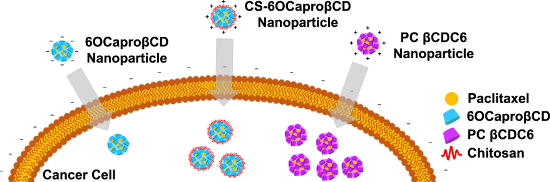
- ]. As a result of the surface coating with chitosan, the zeta potential value of 6OCaproβCD nanoparticles increased from −29 mV to +44 mV as seen in Table 3. Unal et al., prepared uncoated and CS-coated 6OCaproβCD nanocapsules for oral camptothecin delivery. They reported that the CS coating increased


Comparison of the interactions of daunorubicin in a free form and attached to single-walled carbon nanotubes with model lipid membranes
Beilstein J. Nanotechnol. 2016, 7, 524–532, doi:10.3762/bjnano.7.46
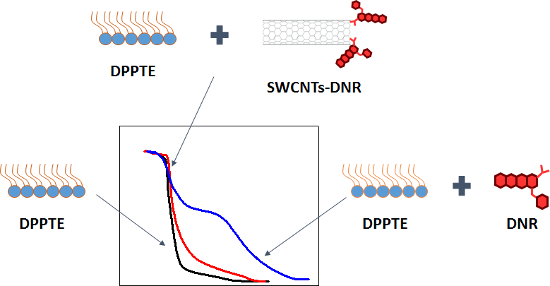
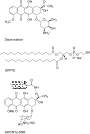
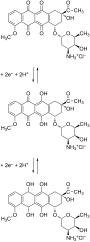
- mechanisms proposed to explain the cellular uptake of CNTs including the passive diffusion in a non-invasive manner (tiny nanoneedle mechanism) [18]. Carbon nanotubes have been successfully used to transport different types of anticancer agents including camptothecin, doxorubicin and daunorubicin [19]. The




Silica micro/nanospheres for theranostics: from bimodal MRI and fluorescent imaging probes to cancer therapy
Beilstein J. Nanotechnol. 2015, 6, 546–558, doi:10.3762/bjnano.6.57
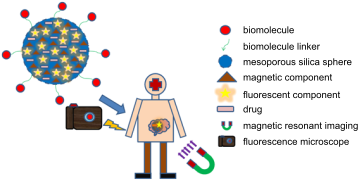
- after 24 h. Again, Liong et al. [56] reported the synthesis of multifunctional silica nanospheres with magnetic iron oxide NPs, luminescent fluorescein isothiocyanate (FITC) and camptothecin or paclitaxel as anti-cancer drug molecules entrapped inside the core. These nanospheres were finally modified


Functionalized polystyrene nanoparticles as a platform for studying bio–nano interactions
Beilstein J. Nanotechnol. 2014, 5, 2403–2412, doi:10.3762/bjnano.5.250
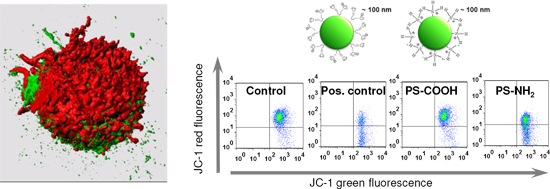
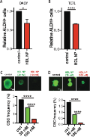
- on the outer membrane leaflet of THP-1 cells consistent with the induction of apoptosis (Figure 4). Camptothecin, an inhibitor of topoisomerase I, was used as a positive control. Likewise, in leukemia cells xenografted onto the chick chorioallantoic membrane in vivo, intravenous administration of PS
- either PS-COOH or PS-NH2 (each at 100 µg/mL) for 72 h, analyzed by using fluorescence microscopy and quantified by using ImageJ. The graphs show the amounts of apoptotic (annexin V+) and late apoptotic or necrotic (propidium iodide+) cells. Camptothecin: positive control. Results are mean ± SEM, n = 3


PEGylated versus non-PEGylated magnetic nanoparticles as camptothecin delivery system
Beilstein J. Nanotechnol. 2014, 5, 1312–1319, doi:10.3762/bjnano.5.144
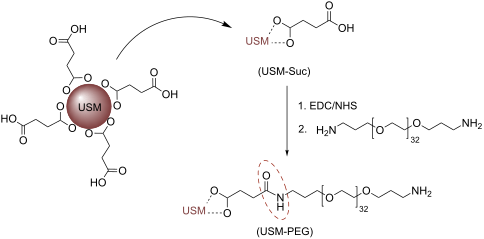
- Biología del Desarrollo (CABD-CSIC-Universidad Pablo de Olavide), Sevilla, Spain 10.3762/bjnano.5.144 Abstract Camptothecin (CPT; (S)-(+)-4-ethyl-4-hydroxy-1H-pyrano[3',4':6,7]indolizino[1,2-b]quinoline-3,14-(4H,12H)-dione) is a highly cytotoxic natural alkaloid that has not yet found use as
- chemotherapeutic agent due to its poor water-solubility and chemical instability and, as a consequence, no effective administration means have been designed. In this work, camptothecin has been successfully loaded into iron oxide superparamagnetic nanoparticles with an average size of 14 nm. It was found that
- surface modification of the nanoparticles by polyethylene glycol enables loading a large amount of camptothecin. While the unloaded nanoparticles do not induce apoptosis in the H460 lung cancer cell line, the camptothecin-loaded nanoparticle formulations exhibit remarkable pro-apoptotic activity. These





