Search results
Search for "cancer treatment" in Full Text gives 77 result(s) in Beilstein Journal of Nanotechnology.
Nanocarrier strategies to overcome P-glycoprotein-mediated drug resistance in cancer therapy
Beilstein J. Nanotechnol. 2026, 17, 882–921, doi:10.3762/bjnano.17.64
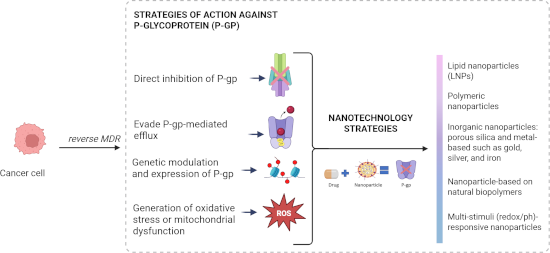
- restoring drug sensitivity [10]. 1.2 Mechanisms of multidrug resistance in cancer Multidrug resistance and metastasis are the main causes of cancer treatment failure. MDR tends to occur in cancer patients and is the ability of tumor cells to develop a specific mechanism to resist and overcome the cytotoxic
- Eligard® (a PLGA-based in situ forming implant), and Genexol-PM® (a PEG–PLA polymeric micelle for cancer treatment) are already available, many current designs still face challenges, especially in understanding biological barriers, patient response variability, and the translation of preclinical findings


Biomimetic nanoparticles in cancer photodynamic therapy: a review of targeted delivery systems and therapeutic outcomes
Beilstein J. Nanotechnol. 2026, 17, 396–422, doi:10.3762/bjnano.17.27
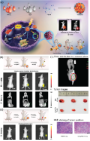
- cancer treatment that uses photosensitizers (PSs) activated by light to produce cytotoxic reactive oxygen species (ROS). Although PDT shows clinical promise, its effectiveness is limited by factors such as insufficient tumor targeting, tumor hypoxia, PS instability, and weak immune responses. Biomimetic


From shield to spear: Charge-reversible nanocarriers in overcoming cancer therapy barriers
Beilstein J. Nanotechnol. 2026, 17, 159–175, doi:10.3762/bjnano.17.10
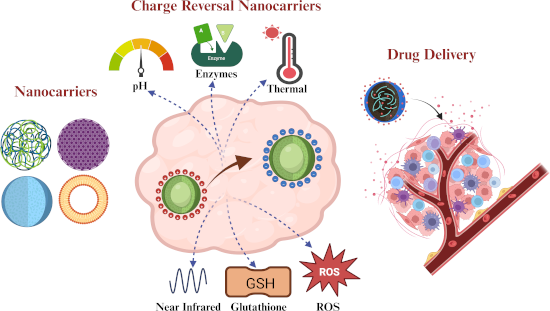
- therapies (e.g., immunotherapy) underscore the transformative potential of charge-reversible nanocarriers in revolutionising cancer treatment and improving patient outcomes. Keywords: cancer; charge reversible nanocarriers; nanocarriers; targeted therapy; tumour microenvironment; Review 1 Introduction
- pressing need for innovative solutions. An example would be smart nanocarrier drug delivery systems that enhance targeting precision and mitigate adverse effects [9][10]. Nanotechnology-based drug delivery systems have revolutionised cancer treatment by improving drug solubility, stability, and
- distinct edge over conventional nanocarriers, representing a significant leap toward more precise and efficient cancer treatments [16]. This review aims to present an in-depth analysis of charge-reversible nanocarriers (CRNs) in cancer treatment, emphasising their underlying mechanisms, benefits, and


Development and in vitro evaluation of liposomes and immunoliposomes containing 5-fluorouracil and R-phycoerythrin as a potential phototheranostic system for colorectal cancer
Beilstein J. Nanotechnol. 2026, 17, 97–121, doi:10.3762/bjnano.17.7
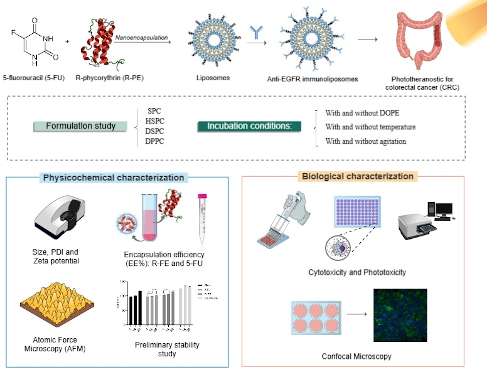
- third most prevalent type of cancer in the world. R-phycoerythrin (R-PE) is a phycobiliprotein isolated from red algae such as Solieria filiformis, with fluorescent properties, photodynamic activity and potential for cancer treatment. However, 5-FU toxicity promotes several side effects and R-PE low
- that approximately half of metastatic CRC cases are resistant to 5-FU treatments, contributing to decrease the survival rate of patients [5]. In this context, nanotechnology has emerged as a promising therapeutic strategy for cancer treatment. Nanostructured drug delivery systems enable preferential
- potential application in cancer treatment, ranging from in vitro cell programmed death induction in the liver, lung, and gastric cancer cells [12] to in vivo reduction in nodule number and liver weight in rats [13]. In addition, R-PE also has a photosensitizing role that can be explored in photodynamic



Improving magnetic properties of Mn- and Zn-doped core–shell iron oxide nanoparticles by tuning their size
Beilstein J. Nanotechnol. 2025, 16, 2285–2295, doi:10.3762/bjnano.16.157
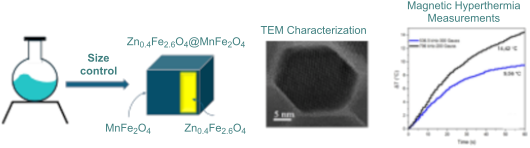
- investigated as a novel cancer treatment due to its ability to locally generate heat in tumors, thereby minimizing damage to healthy tissues compared to conventional chemotherapy and radiotherapy [3]. This process relies on exposing magnetic nanoparticles to an alternating magnetic field, causing them to



Rapid synthesis of highly monodisperse AgSbS2 nanocrystals: unveiling multifaceted activities in cancer therapy, antibacterial strategies, and antioxidant defense
Beilstein J. Nanotechnol. 2025, 16, 2105–2115, doi:10.3762/bjnano.16.145
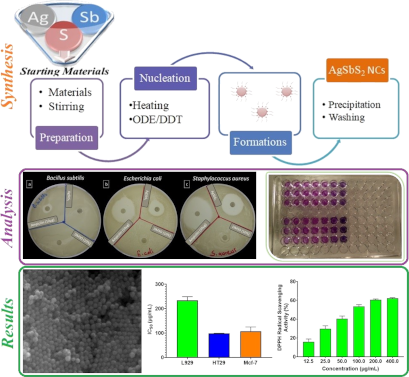
- compared to their pronounced impact on malignant cell lines, thereby establishing a differential selectivity profile. This differential efficacy suggests considerable potential for NCs to function as targeted therapeutic agents in cancer treatment, demonstrating promising selectivity towards cancerous


Toward clinical translation of carbon nanomaterials in anticancer drug delivery: the need for standardisation
Beilstein J. Nanotechnol. 2025, 16, 2092–2104, doi:10.3762/bjnano.16.144

- enhancing therapeutic delivery, particularly in areas such as cancer treatment. This perspective highlights critical considerations in the development of CNM-based nanocarriers, spanning from initial design to clinical implementation. Keywords: carbon nanomaterials (CNMs); carbon nanoparticles (CNPs); drug
- -consuming production, and a lack of standardised methods for their characterisation. Nevertheless, growing research into CNM-based nanoformulations continues to address key challenges, underscoring their promise in enhancing therapeutic delivery; particularly in cancer treatment, where the global burden
- , nontraditional approach in cancer treatment and an active research area. In this approach, engineered NMs, acting as nanocarriers, selectively and specifically target cancer cells to deliver drug payloads. The NMs can distinguish between cancer cells and healthy cells; thereby minimising adverse effects



Advances of aptamers in esophageal cancer diagnosis, treatment and drug delivery
Beilstein J. Nanotechnol. 2025, 16, 1734–1750, doi:10.3762/bjnano.16.121
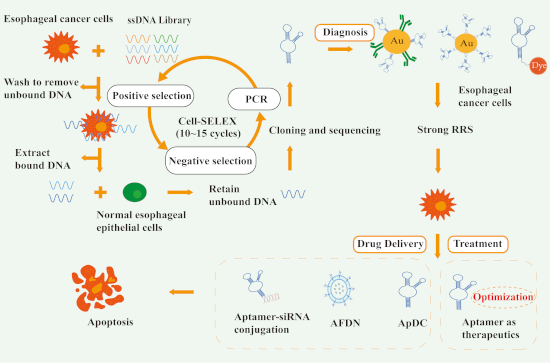
- are also an important part of esophageal cancer treatment [23] and are considered to have some immune activation effects [24]. However, the unavoidable drug resistance problems of small-molecule drugs, their fast clearance rate, and a series of side effects caused by nonspecific use are serious
- , this synergistic strategy presents a promising approach to circumvent chemotherapy resistance in cancer treatment. In general, DNA aptamers have higher thermal stability, RNA aptamers are richer in secondary structure, and peptide aptamers are smaller in size and easier to enter cells [29]. Furthermore
- strategy for esophageal cancer and demonstrates the potential application of aptamer technology in esophageal cancer treatment. 5.2 Aptamer-functionalized drug nanocarriers A multifunctional strategy based on aptamer nanoformulation of chemotherapeutic drugs and gene therapy could protect chemotherapeutic


Prospects of nanotechnology and natural products for cancer and immunotherapy
Beilstein J. Nanotechnol. 2025, 16, 1644–1667, doi:10.3762/bjnano.16.116
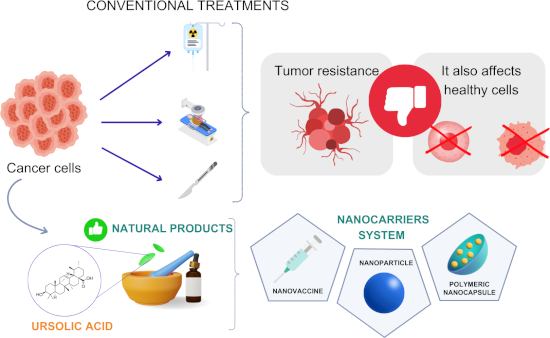
- T-lymphocyte associated protein 4), which inhibit T-cell activation, allowing cancer cells to escape immune-mediated destruction [8]. Immunotherapy shows promise as a cancer treatment approach, encompassing strategies such as monoclonal antibodies, immune checkpoint inhibitors, antitumor vaccines
- study employs a technology foresight approach based on patent analysis to provide a strategic overview of emerging trends in the application of nanotechnology to natural products for cancer treatment and immunotherapy. This method allows for the identification of innovation gaps, technological barriers
- Organization (WIPO) were used to carry out the search using the descriptors “nano* AND cancer AND natural product” for research associated with cancer treatment, while the descriptors “nano* AND immun* AND natural product” was implemented to analyze patents related to immunotherapy. Furthermore, a time filter


Ferroptosis induction by engineered liposomes for enhanced tumor therapy
Beilstein J. Nanotechnol. 2025, 16, 1325–1349, doi:10.3762/bjnano.16.97


Better together: biomimetic nanomedicines for high performance tumor therapy
Beilstein J. Nanotechnol. 2025, 16, 1246–1276, doi:10.3762/bjnano.16.92
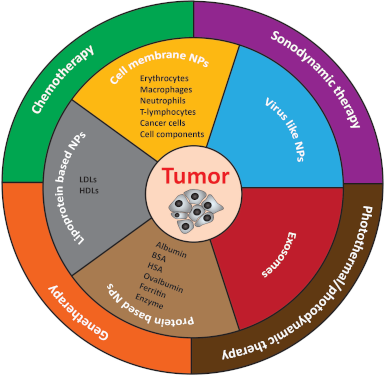
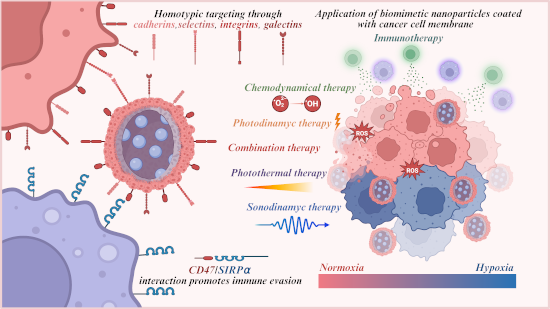
- 38040, Turkey Department of Pharmaceutics, School of Pharmacy, China Pharmaceutical University, Nanjing 211198, PR China 10.3762/bjnano.16.92 Abstract The emergence of nanotechnology offers a promising avenue for enhancing cancer treatment outcomes. In this context, biomimetic nanoparticles have
- utility, biomimetic nanoparticles hold great promise for advancing the field of cancer treatment. Keywords: biomimetic nanoparticles; homotypic binding; nanomaterials; targeted drug delivery; tumor therapy; Introduction Cancer is a complex disease, which involves numerous cells and their crosstalk with
- systems [1][2]. Cancer treatment has been revolutionized, yet cancer is treated with traditional methods, that is, chemotherapy, radiotherapy, and surgical intervention, accompanied by several lethal implications along with low solubility, poor bioavailability, and fatal off-target effects [3][4]. In






Piezoelectricity of hexagonal boron nitrides improves bone tissue generation as tested on osteoblasts
Beilstein J. Nanotechnol. 2025, 16, 1068–1081, doi:10.3762/bjnano.16.78
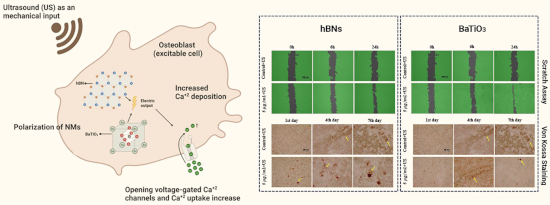
- [30][31]. The piezoelectric property of 2D hBN arises from its noncentrosymmetric structure, supported by these van der Waals interactions [32]. The excellent biocompatibility of hBN makes it attractive for diverse applications, including cosmetics, drug delivery, cancer treatment, orthopedic implants


Polyurethane/silk fibroin-based electrospun membranes for wound healing and skin substitute applications
Beilstein J. Nanotechnol. 2025, 16, 591–612, doi:10.3762/bjnano.16.46
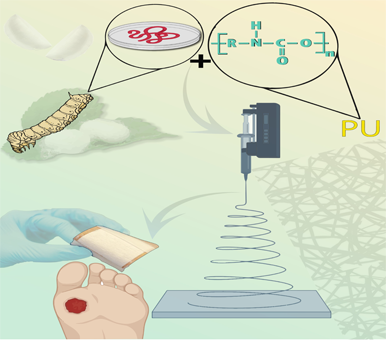
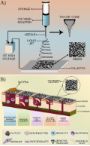
- power. These membranes were shown to ablate HepG2 cancer cells in vitro, revealing the prospect for localized cancer treatment [176]. Lv et al. created a new light-sensitive shape memory polyurethane (SMPU) by using micro/nanofibers of polydopamine (PDA)-coated poly(ε-caprolactone). The aim of this



Radiosensitizing properties of dual-functionalized carbon nanostructures loaded with temozolomide
Beilstein J. Nanotechnol. 2025, 16, 229–251, doi:10.3762/bjnano.16.18
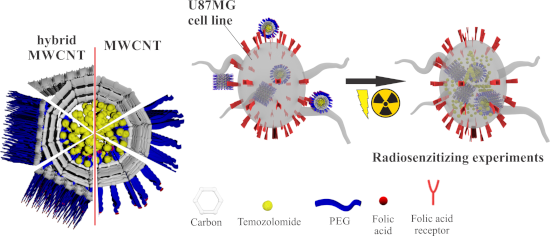
- . Such a trend was observed in a study of Jun et al. [47] in which MWCNTs conjugated with chitosan oligomers and with incorporated tea polyphenols for cancer treatment were irradiated by gamma rays from 60Co for 30 min with a dose of 1.5 Gy. The irradiation also led to changes in zeta potential to lower




Biomimetic nanocarriers: integrating natural functions for advanced therapeutic applications
Beilstein J. Nanotechnol. 2024, 15, 1619–1626, doi:10.3762/bjnano.15.127

- advancements nanocarriers have brought to medical sciences, particularly in cancer treatment, several challenges remain for their widespread application. Issues such as cytotoxicity, difficulties in management, encapsulation, and in vivo release pose barriers to the application of nanocarriers [16][17]. In
- with cancer treatment offer numerous advantages, including immune evasion, targeting behavior, specific site accumulation, targeted delivery of drugs or genes, and reduced side effects. Studies involving inorganic nanocarriers with cell membrane coatings (CMC-NPs) have highlighted the importance of the


Hymenoptera and biomimetic surfaces: insights and innovations
Beilstein J. Nanotechnol. 2024, 15, 1333–1352, doi:10.3762/bjnano.15.107
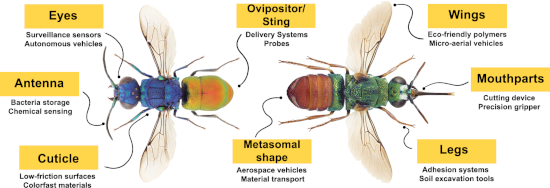
- could greatly benefit from innovations inspired by these stridulation mechanisms. Ultrasound technology has demonstrated significant potential in diagnostic imaging and ultrasound-responsive drug delivery [181][182]. Ultrasound technology is particularly promising for cancer treatment and disease




Dual-functionalized architecture enables stable and tumor cell-specific SiO2NPs in complex biological fluids
Beilstein J. Nanotechnol. 2024, 15, 1238–1252, doi:10.3762/bjnano.15.100
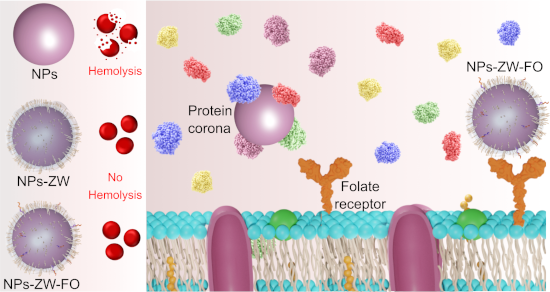
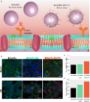
- exhibit heightened efficacy and reduced toxicity for medical purposes. Keywords: colloidal stability; complex media; functionalized nanoparticles; hemolysis; targeting tumor; Introduction In recent years, there has been a growing search for developing high-efficiency nanomedicines for cancer treatment


Realizing active targeting in cancer nanomedicine with ultrasmall nanoparticles
Beilstein J. Nanotechnol. 2024, 15, 1208–1226, doi:10.3762/bjnano.15.98
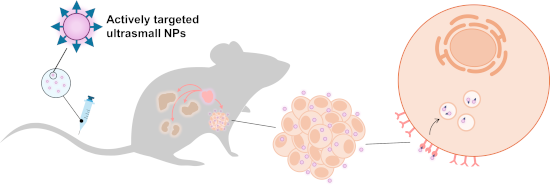
- globular proteins, usNPs exhibit unique physicochemical properties and physiological behavior distinct from larger particles, including lack of protein corona formation, efficient renal clearance, and reduced recognition and sequestration by the reticuloendothelial system. In cancer treatment, usNPs
- functions [54][69][70][71][72][73][74][75]. Therefore, a thorough evaluation of their biocompatibility is necessary before advancing their clinical applications. In the context of cancer treatment, the efficient renal clearance and short blood elimination half-life of usNPs raise questions about their
- incorporation of active targeting strategies is expected to further enhance the selectivity and performance of usNPs for cancer treatment. By designing usNPs to target surface receptors on cancer cells, tumor retention can be improved by minimizing particle intravasation back to tumor blood vessels. Active


Recent updates in applications of nanomedicine for the treatment of hepatic fibrosis
Beilstein J. Nanotechnol. 2024, 15, 1105–1116, doi:10.3762/bjnano.15.89
- ingredients. Cancer nanomedicine represents the most extensively studied nanotechnology application in the field of pharmaceutics and pharmacology since the first nanodrug for cancer treatment, liposomal doxorubicin (Doxil®), has been approved by the FDA. The advancement of cancer nanomedicine and its
- regenerative medicine. Aiming to improve the treatment outcomes, new nanomedicinal drugs and formulations have been reported on an almost daily basis for targeting various diseases. Until now, most nanomedicine applications have focused primarily on drug delivery and theranostic nanoplatforms for cancer
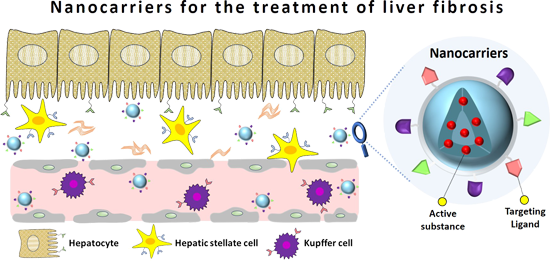
- treatment. The enhanced permeability and retention (EPR) effect, first described by Maeda and co-workers in 1986, allows for high accumulation of the drug nanocarriers via the leaky vasculature and the deficient lymphatic system around solid tumors, as illustrated in the right panel of Figure 1 [3][4][5


Unveiling the potential of alginate-based nanomaterials in sensing technology and smart delivery applications
Beilstein J. Nanotechnol. 2024, 15, 1077–1104, doi:10.3762/bjnano.15.88
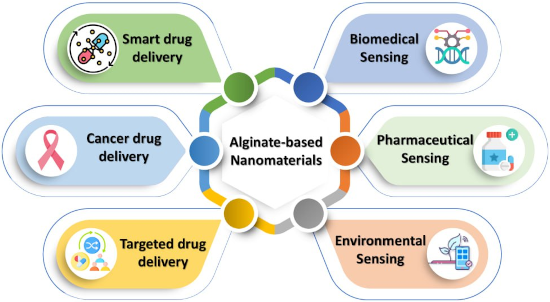
- therapy [78]. Alginate-based fully natural nanoparticles were developed and used for cancer treatment. Pakistani scientists investigated amygdalin in an alginate–chitosan-based matrix [79]. Amygdalin is a natural material and it has very strong anticancerous activity. Scientists achieved over 90% drug


Entry of nanoparticles into cells and tissues: status and challenges
Beilstein J. Nanotechnol. 2024, 15, 1017–1029, doi:10.3762/bjnano.15.83
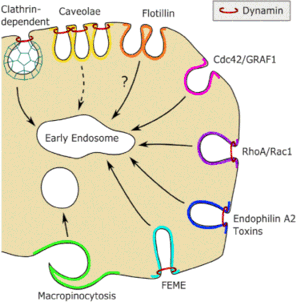
- cancer treatment, the goal being to increase the fraction of injected drug delivered to the tumor and thereby improve the therapeutic effect and decrease side effects. Thus, we discuss how NPs are delivered to tumors and some challenges related to investigations of biodistribution, pharmacokinetics, and
- intravenous (i.v.) injection is required to benefit from NPs as therapeutics or imaging agents in an optimal way. Many different types of NPs have been made; for an overview, see [1]. Doxorubicin encapsulated in liposomes (Doxil®/Caelyx®) was the first NP-based drug approved for cancer treatment by the US


Therapeutic effect of F127-folate@PLGA/CHL/IR780 nanoparticles on folate receptor-expressing cancer cells
Beilstein J. Nanotechnol. 2024, 15, 954–964, doi:10.3762/bjnano.15.78
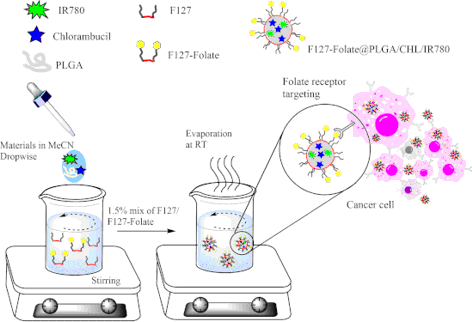
- cancer treatment. The bigger the nanoparticles, the faster they would be cleared by the mononuclear phagocyte system [41], while those smaller than 6 nm would be excreted into the Bowman space of the kidney [42]. In addition to size, nanoparticle charge is also crucial for boosting its circulation in the
- the chemotherapy drug CHL. IR780 exhibits fluorescence in the infrared region, which is suitable for pre-clinical applications [12][13]. CHL in cancer treatment attaches to the DNA double strands and prevents them from splitting, disrupting the division and proliferation of cancer cells [12][13
- in cancer treatment. Conclusion In this work, we designed F127-folate@PLGA nanoparticles capable of carrying CHL and IR780. The formulation approach has produced nanoparticles of extremely homogeneous size. The F127-folate polymer on the surface of nanoparticles made it easier for nanoparticles to



Electrospun nanofibers: building blocks for the repair of bone tissue
Beilstein J. Nanotechnol. 2024, 15, 941–953, doi:10.3762/bjnano.15.77
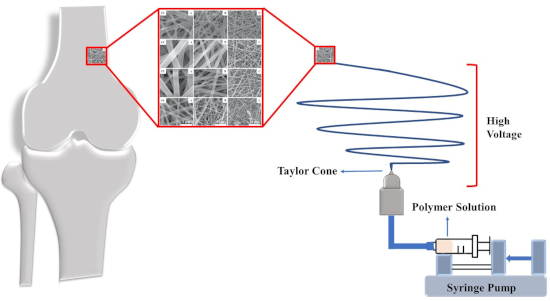
- the surface of the nanofibrous scaffolds increases the therapeutic response to the drugs by a controlled and sustained release in the targeted tissue [35]. (v) Their ability to carry different drugs in their structure reduces the risk of multidrug resistance in cancer treatment with dose-specific or


Radiofrequency enhances drug release from responsive nanoflowers for hepatocellular carcinoma therapy
Beilstein J. Nanotechnol. 2024, 15, 569–579, doi:10.3762/bjnano.15.49
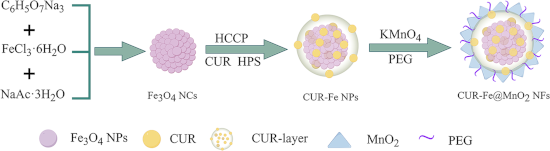
- can alleviate tumor hypoxia and regulate TME to improve antitumor efficiency. In addition, PEG-modified NFs may significantly enhance passive targeting and retention via the EPR effect, thus enhancing their efficacy in cancer treatment [30]. The Fe3O4 NCs, Fe3O4 NCs-CUR layer nanoparticles (CUR-Fe NPs


Classification and application of metal-based nanoantioxidants in medicine and healthcare
Beilstein J. Nanotechnol. 2024, 15, 396–415, doi:10.3762/bjnano.15.36
- ) concentration of 0.5 wt % for the successful formation of ferulic acid-loaded lipid-based nanoparticles [141]. The ferulic acid-loaded nanoparticles with improved bioavailability can be useful for skin care products and human skin cancer treatment [142][143][144]. Wound repair The skin is the outermost layer
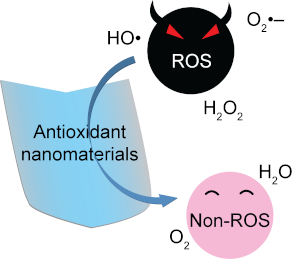
- ]. Antioxidants contribute to cancer inhibition and cancer treatment by several mechanisms. First, nanoantioxidants reduce cancer initiation by protecting DNA molecules from oxidative stress and stimulating DNA repair. For example, platinum nanoparticles inhibited the growth of epithelial lung cancer cells by