


Search results
Search for "gut-on-a-chip" in Full Text gives 1 result(s) in Beilstein Journal of Nanotechnology.
Interface-engineered Caco-2 cell culture on a collagen-coated liquid–liquid interface in a microfluidic device
Beilstein J. Nanotechnol. 2026, 17, 760–768, doi:10.3762/bjnano.17.53
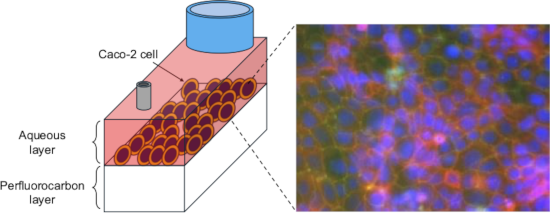
- enables the formation of stable liquid–liquid interfaces that serve as viable and flexible substrates for epithelial cell culture, offering new opportunities for multiphase microfluidic models of epithelial barriers. Keywords: Caco-2; collagen; FC-43; gut-on-a-chip; liquid–liquid interface; Introduction
- tissues [2][3][4]. The microfluidic culture system known as gut-on-a-chip enables the cultivation of Caco-2 cells under conditions that more closely recapitulate the in vivo intestinal environment. By precisely controlling fluid flow and inducing mechanical stimuli, this platform provides physiologically
- relevant mechanical cues that are difficult to reproduce in conventional static culture systems [5][6][7]. Gut-on-a-chip platforms recapitulate the apical-basolateral compartmentalization of the human intestinal epithelium by dividing upper and lower microchannels with a solid porous membrane, upon which


Other Beilstein-Institut Open Science Activities



