


Search results
Search for "in situ hybridization" in Full Text gives 5 result(s) in Beilstein Journal of Nanotechnology.
The cement of the tube-dwelling polychaete Sabellaria alveolata: a complex composite adhesive material
Beilstein J. Nanotechnol. 2025, 16, 1998–2014, doi:10.3762/bjnano.16.138
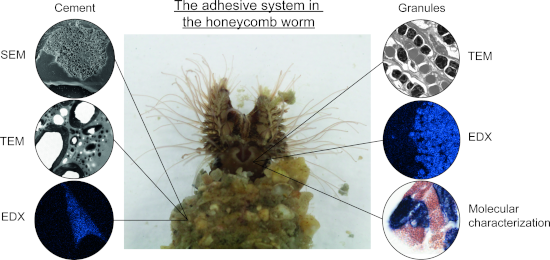
- . Phosphoserine has been identified as one of the main modified amino acids in tubeworm cement and, using in situ hybridization, we propose that FAM20C kinases would be the enzymes responsible for the phosphorylation of serine residues in adhesive proteins. Comparison between the ultrastructure of the granules
- maturation by identifying and localizing the kinases phosphorylating adhesive proteins using in silico analyses and in situ hybridization techniques. The results may provide new insights into the composition and biosynthesis of the adhesive secretion, which is crucial to the honeycomb worm’s survival
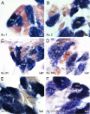
- products were used for RNA probe synthesis after sequencing to check if the amplified sequence corresponds to the desired transcript. Localization of the candidates using in situ hybridization A few worms were retrieved from their tubes, and their anterior part was dissected and fixed in a 4



Using gold nanoparticles to detect single-nucleotide polymorphisms: toward liquid biopsy
Beilstein J. Nanotechnol. 2020, 11, 263–284, doi:10.3762/bjnano.11.20
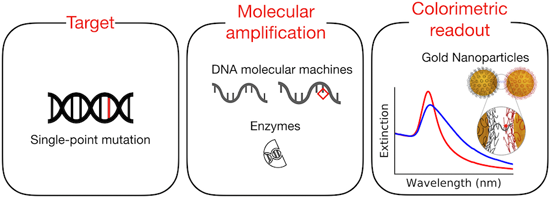
- -art of advanced techniques in the field of genomics such as digital PCR, next generation sequencing (NGS), fluorescence in situ hybridization (FISH) and BEAMing. These facilitate the fast design of mutational profiles of tumor DNA, helping the prioritization of anti-cancer therapy. Although these


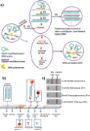

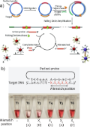

Overview about the localization of nanoparticles in tissue and cellular context by different imaging techniques
Beilstein J. Nanotechnol. 2015, 6, 263–280, doi:10.3762/bjnano.6.25
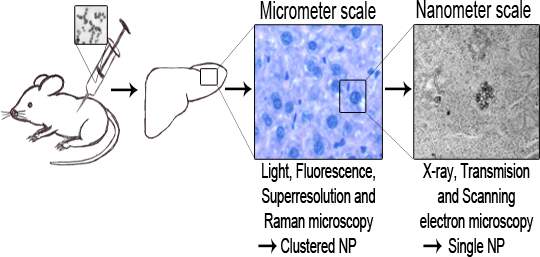
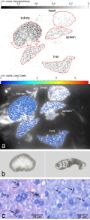
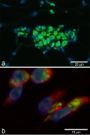
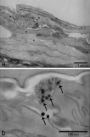
- microscope (0.2 µm) and the grain size of the emulsion [69]. This technique has previously been used, for example, for the localization of specific nucleic acid sequence, e.g., chromosomes or viral infections, by in situ hybridization employing radiolabeled nucleic acid probes [70]. We reasoned that this



Effect of channel length on the electrical response of carbon nanotube field-effect transistors to deoxyribonucleic acid hybridization
Beilstein J. Nanotechnol. 2014, 5, 2081–2091, doi:10.3762/bjnano.5.217
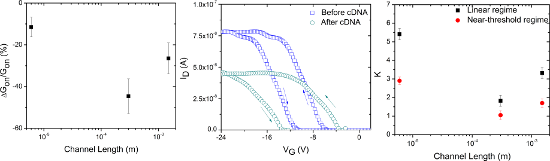
- the field of biomedical and life science research [1][2]. Currently, the detection methods for nucleic acids include northern blotting analysis [3], in situ hybridization [4], real-time fluorescence quantitative polymerase chain reaction (RT-PCR) [5] and microarrays [6]. These detection methods suffer


Molecular biology approaches in bioadhesion research
Beilstein J. Nanotechnol. 2014, 5, 983–993, doi:10.3762/bjnano.5.112
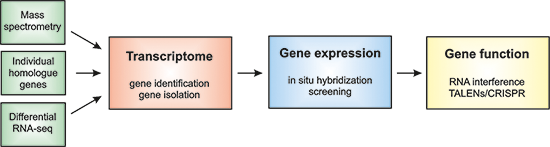
- expression; in situ hybridization; RNA interference; transcriptome; Introduction The capability of an organism to attach to a surface, either temporarily or permanently, is referred to as “bioadhesion”. Bioadhesion occurs in many living organisms that have designed ways to adhere to a range of surfaces [1
- assembled hypothetical complementary DNA originating from isolated messenger RNA) expressed in the region of the animal containing adhesive-producing cells; secondly, in situ hybridization (ISH) screening provides the (temporal and) spatial expression of target transcripts; thirdly, RNA interference (RNAi
- differential RNA-seq experiment can be compared to the established transcriptome database. 3. Spatial gene expression 3.1 Aim of in situ hybridization For detecting the spatial (and temporal) expression of genes within a tissue, ISH is a widespread and straightforward method. The principle of ISH can be used


Other Beilstein-Institut Open Science Activities



