


Search results
Search for "lactic acid bacteria" in Full Text gives 2 result(s) in Beilstein Journal of Nanotechnology.
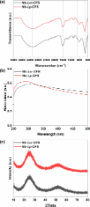
Biosynthesis, characterization, and biofunctional assessment of niobium oxide nanostructures obtained using lactic acid bacteria-derived supernatants
Beilstein J. Nanotechnol. 2026, 17, 1128–1141, doi:10.3762/bjnano.17.77
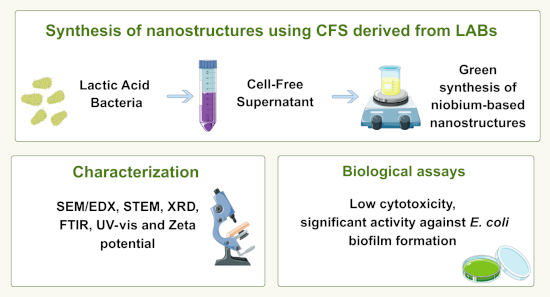
- , cell-free approach using supernatants derived from lactic acid bacteria (LAB) Lacticaseibacillus rhamnosus and Lacticaseibacillus paracasei UFTM 2.9. The use of LAB supernatants provided an eco-friendly and sustainable route for nanoparticle production, avoiding toxic reagents while exploiting
- chemical routes, primarily by avoiding the use of toxic and high-cost substances [9][10]. Among the resources considered for use in the green synthesis of nanoparticles are extracts derived from lactic acid bacteria (LAB), a group of microorganisms widely used in different industrial processes, precisely


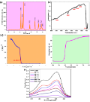
Characterization of ZnO nanoparticles synthesized using probiotic Lactiplantibacillus plantarum GP258
Beilstein J. Nanotechnol. 2025, 16, 78–89, doi:10.3762/bjnano.16.8
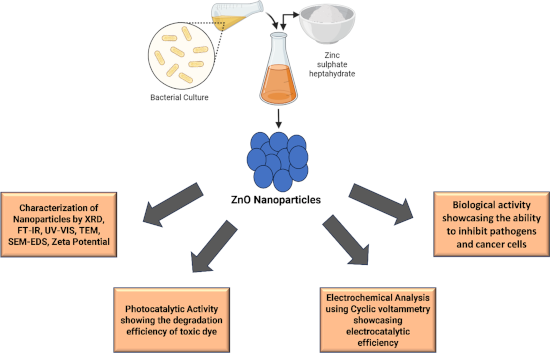
- nanoparticles (ZnO NPs), utilizing lactic acid bacteria isolated from curd as the key biological agent. Bacteria function as agents for both reduction and capping processes, which aids the synthesis of ZnO NPs. Various characterization techniques including XRD, FTIR, UV–vis, TEM, SEM-EDX, and zeta potential
- applications. Keywords: anticancer; green synthesis; lactic acid bacteria; nanoparticles; zinc oxide; Introduction Nanotechnology has revolutionized various fields through its remarkable development and the unique properties exhibited by nanoparticles (NPs) at the mesoscopic level. Dimension, form, surface
- biomedical applications. This work reports on the green synthesis of ZnO NPs employing lactic acid bacteria (LAB) as capping and reducing agents to produce biocompatible NPs for use in pharmaceutical and biological applications [3][4][5]. LAB are Gram-positive, catalase-negative, and non-pathogenic bacteria



Other Beilstein-Institut Open Science Activities



