


Search results
Search for "metallic nanoparticles" in Full Text gives 108 result(s) in Beilstein Journal of Nanotechnology.
Nanocarrier strategies to overcome P-glycoprotein-mediated drug resistance in cancer therapy
Beilstein J. Nanotechnol. 2026, 17, 882–921, doi:10.3762/bjnano.17.64
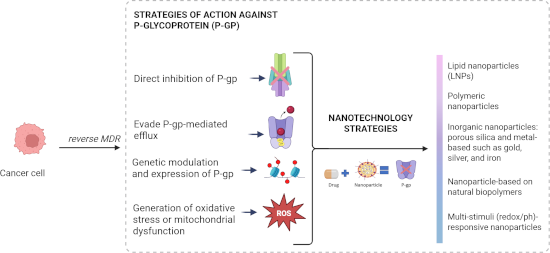
- , including polymeric micelles, metallic nanoparticles, liposomes, exosomes and extracellular vesicles, functionalized liposomes, and mesoporous silica nanoparticles. Each platform offers distinct advantages depending on the drug, tumor type, and specific resistance mechanisms targeted. 3.1 General


Nanoparticle delivery systems for HIV pre-exposure prophylaxis (PrEP): advances and challenges
Beilstein J. Nanotechnol. 2026, 17, 839–853, doi:10.3762/bjnano.17.60
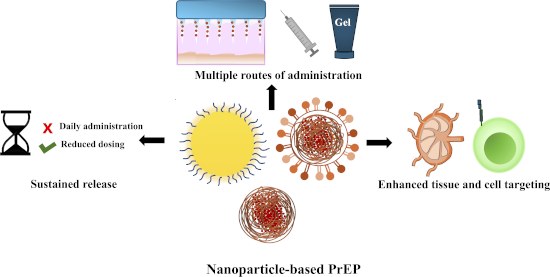
- systems. Some metallic nanoparticles (MNPs), such as gold nanoparticles (AuNPs), exhibit long-term stability, chemically modifiable surfaces, and potential for intrinsic antiviral activity [68][69]. AuNPs can, for instance, interfere with and block HIV gp120-CD4 interactions. Other MNPs, like silver


Cellulose as a photocatalyst support material: extraction, structural features, and environmental applications
Beilstein J. Nanotechnol. 2026, 17, 635–652, doi:10.3762/bjnano.17.44
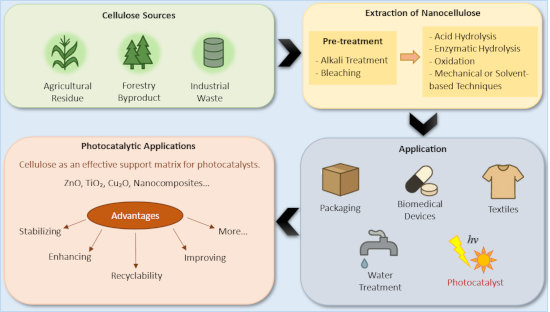
- enhancing charge-transfer dynamics [89]. Recently, nanocellulose has emerged as a promising support material for the synthesis of metal, metal oxide, and non-metallic nanoparticles, and when these components are combined, they often act synergistically to enhance photodegradation processes. Noble and


Advances in nanotechnology applied to natural products
Beilstein J. Nanotechnol. 2026, 17, 555–558, doi:10.3762/bjnano.17.36

- nanomaterials, particularly metallic nanoparticles. Metallic nanoparticles, typically defined as structures with diameters between 1 and 100 nm, exhibit distinctive electrical, optical, and magnetic properties that support a broad range of applications [26]. They can be obtained via green synthesis using
- , metallic nanoparticles have shown promise in antiseptic and therapeutic contexts, including the prevention of biofilm formation and infection in dentistry, integration into restorative or regenerative dental materials, and modulation of biological responses in clinical treatments [28]. Overall, the
On the road to sustainability – application of metallic nanoparticles obtained by green synthesis in dentistry: a scoping review
Beilstein J. Nanotechnol. 2025, 16, 1851–1862, doi:10.3762/bjnano.16.128
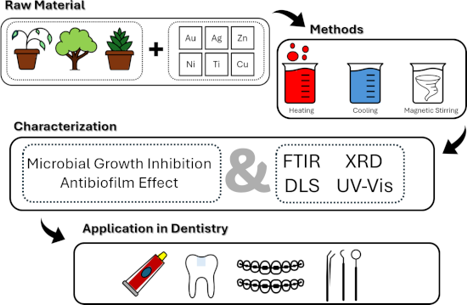
- Grosso do Sul, Avenida Costa e Silva, s/n – Zip Code: 79070-900 – Bairro Universitário, Campo Grande/MS, Brazil 10.3762/bjnano.16.128 Abstract The growing interest in green-synthesized metallic nanoparticles reflects a global shift toward sustainable, eco-friendly technologies in biomedical innovation
- widely studied nanomaterials are metallic nanoparticles, particularly silver (AgNPs), gold (AuNPs), and copper (CuNPs), and various metal oxide nanoparticles such as zinc oxide (ZnO-NPs), due to their high surface-to-volume ratio, chemical stability, and distinctive optical and antimicrobial properties
- , safe, and economically viable alternative [8][9]. This approach employs biological agents, such as plant extracts, fungi, bacteria, and algae, which contain bioactive compounds capable of acting as reducing and stabilizing agents in the formation of metallic nanoparticles [10][11]. In the case of plant


Nanomaterials for biomedical applications
Beilstein J. Nanotechnol. 2025, 16, 1499–1503, doi:10.3762/bjnano.16.105
- ]. Polymeric nanoparticles, dendrimers, and carbon-based structures such as carbon nanotubes are very promising when it comes to delivering drugs and genes to certain parts of the body [3]. Conversely, metallic nanoparticles such as gold and iron oxide, and fluorescent quantum dots have applications in
- photothermal therapy (PTT), in which heating special nanoparticles with light helps kill damaged cells, most notably cancerous cells. Most doctors are using this technique since it treats tumors more precisely and in a less invasive way than standard chemotherapy and radiation [32]. Gold and silver metallic
- nanoparticles are most often used in photothermal therapy. These nanomaterials can capture specific wavelengths of light from the near-infrared spectrum and then use that energy to generate heat. This heat from the laser points causes cancer cells to be damaged or destroyed, while reducing the damage to nearby
Synthesis and antibacterial properties of nanosilver-modified cellulose triacetate membranes for seawater desalination
Beilstein J. Nanotechnol. 2025, 16, 1380–1391, doi:10.3762/bjnano.16.100
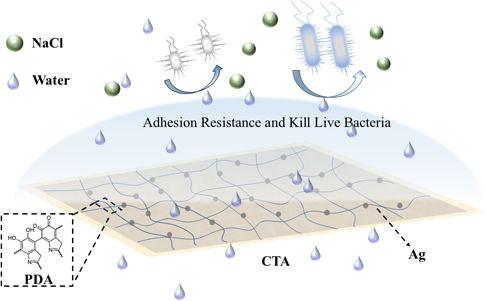
- nanomaterials can be engineered to optimize their antimicrobial activity, making them versatile tools in the development of advanced membrane technologies. Quantum effects, such as localized surface plasmon resonance in metallic nanoparticles, can further enhance antimicrobial properties by generating reactive
- lifespan of the membranes. The widely used antimicrobial nanoparticles can be categorized based on their composition and properties as follows: metallic nanoparticles, carbon-based nanomaterials, oxide nanoparticles, and composite nanomaterials. Zheng’s group used an in situ synthesis method to embed AgNPs


Better together: biomimetic nanomedicines for high performance tumor therapy
Beilstein J. Nanotechnol. 2025, 16, 1246–1276, doi:10.3762/bjnano.16.92
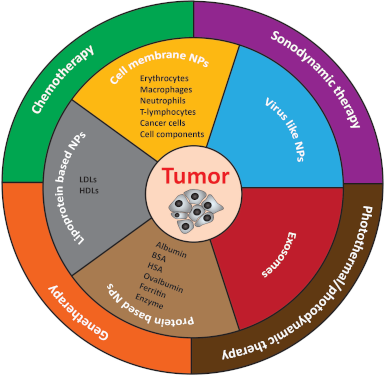
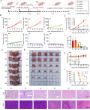
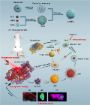
- sites it is considered safe for drug delivery applications. In fact, albumin-conjugated drugs are already used in clinical practice [75]. Albumin molecules can be used as a template to surface-decorate inorganic/metallic nanoparticles by biomineralization. In this method, the thiol group at the albumin







Synthetic-polymer-assisted antisense oligonucleotide delivery: targeted approaches for precision disease treatment
Beilstein J. Nanotechnol. 2025, 16, 435–463, doi:10.3762/bjnano.16.34


ReactorAFM/STM – dynamic reactions on surfaces at elevated temperature and atmospheric pressure
Beilstein J. Nanotechnol. 2025, 16, 397–406, doi:10.3762/bjnano.16.30
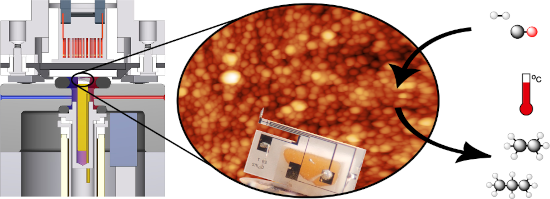
- , exploring the effects of varying support thicknesses and materials, as well as size distributions of metallic nanoparticles, and identifying which product gases are favored under specific reaction conditions, could extend our understanding of FTS. Schematic overview of the experimental setup (left side) and


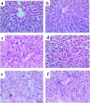
Liver-targeting iron oxide nanoparticles and their complexes with plant extracts for biocompatibility
Beilstein J. Nanotechnol. 2024, 15, 1593–1602, doi:10.3762/bjnano.15.125
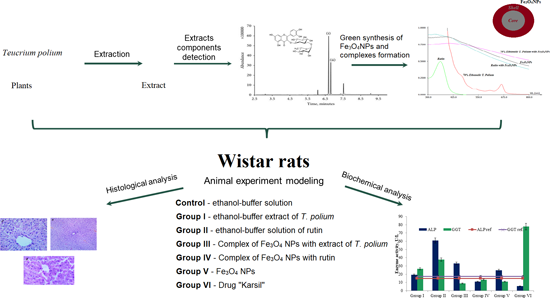
- tissue barriers all give iron oxide MNPs an advantage over other metallic nanoparticles. Because of their small size, nanoparticles have a high surface-to-volume ratio, making them more appealing. However, since the large surface area provides numerous active sites for interactions, it can also lead to


Green synthesis of silver nanoparticles derived from algae and their larvicidal properties to control Aedes aegypti
Beilstein J. Nanotechnol. 2024, 15, 1566–1575, doi:10.3762/bjnano.15.123
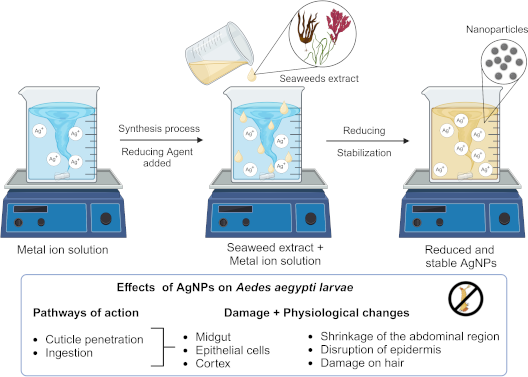
- characteristics such as greater absorption capacity, greater bioavailability, controlled release of active ingredients, improved solubility of hydrophobic substances in water, and good kinetic stability [12][13][14]. Metallic nanoparticles have been investigated as a promising approach for vector control. The
- . aegypti and their potential role for the control and prevention of arboviruses are presented. Finally, ecotoxicity and environmental risk assessment of AgNPs are further discussed. Review Synthesis of silver nanoparticles AgNPs are metallic nanoparticles in a size range between 1 and 100 nm with unique
- on naturally occurring biomaterials have been used as an alternative to obtain metallic nanoparticles [32][33]. These do not involve any toxic chemicals and require less energy and synthesis time. Simple protocols have been used involving the reduction of metal ions using biological extracts as


Effect of radiation-induced vacancy saturation on the first-order phase transformation in nanoparticles: insights from a model
Beilstein J. Nanotechnol. 2024, 15, 1453–1472, doi:10.3762/bjnano.15.117


Nanoarchitectonics with cetrimonium bromide on metal nanoparticles for linker-free detection of toxic metal ions and catalytic degradation of 4-nitrophenol
Beilstein J. Nanotechnol. 2024, 15, 1312–1332, doi:10.3762/bjnano.15.106
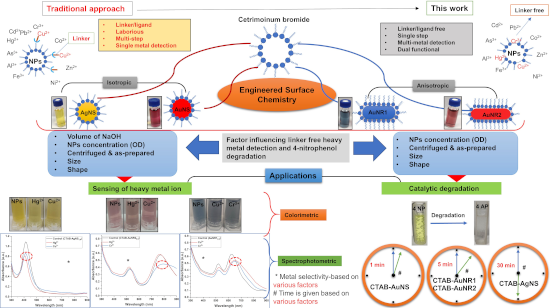
- metallic nanoparticles such as gold and silver [35]. The length of the gold nanorods influences the LSPR [36]. The CTAB molecules on the shorter gold nanorods (20.8 ± 9.5 nm) are densely packed compared to longer nanorods (36.5 ± 7.3 nm). The high curvature of the nanorods leads to enhanced stabilization




Enhanced catalytic reduction through in situ synthesized gold nanoparticles embedded in glucosamine/alginate nanocomposites
Beilstein J. Nanotechnol. 2024, 15, 1227–1237, doi:10.3762/bjnano.15.99
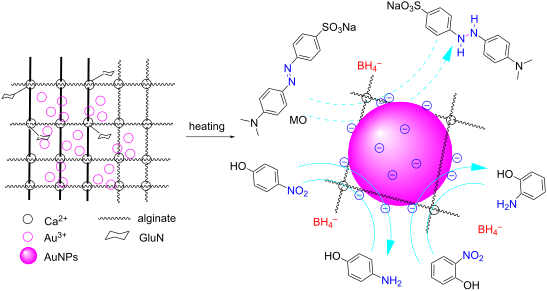
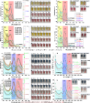
- particular, have demonstrated significant control over the nucleation and growth of metallic nanoparticles. Utilizing polysaccharide-mediated procedures for AuNP synthesis offers several advantages over conventional methods, including cost-effectiveness, energy efficiency, low toxicity, and eco-friendliness
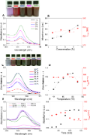
- (e.g., glucose, fructose, and glucosamine (GluN)) for the in situ synthesis of metallic nanoparticles onto alginate-based nanogels remains unexplored. Toxic organic dyes, including nitrophenols and methyl orange (MO), pose a significant environmental threat because of their persistence in water. This



Realizing active targeting in cancer nanomedicine with ultrasmall nanoparticles
Beilstein J. Nanotechnol. 2024, 15, 1208–1226, doi:10.3762/bjnano.15.98
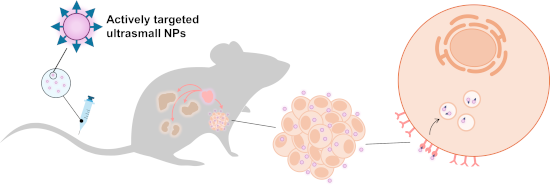
- functionalized to bind to target receptors without interference from nonspecific protein interactions. Figure 2A, 2C, and 2D were adapted from [58]. (“Biomolecular interactions of ultrasmall metallic nanoparticles and nanoclusters“, © 2021 Alioscka A. Sousa et al., published by the Royal Society of Chemistry


Direct electron beam writing of silver using a β-diketonate precursor: first insights
Beilstein J. Nanotechnol. 2024, 15, 1117–1124, doi:10.3762/bjnano.15.90

- . Compared to the typically obtained granular structure of metallic nanoparticles in a carbonaceous matrix, the deposit composition and chemistry evolution are unexpected. The resulting deposit exhibits a carbon-rich body with a surface decorated with silver nanoparticles and an interfacial layer of


Unveiling the potential of alginate-based nanomaterials in sensing technology and smart delivery applications
Beilstein J. Nanotechnol. 2024, 15, 1077–1104, doi:10.3762/bjnano.15.88
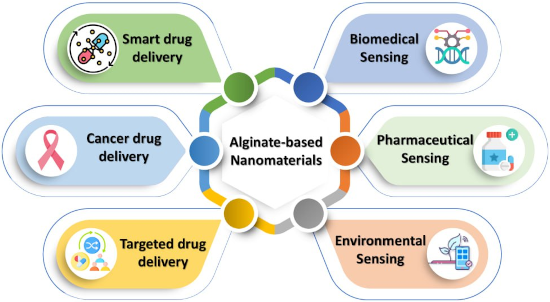
- ]. This property allows the alginate-based nanoparticles to effectively bind and detect heavy metal ions present in water systems. The synthesis of alginate-based nanoparticles for metal sensing involves the incorporation of metallic nanoparticles, such as silver nanoparticles or zinc oxide nanoparticles


Laser synthesis of nanoparticles in organic solvents – products, reactions, and perspectives
Beilstein J. Nanotechnol. 2024, 15, 638–663, doi:10.3762/bjnano.15.54
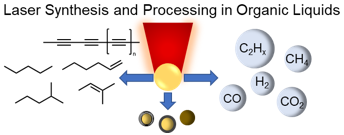
- % for gold [68][69] to a completely oxidized bulk volume, for example, for nickel [70]. In contrast, laser reduction in water leads to the reduction of metal salts and, thus, to the nucleation of metallic nanoparticles [36][71]. Hence, water acts as an oxidizing agent in the context of LAL, LFL, and LML






Curcumin-loaded nanostructured systems for treatment of leishmaniasis: a review
Beilstein J. Nanotechnol. 2024, 15, 37–50, doi:10.3762/bjnano.15.4
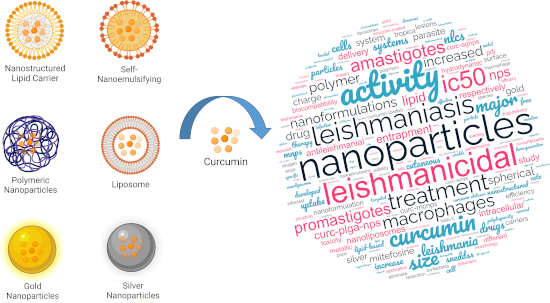
- , lipid nanoparticles, nano- and microemulsions, liposomes, or metallic nanoparticles [68]. Costa-Lima and colleagues incorporated bisnaphthalimidopropyldiaaminooctane (BNIPDaoct) into PLGA polymeric nanoparticles and obtained particles with sizes around 150 nm, with encapsulation efficiency around 90
- (SNEDDSs), (ii) nanoliposomes, (iii) nanostructured lipid carriers, (iv) polymeric, and (v) metallic nanoparticles. Different performances of nanostructured systems containing curc are discussed in the section below. Self-nanoemulsifying drug-delivery systems The SNEDDSs are lipid-based drug-delivery
- nanostructured systems that promote increased leishmanicidal activity and can encapsulate curc as a therapeutic alternative for the treatment of leishmaniasis. Metallic nanoparticles Metallic nanoparticles (MNPs) are versatile nanostructures due to their tunability in shape, composition, size, structure


Nanotechnological approaches in the treatment of schistosomiasis: an overview
Beilstein J. Nanotechnol. 2024, 15, 13–25, doi:10.3762/bjnano.15.2
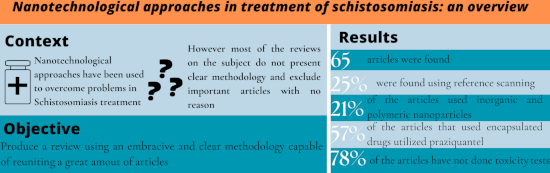
- schistosomiasis due to their characteristics as drug carriers [10], metal nanoparticles usually present intrinsic action even when not loaded with drugs. Works with other parasites suggest that metallic nanoparticles may affect enzyme activity necessary to the physiology and production of the tegument [26
- ]. Therefore, metallic nanoparticles also have a curative role against schistosomiasis. A possible explanation for this action was suggested by Dkhil et al. in their work with gold nanoparticles [27]. They suggested that their curative effects are due to antioxidant properties which confer the ability to
- than that for conventional PZQ. Other works do not address effectiveness tests because they evaluate the impact of nanosystems in physiological/pathological changes caused by S. mansoni. Dkhil et al. [32] showed that metallic nanoparticles could decrease all intestinal changes caused by the parasite


Silver nanoparticles loaded on lactose/alginate: in situ synthesis, catalytic degradation, and pH-dependent antibacterial activity
Beilstein J. Nanotechnol. 2023, 14, 781–792, doi:10.3762/bjnano.14.64
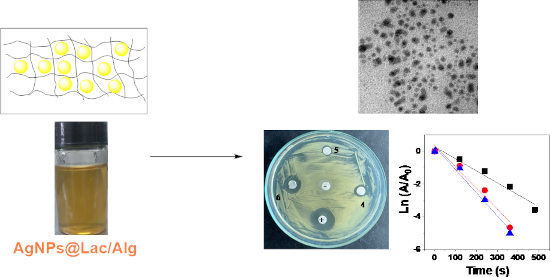
- have shown significant improvement in stabilization because of the hydroxy groups in the sugar molecules of the polysaccharide chain, which can form strong associations with AgNPs [13][14][15]. Previous studies have reported that metallic nanoparticles can be easily incorporated into polysaccharides by


SERS performance of GaN/Ag substrates fabricated by Ag coating of GaN platforms
Beilstein J. Nanotechnol. 2023, 14, 552–564, doi:10.3762/bjnano.14.46
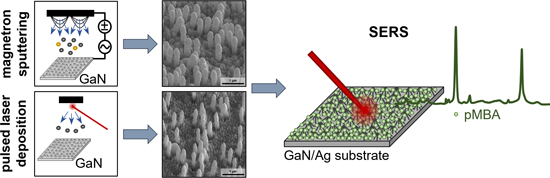
- ][22]. Due to the easiness of fabrication, the most extensively studied SERS substrates are those based on metallic nanoparticles and their assemblies [21][22]. Among SERS substrates fabricated using physical methods of particular interest are those based on nanostructured GaN platforms coated with


Plasmonic nanotechnology for photothermal applications – an evaluation
Beilstein J. Nanotechnol. 2023, 14, 380–419, doi:10.3762/bjnano.14.33
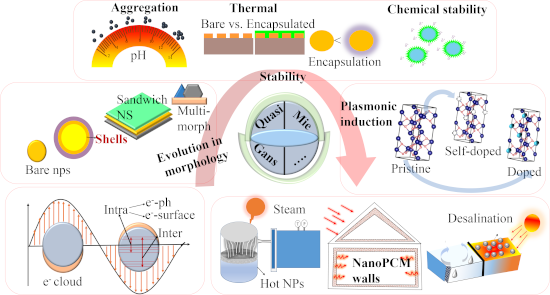
- Plasmonically active nanomaterials for PT applications 4.1 PT performance of metal nanoparticles Metallic nanoparticles are a dominant group of elements for PT research. The calculations of different optical cross sections, namely absorption, scattering, and extinction allow for the prediction of the ideal




Two-step single-reactor synthesis of oleic acid- or undecylenic acid-stabilized magnetic nanoparticles by thermal decomposition
Beilstein J. Nanotechnol. 2023, 14, 11–22, doi:10.3762/bjnano.14.2
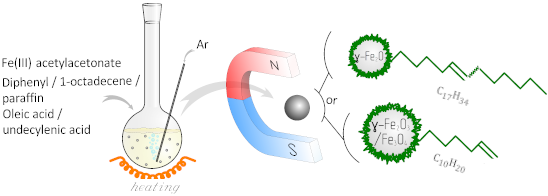
- chemical and physical properties. One such area is biomedicine [1]. Especially iron oxide-based nanoparticles, due to their biodegradation, low toxicity, and enhanced oxidative resistance compared to metallic nanoparticles, show high potential in biomedical applications [2][3][4]. Up to now, iron oxide





