


Search results
Search for "microornamentation" in Full Text gives 3 result(s) in Beilstein Journal of Nanotechnology.
Subdigital integumentary microstructure in Cyrtodactylus (Squamata: Gekkota): do those lineages with incipiently expressed toepads exclusively exhibit adhesive setae?
Beilstein J. Nanotechnol. 2026, 17, 38–56, doi:10.3762/bjnano.17.4
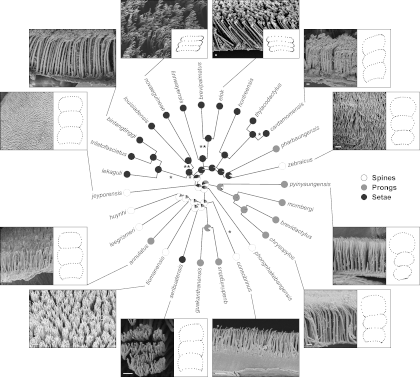
- significantly among both microstructure types and ecotypes. Keywords: ecomorphology; evolution; habitat-specific adaptations; microfibrils; microornamentation; reptiles; toepad evolution; Introduction How a species’ habitat influences its mode of locomotion and how species adapt to effectively traverse and


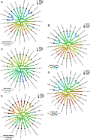
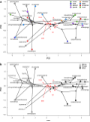
Dry friction of microstructured polymer surfaces inspired by snake skin
Beilstein J. Nanotechnol. 2014, 5, 1091–1103, doi:10.3762/bjnano.5.122
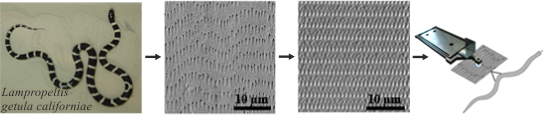
- microstructure investigated in this study was inspired by the anisotropic microornamentation of scales from the ventral body side of the California King Snake (Lampropeltis getula californiae). Frictional properties of snake-inspired microstructured polymer surface (SIMPS) made of epoxy resin were characterised
- , frictional behaviour in respect to stick–slip behaviour is strongly influenced by the dimension of surface microstructures even when no mechanical interlocking occurs. One possible explanation for this phenomenon is that the microornamentation causes a critical stiction length, which leads to a periodical
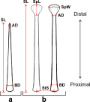
- by the elevated tips (denticulations). The SIMPS microstructure is based on shapes and dimensions of the microornamentation of the biological model, the ventral scales of the snake L. g. californiae. For the biological model, it was previously assumed, that the caudal tips of denticulations are


Friction behavior of a microstructured polymer surface inspired by snake skin
Beilstein J. Nanotechnol. 2014, 5, 83–97, doi:10.3762/bjnano.5.8
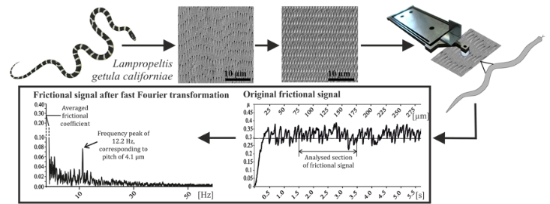
- the skin scales, so called microornamentation [1][4][5][6][7][8][9][10][11][12][13], and specific adaptations of the material architecture of the skin, like highly ordered embedded fibers [14], which can potentially influence material properties [15][16], might contribute to the frictional anisotropy
- . The role of microornamentation in frictional properties of the snake skin was extensively examined [2][3][9][11][12]. We previously showed a strong influence of the stiffness of the underlying layers of the epidermis on the anisotropic frictional properties of the skin [17]. This finding demonstrates
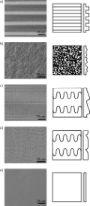
- denticulations), which are periodically interrupted by the elevated tips. This microstructure possesses similar shapes and dimensions of those of the biological model, the microornamentation of the ventral scales of L. g. californiae. Detailed information on the investigated surfaces is listed in Table 1. Stick




Other Beilstein-Institut Open Science Activities



