Search results
Search for "microspheres" in Full Text gives 68 result(s) in Beilstein Journal of Nanotechnology.
Current status of using adsorbent nanomaterials for removing microplastics from water supply systems: a mini review
Beilstein J. Nanotechnol. 2025, 16, 1837–1850, doi:10.3762/bjnano.16.127
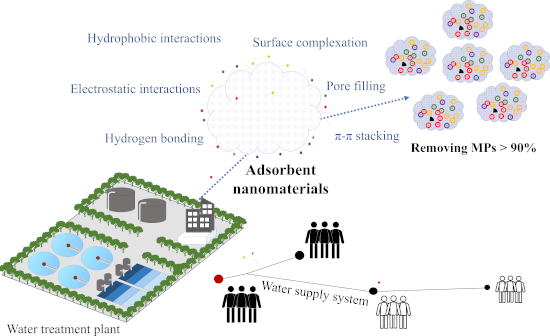
- primary mechanisms were hydrophobic and π–π interactions between PS microspheres and the Ni/rGO nanocomposite [54]. In addition, a mass loss of 35.66–50.46% of MP particles from aqueous polyethylene suspensions after 480 min was observed when using GO, GO-Cu2O, GO-MnO2, and GO-TiO2 for treatment [55


Nanotechnology-based approaches for the removal of microplastics from wastewater: a comprehensive review
Beilstein J. Nanotechnol. 2025, 16, 1607–1632, doi:10.3762/bjnano.16.114
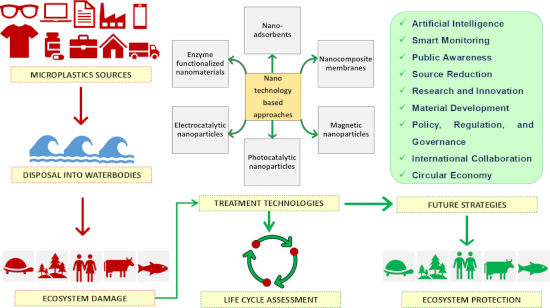
- . The resulting h-Ti3C2Tx nanosheets possess a porous, flat structure with 25 nm diameter holes ideal for MP separation. When tested with fluorescent polystyrene (FP) microspheres of varying sizes as MPs models, the membranes demonstrated exceptional removal efficiency of up to 99.3%. Additionally, a


Synthesis and antibacterial properties of nanosilver-modified cellulose triacetate membranes for seawater desalination
Beilstein J. Nanotechnol. 2025, 16, 1380–1391, doi:10.3762/bjnano.16.100
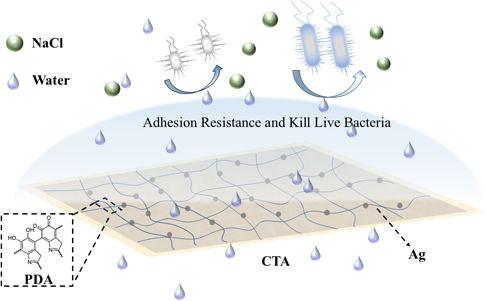
- the PDA layer (Figure 4e). These Ag nanoparticles, typically appearing as discrete entities, are interspersed among the PDA microspheres, contributing to the membrane’s antimicrobial properties essential for mitigating biofouling in desalination applications. The cross-sectional SEM images, along with
- reveal delamination, partial loss of PDA microspheres, and Ag nanoparticles, as well as the presence NaCl within the coating (Figure 4g). These observations are attributed to the prolonged exposure to saline water, which causes chemical degradation of the PDA layer. Also, the high ionic strength and


Better together: biomimetic nanomedicines for high performance tumor therapy
Beilstein J. Nanotechnol. 2025, 16, 1246–1276, doi:10.3762/bjnano.16.92
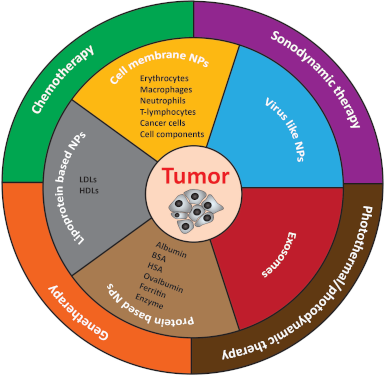
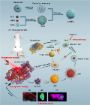
- a certain type of enzyme. The capsosomes can efficiently enter the cell, and the enzymes exert their specific activities intracellularly [101]. More recently, the microfluidic spray technique was used to load alcohol oxidase and catalase into hollow hydrogel microspheres. The microfluidic spray






Hydrogels and nanogels: effectiveness in dermal applications
Beilstein J. Nanotechnol. 2025, 16, 1216–1233, doi:10.3762/bjnano.16.90
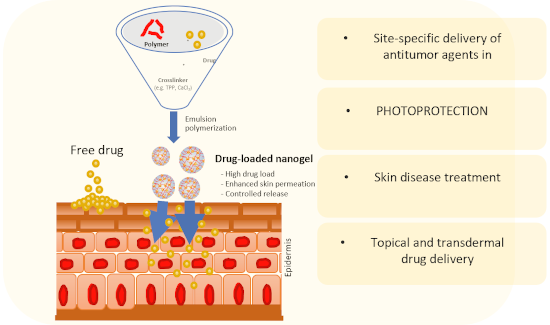
- polymer mixtures generate thermo-sensitive hydrogels, such as chitosan/β-glycerophosphate/collagen-based hydrogels [129]. In another example, hydrogels comprised of gelatin microspheres, glutaraldehyde – as a cross-linker, added to Pluronic F127 and F68 can vary from sol to gel phases by changing both


Shape, membrane morphology, and morphodynamic response of metabolically active human mitochondria revealed by scanning ion conductance microscopy
Beilstein J. Nanotechnol. 2025, 16, 951–967, doi:10.3762/bjnano.16.73
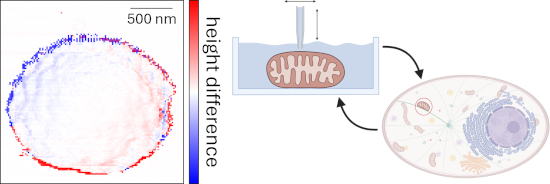
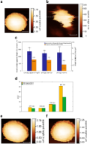
- Supporting Information File 1, Section S4). To determine whether the height intermittency is specific to SICM topographies of metabolically active and fixed mitochondria, we compare these results with SICM topographies of polystyrene microspheres (non-living objects with nearly the same geometry). Given the
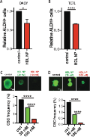
- wide variation in mitochondrial diameters (0.2–2.6 μm), we use two model objects for comparison, namely, microspheres with diameters of 1 and 3 μm. For 3 μm microspheres (Figure 7c,e), the same behaviour is observed qualitatively. However, 1 μm microspheres (Figure 7d,f) do not exhibit the
- intermittency effect. Because of the immobilisation protocol using acetone vapour, the 1 μm microspheres “melted” and adopted a more cell-like shape. Discussion SICM topographies and mitochondrial characteristics The SICM topographies reflect the well-documented diversity of mitochondrial shapes and represent a



Synthetic-polymer-assisted antisense oligonucleotide delivery: targeted approaches for precision disease treatment
Beilstein J. Nanotechnol. 2025, 16, 435–463, doi:10.3762/bjnano.16.34


Development of a mucoadhesive drug delivery system and its interaction with gastric cells
Beilstein J. Nanotechnol. 2025, 16, 371–384, doi:10.3762/bjnano.16.28

- adhere to the mucosa. The size of the microspheres, from which the drug was released over a period of 24 h, was in the range of 800–900 µm [26]. Although particulate systems with larger sizes could be advantageous in terms of higher encapsulation efficiency and slower release, they would have a reduced


Emerging strategies in the sustainable removal of antibiotics using semiconductor-based photocatalysts
Beilstein J. Nanotechnol. 2025, 16, 264–285, doi:10.3762/bjnano.16.21
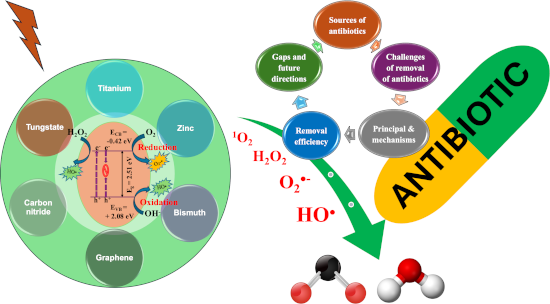
- bandgaps of the different compounds are as follows: 3.22 eV (BiOF), 2.80 eV (BiOCl), 2.36 eV (BiOBr), and 1.75 eV (BiOI) [85]. Although BiOCl has a larger bandgap, it is considered a more promising photocatalyst than BiOI and BiOBr [90]. For example, BiOCl microspheres were able to remove 91.90% of TC



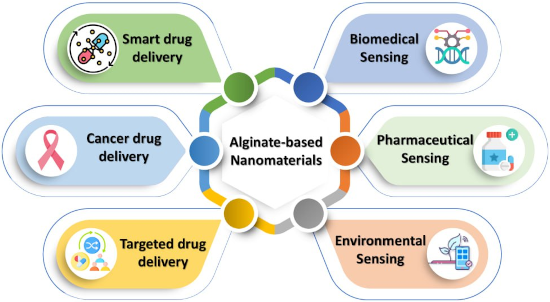
Unveiling the potential of alginate-based nanomaterials in sensing technology and smart delivery applications
Beilstein J. Nanotechnol. 2024, 15, 1077–1104, doi:10.3762/bjnano.15.88


Recognition mechanisms of hemoglobin particles by monocytes – CD163 may just be one
Beilstein J. Nanotechnol. 2023, 14, 1028–1040, doi:10.3762/bjnano.14.85
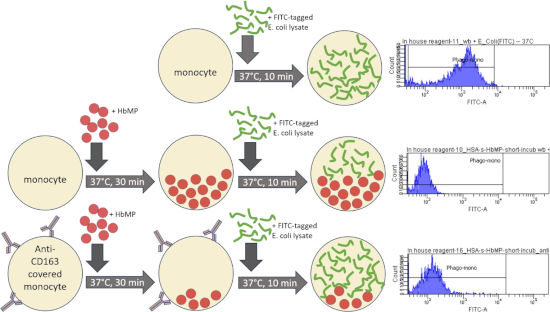
- ) with a diameter between 0.4 and 2.1 µm demonstrate this relationship, as Figure 6 and Figure 7 illustrate (incubation of heparin blood with 2 × 10⁸ MP/mL) [41]. Champion et al. researched this relationship in a model as well [42]. Test particles (polystyrene microspheres) with diameters in the range of




A graphene quantum dots–glassy carbon electrode-based electrochemical sensor for monitoring malathion
Beilstein J. Nanotechnol. 2023, 14, 701–710, doi:10.3762/bjnano.14.56
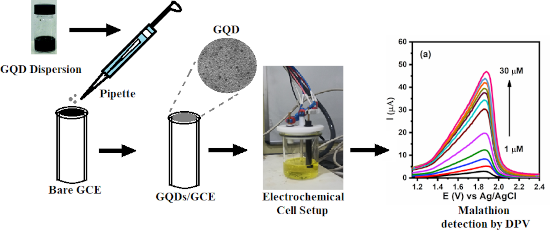
- dots and 3D bismuth oxyiodine hybrid hollow microspheres for the detection of chlopyrifos [26]. In 2020, Jiménez-López et al. worked on a fluorescent probe containing graphene quantum dots and silver nanoparticles for glyphosate detection [27]. In 2021, Xu Dan et al. developed a histidine


Solvent-induced assembly of mono- and divalent silica nanoparticles
Beilstein J. Nanotechnol. 2023, 14, 52–60, doi:10.3762/bjnano.14.6
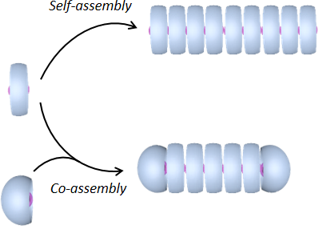
- experimentally utilized to drive particles with a spherical cavity and complementary microspheres to form colloidal clusters [18]. Colloidal chains have been obtained by the assembly of Janus particles with one face selectively functionalized with DNA containing a self-complementary sticky end [19], particles


Recent trends in Bi-based nanomaterials: challenges, fabrication, enhancement techniques, and environmental applications
Beilstein J. Nanotechnol. 2022, 13, 1316–1336, doi:10.3762/bjnano.13.109
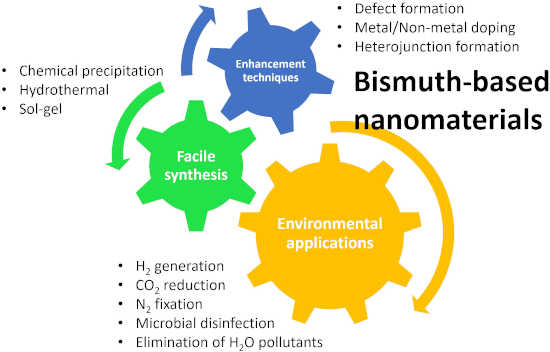
- , Huang et al. reported that BiOI microspheres served as self-sacrificing templates for in situ phase transformation and formation of phase junctions [81]. Different bismuth oxyiodides were formed as a result of this. Hierarchical BiOI, Bi4O5I2, Bi4O5I2–Bi5O7I phase-junction, and Bi5O7I may be synthesized
- ] demonstrated the synthesis of a new direct Z-scheme photocatalyst made of ultrathin Bi2O3 and Bi2MoO6 microspheres. For the effective production of Bi2O3/Bi2MoO6 nanocomposites, researchers adopted a simple in situ alkali treatment of Bi2MoO6 followed by calcination. As a substrate for the production of Bi2O3
- sheets, Bi2MoO6 microspheres were used. The 2D morphological properties of the Bi2O3 sheets resulted in enhanced charge carrier transfer. The relative mass ratio of Bi2MoO6 and Bi2O3 may be fine-tuned by adjusting the alkali dose (i.e., NaOH or KOH). Using phenol degradation and hydrogen generation as a




Studies of probe tip materials by atomic force microscopy: a review
Beilstein J. Nanotechnol. 2022, 13, 1256–1267, doi:10.3762/bjnano.13.104
- coupling another specific H1N1 oligonucleotide fragment using magnetic microspheres as solid-phase support; both were bound to the target DNA (exact match DNA) to form a colorless nucleic acid probe. The two are combined with the target DNA (exact match DNA) to form a colorless capture probe-target DNA
Biomimetic chitosan with biocomposite nanomaterials for bone tissue repair and regeneration
Beilstein J. Nanotechnol. 2022, 13, 1051–1067, doi:10.3762/bjnano.13.92
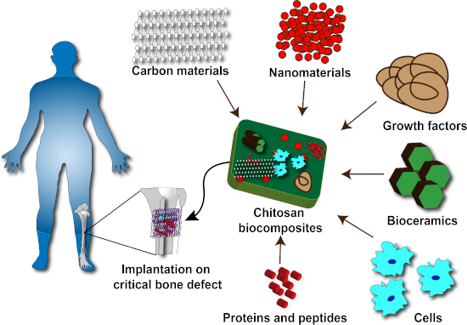
- silsesquioxane, chitosan–nanoSiO2–chondroitin sulphate, chitosan–nanoSiO2–gelatin, and chitosan–bioglass/hydroxyapatite/halloysite nanotubes have remarkable osteogenic characteristics [82][83][84][123]. Chitosan and silica-based microspheres were produced by using sol–gel followed by emulsification and cross
- -linking methods. Next, vancomycin hydrochloride was encapsulated into the microspheres. In vitro biomineralisation tests show apatite formation on the surface of the microspheres. In addition, a sustainable drug release profile was detected. This finding reveals that the produced microspheres have
Micro- and nanotechnology in biomedical engineering for cartilage tissue regeneration in osteoarthritis
Beilstein J. Nanotechnol. 2022, 13, 363–389, doi:10.3762/bjnano.13.31
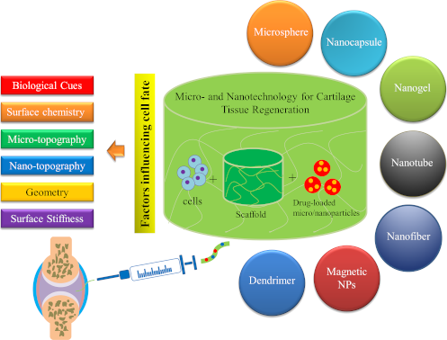
- /nanoscale topographical cues, microspheres, nanoparticles, nanofibers, and nanotubes. Keywords: biological cues; cartilage regeneration; micro/nanotopographical cues; nanotechnology; osteoarthritis; regenerative medicine; Review 1 Introduction Osteoarthritis (OA) is a widespread degenerative disease of
- . Afterward, recent advances in osteochondral tissue engineering resulting from the application of microspheres, nanoparticles, nanofibers, and nanotubes in the structure of biomaterials will be covered (Figure 1). Finally, the role of various cues such as biological cues, microscale/nanoscale topographical
- . Micro- and nanostructures including microspheres, NPs, nanofibers, nanotubes, and nanofilms have been designed to construct new scaffolds and or incorporated into the hydrogel network to provide a controlled release or enhanced mechanical characteristics. Many of these substructures are widely used for


Engineered titania nanomaterials in advanced clinical applications
Beilstein J. Nanotechnol. 2022, 13, 201–218, doi:10.3762/bjnano.13.15
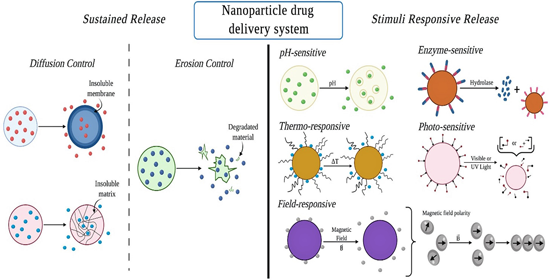
- their use as a matrix for immobilizing enzymes for maintaining their biocatalytic activity for a longer duration [16]. Chen et al. describe the use of TiO2 as a molecular sieve by designing flower-like microspheres consisting of a magnetic Fe3O4 core and a hierarchical mesoporous and macroporous TiO2


A comprehensive review on electrospun nanohybrid membranes for wastewater treatment
Beilstein J. Nanotechnol. 2022, 13, 137–159, doi:10.3762/bjnano.13.10
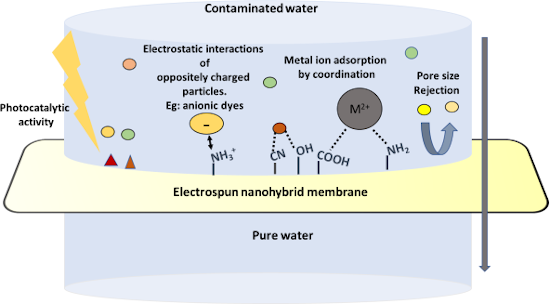
- surface area of the electrospun membranes offers more adsorption sites [54]. Wang et al. developed a highly porous PAN membrane, which was widely tuned by layer-by-layer assembly, which filtered PS microspheres at a lower pressure of 0.6 psi while the pressure required using conventional MF is 10 psi [55




Tin dioxide nanomaterial-based photocatalysts for nitrogen oxide oxidation: a review
Beilstein J. Nanotechnol. 2022, 13, 96–113, doi:10.3762/bjnano.13.7
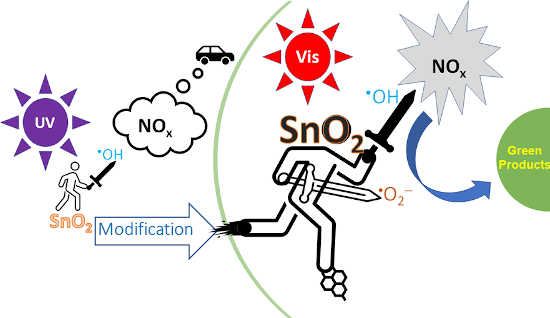
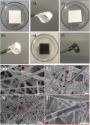
- ] synthesized SnO2 microspheres on a fluorine-doped tin oxide (FTO) substrate and the SEM images (Figure 6) show SnO2 microspheres with an average diameter of 2.0–2.5 μm. By using SnO2 microsphere photocatalysts for the photocatalytic oxidation of NO, Le et al. [67] indicated that 3D hierarchical flower-like
- SnO2 microspheres exhibited a photocatalytic activity towards NO decomposition comparable to that of commercial P25 TiO2. Specifically, SnO2 microspheres can degrade 57.2% NO (1 ppm of initial concentration) under solar light. However, the photocatalytic mechanism of NO degradation has not been
- investigated [67]. Zhang et al. [68] found that the crystalline/amorphous stacking structure of SnO2 microspheres can moderate surface absorption competition between oxygen gas and NO gas, contributing to the generation of reactive oxygen species (ROS) to oxidize NO to NO3− ions. Huy et al. [69] synthesized


Self-assembly of amino acids toward functional biomaterials
Beilstein J. Nanotechnol. 2021, 12, 1140–1150, doi:10.3762/bjnano.12.85
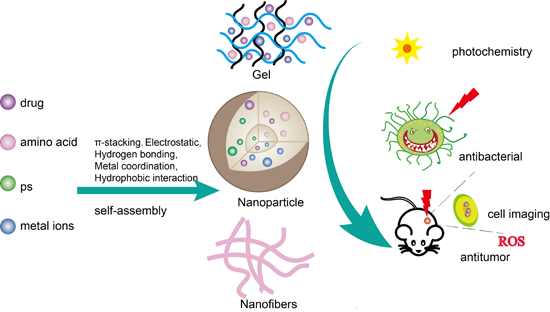
- alcohol dehydrogenase may be incorporated into Cys microspheres, resulting in hybrid microspheres with photocatalytic and biocatalytic activities. In addition, Cys/Zn microspheres were modified with CO32−-doped ZnS nanocrystals by a hydrothermal treatment, and then glutamic acid dehydrogenase was
- that the nanofibers were assembled into sea-urchin-like microspheres. Fmoc-ʟ-Lys nanofibers act as templates to regulate the self-assembly of pigments. Sea-urchin-like structures facilitate light collection due to enhanced absorption cross sections and exciton energy transfer. In addition, Liu et al

Progress and innovation of nanostructured sulfur cathodes and metal-free anodes for room-temperature Na–S batteries
Beilstein J. Nanotechnol. 2021, 12, 995–1020, doi:10.3762/bjnano.12.75
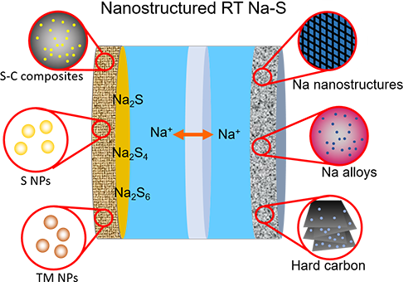
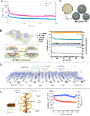
- sulfur host material [24][31]. As an example, Zhang et al. [24] designed a sulfur host based on porous double-shell microspheres, which consist of hollow carbon nanobeads inside a microsized carbon shell. In this structure, sulfur is infused in the nanobeads inside the microspheres and neither sulfur nor
- cathode damage due to the volume change of sulfur. Therefore, an improvement in charge capacity (300 vs 50 mAh·g−1) and cycling stability is achieved when comparing the double- with single-shell carbon microspheres as shown in Figure 3B. In addition, modified porous carbon structures with nitrogen or
- , nanocarbon materials such as graphene and carbon aerogels, carbon microspheres, and mats, felts and papers based on carbon nanotubes and carbon fibers can also be efficiently soaked with Na and additionally provide bending and rolling flexibility, making them very attractive host materials [19][67][68][69




Comprehensive review on ultrasound-responsive theranostic nanomaterials: mechanisms, structures and medical applications
Beilstein J. Nanotechnol. 2021, 12, 808–862, doi:10.3762/bjnano.12.64


Recent progress in actuation technologies of micro/nanorobots
Beilstein J. Nanotechnol. 2021, 12, 756–765, doi:10.3762/bjnano.12.59
- which can effectively conform to the outer contours of any target with autonomous deformation in a liquid environment for grasping and releasing. The robot has multiple actuation modes, for example, through trapping of magnetic microspheres or through encapsulating magnetic nanomaterials in the robot


A stretchable triboelectric nanogenerator made of silver-coated glass microspheres for human motion energy harvesting and self-powered sensing applications
Beilstein J. Nanotechnol. 2021, 12, 402–412, doi:10.3762/bjnano.12.32
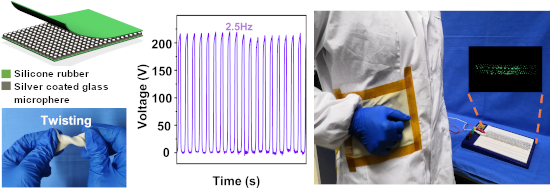
- -coated glass microspheres (S-TENG). The S-TENG exhibits a remarkable performance in harvesting human motion energy and as flexible tactile sensor. By optimizing the device parameters and operating conditions, the maximum open-circuit voltage and short-circuit current of the S-TENG can reach up to 370 V
- microspheres (SCGMs) and silicone rubber as stretchable conductive thread (SCT) and a silicone rubber-coated SCT as the other triboelectric thread [15]. This TENG can convert the biomechanical energy from human joint motions. The elastomer matrix guarantees that the TENG can be applied in stretchable
- -circuit current of the S-TENG (a, b) as functions of the contact area, (c, d) as function of the ratio between silicone rubber and silver-coated glass microspheres, and (e, f) as function of the applied force. (a) Voltage of different capacitors (2.2, 4.7, 10, and 33 μF) as function of the charging time