


Search results
Search for "mucoadhesion" in Full Text gives 6 result(s) in Beilstein Journal of Nanotechnology.
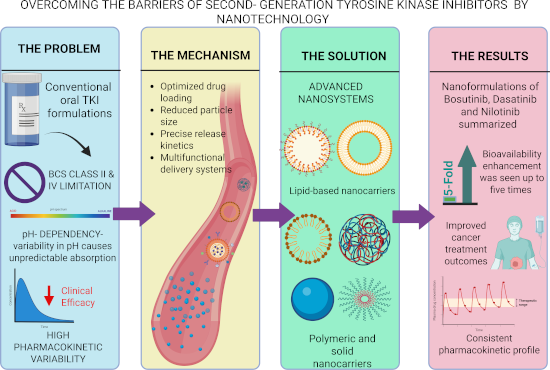
Breaking barriers: nanosystems to overcome solubility and permeability challenges of second-generation tyrosine kinase inhibitors
Beilstein J. Nanotechnol. 2026, 17, 1063–1086, doi:10.3762/bjnano.17.73


Exploring the potential of polymers: advancements in oral nanocarrier technology
Beilstein J. Nanotechnol. 2025, 16, 1751–1793, doi:10.3762/bjnano.16.122
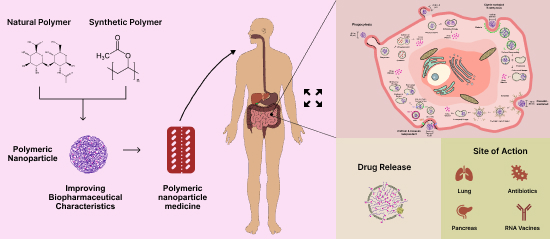
- in the application of polymers as oral nanocarriers, emphasizing key natural and synthetic polymers that enhance stability, bioavailability, and release. The physicochemical properties, biodegradability, and chemical modifications of these polymers, which promote mucoadhesion and epithelial
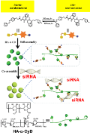
- Figure 1. To address this challenge, and given that cysteine promotes both mucoadhesion and the opening of tight junctions, Han et al. [117] developed a trimethyl chitosan–cysteine conjugate (GTC) to formulate PNs for the co-delivery of antitumor shRNA and siRNA via oral administration. These therapeutic


Development of a mucoadhesive drug delivery system and its interaction with gastric cells
Beilstein J. Nanotechnol. 2025, 16, 371–384, doi:10.3762/bjnano.16.28

- leakage of encapsulated drugs. These drawbacks make alginate challenging to be used in drug delivery applications [11][12]. Therefore, it is generally used together with other polymers, such as chitosan [13] or carboxymethyl cellulose [14], or it is modified with PEG-maleimide [15] to acquire mucoadhesion
- polymer enables drug release by diffusion [21]. Eudragit RS30D is the 30% aqueous dispersion of Eudragit RS100, which is promptly used as coating material [22] or within formulations of drug delivery systems with sustained release characteristics [23]. Although the mucoadhesion of this polymer is known
- alginate was blended with a plant-based polysaccharide [12] or used together with carboxymethylcellulose [25] to improve the mucoadhesion of the designs. To our knowledge, there are not many studies that use the properties of alginate and Eudragit RS100 polymer in a mucoadhesive gastroretentive delivery


Nanotechnological approaches for efficient N2B delivery: from small-molecule drugs to biopharmaceuticals
Beilstein J. Nanotechnol. 2024, 15, 1400–1414, doi:10.3762/bjnano.15.113
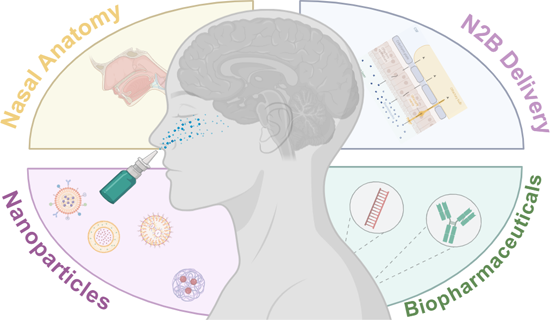
- well-studied tight junction opening abilities of chitosan [85]. In another study on the mucoadhesion and permeation properties of materials, a thiolated cellulose was synthesized and used for delivering a model drug, enoxaparin. The authors reported that thiolation increased mucoadhesion by a factor of
- 9.6 in porcine intestinal mucosa, while the apparent permeability was increased 2.2-fold. These results showed that thiolated cellulose could also be a candidate for enhancing mucoadhesion and permeability, and this polymer could also be studied regarding nasal mucosa permeation in the future [86


Cyclodextrins as eminent constituents in nanoarchitectonics for drug delivery systems
Beilstein J. Nanotechnol. 2023, 14, 218–232, doi:10.3762/bjnano.14.21
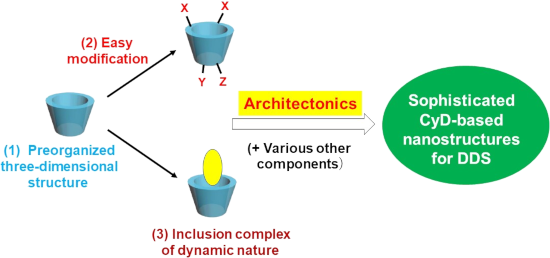
- , insulin was orally delivered [98]. N-Acetyl-ʟ-cysteine enhances the mucoadhesion of the drug to enhance its biological absorption, whereas arginine promotes the intestinal absorption of insulin. The composite was sufficiently water-soluble and applicable to the oral delivery of insulin, which is mostly




Design of a nanostructured mucoadhesive system containing curcumin for buccal application: from physicochemical to biological aspects
Beilstein J. Nanotechnol. 2019, 10, 2304–2328, doi:10.3762/bjnano.10.222
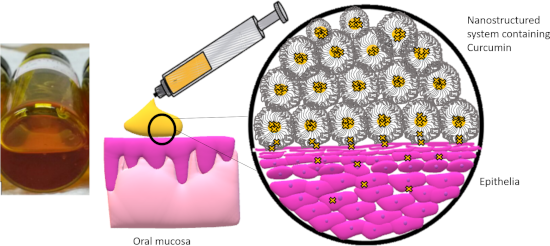
- , The University of Sheffield, Sheffield, UK 10.3762/bjnano.10.222 Abstract Mucoadhesive nanostructured systems comprising poloxamer 407 and Carbopol 974P® have already demonstrated good mucoadhesion, as well as improved mechanical and rheological properties. Curcumin displays excellent biological
- gelation temperature of 36 °C, which ensures increased retention after application in the oral cavity. The mucoadhesion results confirmed the previous findings with the nanostructured systems showing a residence time of 20 min in porcine oral mucosa under flow system conditions. Curcumin was released after
- selectivity targeting cancer cells. Keywords: curcumin; mucoadhesion; oral squamous cell carcinoma; permeation; poloxamer 407; Introduction The development of nanostructured systems containing poloxamer 407 (P407) and Carbopol 974P® (C974P) have previously been shown to have rheological and mechanical


Other Beilstein-Institut Open Science Activities



