


Search results
Search for "nanoadsorbents" in Full Text gives 2 result(s) in Beilstein Journal of Nanotechnology.
Nanotechnology-based approaches for the removal of microplastics from wastewater: a comprehensive review
Beilstein J. Nanotechnol. 2025, 16, 1607–1632, doi:10.3762/bjnano.16.114
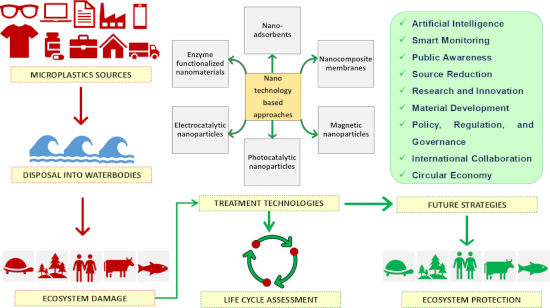
- effectively removing MPs, especially those in the nanosize range. This review presents a detail analysis of the sources, pathways, detection methods, and health impact of MPs, while emphasizing the emerging role of nanotechnology in their remediation. Nanomaterials, including nanoadsorbents, photocatalysts
- ; nanotechnology; nanoadsorbents; nano robots; photocatalysis; Introduction Plastic pollution has become a crucial environmental concern recently. It was reported that from 1950 to 2015, global plastic production increased from 5 to over 300 megatons, with approximately 60 to 99 megatons turning into waste. It is
- offer a promising approach [55]. Nanoadsorbents possess a higher specific surface area and a large number of active sites, contributing to their rapid processing, enhanced selectivity, and extended adsorption–regeneration cycles [80]. In addition, nanomaterials also exhibit excellent reactivity
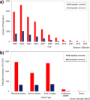


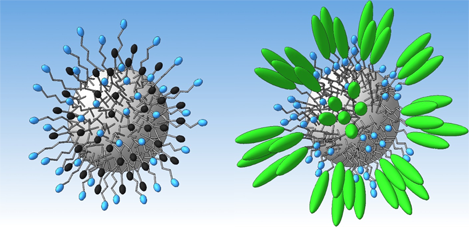
Tailoring bifunctional hybrid organic–inorganic nanoadsorbents by the choice of functional layer composition probed by adsorption of Cu2+ ions
Beilstein J. Nanotechnol. 2017, 8, 334–347, doi:10.3762/bjnano.8.36


Other Beilstein-Institut Open Science Activities



