


Search results
Search for "nanoprecipitation" in Full Text gives 23 result(s) in Beilstein Journal of Nanotechnology.
Development of Protium heptaphyllum essential oil-loaded nanocapsules: experimental design and biological activity
Beilstein J. Nanotechnol. 2026, 17, 974–990, doi:10.3762/bjnano.17.67
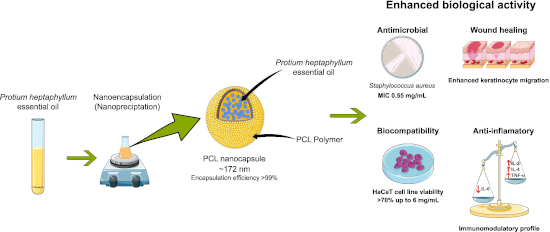
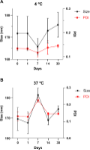
- Abstract Poly(ε-caprolactone) nanocapsules containing breu branco (Protium heptaphyllum) essential oil were successfully prepared by nanoprecipitation and optimized using a Box–Behnken design. Spherical nanosystems were obtained, with a mean particle size of 172.10 ± 0.90 nm, a polydispersity index of 0.14
- nanoencapsulation not only stabilizes breu branco essential oil but also enhances its antimicrobial, regenerative, and immunomodulatory effects, while fostering the sustainable valorization of Amazonian biodiversity. Keywords: biocompatibility; cytokine modulation; drug delivery systems; nanoprecipitation; wound
- with specific advantages and limitations depending on the desired application [15][16]. Among these, nanoprecipitation (NP) is notable for producing uniform particles through a low-cost, reproducible process based on polymer nucleation in aqueous media [17][18]. Previous work, such as that by Vauthier




Nanocarrier-integrated multilayer films produced by 3D printing for improved skin adhesion and curcumin photostability
Beilstein J. Nanotechnol. 2026, 17, 440–453, doi:10.3762/bjnano.17.30
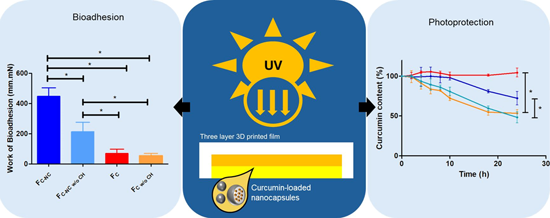
- pressure at 40 °C, a procedure widely employed in the nanoprecipitation-based preparation of polymeric nanocapsules. Considering the high volatility and water miscibility of acetone and its classification as a class-3 solvent (ICH Q3C), residual levels are expected to be minimal after evaporation


Exploring the potential of polymers: advancements in oral nanocarrier technology
Beilstein J. Nanotechnol. 2025, 16, 1751–1793, doi:10.3762/bjnano.16.122
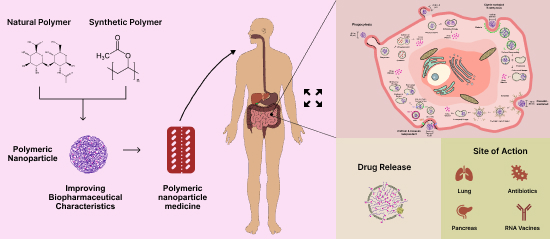
- ][42]. These strategies involve dissolving or dispersing pre-existing polymers in appropriate solvents, followed by NP formation through approaches such as nanoprecipitation, solvent diffusion-emulsification, solvent evaporation, ionic gelation, and dialysis. Each technique is intrinsically linked to
- specific polymer classes, depending on their physicochemical properties and solubility behavior. Nanoprecipitation is frequently employed for synthetic polymers such as PLGA and PCL, which are soluble in organic solvents and undergo controlled precipitation in aqueous media, enabling efficient


Prospects of nanotechnology and natural products for cancer and immunotherapy
Beilstein J. Nanotechnol. 2025, 16, 1644–1667, doi:10.3762/bjnano.16.116
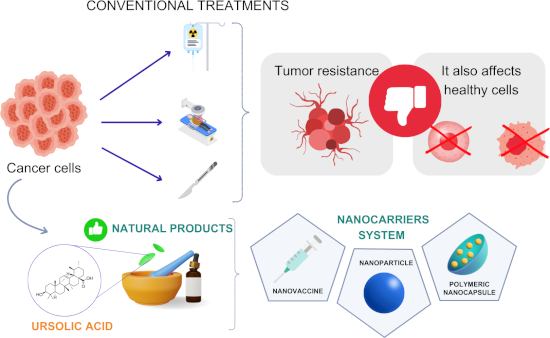
- nanoparticles can be synthesized using methods such as direct polymerization of monomers, nanoprecipitation, solvent evaporation emulsification, dispersion of preformed polymers, or salting-out [27]. For cancer and immunotherapy, polymeric nanoparticles offer advantages such as biocompatibility, stimulation of
- methods for developing PNCs involve appropriate materials and various production techniques, including emulsion polymerization, layer-by-layer self-assembly, interface polymerization, nanoprecipitation, spray-drying, and supercritical fluids [179][180]. This technology offers the ability to encapsulate


Venom-loaded cationic-functionalized poly(lactic acid) nanoparticles for serum production against Tityus serrulatus scorpion
Beilstein J. Nanotechnol. 2025, 16, 1633–1643, doi:10.3762/bjnano.16.115
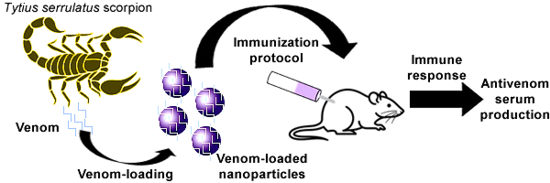
- -loaded PLA nanoparticles were fabricated by nanoprecipitation methods. In this technique, the PLA nanoparticles (NPs) were produced by low-energy solvent displacement and functionalized with polyethylenimine (cationic polymer) for the T. serrulatus protein adsorption. The NPs showed a mean diameter of
- were successfully obtained using parameters selected for the nanoprecipitation method. This low-energy technique allowed the spontaneous self-assembling of PLA nanoparticles, which were functionalized with polyethyleneimine (PEI) to enable the adsorption of venom proteins. Experimental results
- colloidal stability observed in the formulations with low zeta potential values can be attributed to steric stabilization provided by poly(vinyl alcohol) (PVA) and an additional electrostatic repulsion introduced by surface-bound PEI. This behavior is consistent with previous reports on nanoprecipitation


Enhancing the therapeutical potential of metalloantibiotics using nano-based delivery systems
Beilstein J. Nanotechnol. 2025, 16, 1350–1366, doi:10.3762/bjnano.16.98
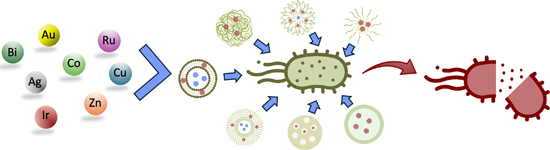
- (NPs) are highly versatile drug delivery systems that can be synthesized from natural or synthetic materials, providing a broad range of possible structures and characteristics. These NPs are typically fabricated through techniques such as emulsification, nanoprecipitation, or microfluidics, and can
- example, Gasser and co-workers disclosed the encapsulation of the Ru(II) polypyridyl complexes 18 (Figure 5) in nanoconjugates of poly(lactic acid) (PLA) with varying molecular weights [127]. Nanoprecipitation produced narrowly dispersed nanoparticles with high ruthenium loadings (up to 53%), as confirmed


Polymer lipid hybrid nanoparticles for phytochemical delivery: challenges, progress, and future prospects
Beilstein J. Nanotechnol. 2024, 15, 1473–1497, doi:10.3762/bjnano.15.118
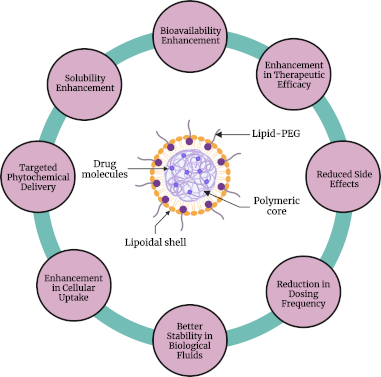
- modification of PLHNPs begins with the preparation of the nanoparticles themselves. PLHNPs are typically synthesized using techniques such as solvent evaporation, nanoprecipitation, double emulsion, or solvent injection, resulting in the formation of nanoparticles with a lipid–polymer hybrid structure [60


Nanotechnological approaches for efficient N2B delivery: from small-molecule drugs to biopharmaceuticals
Beilstein J. Nanotechnol. 2024, 15, 1400–1414, doi:10.3762/bjnano.15.113
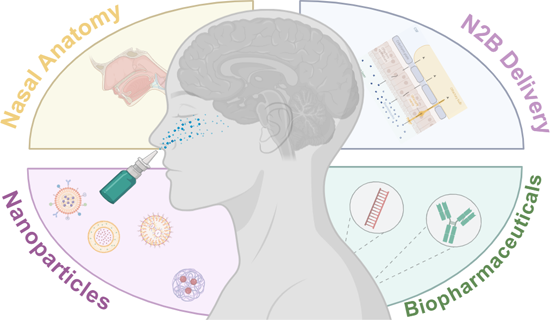
- al. reported the encapsulation of ropinirole hydrochloride (RH), an anti-Parkinson drug, into chitosan-coated PLGA NPs by the nanoprecipitation method to enhance drug delivery through the nasal mucosa. The researchers assessed the mucoadhesive properties by observing the ability of the NPs to adsorb


Unveiling the potential of alginate-based nanomaterials in sensing technology and smart delivery applications
Beilstein J. Nanotechnol. 2024, 15, 1077–1104, doi:10.3762/bjnano.15.88
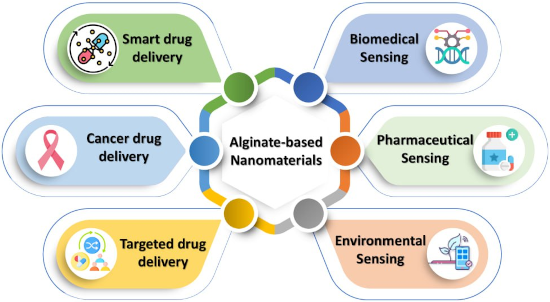
- evaporation, and nanoprecipitation. Advances in alginate-based nanoparticle design have resulted in increased drug encapsulation efficiency, allowing for larger drug payloads within the nanoparticles. Biopolymeric nanoparticles have become the most commonly used nanoparticle DDSs in recent years. The


Therapeutic effect of F127-folate@PLGA/CHL/IR780 nanoparticles on folate receptor-expressing cancer cells
Beilstein J. Nanotechnol. 2024, 15, 954–964, doi:10.3762/bjnano.15.78
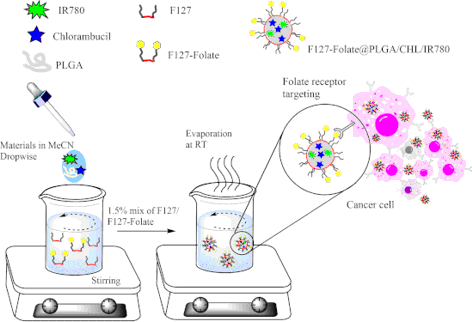
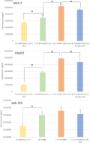
- nanoprecipitation technique, resulting in small size, high homogeneity, and negative surface charge. Importantly, the folate-targeted nanoparticles demonstrated enhanced uptake and cytotoxicity in folate receptor-positive cancer cell lines (MCF-7 and HepG-2) compared to folate receptor-negative cells (HEK 293
- emulsion, or nanoprecipitation [1][4], in which copolymers are dissolved in an organic solvent, called the organic phase, and then are put into an immiscible aqueous solution, called the water phase, to form the nanoparticles. Various surfactants, including poly(vinyl alcohol) (PVA), sodium cholate, or
- [1][2][3][4][5]. In the study, we employed two methods, namely, single emulsion–evaporation and nanoprecipitation–diffusion, using F127 as a surfactant. The nanoparticles formulated by the emulsion–evaporation approach were not uniform and tended to aggregate (data not shown), while the nanoparticles



Nanomedicines against Chagas disease: a critical review
Beilstein J. Nanotechnol. 2024, 15, 333–349, doi:10.3762/bjnano.15.30
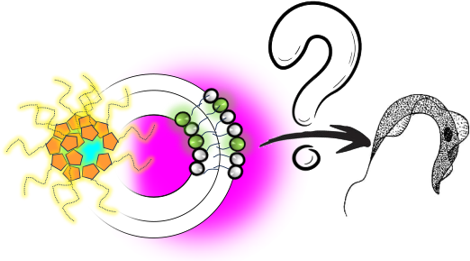
- the cumulative dose of BNZ would reduce its toxicity without losing effectiveness [48], BNZ has recently been formulated as nanocrystals (NCs). The solubility of BNZ formulated as nanocrystals prepared by nanoprecipitation using the non-ionic surfactant poloxamer 188 as a stabilizer (BNZ-NC) was

Nanocarrier systems loaded with IR780, iron oxide nanoparticles and chlorambucil for cancer theragnostics
Beilstein J. Nanotechnol. 2024, 15, 180–189, doi:10.3762/bjnano.15.17
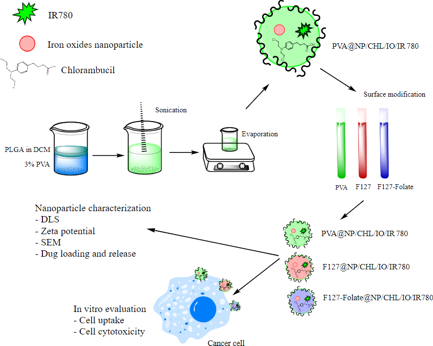
- % using the nanoprecipitation method [29]. The loading of iron oxide nanoparticles The entrapment of iron oxide NPs into PLGA nanoparticles was estimated by measuring the absorbance at 562 nm through the Prussian blue reaction. The entrapment of IO was approx. 1.11% of the total weight of nanoparticles


Nanotechnological approaches in the treatment of schistosomiasis: an overview
Beilstein J. Nanotechnol. 2024, 15, 13–25, doi:10.3762/bjnano.15.2
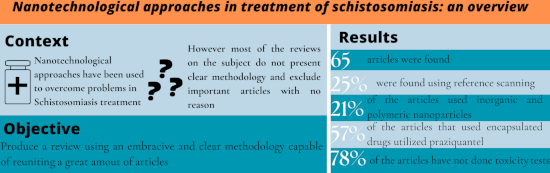
- polymers or the polymerization of monomers [17]. The first one is more commonly describe in the literature, and the techniques usually employed to produce them include nanoprecipitation, solvent evaporation, emulsification/solvent diffusion, and emulsification/reverse salting out [18][19]. The main


Gelatin nanoparticles with tunable mechanical properties: effect of crosslinking time and loading
Beilstein J. Nanotechnol. 2022, 13, 778–787, doi:10.3762/bjnano.13.68
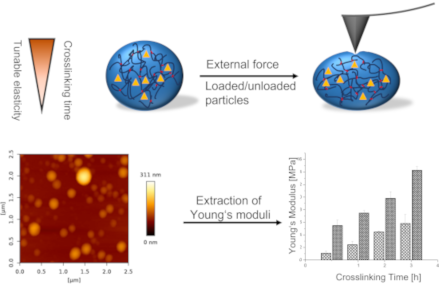
- nanoprecipitation method described in [17]. In brief, 20 mg gelatin was dissolved in 1 mL of deionized water at 50 °C and added to the antisolvent phase, consisting of 2.8% poloxamer 188 dissolved in a mixture of acetone and deionized water in a ratio of 15:1, with an injection rate of 0.25 mL/min using a syringe


Progress and innovation of nanostructured sulfur cathodes and metal-free anodes for room-temperature Na–S batteries
Beilstein J. Nanotechnol. 2021, 12, 995–1020, doi:10.3762/bjnano.12.75
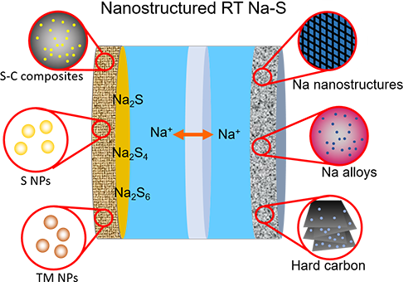
- consisting of choline chloride and Na2S2O3 [61]. This cathode material retained 900 mAh·g−1 over 100 cycles. A modified precipitation method for S NPs is flash nanoprecipitation using a confined impingement jet mixer, in which Na2S2O3, H2O, HCl, and a stabilizing copolymer (polyvinylpyrrolidone, PVP) form




The impact of molecular tumor profiling on the design strategies for targeting myeloid leukemia and EGFR/CD44-positive solid tumors
Beilstein J. Nanotechnol. 2021, 12, 375–401, doi:10.3762/bjnano.12.31
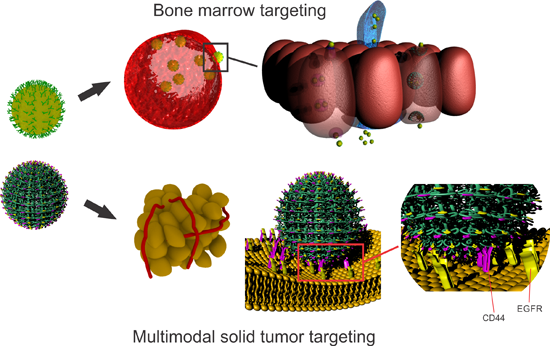
- ponatinib and SAR302503 are hydrophobic drugs and were co-encapsulated inside the hydrophobic core of PEG–PLA micelles by solvent displacement nanoprecipitation. The results demonstrated that the targeted NDDS enabled a high availability of the drugs inside the BM, which is a prerequisite for overcoming the


Microfluidics as tool to prepare size-tunable PLGA nanoparticles with high curcumin encapsulation for efficient mucus penetration
Beilstein J. Nanotechnol. 2019, 10, 2280–2293, doi:10.3762/bjnano.10.220
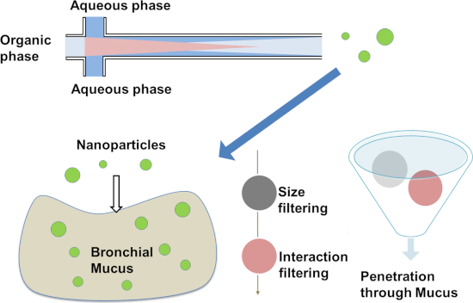
- , relying on PLGA's biodegradability and the fact that it is FDA approved for some products [26][27]. Many different methods have been established to prepare PLGA NPs, such as double emulsion and nanoprecipitation [28][29]. Among many other techniques, nanoprecipitation was adopted very quickly to prepare
- of sub-micrometer NPs in a conventional “bench-top” nanoprecipitation method still faces several critical challenges, such as the lack of reproducibility, which restricts it from being widely adopted in the pharmaceutical industry [32][33]. This issue is mainly attributed to the poor control of the
- PLGA NPs using the nanoprecipitation method. This system offers stable conditions to produce monodisperse particles of small size. At the same time, it offers the possibility to vary some additional factors during preparation, such as channel diameter and channel length [37]. For the successful


Incorporation of doxorubicin in different polymer nanoparticles and their anticancer activity
Beilstein J. Nanotechnol. 2019, 10, 2062–2072, doi:10.3762/bjnano.10.201
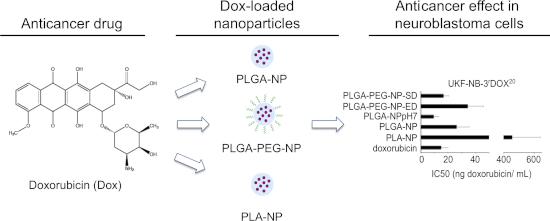
- , nanoparticles produced by nanoprecipitation, micelles based on multi-arm star-shaped PLGA–PEG block copolymers, or nanopolymersomes [14][15][16][17][18]. In addition, PLGA nanoparticles prepared at pH 7 displayed a more controlled and sustained doxorubicin release than PLGA nanoparticles prepared without pH
- such as nanoparticles or micelles with doxorubicin covalently bound to the polymer, nanoparticles produced by nanoprecipitation, micelles based on multi-arm star-shaped PLGA–PEG block copolymers, or nanopolymersomes [14][15][16][17][18]. Nanoparticle efficacy in cell culture Finally, the effects of
- preparations, which display more sustained drug release, such as nanoparticles or micelles with doxorubicin covalently bound to the polymer, nanoparticles produced by nanoprecipitation, micelles based on multi-arm star-shaped PLGA–PEG block copolymers, or nanopolymersomes [14][15][16][17][18] may overcome such





Atomic-level characterization and cilostazol affinity of poly(lactic acid) nanoparticles conjugated with differentially charged hydrophilic molecules
Beilstein J. Nanotechnol. 2018, 9, 1328–1338, doi:10.3762/bjnano.9.126
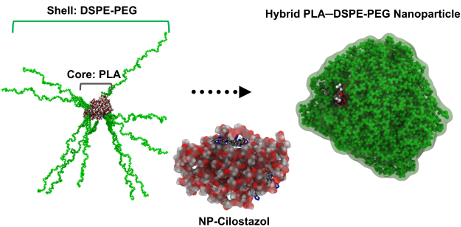
- differentially charged polymeric NPs PEGylated with DSPE–PEG(2000) (1,2-distearoyl-sn-glycero-3-phosphoethanolamine-N-[poly(ethylene glycol)-2000]) carboxylic acid-, methoxy- and amino-terminated NPs prepared by the nanoprecipitation method and to study the NP–drug complexation for a model antiaggregant compound
- -assembling process in which a core–shell structure is observed with PLA in the core and DSPE–PEG in the shell; this model is consistent with the nanoprecipitation synthesis method previously used [34]. Methoxy-terminated NPs showed a slightly larger size compared to charged particles just as it was observed


Development of polycationic amphiphilic cyclodextrin nanoparticles for anticancer drug delivery
Beilstein J. Nanotechnol. 2017, 8, 1457–1468, doi:10.3762/bjnano.8.145
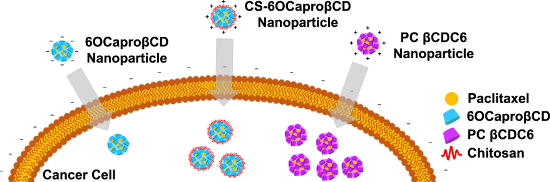
- face whilst the polycationic PC βCDC6 has 7 cationic groups on the primary face and 14 lipophilic groups on the secondary face. Both nanoparticles were prepared by a nanoprecipitation technique which is based on spherical crystallites of the polymer while precipitation occurs at the interface. In
- different organic solvents used in the organic phase on the mean particle size and polydispersity index (PDI) of blank amphiphilic CD nanoparticles is given in Table 1. It is clearly seen that among the various water-miscible solvents (required for the nanoprecipitation technique), ethanol is the optimal
- solvent in this study in terms of mean diameter and PDI for all CD nanoparticle formulations. The nanoprecipitation method is mainly based on interfacial turbulence between a miscible organic phase and an aqueous phase [28]. In nanoprecipitation, the polymer and drug is dissolved in a water-miscible


Cationic PEGylated polycaprolactone nanoparticles carrying post-operation docetaxel for glioma treatment
Beilstein J. Nanotechnol. 2017, 8, 1446–1456, doi:10.3762/bjnano.8.144
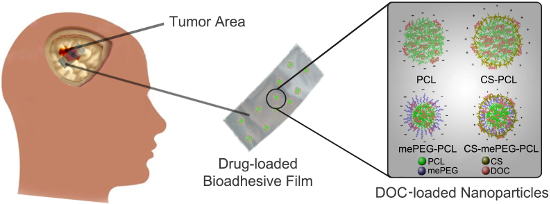
- film formulations as post-surgical local delivery systems for docetaxel (DOC). PCL and its derivative poly(ethylene glycol)-block-poly(ε−caprolactone) methyl ether (mePEG-PCL) were used to prepare these nanoparticles by the nanoprecipitation technique with surface modification by coating with CS. The
- obtain smaller, monodisperse nanoparticles with favorable stability. Three different preparation techniques, emulsion/solvent evaporation, double emulsion and nanoprecipitation, were used to prepare PCL or mePEG-PCL nanoparticles. As seen in Table 1, the mean diameter of PCL nanoparticles was found to be
- -based techniques have larger diameters, especially in the case of the double emulsification technique when compared to nanoprecipitation. These results shows compare well with the literature [52][53][54][55]. According to the data in Table 1, significantly smaller nanoparticles were obtained with mePEG




Nanoscale isoindigo-carriers: self-assembly and tunable properties
Beilstein J. Nanotechnol. 2017, 8, 313–324, doi:10.3762/bjnano.8.34
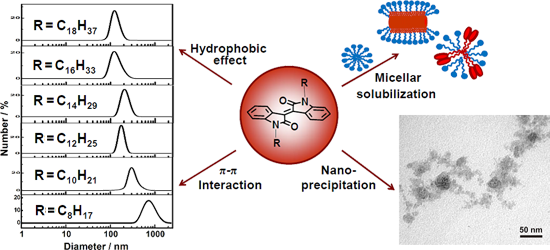
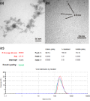
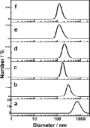
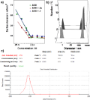
- structures with tunable morphologies for the use in drug delivery. Amphiphilic long-chain dialkylated isoindigos have the ability to form stable solid nanoparticles via a simple nanoprecipitation technique. Their self-assembly was investigated using tensiometry, dynamic light scattering, spectrophotometry
- . Drug nanostructures thus obtained are single-component systems unlike traditional colloidal drug carriers. The design of building blocks allows for the control of physical and chemical properties of self-assembled systems. Self-assembly [41] and nanoprecipitation [42] are the most common approaches to
- work, we focused on the fabrication of nanoscale isoindigo carriers using two approaches: self-assembly and nanoprecipitation. The study aimed to demonstrate the possibility to modulate drug delivery of amphiphilic isoindigo derivatives by tuning hydrophilic–lipophilic balance, π–π stacking interaction




Assembling semiconducting molecules by covalent attachment to a lamellar crystalline polymer substrate
Beilstein J. Nanotechnol. 2016, 7, 784–798, doi:10.3762/bjnano.7.70
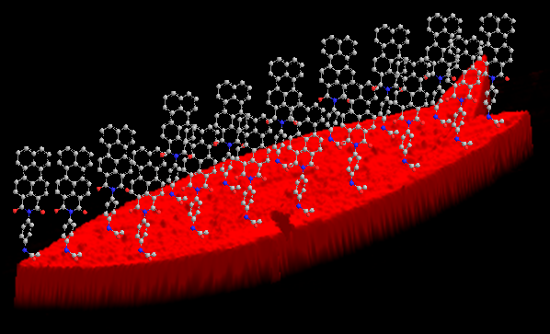
- semiconducting molecules. Results Nanocrystal analysis by AFM The model of an ideal CPE45 nanocrystal Nanocrystal dispersions were prepared via nanoprecipitation with the impact of shear forces generated by ultrasonication. By cryo-transmission electron microscopy (TEM) studies on the dispersions, a thickness of





