


Search results
Search for "numerical computation" in Full Text gives 3 result(s) in Beilstein Journal of Nanotechnology.
Towards a quantitative theory for transmission X-ray microscopy
Beilstein J. Nanotechnol. 2025, 16, 1113–1128, doi:10.3762/bjnano.16.82
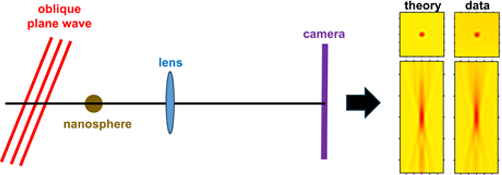
- approximate the zone plate as a lens. This is an excellent and widely used approximation [20][21][29] because it has been shown that zone plates with a sufficient number of zones (>200) yield diffraction-limited Airy disk patterns at each focus fm = f1/m [30][31]. Indeed, we have shown by numerical
- computation that the diffraction pattern produced by the zone plate used in this study (900 zones, with outermost zone width drn = 25 nm) quantitatively agrees with the expected Airy disk pattern for the lens with the equivalent NA [32]. 2.4 pc-Mie model equations Combining the preceding steps (2.1–2.3) for



Modeling a multiple-chain emeraldine gas sensor for NH3 and NO2 detection
Beilstein J. Nanotechnol. 2022, 13, 721–729, doi:10.3762/bjnano.13.64
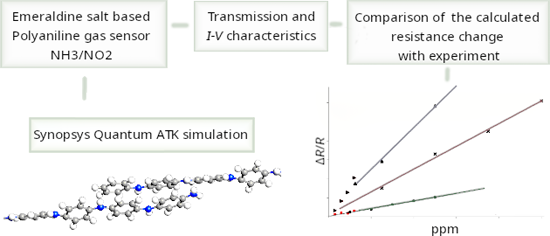
- good properties for NO2 detection. Keywords: ammonia; gas sensor; nitrogen dioxide; numerical computation; polyaniline; Introduction Polyaniline is a conducting polymer consisting of benzene rings connected by nitrogen units, which can be used in a wide spectrum of applications, for example, dyes for


Interplay between pairing and correlations in spin-polarized bound states
Beilstein J. Nanotechnol. 2018, 9, 1370–1380, doi:10.3762/bjnano.9.129
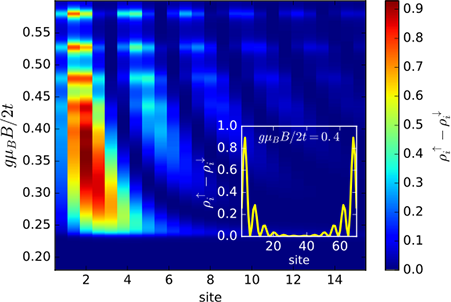
- -of-plane spin–orbit field, respectively, and satisfy . Solving numerically the BdG equations (Equation 6) we can determine the local order parameter χi and occupancy niσ where f(ω) = [1 + exp(ω/kBT)]−1. In what follows, we shall inspect the spin-resolved local density of states For its numerical
- computation we replace the Dirac delta function with the Lorentzian function δ(ω) = ζ/[π(ω2 + ζ2)] with a small broadening ζ = 0.01 t. We have solved the BdG equations, considering a single magnetic impurity in a square lattice, comprising Na × Nb = 41 × 41 sites. We assumed U/t = −3, μ/t = 0, and determined


![[Graphic 23]](/bjnano/content/inline/2190-4286-9-129-i39.svg?max-width=637&scale=1.18182) obtained for |J| < Jc in the absence of spin–orbit coupling (le...
obtained for |J| < Jc in the absence of spin–orbit coupling (le...

![[Graphic 26]](/bjnano/content/inline/2190-4286-9-129-i42.svg?max-width=637&scale=1.18182) as a function of the r...
as a function of the r...


Other Beilstein-Institut Open Science Activities



