


Search results
Search for "ocular drug delivery" in Full Text gives 3 result(s) in Beilstein Journal of Nanotechnology.
Multifunctional anionic nanoemulsion with linseed oil and lecithin: a preliminary approach for dry eye disease
Beilstein J. Nanotechnol. 2025, 16, 1711–1733, doi:10.3762/bjnano.16.120
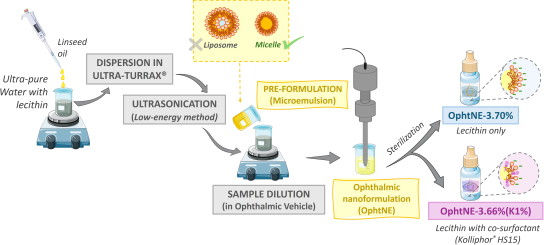
- disease cases [13]. Advances in nanomedicine have provided effective solutions, particularly for treating DED [1]. To address challenges in topical ocular drug delivery and to develop products that mimic tear film composition, ocular nanosystems (ONSs) with diameters ranging from 50 to 300 nm are being


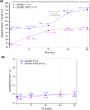

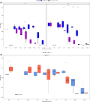
Recent advances in photothermal nanomaterials for ophthalmic applications
Beilstein J. Nanotechnol. 2025, 16, 195–215, doi:10.3762/bjnano.16.16
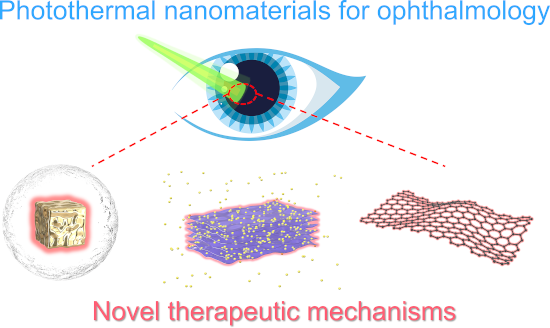
- neuropathy [125][126]. Currently, ocular drug delivery is the prevalent treatment approach; however, it faces challenges due to drug degradation and obstacles in drug diffusion, rendering the therapy less effective [127][128]. Therefore, ocular drug delivery systems capable of controlled and sustained drug
- penetration and deposition [163]. Moreover, common ocular drug delivery methods have disadvantages such as short intraocular retention time, low drug accumulation, and low bioavailability [164]. Because of the transparency of the cornea and crystalline lens, the eye allows various wavelengths of light to


Microneedle-based ocular drug delivery systems – recent advances and challenges
Beilstein J. Nanotechnol. 2022, 13, 1167–1184, doi:10.3762/bjnano.13.98
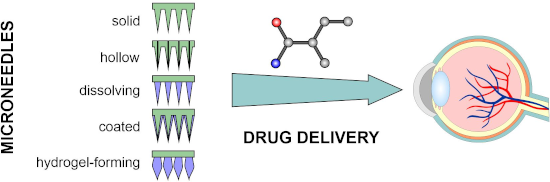
- physiology of the eye are summarized and discussed. Keywords: eye; microneedles; ocular drug delivery; ophthalmic drugs; Review 1 Introduction Since its first appearance in biomedicine, microtechnology is rapidly entering the world of pharmaceutical sciences, including pharmaceutical technology [1][2][3][4
- , research is focused on microneedle systems/patches for ocular drug delivery. Initially, such arrays were considered as painless, non-invasive, and highly efficient alternative for transdermal, intradermal, and percutaneous delivery of drugs [8][101][102]. Recently, it has been found that they can be
- microneedle coating are depicted in Figure 3 [171]. 3 An overview of microneedle systems for ocular drug delivery Considering the construction and the mechanism of action, four types of MNs used to deliver a drug to the eye can be distinguished in the scientific literature: (i) Solid MNs, used mostly for


Other Beilstein-Institut Open Science Activities



