


Search results
Search for "oral drug delivery" in Full Text gives 3 result(s) in Beilstein Journal of Nanotechnology.
Exploring the potential of polymers: advancements in oral nanocarrier technology
Beilstein J. Nanotechnol. 2025, 16, 1751–1793, doi:10.3762/bjnano.16.122
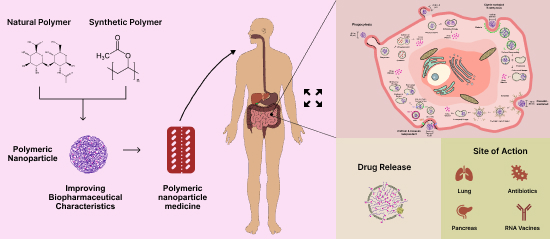
- permeability, critical factors for effective oral drug delivery, are discussed in detail. Furthermore, nanoparticle synthesis methods that enable controlled release profiles, optimized biodistribution, and improved therapeutic efficacy are also explored. Thus, polymers represent a dynamic platform for
- therapeutic payload and intestinal permeability [17]. PNs represent a viable strategy for overcoming GIT barriers in oral drug delivery. The polymeric composition allows for diverse and sophisticated designs, with primary advantages including the ability to control size, shape, and surface charge. Furthermore
- bioavailability enhancement are discussed. The objective of this study is to provide a comprehensive theoretical foundation for employing polymers as nanocarriers in oral drug delivery. 2 Polymeric nanoparticles: a viable option for oral administration The biocompatibility and biodegradability of polymers have


Orally administered docetaxel-loaded chitosan-decorated cationic PLGA nanoparticles for intestinal tumors: formulation, comprehensive in vitro characterization, and release kinetics
Beilstein J. Nanotechnol. 2022, 13, 1393–1407, doi:10.3762/bjnano.13.115
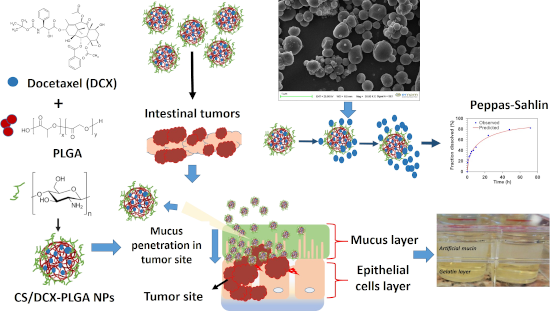
- : chitosan; docetaxel; intestinal tumors; oral drug delivery; PLGA; Introduction Cancer is one of the most common chronic diseases in the world, characterized by the uncontrolled proliferation and spread of cells [1]. To date, effective and safe treatment approaches for cancer treatment have not been fully
- , first order, Higuchi, Korsmeyer–Peppas, Peppas–Sahlin, Hopfenberg, Baker–Lonsdale, or Weibull model). Many studies in this area only evaluate the in vitro release profile, but examining possible models in release kinetics, especially in oral drug delivery systems, is valuable for a clearer


Tight junction between endothelial cells: the interaction between nanoparticles and blood vessels
Beilstein J. Nanotechnol. 2016, 7, 675–684, doi:10.3762/bjnano.7.60
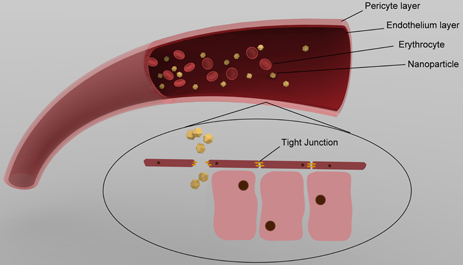
- pulmonary barrier (air–blood barrier) causing interstitial fibrosis [32]. Zinc oxide NPs take part in inflammatory responses in lung epithelial cells [20]. In the research for oral drug delivery, NPs could be absorbed through the intestine, and bioadhesive polymers could improve this capacity [33

Other Beilstein-Institut Open Science Activities



