


Search results
Search for "plasmonic nanomaterials" in Full Text gives 7 result(s) in Beilstein Journal of Nanotechnology.
Upcycling agroindustrial waste into graphene oxide supports for gold nanoparticles: toward sustainable nanomaterials
Beilstein J. Nanotechnol. 2026, 17, 489–504, doi:10.3762/bjnano.17.32
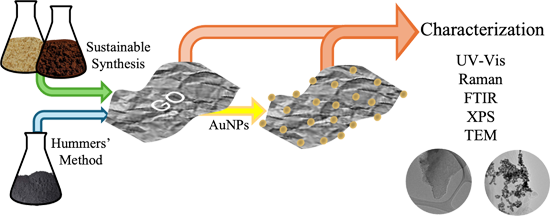
- ; hybrid nanocomposites; plasmonic nanomaterials; surface functionalization; Introduction Graphene oxide (GO), due to its unique physicochemical properties, is widely explored regarding a range of applications, including sensors, water purification, and energy storage and conversion [1][2][3][4][5]. GO is






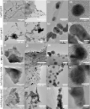

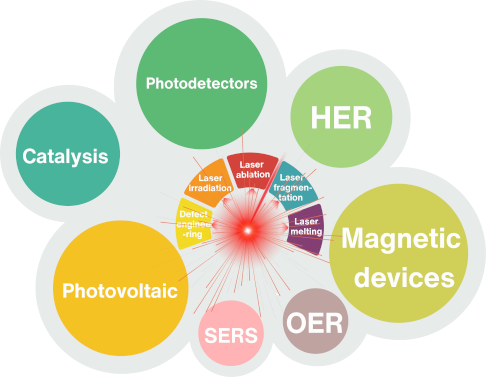
Laser processing in liquids: insights into nanocolloid generation and thin film integration for energy, photonic, and sensing applications
Beilstein J. Nanotechnol. 2025, 16, 1428–1498, doi:10.3762/bjnano.16.104


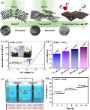


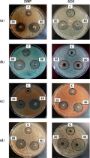


Nanoarchitectonics of photothermal materials to enhance the sensitivity of lateral flow assays
Beilstein J. Nanotechnol. 2023, 14, 988–1003, doi:10.3762/bjnano.14.82
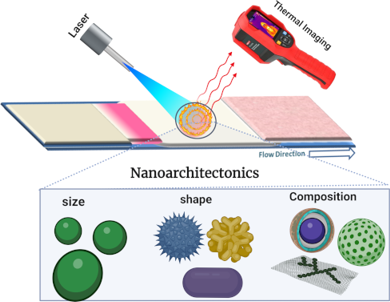
- for light-to-heat conversion. The photothermal conversion efficiency mainly depends on the absorption wavelength and the composition of the nanomaterials. The absorption wavelength should lie in the NIR region to obtain the maximum photothermal conversion. For plasmonic nanomaterials, this can be


Plasmonic nanotechnology for photothermal applications – an evaluation
Beilstein J. Nanotechnol. 2023, 14, 380–419, doi:10.3762/bjnano.14.33
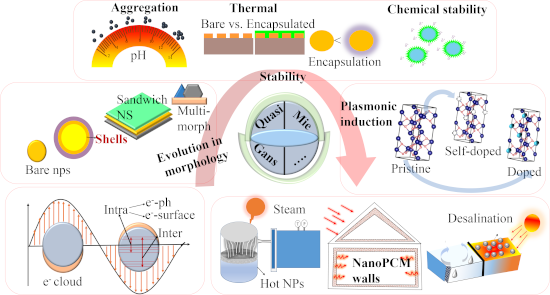
- A. R. Indhu L. Keerthana Gnanaprakash Dharmalingam Plasmonic Nanomaterials Laboratory, PSG Institute of Advanced Studies, Coimbatore-641004, India 10.3762/bjnano.14.33 Abstract The application of plasmonic nanoparticles is motivated by the phenomenon of surface plasmon resonance. Owing to the
- engineering, doping, incorporation, and modification of suitable matrix materials. Plasmonic nanomaterials offer an alternative and attractive approach in this regard, through the flexibility in the excitation of surface plasmons. Specific advantages are the considerable improved bandwidth of the absorption
- , a higher efficiency of photon absorption, facile tuning, as well as flexibility in the synthesis of plasmonic nanomaterials. This review of plasmonic PT (PPT) research begins with a theoretical discussion on the plasmonic properties of nanoparticles by means of the quasi-static approximation, Mie




Zinc oxide nanostructures for fluorescence and Raman signal enhancement: a review
Beilstein J. Nanotechnol. 2022, 13, 472–490, doi:10.3762/bjnano.13.40
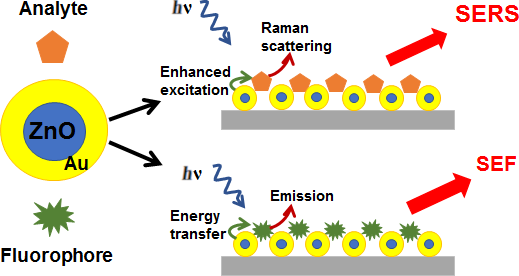
- combination with Au and Ag plasmonic nanomaterials, the 514, 785, and 1064 nm laser excitation lines and p-aminothiophenol (PATP) as a molecule to study the charge transfer in metal–semiconductor–molecule–metal model systems [66]. They concluded that ZnO, with its work function (WZnO) of 5.2 eV is in ohmic




The role of deep eutectic solvents and carrageenan in synthesizing biocompatible anisotropic metal nanoparticles
Beilstein J. Nanotechnol. 2021, 12, 924–938, doi:10.3762/bjnano.12.69
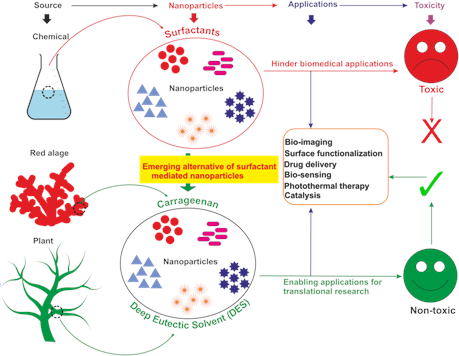
- application. The following section of the review focuses on DESs and carrageenan, a class of emerging green solvents and a carbohydrate polymer for synthesizing safe plasmonic nanomaterials. Deep eutectic solvents in nanotechnology The preparation of DESs involves mixing solid organic precursors with high


Using gold nanoparticles to detect single-nucleotide polymorphisms: toward liquid biopsy
Beilstein J. Nanotechnol. 2020, 11, 263–284, doi:10.3762/bjnano.11.20
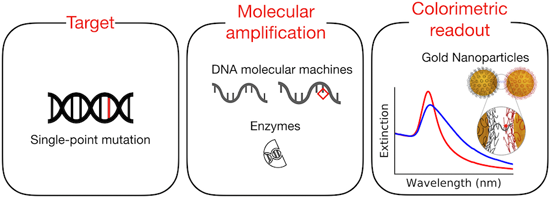
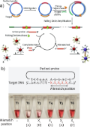
- , based on DNA molecular machines or enzyme-assisted processes, were the subject of constant improvements, the plasmonic component remains barely explored. However, a vast number of plasmonic nanomaterials with different shapes, sizes and compositions is commonly available, offering a broad range of




Other Beilstein-Institut Open Science Activities



