


Search results
Search for "platelet aggregation" in Full Text gives 4 result(s) in Beilstein Journal of Nanotechnology.
Ultrasonic irradiation in the synthesis of nanohydroxyapatite: a chemically friendly technique for improving hemocompatibility and antibiofilm applications
Beilstein J. Nanotechnol. 2026, 17, 991–1015, doi:10.3762/bjnano.17.68
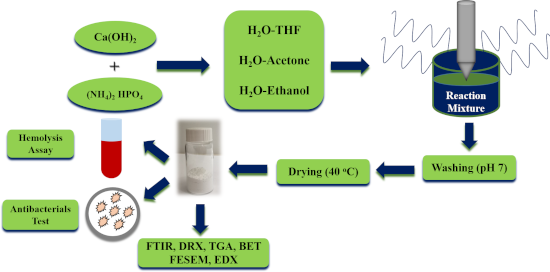
- previously, supports the highly promising and non-disruptive preliminary profile of the synthesized nanostructures. When assessing the hemotoxicity of a biomaterial, platelet aggregation must also be studied. This process is crucial for preventing many circulation-related diseases and pathologies, such as
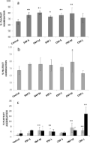
- platelets must be studied since they participate in the first events that lead to the formation of blood clots, which are associated with the development of strokes and heart attacks [90]. Therefore, to evaluate the effect of nHA synthesized in W/THF on platelets, in vitro platelet aggregation tests were
- aggregation (SLP), nor the integral measurement of the entire aggregation process (AUC). Small variations (<10%) were observed, but they were not significant with respect to the control conditions. The inability of synthesized nHA to alter the natural process of platelet aggregation is very favorable and




Bio-imaging with the helium-ion microscope: A review
Beilstein J. Nanotechnol. 2021, 12, 1–23, doi:10.3762/bjnano.12.1
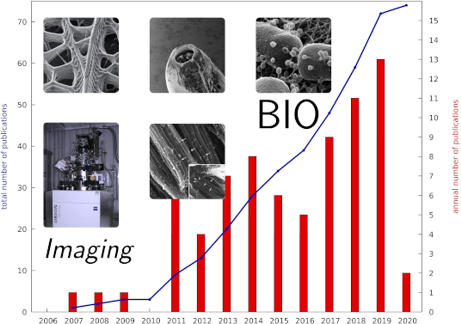
- that coating, as required for SEM, introduces artefacts such as a granular structure on the cell surfaces and a partial closing of pores, thus highlighting one of the benefits of HIM. Bazou et al. also studied tumour cell-induced platelet aggregation by fluorescence microscopy and HIM. In this study


Identification of physicochemical properties that modulate nanoparticle aggregation in blood
Beilstein J. Nanotechnol. 2020, 11, 550–567, doi:10.3762/bjnano.11.44
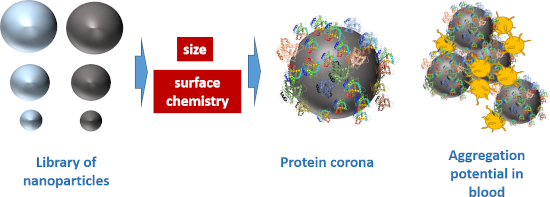
- purpose of investigating the role of surface curvature and chemistry on platelet aggregation, activation and adhesion. Substantial differences were found in the composition of the protein corona depending on the chemical nature of the nanoparticles, while the surface curvature was found to play a minor
- , the results presented herein suggest the existence of independent modes of action that are differently affected by the physicochemical properties of the materials, potentially leading to vessel occlusion and/or formation of thrombi in vivo. Keywords: aggregation; nanoparticles; platelet aggregation
- platelet deposition in post-capillary venules in the liver and heart, suggesting the role of this protein in nanoparticle-mediated platelet aggregation [14][15]. Silica nanoparticles (SNPs) of different sizes were found to activate glycoprotein IIb/IIIa and to induce the expression of P-selectin in




Model systems for studying cell adhesion and biomimetic actin networks
Beilstein J. Nanotechnol. 2014, 5, 1193–1202, doi:10.3762/bjnano.5.131
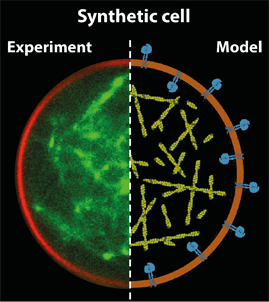
- platelet aggregation and has been well characterised. The liposomes, into which the integrins were incorporated, had diameters of 40 ± 8 nm and can be characterised as small liposomes. Integrin reconstitution was carried out by a detergent-dialysis method. During reconstitution the purified integrins were


Other Beilstein-Institut Open Science Activities



