Search results
Search for "poly(lactic acid)" in Full Text gives 29 result(s) in Beilstein Journal of Nanotechnology.
Beyond the shell: exploring polymer–lipid interfaces in core–shell nanofibers to carry hyaluronic acid and β-caryophyllene
Beilstein J. Nanotechnol. 2025, 16, 2015–2033, doi:10.3762/bjnano.16.139
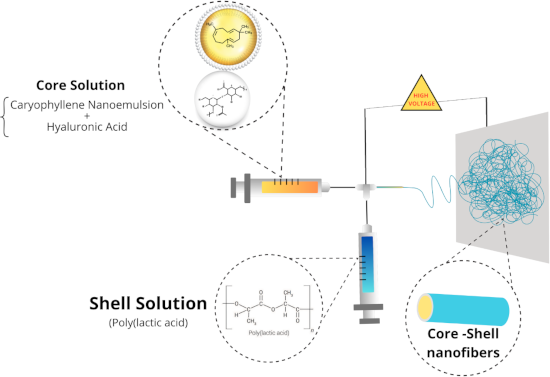
- innovative strategies to ensure their compatibility and sustained activity. This study addresses this critical challenge through the rational design and fabrication of hybrid core–shell nanofibers manufactured via coaxial electrospinning. Poly(lactic acid) (PLA) was used as an outer shell providing
- encapsulated within a PLA shell, highlighting substantial potential for biomedical applications by overcoming key material integration hurdles. Keywords: co-axial nanofibers; electrospinning; hybrid nanosystem; nanofibers; nanoemulsion; poly(lactic acid); Introduction Driven by the significant potential of
- -caryophyllene (purity ≥80%), fluorescein, poly(lactic acid) (Mw ≈ 93,156 Da), anhydrous chloroform (PA), and PBS tablets (pH 7.2–7.6) were obtained from Sigma-Aldrich (USA). Captex® 300 was kindly provided by ABITEC Corporation (USA). Pharmaceutical-grade hyaluronic acid (95% purity) was purchased from Shandong




Venom-loaded cationic-functionalized poly(lactic acid) nanoparticles for serum production against Tityus serrulatus scorpion
Beilstein J. Nanotechnol. 2025, 16, 1633–1643, doi:10.3762/bjnano.16.115
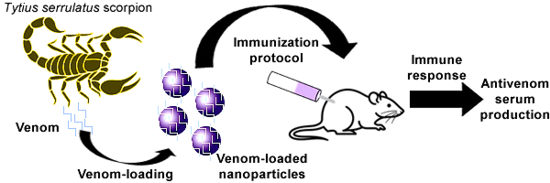
- only specific treatment for envenomation is the administration of antivenoms associated with traditional adjuvants. Novel adjuvants are studied to reduce or avoid side effects and potentialize the efficacy of conventional serum. In this study, poly(lactic acid) nanoparticles were functionalized with
- as a biotechnological approach to immunotherapy against scorpion envenomation. Keywords: cationic nanoparticles; immunoadjuvant; polyethylenimine; poly(lactic acid); Tityus serrulatus; Introduction Accidents caused by scorpion envenoming are recognized as an important public health problem in
- polymers such as poly(lactic acid) (PLA) has been investigated [13]. The nanoparticles produced using these synthetic polyesters show neutral or negative zeta potential, which limits the loading of negatively charged macromolecules such as proteins, polypeptides, or DNA [14][20]. The surface of


Enhancing the therapeutical potential of metalloantibiotics using nano-based delivery systems
Beilstein J. Nanotechnol. 2025, 16, 1350–1366, doi:10.3762/bjnano.16.98
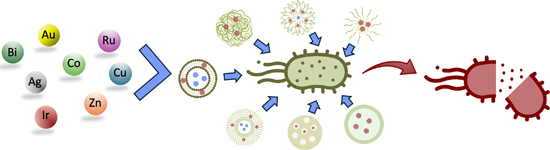
- example, Gasser and co-workers disclosed the encapsulation of the Ru(II) polypyridyl complexes 18 (Figure 5) in nanoconjugates of poly(lactic acid) (PLA) with varying molecular weights [127]. Nanoprecipitation produced narrowly dispersed nanoparticles with high ruthenium loadings (up to 53%), as confirmed


Nanocarriers and macrophage interaction: from a potential hurdle to an alternative therapeutic strategy
Beilstein J. Nanotechnol. 2025, 16, 97–118, doi:10.3762/bjnano.16.10
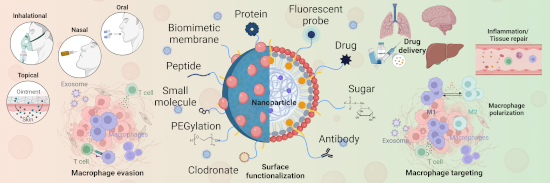
- promise in mitigating inflammation and promoting tumoricidal macrophage polarization. For inflammatory diseases like IBD, targeting pro-inflammatory cytokines with siRNA has proven effective. Laroui et al. developed polymeric NPs made of poly(lactic acid)–poly(ethylene glycol) block copolymer (PLA-PEG


Nanotechnological approaches for efficient N2B delivery: from small-molecule drugs to biopharmaceuticals
Beilstein J. Nanotechnol. 2024, 15, 1400–1414, doi:10.3762/bjnano.15.113
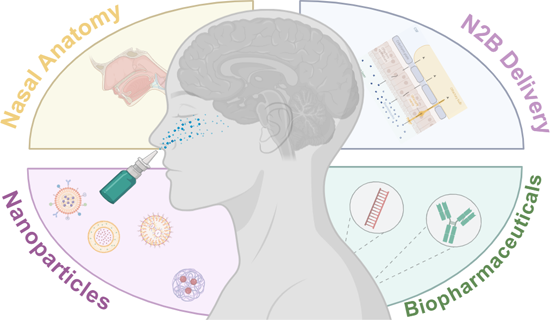
- [77]. In addition to biopolymers, synthetic biodegradable and biocompatible polymers such as poly(lactic acid) (PLA) and poly(lactic-co-glycolic acid) (PLGA), which are approved by the US Food and Drug Administration (FDA) for human administration [78] are relevant options. Extensive testing has been


Therapeutic effect of F127-folate@PLGA/CHL/IR780 nanoparticles on folate receptor-expressing cancer cells
Beilstein J. Nanotechnol. 2024, 15, 954–964, doi:10.3762/bjnano.15.78
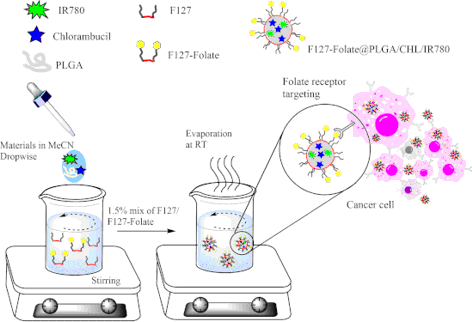
- and diagnosis, leveraging the advantages of PLGA, folate targeting, and the integration of therapeutic and imaging agents. Keywords: cancer; chlorambucil; drug carrier; IR780; PLGA nanoparticle; theragnostic; Introduction Poly(ᴅ,ʟ-lactic-co-glycolic acid) (PLGA), a copolymer of poly(lactic acid

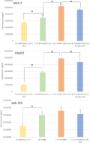


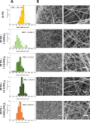
Electrospun polysuccinimide scaffolds containing different salts as potential wound dressing material
Beilstein J. Nanotechnol. 2024, 15, 781–796, doi:10.3762/bjnano.15.65
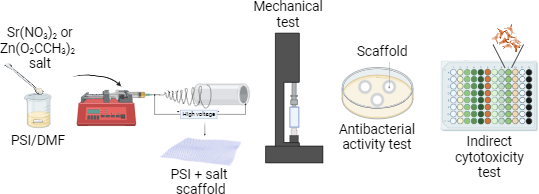
- Polymer mixtures contain at least one component besides the polymer, such as nanoparticles, inorganic salts, or other polymers. These types of polymer mixtures are used for medical purposes; for example, metronidazole/poly(ε-caprolactone) (PCL)/alginate for dental implants or poly(lactic acid



Microneedle-based ocular drug delivery systems – recent advances and challenges
Beilstein J. Nanotechnol. 2022, 13, 1167–1184, doi:10.3762/bjnano.13.98
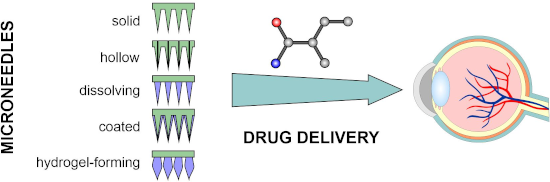
- ], polyvinyl alcohol (PVA) [123], and polymethacrylates [118][124][125]. Among the biodegradable materials, carbohydrates, including maltose [126], trehalose [127], and sucrose [128], are frequently mentioned. Moreover, biodegradable polymers such as poly(lactic acid) (PLA) [129], poly(glycolic acid) (PGA
- , biodegradable polymers such as poly(lactic acid), poly(glycolic acid), and non-biodegradable polymers, for example, photolithographic epoxy resins are used [148]. The methods used for the production of microneedles include lithographic or laser techniques, casting, and 3D printing, to mention a few. The laser


Biomimetic chitosan with biocomposite nanomaterials for bone tissue repair and regeneration
Beilstein J. Nanotechnol. 2022, 13, 1051–1067, doi:10.3762/bjnano.13.92
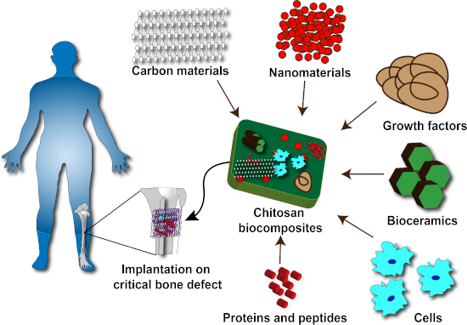
- that the compressive strength of the 3D-printed samples was 16.32 MPa, with a porosity of 37.1% [124]. Nazeer et al. used 3D-printed poly (lactic acid) with chitosan and hydroxyapatite scaffolds for bone repair applications. The honeycomb and rectilinear pattern of the scaffolds were printed through a
Effects of drug concentration and PLGA addition on the properties of electrospun ampicillin trihydrate-loaded PLA nanofibers
Beilstein J. Nanotechnol. 2022, 13, 245–254, doi:10.3762/bjnano.13.19
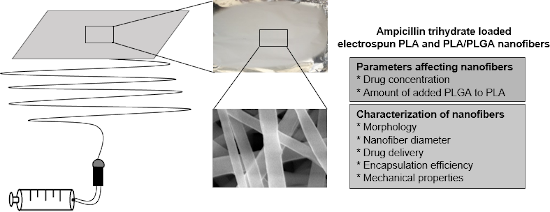
- produce ampicillin trihydrate-loaded poly(lactic acid) (PLA) and PLA/poly(lactic-co-glycolic acid) (PLA/PLGA) polymeric nanofibers via electrospinning using 1,1,1,3,3,3-hexafluoro-2-propanol (HFIP) as the solvent for local application in tissue engineering. The effects of ampicillin trihydrate


A comprehensive review on electrospun nanohybrid membranes for wastewater treatment
Beilstein J. Nanotechnol. 2022, 13, 137–159, doi:10.3762/bjnano.13.10
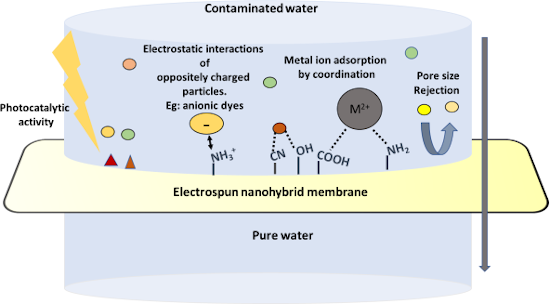
- bioactive products. Patel et al. fabricated bioactive electrospun nanocomposite scaffolds of poly(lactic acid) for bone tissue engineering by incorporating cellulose nanocrystals and observed that the nanohybrid has excellent properties in terms of mechanical strength and thermal stability compared to the


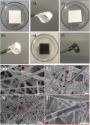


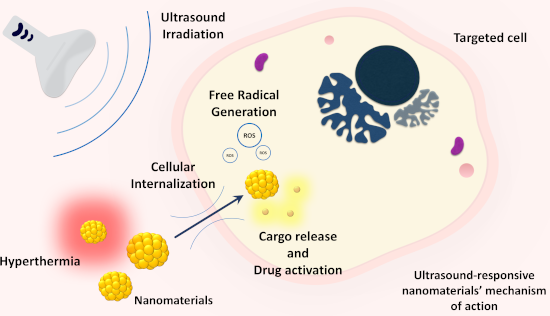
Comprehensive review on ultrasound-responsive theranostic nanomaterials: mechanisms, structures and medical applications
Beilstein J. Nanotechnol. 2021, 12, 808–862, doi:10.3762/bjnano.12.64


The impact of molecular tumor profiling on the design strategies for targeting myeloid leukemia and EGFR/CD44-positive solid tumors
Beilstein J. Nanotechnol. 2021, 12, 375–401, doi:10.3762/bjnano.12.31
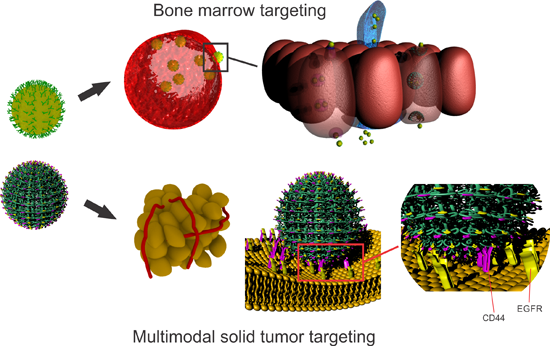
- articles regarding the use of EGFR mAbs as a specific targeting motif for polymer NPs such as poly(lactic acid-co-lysine), poly(ethylene glycol-co-caprolactone), an poly(lactic acid-co-glycolic acid) NPs. All of them have shown


Key for crossing the BBB with nanoparticles: the rational design
Beilstein J. Nanotechnol. 2020, 11, 866–883, doi:10.3762/bjnano.11.72
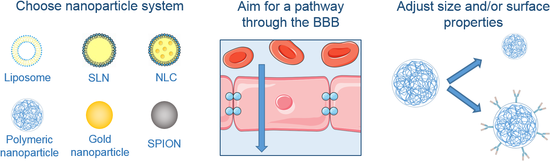
- polymeric nanoparticles prepared with PBCA and polymers from the poly(ethylene) family such as poly(lactic acid) (PLA) and poly(lactic-co-glycolic acid) (PLGA) [25][26]. Liposomes and other lipidic nanoparticles have also been reported as able to pass the BBB [27], as well as protein-based nanoparticles


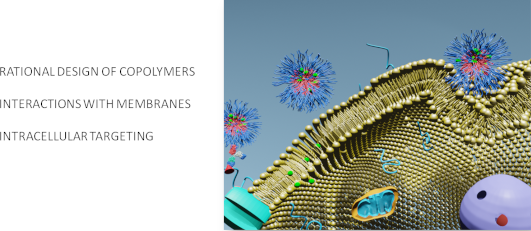
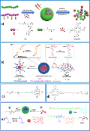
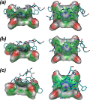
Rational design of block copolymer self-assemblies in photodynamic therapy
Beilstein J. Nanotechnol. 2020, 11, 180–212, doi:10.3762/bjnano.11.15






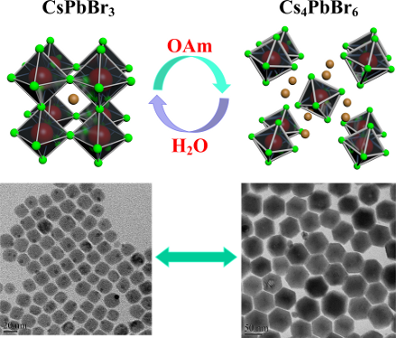
Ultrasonication-assisted synthesis of CsPbBr3 and Cs4PbBr6 perovskite nanocrystals and their reversible transformation
Beilstein J. Nanotechnol. 2019, 10, 666–676, doi:10.3762/bjnano.10.66
- shape and size are tuned through the control of temperature, reaction time, and composition of the precursors [15][16][17]. Chen et al. demonstrated a facile solvothermal method for preparing CsPbX3 PNCs with adjustable optical properties [18]. Additionally, Li's group reported a poly(lactic acid



Preparation of micro/nanopatterned gelatins crosslinked with genipin for biocompatible dental implants
Beilstein J. Nanotechnol. 2018, 9, 1735–1754, doi:10.3762/bjnano.9.165
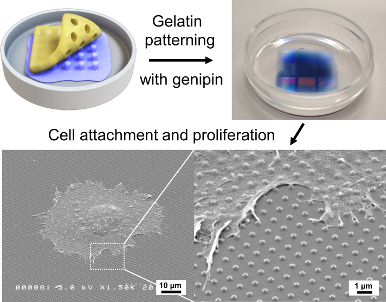
- previously reported [59]. In a previous study, Saos-2 cells on poly (lactic acid) (PLLA) pillars with diameter of 200 nm and height of 900 nm extended numerous filopodia radially and the tips of the filopodia were attached to the top of the pillars [59]. However, the small cell area seen on PLLA pillars was






Atomic-level characterization and cilostazol affinity of poly(lactic acid) nanoparticles conjugated with differentially charged hydrophilic molecules
Beilstein J. Nanotechnol. 2018, 9, 1328–1338, doi:10.3762/bjnano.9.126
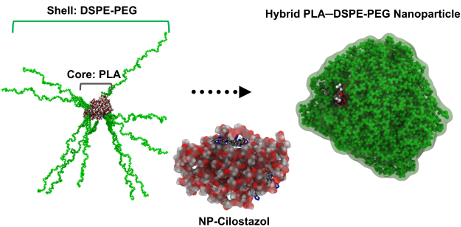
- promising field for numerous diseases and represents the forefront of modern medicine. In the present work, full atomistic computer simulations were applied to study poly(lactic acid) (PLA) nanoparticles conjugated with polyethylene glycol (PEG). The formation of this complex system was simulated using the
- against in vitro and in vivo degradation [7][8][9]. Poly(lactic acid) (PLA) is one of the most commonly used polymers for the synthesis of NPs. PLA is a synthetic biodegradable, compostable and non-toxic polymer derived from renewable resources [10][11][12]. Despite its benefits for different formulations
- determine the spatial distribution of cilostazol in polymeric NPs and to explore its potential use in this kind of drug delivery system. Experimental Characterization of copolymer structures by all-atom molecular dynamics simulations The poly(lactic acid) core PLA polymer chains were built in three


Surface functionalization of 3D-printed plastics via initiated chemical vapor deposition
Beilstein J. Nanotechnol. 2017, 8, 1629–1636, doi:10.3762/bjnano.8.162
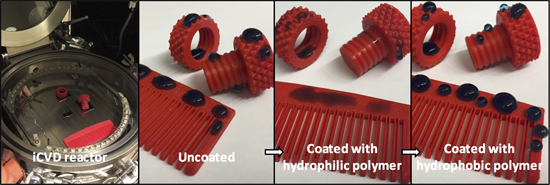
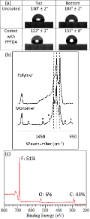
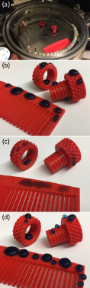
- studied the ability of the initiated chemical vapor deposition (iCVD) process to coat 3D-printed shapes composed of poly(lactic acid) and acrylonitrile butadiene styrene. The thermally insulating properties of 3D-printed plastics pose a challenge to the iCVD process due to large thermal gradients along
- thickness and therefore the thermal gradients were modest. In contrast to these previous studies, our 3D-printed objects are over 5 mm in thickness and therefore the significant thermal gradients may impact the deposition process. In this study, we printed the 3D objects using both poly(lactic acid) (PLA



Low uptake of silica nanoparticles in Caco-2 intestinal epithelial barriers
Beilstein J. Nanotechnol. 2017, 8, 1396–1406, doi:10.3762/bjnano.8.141
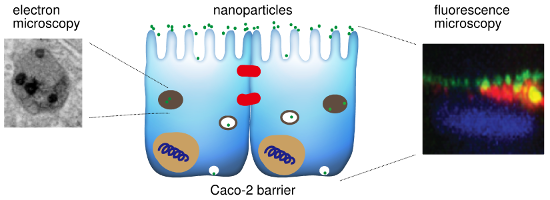
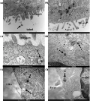
- ][33] and poly(lactic-co-glycolic acid) and poly(lactic acid) with attached poly(ethylene glycol) [31][32] nanoparticles and to be temperature-dependent [29][30][31][32][33]. Despite uptake, transport across differentiated Caco-2 barriers (grown for 21 days) has been shown to be very limited for



Nano- and microstructured materials for in vitro studies of the physiology of vascular cells
Beilstein J. Nanotechnol. 2016, 7, 1620–1641, doi:10.3762/bjnano.7.155
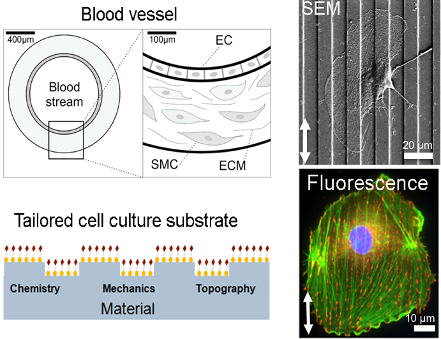
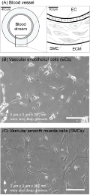
- for vascular cell studies are poly(dimethylsiloxane) (PDMS) [6][61][103][104][105][106], poly(ethylene glycol) (PEG)-derived polymers [5][87][98][107][108][109][110][111][112][113] poly(acrylamide) (PAA) [50][114][115][116] and poly(lactic acid) (PLA) [117][118]. Alternative materials used for micro
- molecules is disadvantegous too. Using more advanced chemistry for immobilizing the molecules of interest in a controlled fashion [145][146][147][148]. Typical molecules used for non-specific surface coatings are poly-L-Lysine (PLL) and poly(lactic acid) (PLA), both interact unspecifically with cells

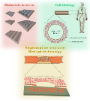


Manufacturing and investigation of physical properties of polyacrylonitrile nanofibre composites with SiO2, TiO2 and Bi2O3 nanoparticles
Beilstein J. Nanotechnol. 2016, 7, 1141–1155, doi:10.3762/bjnano.7.106
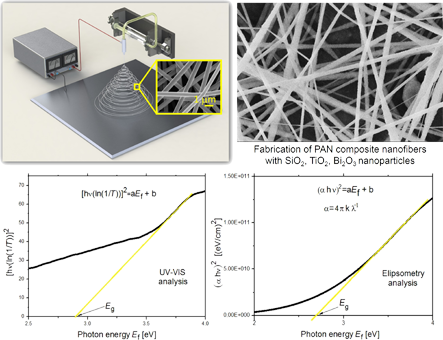
- prior modification of the particle surface) significantly improves the mechanical properties and thermal strength of the resulting composite relative to the pure polymer. In addition, polymer composites (based on, inter alia, poly(ether ether ketone) (PEEK), poly(methyl methacrylate) (PMMA), poly(lactic
- acid) (PLA), poly(butylene succinate) (PBS), poly(3-hydroxybutyrate-co-3-hydroxyvalerate) (PHBV), poly(vinylidene difluoride) (PVBF), poly(vinylpyrrolidone) PVP, poly(acrylonitrile) (PAN)) reinforced with particles of SiO2, TiO2 and Bi2O3, particularly in thin layers, are very attractive because of



Fabrication and characterization of novel multilayered structures by stereocomplexion of poly(D-lactic acid)/poly(L-lactic acid) and self-assembly of polyelectrolytes
Beilstein J. Nanotechnol. 2016, 7, 81–90, doi:10.3762/bjnano.7.10
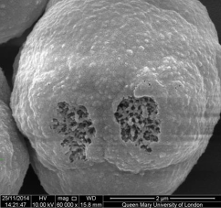
- between the (PDLA/PLLA)n stereocomplex and the cores with and without the polymeric (PSS/PAH)n/PLL multilayer precursor (PEM). Nuclear magnetic resonance (NMR) and gel permeation chromatography (GPC) were used to characterize the chemical composition and molecular weight of poly(lactic acid) polymers
- aliphatic polyester poly(lactic acid) (PLA) has been widely used in the biomedical field due to its extraordinary biocompatibility, biodegradability and mechanical properties [19][30][31][32][33]. Lactic acid, which is the degraded product from PLA, is fully biocompatible in human bodies, and therefore
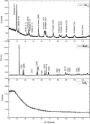
- °, and 18.1° and are the typical peaks of poly(lactic acid). The diffraction peaks of the PDLA/PLLA film are at θ = 12° and 22.1° (which is an overlap of the peaks at 20.8° and 24.1°). The peaks of the microcapsules situate at θ = 12°, 20.8° and 24.1°, which are uniquely assigned to PLA stereocomplex


Nanofibers for drug delivery – incorporation and release of model molecules, influence of molecular weight and polymer structure
Beilstein J. Nanotechnol. 2015, 6, 1939–1945, doi:10.3762/bjnano.6.198
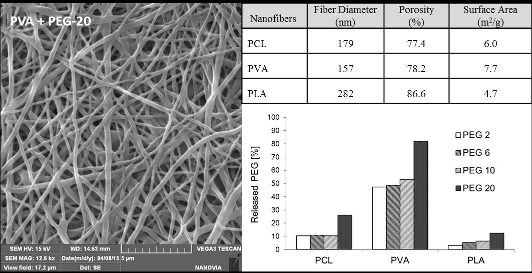
- , solvent or tablet excipient. Apart from these applications the PEG has significant effect on the drug release. It has been shown that addition of PEG molecules is an efficient way to modify the release of hydrophobic paclitaxel from poly(lactic acid-co-glycolic acid) matrix [25] or proteins from lipidic



Synthesis, characterization and in vitro biocompatibility study of Au/TMC/Fe3O4 nanocomposites as a promising, nontoxic system for biomedical applications
Beilstein J. Nanotechnol. 2015, 6, 1677–1689, doi:10.3762/bjnano.6.170
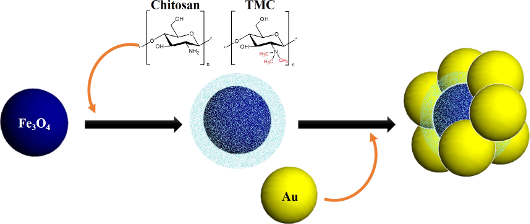
- interactions with cells and proteins [12]. Biodegradable polymers that are generally used for coating magnetic nanoparticles include poly(ethylene glycol) (PEG), poly(vinyl alcohol) (PVA), polyethyleneimine (PEI), poly(D,L-lactide), poly(lactic acid), poly(D,L-glycolide), poly(lactide-co-glycolide