


Search results
Search for "skin regeneration" in Full Text gives 4 result(s) in Beilstein Journal of Nanotechnology.
Quality by design optimization of microemulsions for topical delivery of Passiflora setacea seed oil
Beilstein J. Nanotechnol. 2025, 16, 2116–2131, doi:10.3762/bjnano.16.146
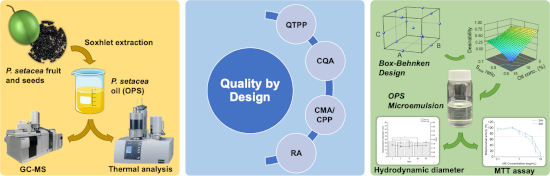
- assessments to include additional cell types, particularly keratinocytes and dermal fibroblasts, which are key players in skin regeneration and re-epithelialization [17]. Although the MTT assay is a widely accepted and convenient method for preliminary cytotoxicity screening, it offers limited insight into


Beyond the shell: exploring polymer–lipid interfaces in core–shell nanofibers to carry hyaluronic acid and β-caryophyllene
Beilstein J. Nanotechnol. 2025, 16, 2015–2033, doi:10.3762/bjnano.16.139
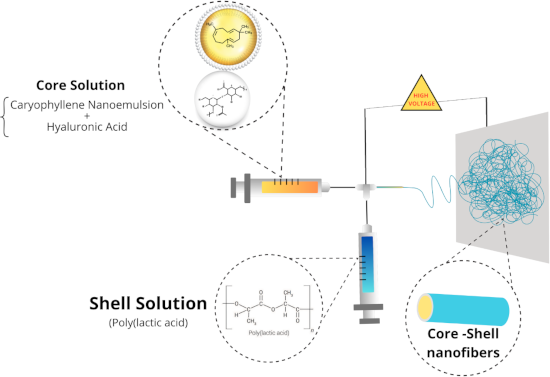
- , antimicrobial, and anti-inflammatory effects [30][31]. It is also currently been evaluated as a candidate for skin regeneration due to its effect as a cannabinoid receptor 2 (CB2) ligand, with studies suggesting that CB2 activation by selective agonists can enhance re-epithelialization, reduce pain, and improve




Polyurethane/silk fibroin-based electrospun membranes for wound healing and skin substitute applications
Beilstein J. Nanotechnol. 2025, 16, 591–612, doi:10.3762/bjnano.16.46
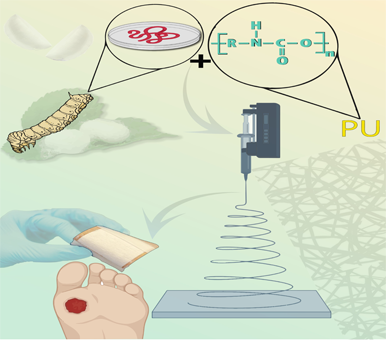
- 37610, Pakistan 10.3762/bjnano.16.46 Abstract The importance of electrospun membranes for biomedical applications has increased, especially when it comes to skin regeneration and wound healing. This review presents the production and applications of electrospun membranes based on polyurethane (PU) and
- offers a number of enhanced properties. The study offers a comprehensive overview of the advanced developments and applications of PU/SF composites, highlighting their significant potential in wound healing. These composite membranes present promising advancements in wound healing and skin regeneration
- by combining the unique properties of silk and PU, opening up the possibilities for innovative treatments. Keywords: electrospinning; nanofibers; polyurethane; silk fibroin; skin regeneration; wound healing; Introduction The biomedical field is a revolutionary sector in healthcare and research



Ciprofloxacin-loaded dissolving polymeric microneedles as a potential therapeutic for the treatment of S. aureus skin infections
Beilstein J. Nanotechnol. 2022, 13, 517–527, doi:10.3762/bjnano.13.43
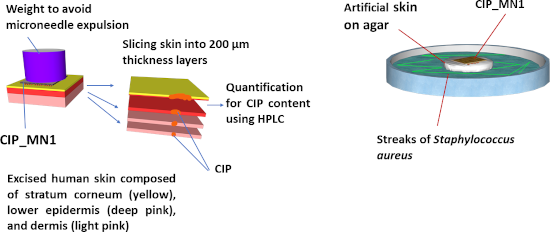
- superiority of the CIP_MN1 formulation, which was chosen to be investigated further. Next the penetration capabilities of CIP_MN1 were studied using the in vitro skin model composed of 2.5% agarose gel. Agarose gel is widely used in wound healing for skin regeneration due to its mechanical properties that


Other Beilstein-Institut Open Science Activities



