


Search results
Search for "structure–function relationships" in Full Text gives 11 result(s) in Beilstein Journal of Nanotechnology.
Protein-based custom-designed molecular nanotraps for biomedical applications
Beilstein J. Nanotechnol. 2026, 17, 683–687, doi:10.3762/bjnano.17.47

- recognized as functionally active, often undergoing partial folding upon interaction with molecular partners [12]. These observations are reshaping the current understanding of protein structure–function relationships, opening the possibility of employing unfolded or disordered proteins as functional

Micro- and nanoscale effects in biological and bioinspired materials and surfaces
Beilstein J. Nanotechnol. 2026, 17, 214–217, doi:10.3762/bjnano.17.14
- Chimica, Biologia e Biotecnologie, University of Perugia, Via Elce di Sotto 8, 06121 Perugia, Italy 10.3762/bjnano.17.14 Keywords: adhesion; bioengineering; functional morphology; material properties; medical coatings; microstructures; nanostructures; optics; structure–function relationships; Micro- and
Ambient pressure XPS at MAX IV
Beilstein J. Nanotechnol. 2025, 16, 1677–1694, doi:10.3762/bjnano.16.118
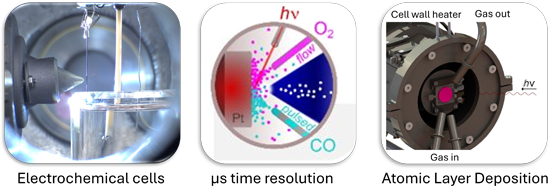
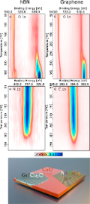
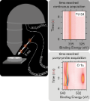
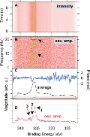
- spectrometry will enable a more holistic understanding of structure–function relationships at working interfaces. Additionally, the development of correlated, spatially resolved measurements, potentially via photoemission electron microscopy (PEEM) or scanning probe methods, could further bridge the gap





Biomimetics and bioinspired surfaces: from nature to theory and applications
Beilstein J. Nanotechnol. 2025, 16, 418–421, doi:10.3762/bjnano.16.32
- the structure–function relationships of these surfaces useful for translational approaches. Further general insights into biological principles and their subsequent transfer into biomimetic engineering are provided in a multiscale biological analysis by Amador et al. [6], ranging from viruses to

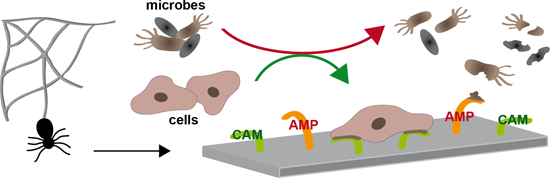
Bioselectivity of silk protein-based materials and their bio-inspired applications
Beilstein J. Nanotechnol. 2022, 13, 902–921, doi:10.3762/bjnano.13.81


Physical constraints lead to parallel evolution of micro- and nanostructures of animal adhesive pads: a review
Beilstein J. Nanotechnol. 2021, 12, 725–743, doi:10.3762/bjnano.12.57
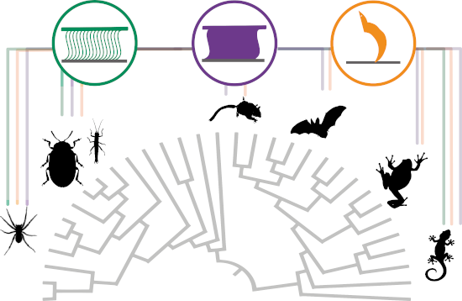
- overarching principles that these structures rely on. Since the structure–function relationships discussed above are based on fundamental physical principles and mostly related to the geometry of the structure, they must also hold true for artificial surfaces with a similar geometry. This in turn means that


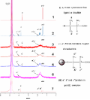
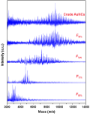
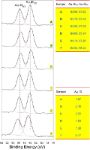
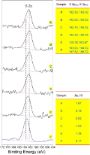
Structural and optical properties of penicillamine-protected gold nanocluster fractions separated by sequential size-selective fractionation
Beilstein J. Nanotechnol. 2019, 10, 955–966, doi:10.3762/bjnano.10.96
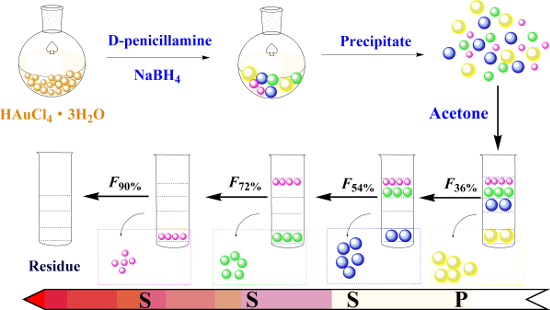
- high precision, facilitating easy evaluation of structure–function relationships in their toxicological studies, as well as improving the repeatability in AuNC self-assembly. Further optimization of SSSP fractionation can result in fractionation of AuNCs to specific sizes at gram scales, which is



Biological and biomimetic materials and surfaces
Beilstein J. Nanotechnol. 2017, 8, 403–407, doi:10.3762/bjnano.8.42
- shrubby monocotyledons plants with an emphasis on the structure–function relationships in Dracaena marginata stems [11]. Based on the results of microscopy and mechanical testing, a model of mechanical interactions between tissues and vascular bundles in the D. marginata stem was generated, and the
Biomechanics of selected arborescent and shrubby monocotyledons
Beilstein J. Nanotechnol. 2016, 7, 1602–1619, doi:10.3762/bjnano.7.154
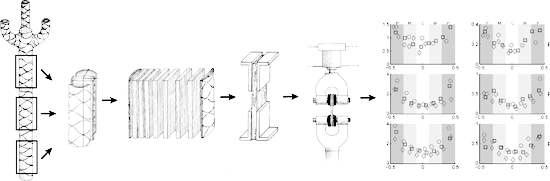
- mechanically relevant (ultra-)structures and the mechanical behaviour of various arborescent and shrubby monocotyledons and obtaining the structure–function relationships of different structurally conspicuous parts in Dracaena marginata stems. The stems of five different “woody” monocotyledon species were
- ; Introduction For many centuries, botanists and non-biologists alike have expressed their fascination about the conspicuous growth form of arborescent monocotyledons. Nevertheless, only in the middle of the 20th century first attempts were made to understand the form–structure–function relationships of these




Protein corona – from molecular adsorption to physiological complexity
Beilstein J. Nanotechnol. 2015, 6, 857–873, doi:10.3762/bjnano.6.88
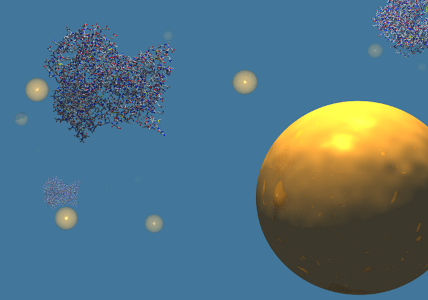
- decreases its tendency to desorb. In this context, further experiments are desirable, dissecting the influences of avidity, affinity, van-der-Waals-type and Coulomb-type interactions. Role of surface chemistry A plethora of different surface functionalities exists and structure–function relationships have
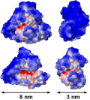
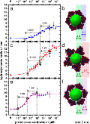
- composition need to be revealed in detail. Establishing structure function-relationships linking NP properties to biological response therefore remains a still distant goal despite the considerable achievements of the past years. This knowledge is needed not only to understand and minimize nano-toxicity but



Real-time monitoring of calcium carbonate and cationic peptide deposition on carboxylate-SAM using a microfluidic SAW biosensor
Beilstein J. Nanotechnol. 2014, 5, 1823–1835, doi:10.3762/bjnano.5.193
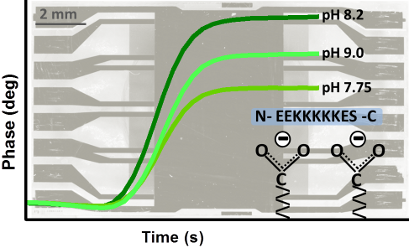
- desired break-through in terms of elucidating the structure–function relationships in biomineralization. Our possiblities to replicate biominerals, to create sustainable processes and to design bio-inspired new biocompatible materials with sophisticated structures and functions will certainly expand





