


Search results
Search for "thermochromism" in Full Text gives 2 result(s) in Beilstein Journal of Nanotechnology.
Structure-dependent thermochromism of PAZO thin films: theory and experiment
Beilstein J. Nanotechnol. 2026, 17, 186–199, doi:10.3762/bjnano.17.12
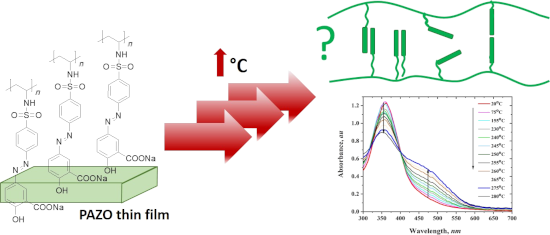
- calculations further support these findings, indicating that temperature-dependent intermolecular interactions and conformational changes play a significant role in shaping the optical behavior of the films. These results provide new insights into the structure–property relationships underlying thermochromism
- in azopolymer thin films and offer valuable guidelines for the design of thermally responsive photonic materials. Keywords: aggregate; azopolymer; birefringence; PAZO; thermochromism; Introduction Functionalization of polymers with different photo- and bioactive groups to achieve novel
- govern thermochromism and polarization sensitivity in azopolymer thin films. These findings advance the rational design of thermally and optically responsive materials with promising potential in photonics and optoelectronics. Experimental and Computational Details All thin films used in this study were


Surface functionalization of aluminosilicate nanotubes with organic molecules
Beilstein J. Nanotechnol. 2012, 3, 82–100, doi:10.3762/bjnano.3.10
- synthesis, electrical and mechanical properties, thermochromism, solvatochromism, and crystal structure [75][76][77][78], have been extensively studied. Their optical properties, conductivity, and field-effect mobility (FEM) strongly depend on chain conformation and the solid-state-packing mode. For example
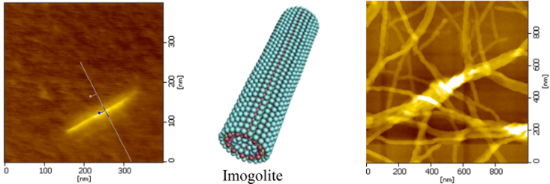
- structure (Figure 20). Nanofiber formation is always accompanied by a color change from orange to dark red, which is referred to as thermochromism [83]. Recently, a chemiresistive sensor based on a nanofiber hybrid of carbon nanotube/poly(3-hexylthiophene)- and carbon nanotube/hexafluoroiso-propanol


Other Beilstein-Institut Open Science Activities



