


Search results
Search for "ultrasonic irradiation" in Full Text gives 6 result(s) in Beilstein Journal of Nanotechnology.
Ultrasonic irradiation in the synthesis of nanohydroxyapatite: a chemically friendly technique for improving hemocompatibility and antibiofilm applications
Beilstein J. Nanotechnol. 2026, 17, 991–1015, doi:10.3762/bjnano.17.68
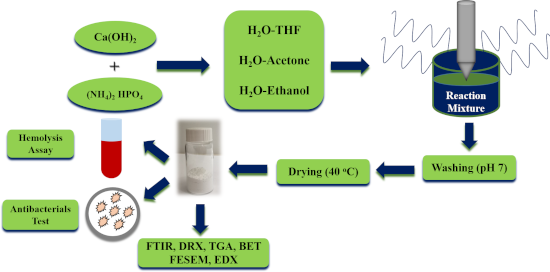
- 10.3762/bjnano.17.68 Abstract This study explores the synthesis of nanohydroxyapatite (nHA) using high-frequency ultrasonic irradiation (UI), a chemically friendly technique aligned with green chemistry principles. Synthesis was achieved by varying the UI time (15, 30, 45, and 60 min) and the reaction
- engineering. Keywords: antibiofilm properties; hemocompatibility; nanohydroxyapatite; ultrasonic irradiation; Introduction Nowadays, there is a high demand for the development of bone substitutes that are biocompatible, bioactive, mechanically strong, and well tolerated by the immune system [1], which
- chemical species are easily generated without the need for reaction initiators. For this reason, ultrasonic irradiation is widely used in the formation, grinding, dispersion, and activation of many inorganic compounds at the micro- and the nanoscale [17][18]. Previous research has reported the production


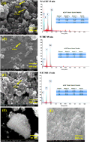


Multilayer capsules made of weak polyelectrolytes: a review on the preparation, functionalization and applications in drug delivery
Beilstein J. Nanotechnol. 2020, 11, 508–532, doi:10.3762/bjnano.11.41
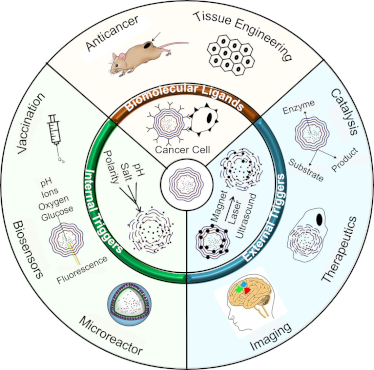



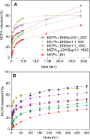
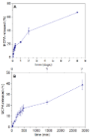
Layered double hydroxide/sepiolite hybrid nanoarchitectures for the controlled release of herbicides
Beilstein J. Nanotechnol. 2019, 10, 1679–1690, doi:10.3762/bjnano.10.163
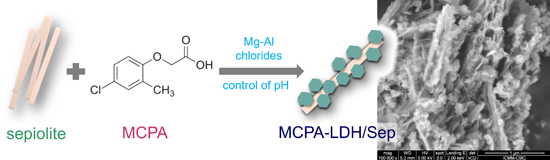
- or in the process of growing. Examples are the direct assembly of carbon nanotubes and sepiolite under ultrasonic irradiation [19] and the generation of layered titanosilicates in the presence of sepiolite [20]. In this context, the use of organic–inorganic interphases has proved highly effective to


From iron coordination compounds to metal oxide nanoparticles
Beilstein J. Nanotechnol. 2016, 7, 2074–2087, doi:10.3762/bjnano.7.198
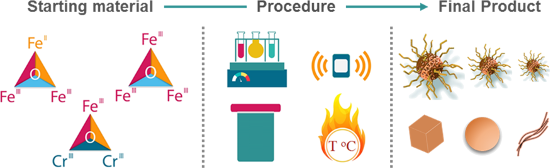
- subjected to irradiation with ultrasound (Supporting Information File 1, Figure S22). The procedures for samples NPU1–NPU2 differ only in the ultrasonic irradiation time (5 min for NPU1 and 30 min for NPU2). In addition, sample NPU2 was also subsequently subjected to thermal treatment at 400 °C to track


Experimental techniques for the characterization of carbon nanoparticles – a brief overview
Beilstein J. Nanotechnol. 2014, 5, 1760–1766, doi:10.3762/bjnano.5.186
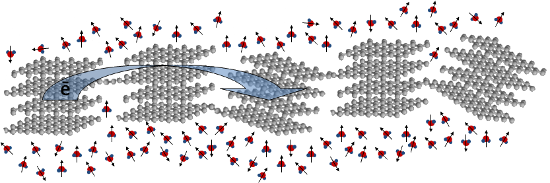
- nanoparticles and allow for observation of the changes in the quasi-graphitic ordering induced by ultrasonic irradiation and with the so-called quasi-high pressure effect under adsorption conditions. Structural changes have strong influence on the electronic properties, especially the localization of charge
- graphite were treated with ultrasonic irradiation [16]. This procedure results in the development of an internal strain which generates the stacking fault by shifting the layers laterally as well as increasing the distance between them. The in-plane coherence length and the degree of three dimensional


A sonochemical approach to the direct surface functionalization of superparamagnetic iron oxide nanoparticles with (3-aminopropyl)triethoxysilane
Beilstein J. Nanotechnol. 2014, 5, 1472–1476, doi:10.3762/bjnano.5.160
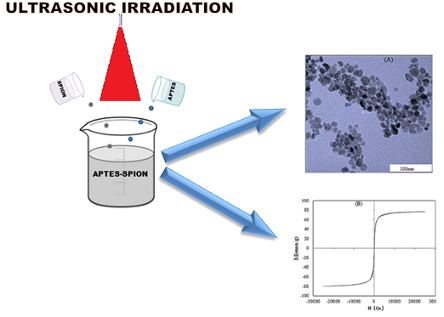
- magnets (1.5 T, for details see Supporting Information File 1). The ultrasonic irradiation of the mixture causes the formation, growth and collapse of bubbles (acoustic cavitation process) within the liquid content. These bubbles behave as individual microreactors as they are often accompanied by a


Other Beilstein-Institut Open Science Activities



