


Search results
Search for 日本10公里记录 in Full Text gives 2649 result(s) in Beilstein Journal of Nanotechnology. Showing first 200.
Molecular and mechanical insights into gecko seta adhesion: multiscale simulations combining molecular dynamics and the finite element method
Beilstein J. Nanotechnol. 2025, 16, 2055–2076, doi:10.3762/bjnano.16.141
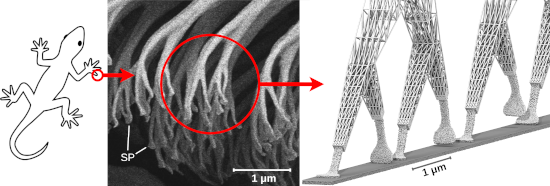
- scales involved. In previous research, we used molecular dynamics simulations to explore various aspects of gecko adhesion [10][11][12][13]. We found that humidity increases the force required to pull a spatula off from a substrate [10][12], a phenomenon also observed in high-humidity atomic force
- microscopy (AFM) experiments. Our investigation into how gecko keratin interacts with hydrophilic and hydrophobic substrates [12] supported the importance of the water-mediating effect [10] and elucidated mechanistic differences depending on surface chemistry. A particle-based mesoscale model of a single
- parametrization of our coarse-grained potential against united-atom simulations of gecko keratin on nonpolar surfaces [10]. Hydrophilic substrates, roughness, and humidity, which introduce additional mechanisms such as keratin softening and capillary forces, have been addressed in our previous spatula-scale






Stereodiscrimination of guests in chiral organosilica aerogels studied by ESR spectroscopy
Beilstein J. Nanotechnol. 2025, 16, 2034–2054, doi:10.3762/bjnano.16.140
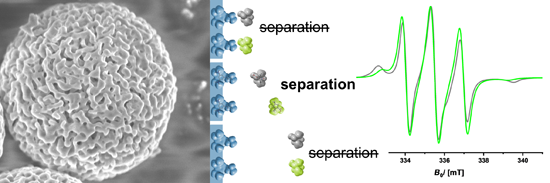
- , chiral materials are crucial in asymmetric synthesis, where the selective production of a desired enantiomer is needed, particularly in pharmaceuticals [7]. Chiral metal-organic frameworks [8] and nanoporous materials [9][10] are emerging as vital components in enantioselective catalysis due to their
- the spins can be refocused depends on their diffusional displacement during the interval between the gradient pulses. Thus, PFG-NMR is sensitive for processes occurring on length scales from ca. 10 nm to several millimeters and at the milliseconds-to-seconds timescale. Besides the fact that NMR is an
- access the sub-10 nm domain and to obtain information about the dynamics of guests confined to the porous system on short timescales below milliseconds. Here, electron spin resonance (ESR) has some advantages. Because of the temporal dimension of these rotational dynamics at the microseconds timescale




Beyond the shell: exploring polymer–lipid interfaces in core–shell nanofibers to carry hyaluronic acid and β-caryophyllene
Beilstein J. Nanotechnol. 2025, 16, 2015–2033, doi:10.3762/bjnano.16.139
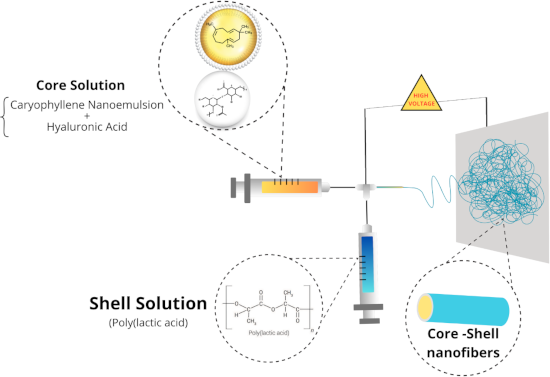
- advancements in the controlled release of diverse bioactive compounds [5][6][7][8][9][10]. Among the various nanostructured platforms explored for these purposes, nanofibers have gained attention due to their high surface area, adjustable porosity, and robust mechanical properties, which set them apart from
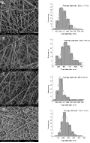
- %), surfactant concentration (2–20%), and HLB (10–15) as the independent variables (data not shown). Based on the preliminary results, a sample was selected for this study. It can be observed that formulations exhibited droplet mean sizes in the nanoscale range, varying from 58 nm. The formulations showed a
- surface distribution may compromise encapsulation efficiency and alter release kinetics [76]. Surface hydrophilicity The hydrophilicity of the membranes was evaluated through contact angle measurements. Figure 10 shows photographs of a water droplet in contact with the surface of the samples: (a




The cement of the tube-dwelling polychaete Sabellaria alveolata: a complex composite adhesive material
Beilstein J. Nanotechnol. 2025, 16, 1998–2014, doi:10.3762/bjnano.16.138
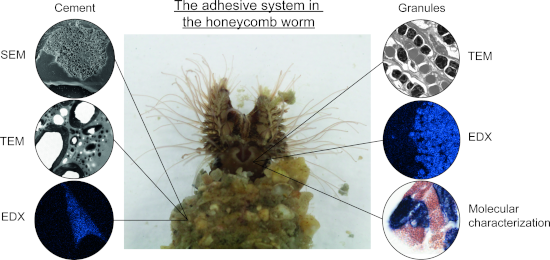
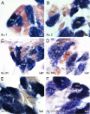
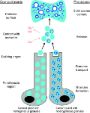
- either homogeneous or heterogeneous containing inclusions [6][10][11][12]. The adhesive proteins are packaged into secretory granules via a process called complex coacervation, which involves the aggregation of oppositely charged proteins along with a sulfated polysaccharide and significant amounts of
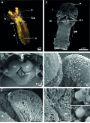
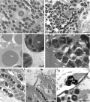
- ) equipped with an 80 mm2 silicon drift detector. Acquisition conditions on the SEM were 15 kV, 10 mm working distance, and 10 s live time acquisition at approximately 30–40% dead time. The spectra were acquired with an AZtec (Oxford Instrument) EDS data processing software. Transmission electron microscopy
- The anterior part of S. alveolata individuals and single glass beads bearing cement spots were fixed for 3 h at 4 °C in a solution of 3% glutaraldehyde in cacodylate buffer (0.1 M, pH 7.8; osmolarity adjusted to 1030 mOsm·L−1 with NaCl). They were then rinsed three times for 10 min in a solution of



Laser ablation in liquids for shape-tailored synthesis of nanomaterials: status and challenges
Beilstein J. Nanotechnol. 2025, 16, 1963–1997, doi:10.3762/bjnano.16.137
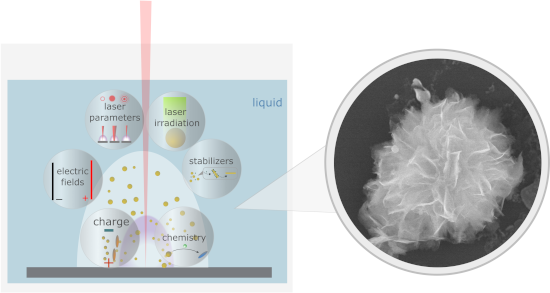
- . Combining both top-down and bottom-up strategies, laser-assisted methods are demonstrating the prospects to become a versatile nanoscale manufacturing strategy based on clean, sustainable, and large-scale approach applicable to a broad range of nanomaterials [1][2][3][4][5][6][7][8][9][10][11]. The current
- formation of seeds and NP growth represent thermodynamic condensation and electrostatic growth [8]. As demonstrated in [10], the initially formed seeds are prone to interact with the electrons in plasma, attaining negative charge, which attracts positive ions from plasma enabling growth. This occurs unless
- absorbed energy occurs via two mechanisms, convective and radiative. Typically, radiative fluxes are several orders of magnitude lower than convective ones; thus, it is usually excluded from consideration and only convective fluxes φconv are estimated. This can be done using Equations 9–10: where, h is the




Mechanical property measurements enabled by short-term Fourier-transform of atomic force microscopy thermal deflection analysis
Beilstein J. Nanotechnol. 2025, 16, 1952–1962, doi:10.3762/bjnano.16.136
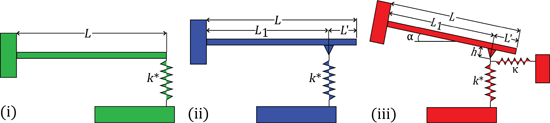
- bring physical meaning to the experimental data. Instead, in almost every example in the literature, the frequency variation is normalized to what is measured on a surface having known mechanical properties [5][9][10]. Alongside the development of CR-AFM and the analytical models used to describe the
- mechanical properties of these samples are provided in Table 1. Silicon wafers were ultrasonicated in acetone and ethanol for 10 min each. HOPG samples were cleaved using the Scotch tape method within 30 min of beginning an experiment. Finally, the PEO and PDMS samples were not surface-treated following
- high-sample rate data was performed. This data was windowed into segments of data having lengths of 2N in number of data points, with N ranging from 10 to 20. These windowed segments were convolved with the Hanning window to reduce spectral leakage. For each window, a Fourier transform was calculated




Evaluating metal-organic precursors for focused ion beam-induced deposition through solid-layer decomposition analysis
Beilstein J. Nanotechnol. 2025, 16, 1942–1951, doi:10.3762/bjnano.16.135
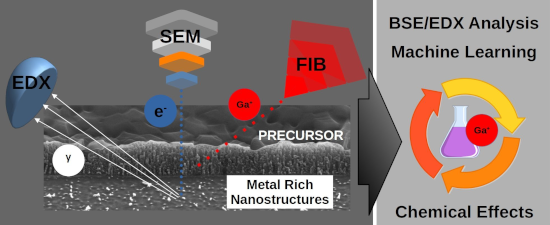
- or ion beam-induced deposition (FEBID/FIBID) allows for the precise fabrication of two- and three-dimensional nanostructures with well-defined shapes and dimensions ranging from 5 to 10 nm [1][5][6][7][8][9][10]. This high spatial resolution is achieved by precisely controlling the position and
- (111) wafer was placed in the special holder on the cold finger of the apparatus. The process was performed under a pressure of 10−2 mbar and at the following temperatures: 418 K − [Cu2(μ-O2Ct-Bu)4] [29] (1), 393 K − [Cu2(NH2(NH=)CC2F5)2(µ-O2CC2F5)4] [32] (2), 413 K − [Cu2(µ-O2CC2F5)4] (3), and 413 K
- current and duration of the experiments were adjusted (within a range of 1 to 10 nA for the ion current, and 10 s to 10 min the irradiation) in order to achieve the optimal ion fluence necessary for the decomposition of the entire precursor layer. Time-dependent changes in the morphology of the irradiated


Quantum circuits with SINIS structures
Beilstein J. Nanotechnol. 2025, 16, 1931–1941, doi:10.3762/bjnano.16.134
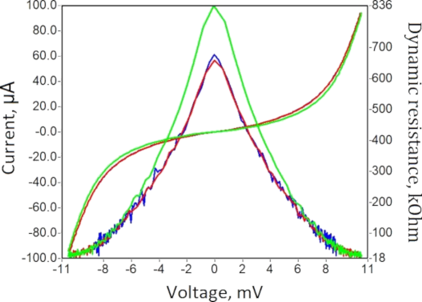
- were obtained with a black body radiation source and series of band-pass filters. The specially designed SINIS arrays are intended to detect 90 GHz radiation at the “Big Telescope Alt-azimuthal” (romanized Russian: “Bolshoi Teleskop Alt-azimutalnyi”, BTA) with noise equivalent power of less than 10−16
- devices are manufactured on their basis [1][2][3]. These extend from cryogenic thermometers [4][5][6] and electron coolers [7][8][9][10] to various detectors such as Andreev bolometers [11][12][13], cold electron bolometers [14][15], superconductor–insulator–normal metal–insulator–superconductor (SINIS
- nanostructure consisting of a T-shaped normal metal electrode (copper), an insulating tunnel layer (aluminum oxide), and a superconducting fork (aluminum), Figure 2a. Tunnel junction size is 0.2 × 0.2 µm, loop area 2, 4, 8, or 10 µm2. The transport characteristics of the fabricated interferometers were studied


PEGylated lipids in lipid nanoparticle delivery dynamics and therapeutic innovation
Beilstein J. Nanotechnol. 2025, 16, 1914–1930, doi:10.3762/bjnano.16.133
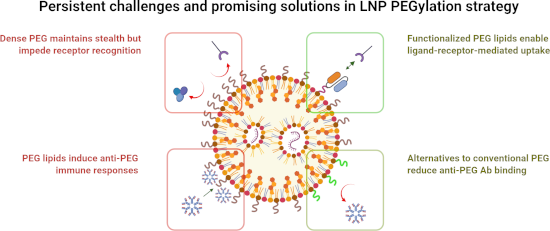
- molar ratio of 50:10:38.5:1.5, SANS analysis revealed a core–shell architecture with an average particle diameter of approximately 75 nm and a LNP shell thickness of 5 to 7 nm. Quantitative modeling of shell composition further demonstrated that the DMPE-PEG2k lipid accounted for 3.0 ± 0.5% of the shell
- volume, alongside 38 ± 7% MC3, 33 ± 3% cholesterol, and 26 ± 4% DSPC. Notably, PEG lipids were found exclusively in the shell region, with no detectable presence in the core area [10]. This localization of PEG lipids aligns with their intended function to form a sterically repulsive layer that stabilizes
- including RVG29, T7, AP2, and mApoE through thiol-maleimide click chemistry [38][39][40]. The functionalized PEG lipid was incorporated by substituting 10%, 30%, or 50% of the total 1.5 mol % PEG lipid content with DSPE-PEG-maleimide in the LNP formulation. Peptides containing a terminal cysteine residue


Targeting the vector of arboviruses Aedes aegypti with nanoemulsions based on essential oils: a review with focus on larvicidal and repellent properties
Beilstein J. Nanotechnol. 2025, 16, 1894–1913, doi:10.3762/bjnano.16.132
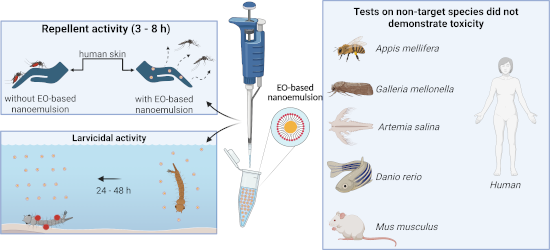
- compared to that of free EOs, in both activities. However, the repellent activity has been less explored, present in only three of the studies evaluated, in the last 10 years. Correlatingh with this, other aspects such as botanical species of EOs, mechanisms of action, composition, and characteristics of
- Bacillus thuringiensis israelensis (Bti); mechanical control, based on improving basic sanitation and infrastructure to eliminate breeding sites; and behavioral control, which promotes the adoption of practices such as the use of traps to capture mosquitoes at different life stages [9][10][11][12]. In this
- bites and, consequently, the transmission of diseases [10][24]. Despite the potential of essential oils, their use in vector control faces several limitations. The high volatility of the active compounds can reduce long-term efficacy, requiring frequent reapplications. In addition, the low polarity of


Programmable soliton dynamics in all-Josephson-junction logic cells and networks
Beilstein J. Nanotechnol. 2025, 16, 1883–1893, doi:10.3762/bjnano.16.131

- JJ-based architectures face fundamental density constraints imposed by magnetic flux manipulation requirements and complex mutual inductive crosstalks. Circuits composed entirely of Josephson junctions (all-JJ circuits) [10][11][12][13][14][15][16] represent a promising platform for energy-efficient
- networks. (Agreement no. 075-15-2025-010). A.M. is grateful to the Foundation for the Advancement of Theoretical Physics and Mathematics “BASIS” (A.M. grant 24-2-10-6-1).


Low-temperature AFM with a microwave cavity optomechanical transducer
Beilstein J. Nanotechnol. 2025, 16, 1873–1882, doi:10.3762/bjnano.16.130
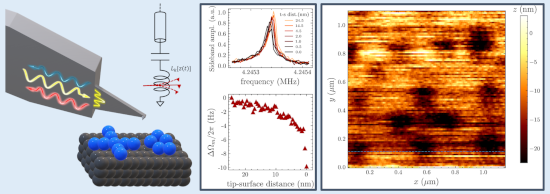
- ], tests of quantum gravity [3][4][5], force microscopy [6][7][8], magnetometry [9][10], and quantum state transfer [11][12][13]. In some cases, further improvement on fundamental figures of merit is required, while, in other cases, the difficulty lies in balancing trade-offs to find an optimal design that
- electromechanical coupling (KIMEC), whose design and fabrication were already presented in detail in previous publications by our group [17][18]. Here, we focus on the deployment of the force sensor, demonstrating force-gradient sensing and scanning over a test surface at 10 mK in a closed-cycle dilution
- edge of the plate, giving rise to a modulation of its kinetic inductance due to surface strain generated by cantilever bending. A Pt–C tip with curvature radius below 10 nm at its apex is formed at the free end of the cantilever through a series of electron-beam-assisted depositions. Figure 1d shows a


Self-assembly and adhesive properties of Pollicipes pollicipes barnacle cement protein cp19k: influence of pH and ionic strength
Beilstein J. Nanotechnol. 2025, 16, 1863–1872, doi:10.3762/bjnano.16.129
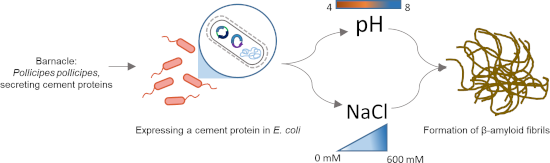
- modifications in recombinant protein expression systems [9]. Cell-Tak™ is a commercial mixture of mussel foot proteins Mfp-1 and Mfp-2 from Mytilus edulis [10] but purification of Mfp-based adhesives necessitates harvesting and chemical processing of large quantities of mussels, raising ecological and
- scalability concerns [10]. Additionally, M. edulis Mfp exhibits optimal adhesion under acidic conditions [11], potentially limiting its biomedical application. Meanwhile, synthetic sealants based on DOPA functionalisation of natural or synthetic polymers have shown promise in biomedical applications, but
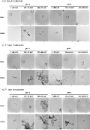
- achieved (Supporting Information File 1, Figure S1). Purified protein was dialysed into 10 mM sodium acetate (pH 4.0) or 10 mM sodium phosphate (pH 8.0) buffer, with NaCl concentrations ranging from 0 to 600 mM. Transmission electron microscopy TEM analysis identified the formation of fibril structures by


On the road to sustainability – application of metallic nanoparticles obtained by green synthesis in dentistry: a scoping review
Beilstein J. Nanotechnol. 2025, 16, 1851–1862, doi:10.3762/bjnano.16.128
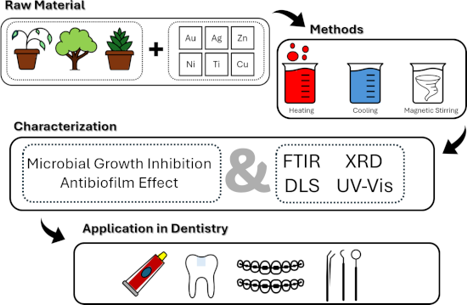
- , safe, and economically viable alternative [8][9]. This approach employs biological agents, such as plant extracts, fungi, bacteria, and algae, which contain bioactive compounds capable of acting as reducing and stabilizing agents in the formation of metallic nanoparticles [10][11]. In the case of plant
- in health-related nanotechnology [8][10]. It is considered a promising approach that integrates technological innovation, biological safety, and environmental responsibility [8][10][16]. An interesting example are silver nanoparticles, particularly those synthesized via green methods, which have
- attributed to a combination of scientific, cultural, and socioeconomic factors. First, India possesses a rich biodiversity, with a variety of endemic medicinal plants traditionally used in Ayurvedic and Unani medicine [10]. The country’s long-standing cultural familiarity with plant-based therapeutics


Current status of using adsorbent nanomaterials for removing microplastics from water supply systems: a mini review
Beilstein J. Nanotechnol. 2025, 16, 1837–1850, doi:10.3762/bjnano.16.127
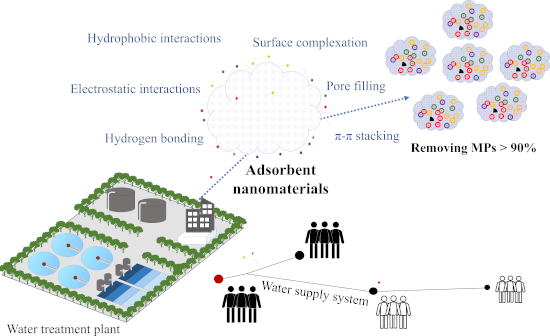
- properly removed during treatment [8]. Exposure to MPs and their adsorbed contaminants through water supply systems has been related to various adverse health effects, including endocrine disruption, neurotoxicity, carcinogenesis, and chronic exposure-related issues [9][10]. Ecologically, MPs disrupt
- Morocco demonstrated a significant amount of MPs discharged into the marine environment, with a daily average ranging from 1.6 × 10⁸ MPs per day to 9.9 × 10⁸ MPs per day in the summer [32]. Ocean-based sources, such as tourism, fishing, aquaculture, and maritime industries, account for the remaining 10–20


Phytol-loaded soybean oil nanoemulsion as a promising alternative against Leishmania amazonensis
Beilstein J. Nanotechnol. 2025, 16, 1826–1836, doi:10.3762/bjnano.16.126

- antimonials, has been increasingly reported [10][11]. As a result, plant-derived natural compounds have been extensively investigated as alternative therapeutic agents [12]. There are currently no herbal medicines used in the treatment of cutaneous leishmaniasis. However, previous studies have reported that
- . 12800-058, Bleiswijk, The Netherlands) supplemented with 10% fetal bovine serum (FBS, Life Technologies, Cat. 12657029, Bleiswijk, The Netherlands) and maintained in an atmosphere of 5% CO2 at 37 °C. Cell viability was assessed using MTT reagent (Sigma-Aldrich, Cat. M5655, St. Louis, MO, USA), with
- -solvent, Tween® 80, and ʟ-α-phosphatidylcholine (PC), as surfactants. For nanoemulsions containing phytol, 10 mg/g of the drug was added to OP. Subsequent to the nanoemulsification step, the nanoemulsions were transferred into hermetically sealed glass vials and stored at room temperature for further


Further insights into the thermodynamics of linear carbon chains for temperatures ranging from 13 to 300 K
Beilstein J. Nanotechnol. 2025, 16, 1818–1825, doi:10.3762/bjnano.16.125
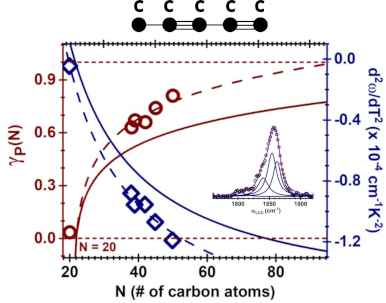
- gradients), and mechanical (e.g., pressure variations) stimuli [1][2][3][4][5][6][7][8][9][10][11][12][13][14][15][16][17][18][19][20][21][22][23]. These responses are directly connected with electronic and transport properties, which in turn depend on the equilibrium between emission and absorption of
- phonons, and gain and loss of energy of carriers [1][2][10][17][24][25][26][27][28]. The phonon lifetime as well as the selection rules behind ph–ph and e–ph interactions determine the efficiency of such phonon emission and absorption [1][2][10][17][24][25][26][27][28]. Phonons need to be in an excited
- temperature (T)-dependent phenomena are ruled by anharmonic ph–ph interactions, which are also driven by three- and four-phonon processes, and by e–ph interactions [1][2][3][4][5][6][7][8][9][10][11][12][13][14][15][16][17][18][19][20][21][22][23][24][25][26][27][28][29]. Therefore, phonon assignments in


![[Graphic 23]](/bjnano/content/inline/2190-4286-16-125-i25.svg?max-width=637&scale=1.18182)
Piezoelectricity of layered double hydroxides: perspectives regarding piezocatalysis and nanogenerators
Beilstein J. Nanotechnol. 2025, 16, 1812–1817, doi:10.3762/bjnano.16.124

- -photocatalytic process. Other work was dedicated to imidacloprid degradation by activated peroxydisulfate [10]. In this study, Zn/Al-LDH served as a piezo-photocatalyst for peroxydisulfate activation. The degradation ratio for imidacloprid reached 90.6% with a reaction rate constant of 0.021 min−1, which was 205
- XRD patterns lack the characteristic LDHs reflections, particularly the (003) and (006) peaks typically observed at 2θ values of around 10° and 20°, respectively. The absence of these reflections strongly suggests that the samples do not exhibit the structural features characteristic of LDHs. In
- successful synthesis of a hydrotalcite-like Ni/Fe-LDH. The reported cation ratio of Ni/Fe = 0.56 is unlikely to yield a stable LDH phase. Moreover, the presented XRD data begin only at 2θ values of 20°, thereby omitting the (003) reflection at approximately 10°, which is one of the most critical indicators

Electrical, photocatalytic, and sensory properties of graphene oxide and polyimide implanted with low- and medium-energy silver ions
Beilstein J. Nanotechnol. 2025, 16, 1794–1811, doi:10.3762/bjnano.16.123
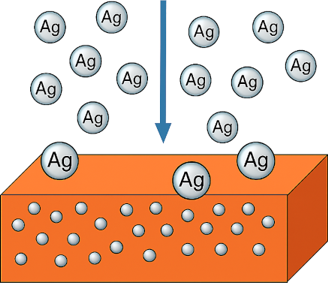
- [10]. The delocalized electrons in these regions can freely pass between neighboring centers, thereby reducing the energy activation for conducting electric current. At the same time, the aggregation of the implanted Ag ions and the formation of metal islands or clusters in the form of nanostructures
- to deeper ion penetration. While higher fluences also distort the surface, the resulting densification or redistribution of defects may lead to a decrease in roughness at the highest fluence. The findings for PI suggest that the application of low-energy 20 keV Ag (Figure 10) ion implantation results
- the sheet resistivity over the entire range of relative humidity measurements. The sheet resistivity of this sample at 10% relative humidity was 1 × 10¹¹ Ω·sq−1, while after increasing the relative humidity to the 60%, the sheet resistivity decreased significantly to 2 × 10⁸ Ω·sq−1. Different results


Exploring the potential of polymers: advancements in oral nanocarrier technology
Beilstein J. Nanotechnol. 2025, 16, 1751–1793, doi:10.3762/bjnano.16.122
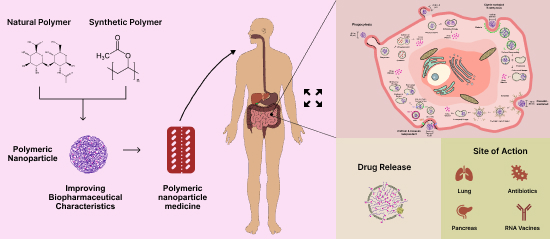
- biodistribution while preventing undesirable interactions and degradation before reaching target tissues and cells [10]. Moreover, by overcoming the biological and chemical barriers of the body, nanotechnology increases the efficiency and effectiveness of therapeutic and diagnostic regimens, offering less
- increases), has the potential to close the pores and regulate the release of the active ingredients. This release can occur through diffusion via water-filled pores, diffusion through the polymer matrix, osmotic pumping, and erosion [10][86]. The release of the encapsulated agent refers to the transport of
- . Diffusion-controlled release is directly influenced by the effective diffusion coefficient of the drug within the polymer matrix [10]. Erosion, as a release mechanism, involves the degradation of the polymer matrix, altering the nanostructure in two ways: surface and bulk erosion. In surface erosion, the


Advances of aptamers in esophageal cancer diagnosis, treatment and drug delivery
Beilstein J. Nanotechnol. 2025, 16, 1734–1750, doi:10.3762/bjnano.16.121
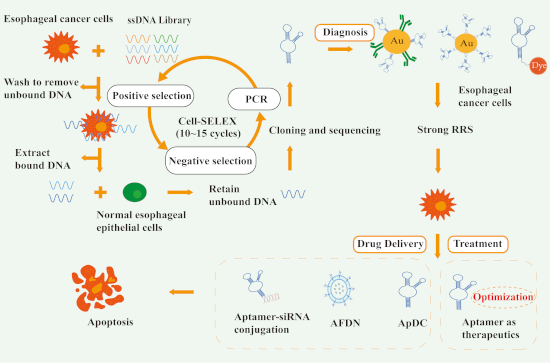
- subtle, frequently escaping clinical detection. Definitive diagnosis typically requires upper gastrointestinal endoscopy to identify potential early neoplastic changes [7][8]. Barrett’s esophagus is generally considered to be a precancerous lesion of EAC [9][10], while esophageal intraepithelial


Multifunctional anionic nanoemulsion with linseed oil and lecithin: a preliminary approach for dry eye disease
Beilstein J. Nanotechnol. 2025, 16, 1711–1733, doi:10.3762/bjnano.16.120
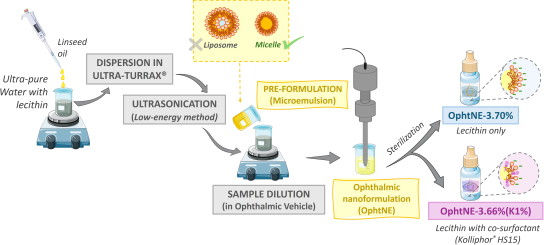
- >75% cell viability in L929 cells and ~10% 2,2-diphenyl-1-picrylhydrazyl (DPPH) antioxidant effect. These findings support the multifunctional potential (cytocompatibility and antioxidant) of sterile OphtNE-3.66%(K1%) for the treatment of DED, emphasizing the need for in vivo studies to ensure its
- (approximately 5% or 1.5 µL) of the administered dose reaches the ocular chamber after topical application to the inferior conjunctival sac [10][11]. The topical use of artificial tears is the standard treatment for symptomatic relief from DED [12], while topical anti-inflammatory therapy is used in chronic
- for 5 min. Then, the system underwent further homogenization with a Q125 Sonicator (QSonica, USA), using the 4435 probe (QSonica, USA) for 15 min (three cycles of 5 min each), at 100% amplitude, with pulses of 10 s on and 2 s off. Ophthalmic nanoformulation The OV was initially prepared by dissolving



Beyond the bilayer: multilayered hygroscopic actuation in pine cone scales
Beilstein J. Nanotechnol. 2025, 16, 1695–1710, doi:10.3762/bjnano.16.119
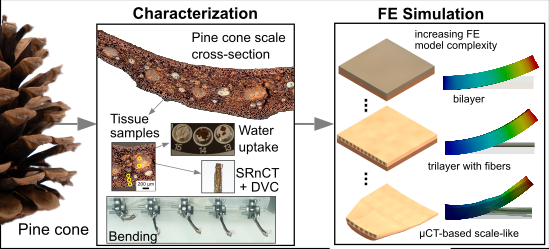
- technical applications [1][2][3][4]. Of particular interest are, for example, Banksia seed pods [5][6], Hakea fruits [7][8], and scales of pine cones [9][10][11][12], which passively respond to changes in ambient relative humidity by shape morphing to facilitate seed dispersal. In the case of pine cones
- our samples inside the chamber, as well as a side view of the samples, were recorded externally every 10 min using a single-board computer (Raspberry Pi 4 Model B, Raspberry Pi Foundation, Cambridge, UK) connected to a temperature and humidity sensor (DHT22, Sertronics GmbH, Berlin, Germany) and a
- also in the scale-like model, another simulation was performed in which the Young's modulus was reduced below the Young's modulus of the sclereid layer from 50 to 10 MPa. The imported geometries were converted into a volume mesh in Ansys (quadratic tetrahedrons; Tet10 elements) with edge lengths of


Ambient pressure XPS at MAX IV
Beilstein J. Nanotechnol. 2025, 16, 1677–1694, doi:10.3762/bjnano.16.118
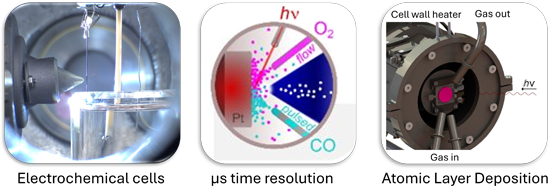
- fields of, among others, catalysis research, material characterization, and thin film deposition, utilizing dedicated cells. HIPPIE, on the 3 GeV ring, covers a wider photon energy range than SPECIES (250 to 2500 eV), also with variable polarization [10]. It has two branches, each with its own
- back-filled vacuum chamber with two manipulators and base pressure in the 10−6 mbar range. Access to the chamber is realized via a large front door. This offers a versatile and flexible system where various custom setups and sample environments can be installed. The primary setup used at the SLE is an
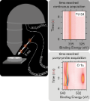
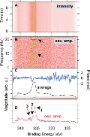
- repetition rate of 5 Hz to control O2 gas injection (piezoelectric valve) in a background of NH3 (15 sccm) and O2 (10 sccm) achieving 3.8 mbar (the local pressure at the sample surface is much higher) total pressure at 460 °C on a PtRh(100) catalyst. Spectra were acquired at 200 kHz (5 µs time resolution





Energy spectrum and quantum phase transition of the coupled single spin and an infinitely coordinated Ising chain
Beilstein J. Nanotechnol. 2025, 16, 1668–1676, doi:10.3762/bjnano.16.117
- layouts, if one considers spins as qubits. In particular, we have previously proposed a method for implementing a CCZ (control–control–Z) quantum gate on a system composed of three logical qubits, which are connected to another coupler qubit [10]. This approach allows to increase the fidelity of the
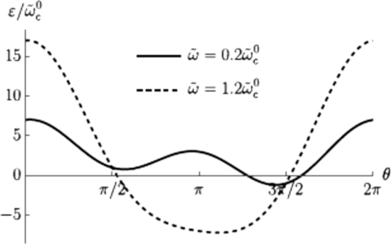
- gate [10]. Although, admittedly, the thermodynamic limit approximation made during the analysis is far from a feasible experimental setup involving only several qubits. Energy profile (Equation 16) of the LMG model in the thermodynamic limit as a function of θ at φ = 0 and = 0. The solid line

![[Graphic 39]](/bjnano/content/inline/2190-4286-16-117-i63.svg?max-width=637&scale=1.18182)


![[Graphic 51]](/bjnano/content/inline/2190-4286-16-117-i75.svg?max-width=637&scale=1.18182)



