


Search results
Search for 日本10公里记录 in Full Text gives 2649 result(s) in Beilstein Journal of Nanotechnology. Showing first 200.
Functional bio-packaging enhanced with nanocellulose from rice straw and cinnamon essential oil Pickering emulsion for fruit preservation
Beilstein J. Nanotechnol. 2025, 16, 1234–1245, doi:10.3762/bjnano.16.91
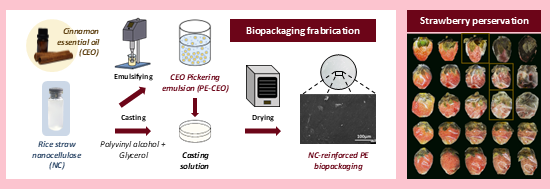
- exhibits good heat-resistance, mechanical, and water-barrier properties. At an emulsion concentration as low as 10% (v/w) in the casting solution, high UV absorbance capacity (up to 100% UVC), high antibacterial activity (92.4% Escherichia coli inhibition), and good antioxidative properties (up to 43% DPPH
- degradation byproducts [8][9]. One problem is that the hydrophilic structure of PVA gives it a high water-solubility, water uptake, and worse mechanical properties [10][11]. Different filler and nanomaterials including silica [12][13][14], graphene [15][16], and metals [17][18] have been added to PVA to
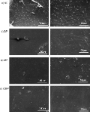
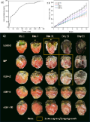
- physicochemical properties of the films. Thermogravimetric analysis (TGA) (Figure 2c) shows how increasing the PE-CEO concentration may affect the thermal stability of the sample. At lower PE-CEO concentration, almost no variation between the rCBP samples can be observed. At 10% (v/w) PE-CEO concentration, a



Hydrogels and nanogels: effectiveness in dermal applications
Beilstein J. Nanotechnol. 2025, 16, 1216–1233, doi:10.3762/bjnano.16.90
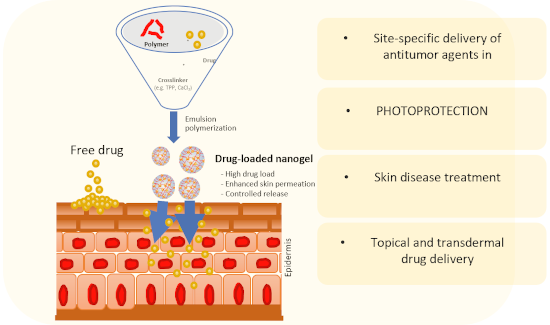
- have emerged as promising alternatives for various medical purposes, including skin [7], nasal [4], and eye [8] applications. The evolution of ocular contact lenses, for example, has benefited from the development of hydrogels [9][10]. Hydrogels can be described as cross-linked polymeric networks
- stirring followed by rest to form the gel [138]. Keratin concentrations varied between 10, 15, and 20% in water, and vigorous agitation was used for dissolution [136]. Then, to promote the formation of disulfide bonds, a 5% solution of H2O2 is added. For gel formation, mixtures should be incubated


Investigation of the solubility of protoporphyrin IX in aqueous and hydroalcoholic solvent systems
Beilstein J. Nanotechnol. 2025, 16, 1209–1215, doi:10.3762/bjnano.16.89
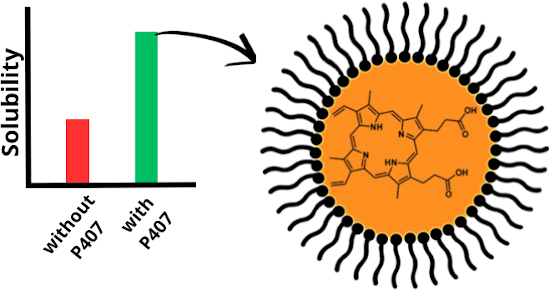
- evaluate the solubility of PpIX in distinct solvent systems to support the development of novel pharmaceutical formulations. The shake-flask method was employed, using purified water, 50% ethanol (EtOH50), 77% ethanol (EtOH77), absolute ethanol (EtOHabs), and polymeric systems containing 10% (w/w
- ) poloxamer 407 (P407) in water, in EtOH50 or in EtOH77. Approximately 10 to 25 mg of PpIX was added to 25 mL of the solvent, and the solutions were stirred at 100 rpm, at 37 °C, for up to 96 h. The PpIX concentration was measured by using a validated method (R = 0.9973), with equilibrium reached within 30
- mg/mL in water to 0.593 mg/mL in water containing 10% (w/w) P407. The solubility of PpIX in EtOH50 and EtOH77 with 10% (w/w) P407 was 0.503 and 0.507 mg/mL, respectively, while EtOHabs yielded the lowest solubility among ethanolic solvents (0.179 mg/mL). These results indicate that water and EtOHabs


Chitosan nanocomposite containing rotenoids: an alternative bioinsecticidal approach for the management of Aedes aegypti
Beilstein J. Nanotechnol. 2025, 16, 1197–1208, doi:10.3762/bjnano.16.88
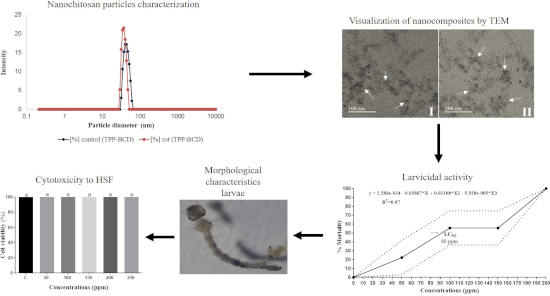
- impacts associated with traditional synthetic insecticides [9][10]. Chitosan nanoparticles, derived from a biodegradable and nontoxic polysaccharide, have proven effective in reducing post-harvest deterioration of fruits and vegetables, in addition to exhibiting well-documented antimicrobial properties
- of nanocomposites in 50% MeOH was prepared. The solution was subjected to ultrasonic bath for 10 min at room temperature. Then, the samples were filtered with a 0.22 μm filter and injected into the HPLC system. For each sample, two runs were performed, and the average peak areas obtained were used
- for concentration calculations. Larvicidal activity assay The larvicidal assay was conducted according to the standards established by the World Health Organization [39] with adaptations [14]. Starting from an initial stock solution (10 mg nanoparticles/mL in water-diluted vinegar [to reach a 0.08



Electronic and optical properties of chloropicrin adsorbed ZnS nanotubes: first principle analysis
Beilstein J. Nanotechnol. 2025, 16, 1184–1196, doi:10.3762/bjnano.16.87
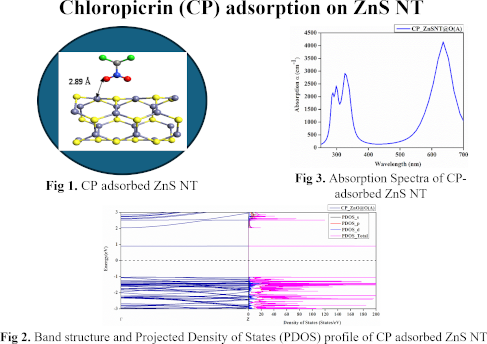
- their bulk counterparts [9][10][11][12][13][14]. Zinc sulfide (ZnS) attracts considerable attention among various nanomaterials due to its unique properties. Nanostructured ZnS with different morphologies, including nanotubes, nanowires, nanoparticles, and nanosheets has been extensively investigated
- the changes in Zn–S bond lengths near the CP adsorption site for different orientations before and after optimization, alongside the adsorption distance between the adsorbate and adsorbent. The most significant changes in bond length were observed near the atomic positions Zn(10)–S(13)–Zn(9), which
- × 10−5 eV/K), and ϑ0 is the attempt frequencies (= 1012 Hz). The recovery time of ZnS NT for various orientations of CP adsorption is calculated and presented in Table 4. Remarkably, the sensing response and recovery time of ZnS NT towards the CP molecule for orientation A is exceptionally favorable


Mechanical stability of individual bacterial cells under different osmotic pressure conditions: a nanoindentation study of Pseudomonas aeruginosa
Beilstein J. Nanotechnol. 2025, 16, 1171–1183, doi:10.3762/bjnano.16.86
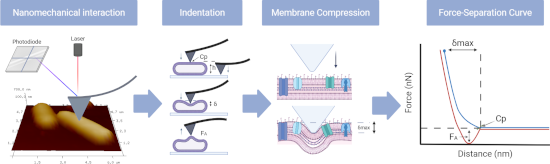
- patients [6][7][8]. As a Gram-negative bacterium, PA is characterized by a distinctive cell wall structure constituted by a thin peptidoglycan layer enclosed by an outer membrane which contains lipopolysaccharides (LPS) [9][10][11]. The outer membrane also contains numerous proteins, lipoproteins, and
- –Hinton agar and again incubated for 24 h under the same conditions. Isolated colonies of PA were collected using a calibrated loop and suspended in 5 mL of phosphate buffer supplemented with 50 µL of Mueller–Hinton broth. The suspension was vortexed for 10 s before its preparation for AFM analysis
- regular adhesive tape, and coated with 5 μL of the cationic polymer poly-ʟ-lysine (PLL, MW 40 kDa, Sigma-Aldrich). The drop of PLL was not allowed to dry but incubated for 10 min, and then the surfaces were repeatedly rinsed with Milli-Q water to allow the formation of a thin film. This coating promotes


Transfer function of an asymmetric superconducting Gauss neuron
Beilstein J. Nanotechnol. 2025, 16, 1160–1170, doi:10.3762/bjnano.16.85
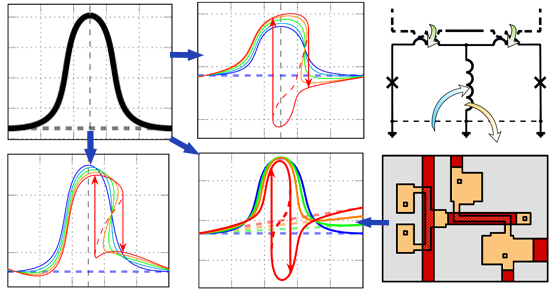
- ] describe neuromorphic elements based on superconducting interferometers that emulate the signal response of biological neurons in various real-world scenarios. In [1][7][8][9][10][11][12][13][14][15], adiabatic neuromorphic interferometers were presented, whose energy consumption can be reduced to the
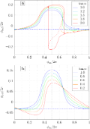
- . Thus, The normalized system of equations takes the form [14]: By solving this system for the input and output fluxes, we obtain the TF of the Gauss neuron ϕout(ϕin), which can be written as a two-parameter dependence: Equation 10 and Equation 9 are derived as the sum and the difference of Equation 7
- and Equation 8, respectively. Equation 11 is obtained by substituting Equation 10 into Equation 6 to eliminate the output signal ϕout. By using the common method of introducing half-sum and half-difference of phases [1][8][9][12][14], φ+ = (φA + φB)/2, φ− = (φB − φA)/2, the system of Equation 10 and



Crystalline and amorphous structure selectivity of ignoble high-entropy alloy nanoparticles during laser ablation in organic liquids is set by pulse duration
Beilstein J. Nanotechnol. 2025, 16, 1141–1159, doi:10.3762/bjnano.16.84
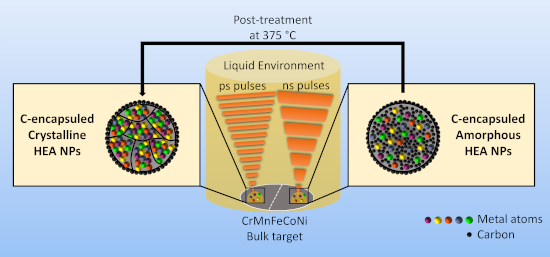
- nanomaterials, usually consisting of single-phase solid solutions made of five or more elements, forming relatively simple face-centered cubic [6][7][8] (fcc) or body-centered cubic [9][10] (bcc) crystal structures, stabilized by the configurational part of Gibbs-free energy. It is worth noting that high
- example in magnetron sputtering techniques. Colloidal HEA NPs by LSPC were first reported in 2019 by Waag et al. [35], where CrMnFeCoNi NPs were produced in ethanol, using a picosecond-pulsed laser for ablation (ps-LAL), yielding colloids of HEA NPs with a mean diameter below 10 nm and productivities of 3
- g/h. Both the bulk target and the NPs showed a crystalline fcc phase with a lattice parameter of 3.58 Å and a solid solution structure. Löffler et al. investigated the very same element system enriched with Mn, again made by ps-LAL in ethanol. They reported particle mean diameters below 10 nm and a




Deep learning for enhancement of low-resolution and noisy scanning probe microscopy images
Beilstein J. Nanotechnol. 2025, 16, 1129–1140, doi:10.3762/bjnano.16.83
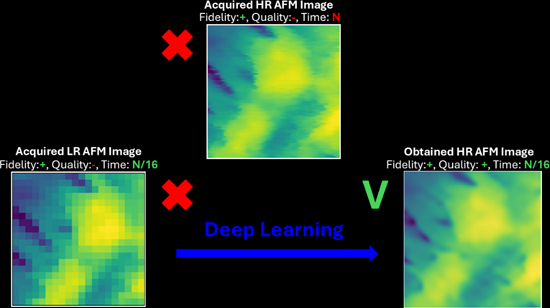
- interactions. Scanning distortions due to non-linearities in the scan are also trickier to correct and harder to avoid in fast scanning. Some of these artifacts can be eliminated or attenuated by image processing techniques [4][5][6][7][8][9][10][11][12]. Another resolution-limiting factor in AFM is the tip
- metric based on the collection of “quality aware” image statistical features. PI is thus given by the formula PI = 0.5 × ((10 − Ma) + NIQE). While Table 1 and Table 2 show the exact values of the different metrics for each method/model (values in bold represent metrics in which all SR deep learning
- no significant statistical difference in fidelity metrics calculated for the images obtained from traditional methods and deep learning models, in the field experts’ evaluation, there is a statistically significant difference in favor of the deep learning models (with p-values below 2.9 × 10⁻⁷). Pre


Towards a quantitative theory for transmission X-ray microscopy
Beilstein J. Nanotechnol. 2025, 16, 1113–1128, doi:10.3762/bjnano.16.82
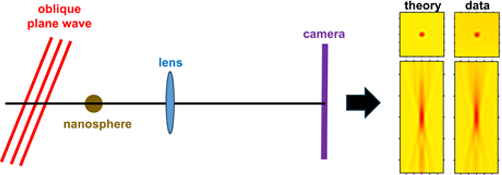
- determined by Beer’s law, whereas the microscope underestimates this absorption by 10–20%. This surprising observation highlights the need for future work to identify the microscope feature(s) that lead to this quantitative discrepancy. Keywords: 3D imaging; mathematical model; Mie theory; nanoparticle
- nm, from which quantitative data are often extracted. For example, in materials science applications, nanoscale spectromicroscopy [5][6][7][8] is used to examine a sample around its absorption edges, which provides insights into its electronic structure. In biomedical applications [9][10][11][12
- Equation 10 into Equation 9 leads to the final expression for the plane-wave field at the camera, which depends on the camera coordinates (x, y) and the amount of defocus z of the sample: Similarly, substitution of Equation 11 into Equation 9 leads to the final expression for the scattered-wave field at



Influence of ion beam current on the structural, optical, and mechanical properties of TiO2 coatings: ion beam-assisted vs conventional electron beam evaporation
Beilstein J. Nanotechnol. 2025, 16, 1097–1112, doi:10.3762/bjnano.16.81
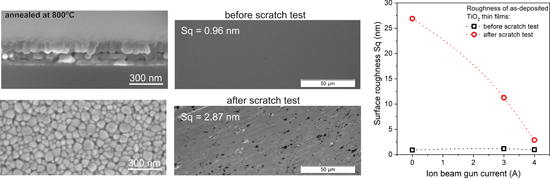
- , annealing caused a decrease of the transparency level by 32% for films deposited by EBE, while for films from the IBAD process the decrease was less than 10%. The use of an ion gun increased the hardness of the TiO2 films from 2.4 to 3.5 GPa (Iibg = 4 A). Although a similar relationship was observed for
- -assisted deposition (IBAD), which is the bombardment of a thin film with a beam of energetic particles during deposition, is an excellent technique for modifying the microstructure and optical, mechanical, and tribological properties of thin film coatings [8][9][10][11]. This energetic process offers many
- ][10][11][12]. Electron beam evaporation is very effective for preparing transparent titanium dioxide thin films, such as optical coatings for a large variety of applications. Due to its desirable structural, optical, and electrical properties, high thermal and chemical stability, relatively low price




Fabrication of metal complex phthalocyanine and porphyrin nanoparticle aqueous colloids by pulsed laser fragmentation in liquid and their potential application to a photosensitizer for photodynamic therapy
Beilstein J. Nanotechnol. 2025, 16, 1088–1096, doi:10.3762/bjnano.16.80
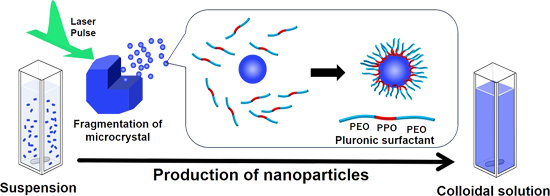
- the activity of the target substance in general. An alternative and promising method for dispersing hydrophobic organic compounds as colloids is pulsed laser fragmentation in liquids (PLFL) [9][10]. This relatively new fabrication method has advantages because a microcrystalline sample powder
- cuvette (1 × 1 × 4 cm3) and irradiated with nanosecond laser pulses (532 nm wavelength, 6 ns full-width at half-maximum, 10 Hz repetition rate, fluence = 140 mJ·cm−2 per pulse) under stirring with a magnetic stirrer. The nanoparticle generation was examined by measuring the absorption spectrum with a USB
- [30][31]. A halogen lamp light with a wide spectral range of 500–800 nm using optical filters was used as light source for 10 min at an output power of 35 mW·cm−2 (Figure S6 and Figure S7, Supporting Information File 1). For AlClPc and PtOEP nanoparticles, a significant reduction in the cell viability


Single-layer graphene oxide film grown on α-Al2O3(0001) for use as an adsorbent
Beilstein J. Nanotechnol. 2025, 16, 1082–1087, doi:10.3762/bjnano.16.79
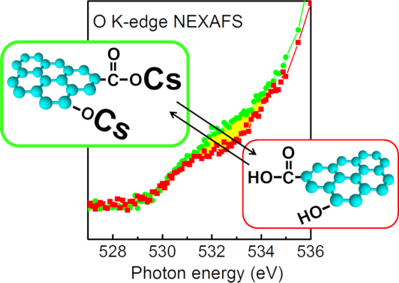
- has a high level of water affinity. Consequently, GO can be expected to have a wide range of applications, such as primers, thermally conductive materials, transparent electrodes, and adsorbent materials [3][4][5][6][7][8][9][10][11][12][13]. GO is typically synthesized by oxidizing graphite. Several
- and primers in addition to adsorbents, which could be investigated in future research. Experimental Growth of SLGO on α-Al2O3(0001) SLGO was grown by a method analogous to [35]. Before synthesizing SLGO, SLG was grown on an α-Al2O3(0001) substrate (size: 10 × 10 mm2, thickness: 430 µm). The substrate
- was annealed at 900 °C in open air in order to obtain an atomically flat surface. Then, the substrate was introduced into a vacuum furnace. The base pressure of the furnace was 6 × 10⁻⁶ Pa. After evacuating, the substrate was annealed up to 1000 °C for 1 h. For the graphene growth, a methanol vapor


Piezoelectricity of hexagonal boron nitrides improves bone tissue generation as tested on osteoblasts
Beilstein J. Nanotechnol. 2025, 16, 1068–1081, doi:10.3762/bjnano.16.78
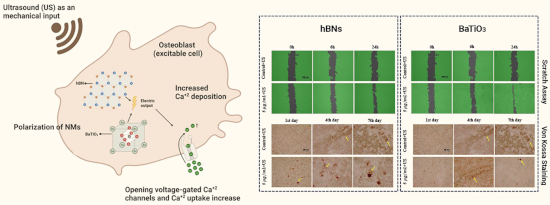
- capability arises from the noncentrosymmetric structure of collagen, which allows both direct and inverse piezoelectric effects [9]. Mechanically induced electrical stimulation activates cellular signaling pathways that enhance osteogenesis and promote osteogenic differentiation [10]. Specifically
- , activation of the calcium/calmodulin pathway leads to the expression of transforming growth factor-β (TGF-β), bone morphogenetic proteins (BMPs), and other regulatory factors which control extracellular matrix production, bone homeostasis, tissue repair, and mesenchymal stem cell (MSC) differentiation [10
- performed to investigate the main interactions between HOb cells and NMs with US stimulation. HOb cells were cultured in a High-Glucose Dulbecco’s Modified Eagle Medium/Nutrient Mixture F-12 (DMEM/F-12) (Pan Biotech) medium containing 10% fetal bovine serum (FBS) (Pan Biotech), 1% penicillin streptomycin


Soft materials nanoarchitectonics: liquid crystals, polymers, gels, biomaterials, and others
Beilstein J. Nanotechnol. 2025, 16, 1025–1067, doi:10.3762/bjnano.16.77
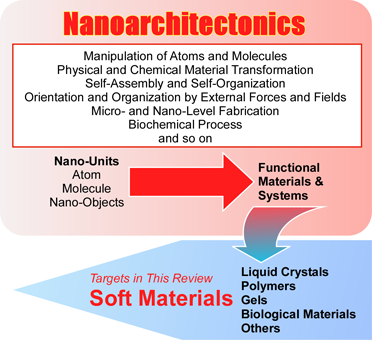
- exhibit diverse responses to external stimuli is on the rise [6][7][8][9][10]. The field of materials chemistry is undergoing a transition from a focus on hard, robust materials to a greater emphasis on softer, more mouldable substances. This shift is actually reasonable as observed in the evolution of
- . At a temperature of 5 °C, the molecules formed islands with a high degree of density. At 40 °C and 10 mN·m−1, a network of separated nanowires was observed. As the surface pressure increased, the separated nanowires exhibited a tendency to come closer together, ultimately forming a nanowire network
- polyelectrolyte–surfactant complexes (Figure 10) [260]. The complex structures consist of polyaniline appended with amino groups and monododecyl phosphate. The intricate films were produced using a spin coating method. The films displayed distinct lamellar structures, resulting from the strong interactions






Multifunctional properties of bio-poly(butylene succinate) reinforced with multiwalled carbon nanotubes
Beilstein J. Nanotechnol. 2025, 16, 1014–1024, doi:10.3762/bjnano.16.76
- morphology and properties of the polymer matrix by altering its structure, crystallinity, thermal stability, and mechanical behavior [9][10][11]. CNTs can be classified into two basic types, namely, single-walled carbon nanotubes (SWCNTs) and multiwalled carbon nanotubes (MWCNTs). SWCNTs exhibit slightly
- many researchers [9][10][11][12][13][14][15][16]. Regarding PBS-based nanocomposites, most studies focus on the influence of CNTs (including modified CNTs) on their thermal behavior [17][18][19], crystallization [20][21][22], structure [14][17][21][22][23], and biodegradability [12]. PBS/CNT
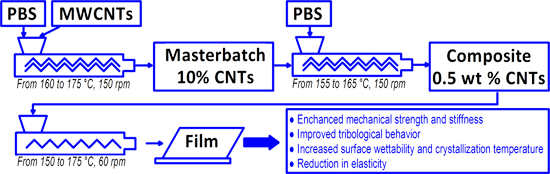
- . Results and Discussion The bio(nano)composite based on PBS containing 0.5 wt % of CNTs (denoted PBS/CNT_0.5) was successfully prepared via dilution of a pre-compounded masterbatch with 10 wt % CNTs (denoted PBS/CNT_10). This specific CNT content was identified as optimal, balancing enhanced material



A calix[4]arene-based supramolecular nanoassembly targeting cancer cells and triggering the release of nitric oxide with green light
Beilstein J. Nanotechnol. 2025, 16, 1003–1013, doi:10.3762/bjnano.16.75
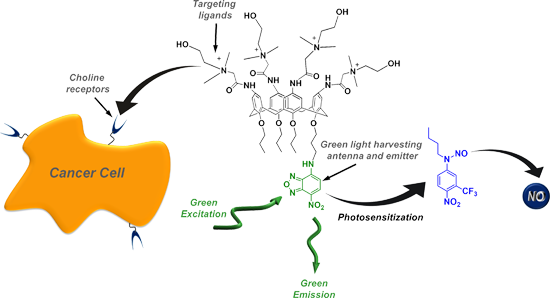
- immunogenicity and paving the way for a variety of applications in the biomedical field [1][6][7][8][9]. Due to their amphiphilic character, calix[n]arene derivatives can self-assemble in water medium, leading to nanoaggregates exhibiting much better hosting performances than the single monomers [10]. Aggregates
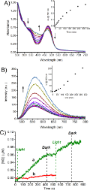
- stable photoproduct (inset Figure 3B), in according to what we have recently reported for an NOPD based on the same chromophoric motif [61]. The quantum yield related to the NO photorelease process was calculated to be ΦNO = 4.5 × 10⁻³, identical to that recently reported for a similar compound bearing a
- related to the NO photorelease processes was calculated to be ΦNO ~ 4 × 10⁻³, which is basically the same value observed by direct excitation of 2 with blue light (see above). Since the ABF chromophore is the only antenna absorbing green light, these results account for a photosensitization process


Time-resolved probing of laser-induced nanostructuring processes in liquids
Beilstein J. Nanotechnol. 2025, 16, 968–1002, doi:10.3762/bjnano.16.74
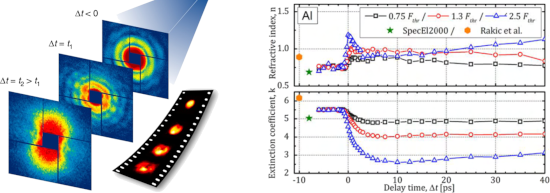
- exchanging energy and material with the excited loci. LSPC commonly encompasses laser ablation in liquid (LAL), which allows for producing NPs from a surface of virtually any solid [6][7][8][9], laser fragmentation in liquid (LFL) to further reduce dimensions of particles down to few-atom clusters [10][11
- electrons of the liquid sample pumped by a synchronized femtosecond laser pulse are then recorded by a detector as a scattering pattern, which provides a momentum transfer range (denoted by q) reaching as large as 10 Å−1, cf. Figure 4B for the liquid water scattering pattern. Here q = 4πsinθ/λ, where θ is
- of electrons (of the order of 10%) can be excited, which would lead to changes of the interatomic forces faster than electron–phonon coupling. This has been seen in semiconductors [24][112] in particular. The electron–phonon coupling will increase the temperature of the lattice, which will undergo


Shape, membrane morphology, and morphodynamic response of metabolically active human mitochondria revealed by scanning ion conductance microscopy
Beilstein J. Nanotechnol. 2025, 16, 951–967, doi:10.3762/bjnano.16.73
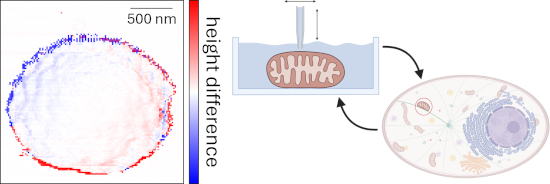
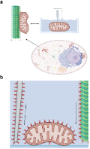
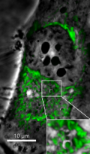
- [6][7][8][9]. These processes are integral to maintaining cellular homeostasis [10], and disruptions in mitochondrial function are implicated in numerous diseases, including Parkinson’s disease [11][12][13], cardiovascular diseases [14][15][16], Alzheimer’s disease [12][17][18], obesity [19], and
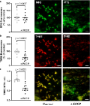
- . Therefore, the TMRE/MTG ratio decreases significantly after FCCP treatment (Figure 1c). In addition, oxygen consumption was measured. An oxygen consumption rate of 211.0 ± 10.16 μmol·L−1 was recorded within 10 min in Krebs–Ringer medium with CaCl2, 5.5 mmol·L−1 glucose and 0.1% BSA (mass fraction
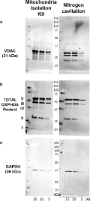
- ), regardless of the isolation method. After storing the mitochondrial fractions at −80 °C for four days to three months, oxygen consumption was only slightly reduced to 182.8 ± 16.88 μmol·L−1 per 10 min. Thus, freezing and thawing have little effect on mitochondrial performance. Because the additives are not



Tendency in tip polarity changes in non-contact atomic force microscopy imaging on a fluorite surface
Beilstein J. Nanotechnol. 2025, 16, 944–950, doi:10.3762/bjnano.16.72
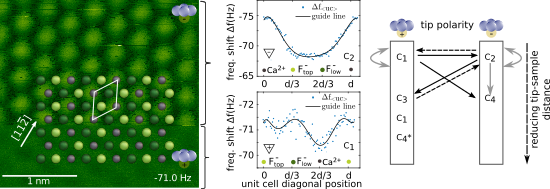
- insulator materials in real space with unprecedented spatial resolution [2][3][4][5][6]. Besides high-resolution imaging of molecular structures [7], NC-AFM has demonstrated its ability to identify sublattices of atomic surfaces [8][9][10]. In these studies, the knowledge of the tip’s atomic structure plays
- over many years based on theoretical simulations of NC-AFM data for a variety of plausible tip models [9][19][20][21][22]. Through further endeavors, a qualitative distance-dependent approach involving electrostatic interactions and Pauli repulsion has recently been exemplified on CaF2(111) [10]. As a
- central result, gradual atomic contrast transitions as a function of the tip–sample distance have been introduced as criteria for identifying a positively and a negatively terminated tip [10]. Still, a crucial aspect in sublattice identification studies is to distinguish between contrast changes caused by


Synthesis of biowaste-derived carbon-dot-mediated silver nanoparticles and the evaluation of electrochemical properties for supercapacitor electrodes
Beilstein J. Nanotechnol. 2025, 16, 933–943, doi:10.3762/bjnano.16.71
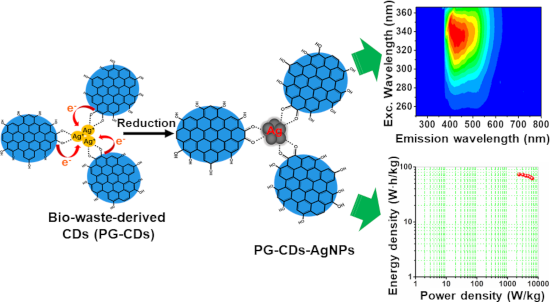
- environmentally friendly as CDs play a role as capping, reducing, and stabilizing agent without addition of any chemicals. PG-CDs-AgNPs showed a particle size of 10 nm having excellent fluorescence emission in the blue region, and it has been explored as an electrode material for supercapacitor applications. The
- density, quick charge/discharge capacity, and an outstanding retention rate. Nanocarbons are the appropriate candidates for EDLCs due to their high surface charge-storage ability and high conductivity [8][9][10]. The development of electrode materials with an efficient EDLC and pseudocapacitor properties
- -CDs-AgNPs) The method for synthesizing AgNPs employing PG-CDs as both the reducing and stabilizing agents is as follows. PG-CDs-AgNPs were synthesized by adding the PG-CDs solution to 1 mM AgNO3 in 1:10 V/V ratio in 100 mL of distilled water. The reaction was kept at room temperature undisturbed. The


Structural and magnetic properties of microwave-synthesized reduced graphene oxide/VO2/Fe2O3 nanocomposite
Beilstein J. Nanotechnol. 2025, 16, 921–932, doi:10.3762/bjnano.16.70
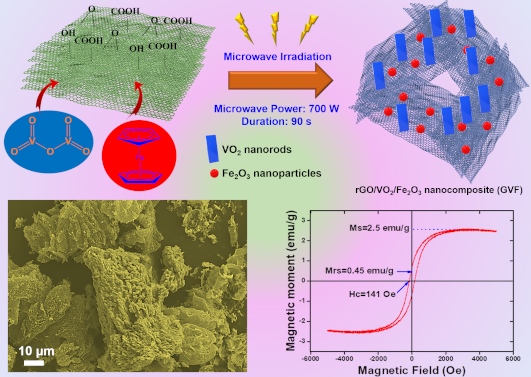
- to these approaches due to lesser time consumption and the lack of sophisticated instrumentation. In this aspect, Kumar et al. demonstrated a facile MW-assisted synthetic route for the perforation and decoration of Pd nanoparticles (NPs) on rGO sheets [10]. The resultant NC displayed its potential



Focused ion beam-induced platinum deposition with a low-temperature cesium ion source
Beilstein J. Nanotechnol. 2025, 16, 910–920, doi:10.3762/bjnano.16.69
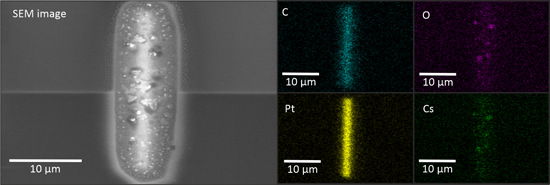
- are more advanced with respect to source development because of their relatively low requirements regarding the cooling laser. Milling [10] as well as induced deposition of platinum (Pt) [11] and tungsten (W) [12] have been studied for a prototype FIB with an ultracold Rb+source. Further, a Cs+ laser
- signal-to-noise ratios for SIMS analysis. A disadvantage of using Cs+ is a possible surface modification [20][21][22]. One aspect of this paper is to show whether it is at all possible to deposit Pt with Cs+ ions or whether surface modifications dominate [10]. This work presents FIBID experiments using a
- nozzle kept about 100 μm above the sample surface. The chamber pressure of the Cs+ and the Ga+ FIB was about 5 × 10⁻⁷ mbar before deposition and 8 × 10⁻⁶ mbar during deposition. For Pt deposition, a beam step size of −150% of the beam diameter was used with an upper limit of 200 nm for the Cs FIBID to


Characterization of ion track-etched conical nanopores in thermal and PECVD SiO2 using small angle X-ray scattering
Beilstein J. Nanotechnol. 2025, 16, 899–909, doi:10.3762/bjnano.16.68
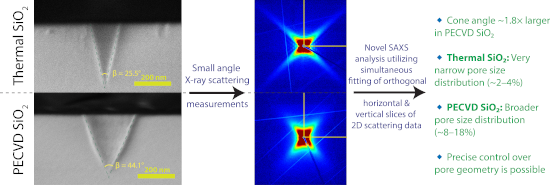
- attracted significant attention in the past decade because of their broad applicability in a variety of areas including biosensing, micro/ultrafiltration, desalination, ion and molecular separation, dialysis, battery technologies, blue energy generation, and nanofluidics [1][2][3][4][5][6][7][8][9][10][11
- nm/min. Using these values in conjunction with our track etching model [13], we calculated track etching rates of 85 ± 10, 87 ± 5, and 91 ± 6 nm/min for the respective PECVD samples, while thermal SiO2 showed a track etching rate of 68 ± 4 nm/min. These track etching rates agrees well with the values
- both the sample-to-detector distance and beam center positions. Exposure times ranged from 2 to 10 s, with samples mounted on a three-axis goniometer for precise alignment with the incident X-ray beam. Detailed information regarding alignment, tilts, measurements, geometry, and 2D analysis procedures


Heat-induced transformation of nickel-coated polycrystalline diamond film studied in situ by XPS and NEXAFS
Beilstein J. Nanotechnol. 2025, 16, 887–898, doi:10.3762/bjnano.16.67
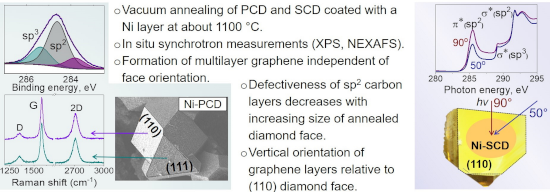
- diamond surfaces is initiated at 750 °C. A temperature of about 1500 °C is needed for the formation of extended graphene-like layers, and temperatures higher than 2000 °C are required for the complete conversion of the diamond (111) surface to graphitic layers [10][11]. Thermal stability of diamond
- crystals depends on the crystallographic orientation of their faces [12][13]. In particular, the (100) face exhibits greater resistance to annealing compared to that of the (111) face [10][13][14][15], and the (110) face has proven to be the most unstable when exposed to high temperatures [14][16]. The
- (10 nm) and the surface (3 nm) of the films, respectively (Figure 1). The C K-edge spectra of the annealed samples show a sharp peak at 289.3 eV assigned to the electron transition from 1s to unoccupied σ* states within the sp3-hybridized carbon atoms in the diamond (σ*(sp3)) and a wide dip at 302.2





