


Search results
Search for Nick Young broadcast journalist thesis French Battalion Drum in Full Text gives 220 result(s) in Beilstein Journal of Nanotechnology. Showing first 200.
Synthesis of metal-fluoride nanoparticles supported on thermally reduced graphite oxide
Beilstein J. Nanotechnol. 2017, 8, 2474–2483, doi:10.3762/bjnano.8.247
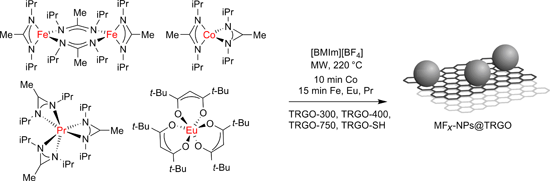
- synthesis of some of the metal amidinate precursors during his lab work for the Bachelor Thesis.


Towards molecular spintronics
Beilstein J. Nanotechnol. 2017, 8, 2464–2466, doi:10.3762/bjnano.8.245

- processing facilities. Such a complex chain can only become and remain successfully operational thanks to the enthusiastic cooperation between the groups, and in particular, between the young researchers. We would therefore like to express our deepest gratitude to all principal investigators, young
Au nanostructure fabrication by pulsed laser deposition in open air: Influence of the deposition geometry
Beilstein J. Nanotechnol. 2017, 8, 2438–2445, doi:10.3762/bjnano.8.242
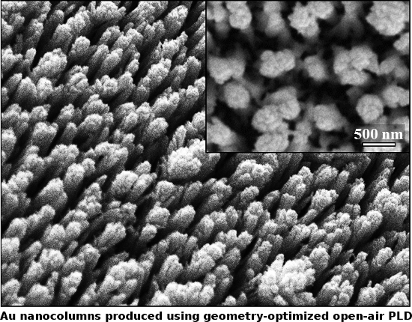
- Young Scientists Scientific Program, BAS.


Surfactant-induced enhancement of droplet adhesion in superhydrophobic soybean (Glycine max L.) leaves
Beilstein J. Nanotechnol. 2017, 8, 2345–2356, doi:10.3762/bjnano.8.234
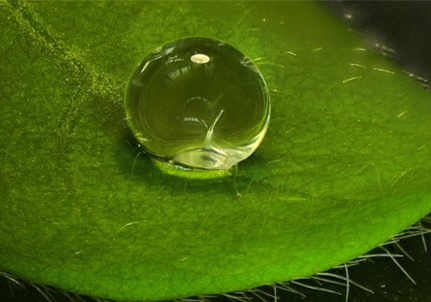
- after applying a 10 µL droplet of distilled water to the surface. The static contact angle was measured using an OCA 35 goniometer (Dataphysics, Filderstadt, Germany). The droplet shape was recorded with a horizontal CCD camera and was automatically calculated using the Laplace–Young fitting algorithm


Numerical investigation of the tribological performance of micro-dimple textured surfaces under hydrodynamic lubrication
Beilstein J. Nanotechnol. 2017, 8, 2324–2338, doi:10.3762/bjnano.8.232
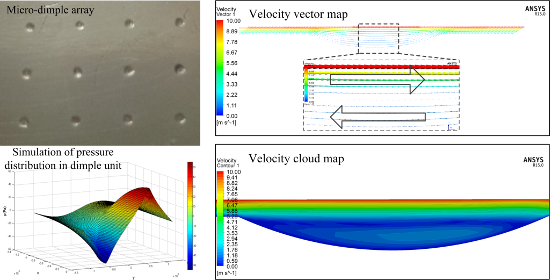
- independence analysis. Parameters of the CFD simulation. Acknowledgements The authors gratefully acknowledge the sponsorship from the National Natural Science Foundation of China (Grant No. 51605296), Shanghai Sailing Program (Grant No. 16YF1408300) and Young Teachers Training Program of Shanghai College




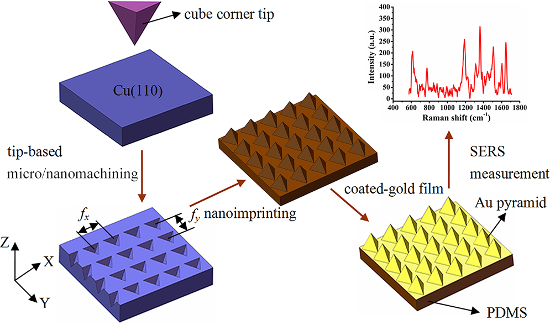
Fabrication of gold-coated PDMS surfaces with arrayed triangular micro/nanopyramids for use as SERS substrates
Beilstein J. Nanotechnol. 2017, 8, 2271–2282, doi:10.3762/bjnano.8.227
- the National Program for Support of Top-notch Young Professors.





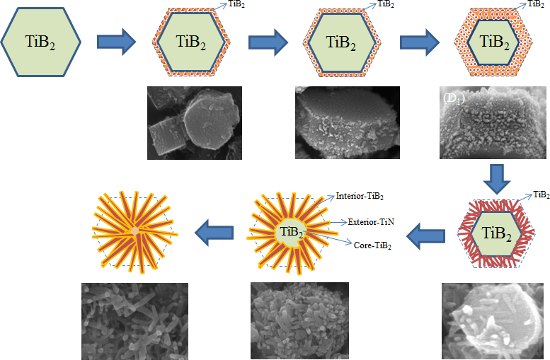
In situ controlled rapid growth of novel high activity TiB2/(TiB2–TiN) hierarchical/heterostructured nanocomposites
Beilstein J. Nanotechnol. 2017, 8, 2116–2125, doi:10.3762/bjnano.8.211
- support from the Program for Guangxi Natural Science Foundation (No. 2014GXNSFFA118004 and No. 2016GXNSFBA380155), Improving the Basic Ability of Young and Middle-aged University Teachers in Guangxi (No.KY2016YB187) and Opening Fund of the Guangxi Key Laboratory of Building New Energy and Energy Saving


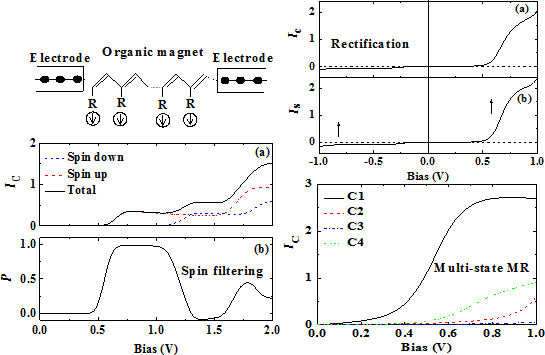
Spin-dependent transport and functional design in organic ferromagnetic devices
Beilstein J. Nanotechnol. 2017, 8, 1919–1931, doi:10.3762/bjnano.8.192
- , 11674197), the Natural Science Foundation of Shandong Province China (No. ZR2014AM017), the Taishan Scholar Project of Shandong Province, the Excellent Young Scholars Research Fund of Shandong Normal University, the Excellence Initiative of the German Federal and State Governments, and the Deutsche


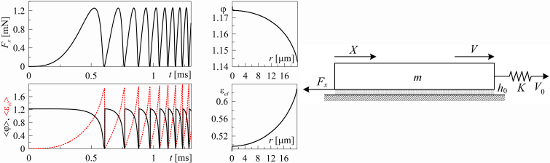
Stick–slip boundary friction mode as a second-order phase transition with an inhomogeneous distribution of elastic stress in the contact area
Beilstein J. Nanotechnol. 2017, 8, 1889–1896, doi:10.3762/bjnano.8.189
- and the Deutsche Forschungsgemeinschaft. I.A.L. and V.N.B. are grateful to the Ministry of Education and Science of Ukraine for financial support under the project for young scientists “Thermodynamic theory of the phase transitions between structural states of the boundary lubricant with spatial


![[Graphic 15]](/bjnano/content/inline/2190-4286-8-189-i33.png?max-width=637&scale=1.18182) = 1.0, ...
= 1.0, ...


Self-assembly of chiral fluorescent nanoparticles based on water-soluble L-tryptophan derivatives of p-tert-butylthiacalix[4]arene
Beilstein J. Nanotechnol. 2017, 8, 1825–1835, doi:10.3762/bjnano.8.184
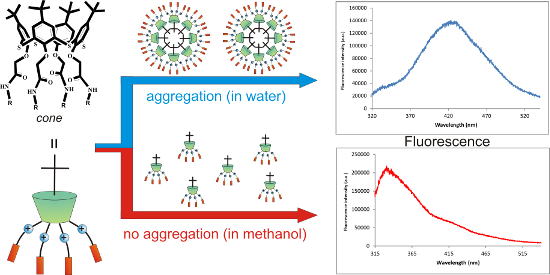
- financially supported by the Ministry of Education and Science of the Russian Federation (the Agreement No 02.a03.0008), by RFBR (16-33-60141 mol_а_dk) and the Program of the President of the Russian Federation for the State support of young Russian scientists–scholarships (CP-3597.2016.4).



Collembola cuticles and the three-phase line tension
Beilstein J. Nanotechnol. 2017, 8, 1714–1722, doi:10.3762/bjnano.8.172
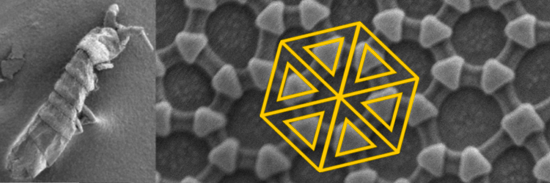
- . Acknowledgements A draft of this article was included in the compilation thesis “Natural Superhydrophobic Surfaces – Nanostructures and Wetting States on Collembola Cuticles” by Håkon Gundersen, as doctoral dissertation in December 2016 at the Norwegian University of Science and Technology (NTNU).


![[Graphic 16]](/bjnano/content/inline/2190-4286-8-172-i22.png?max-width=637&scale=1.18182) . A system with θ0 = 105°, S = 0.1 μm a...
. A system with θ0 = 105°, S = 0.1 μm a...

Oxidative stabilization of polyacrylonitrile nanofibers and carbon nanofibers containing graphene oxide (GO): a spectroscopic and electrochemical study
Beilstein J. Nanotechnol. 2017, 8, 1616–1628, doi:10.3762/bjnano.8.161
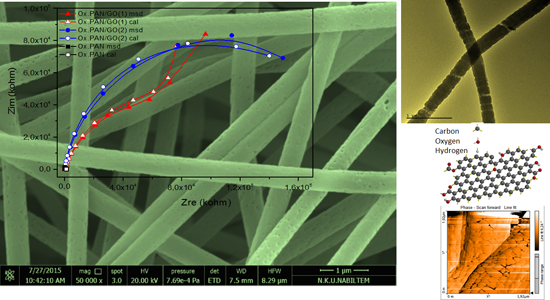
- power supply (Gamma high voltage research) producing a voltage of 15 kV. Aligned nanofibers were deposited on the rotating drum collector at 21.50 Hz rotating frequency at a distance of 15 cm. After producing the nanofibers, oxidative stabilization was performed at 250 °C for 3 h in air atmosphere and


The effect of the electrical double layer on hydrodynamic lubrication: a non-monotonic trend with increasing zeta potential
Beilstein J. Nanotechnol. 2017, 8, 1515–1522, doi:10.3762/bjnano.8.152
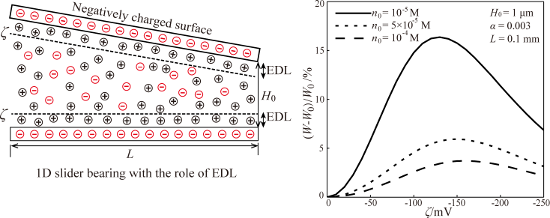
- PBE and varying electrical conductivity. Acknowledgements The authors gratefully acknowledge the financial support of the National Natural Science Foundation of China (No. 51505292 & No. 51505108) and the Young Teachers Training Program of Shanghai, China (No. ZZsl15025).


Adsorption and electronic properties of pentacene on thin dielectric decoupling layers
Beilstein J. Nanotechnol. 2017, 8, 1388–1395, doi:10.3762/bjnano.8.140
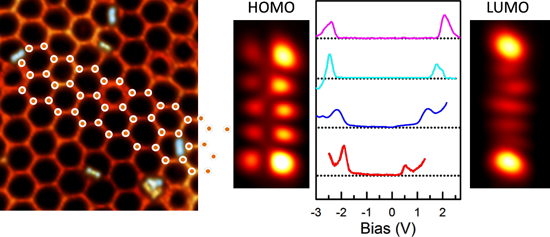
- to these values). Experimental values for Ea, Ei, Egap/Egap,0 for pentacene as well as the values for Φ. Φ has been determined experimentally for the KCl layers on the different substrates by I(z) measurements performed within the Ph.D. Thesis of A. Kabakchiev [20]. For h-BN, a literature value is


Scaling law to determine peak forces in tapping-mode AFM experiments on finite elastic soft matter systems
Beilstein J. Nanotechnol. 2017, 8, 968–974, doi:10.3762/bjnano.8.98
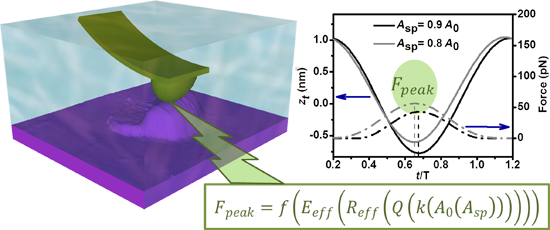
- approximations have not been designed to describe the forces for finite soft-matter systems in highly damping environments. In this article we use the term soft matter to describe polymeric surfaces and/or biological systems (isolated or packed arrays of proteins) with Young moduli in the range of 30–300 MPa [11
- lower Young’s modulus values of the material. Figure 1b shows the comparison of the parametrical equation and numerical simulations for the whole range of Young moduli between 30 and 300 MPa for Asp = 0.9A0. Figure 1b and Figure 2 compare the parametrical equation of Equation 8 and the corresponding
- agreement between the parametrical equation and the numerical simulations remain within a relative error of 10%. However, the accuracy of the present equation decreases when the set-point amplitude value is reduced below 0.8A0, in particular for soft materials with a Young modulus below 60 MPa. The


Triptycene-terminated thiolate and selenolate monolayers on Au(111)
Beilstein J. Nanotechnol. 2017, 8, 892–905, doi:10.3762/bjnano.8.91
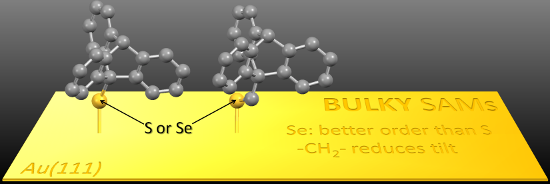
- structure (NEXAFS) spectroscopy and thermal desorption spectroscopy (TDS). Results Synthesis of Trp1SeAc While the syntheses of the other three target molecules have been described in scientific journals [28][29], Trp1SeAc has until now only been reported in the PhD thesis of one of us (B. S.) [30]. For
- [29]. The synthesis route for Trp1SeAc was newly developed in the doctoral thesis of one of us (B. S.) [30] and is presented here for a first time in a scientific journal. The synthesis starts from 9-(chloromethyl)anthracene (see Scheme S1 and experimental details of the synthesis route in the




Functional dependence of resonant harmonics on nanomechanical parameters in dynamic mode atomic force microscopy
Beilstein J. Nanotechnol. 2017, 8, 883–891, doi:10.3762/bjnano.8.90
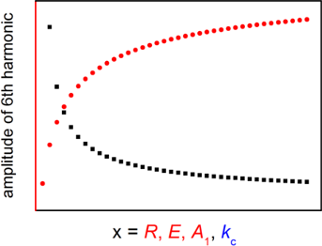
- such parameters [6][7][8][9][10]. The DMT model, which will be used in this work, has the following expression in the repulsive regime: where H is the Hamaker constant, a0 the intermolecular distance, d the tip–sample gap (related to z) and E* the reduced Young modulus, which includes the contribution
- trends are well reproduced by the experiments. As we can notice from the different trends, the 6th harmonic is most sensitive to changes in tip radius for values of tip radius below ca. 10 nm and Young modulus below ca. 20 GPa. If we consider the method for implementing tip radius real time monitoring
- , this will be more effective when sharp (new) tips are imaging stiff samples. Instead, in order to measure the surface Young modulus the modelling shows that the best results will be obtained using larger tip radius (10–15 nm) in order to have an almost constant radius-dependent contribution. So far the


Synthesis of coaxial nanotubes of polyaniline and poly(hydroxyethyl methacrylate) by oxidative/initiated chemical vapor deposition
Beilstein J. Nanotechnol. 2017, 8, 872–882, doi:10.3762/bjnano.8.89
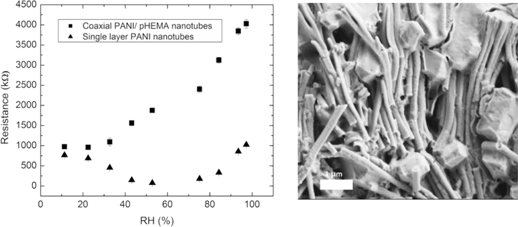
- Sciences) Young Scientist Award Program.


Relationships between chemical structure, mechanical properties and materials processing in nanopatterned organosilicate fins
Beilstein J. Nanotechnol. 2017, 8, 863–871, doi:10.3762/bjnano.8.88
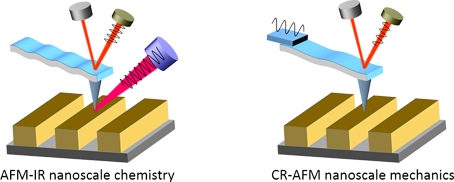
- , Intel Corporation, Hillsboro OR 97124, USA Logic Technology Development, Intel Corporation, 5200 NE Elam Young Parkway, Hillsboro OR 97124, USA 10.3762/bjnano.8.88 Abstract The exploitation of nanoscale size effects to create new nanostructured materials necessitates the development of an understanding

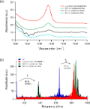


The role of 2D/3D spin-polarization interactions in hybrid copper hydroxide acetate: new insights from first-principles molecular dynamics
Beilstein J. Nanotechnol. 2017, 8, 857–860, doi:10.3762/bjnano.8.86
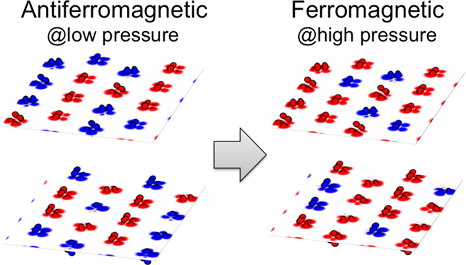
- –2016) managed by the French National Research Agency.


Dispersion of single-wall carbon nanotubes with supramolecular Congo red – properties of the complexes and mechanism of the interaction
Beilstein J. Nanotechnol. 2017, 8, 636–648, doi:10.3762/bjnano.8.68
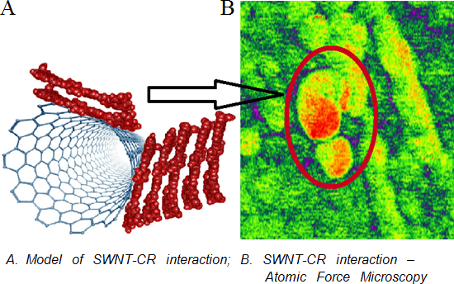
- CR/SWNT ratio (1 mg SWNTs + 1 mL of 10 mg/mL CR): CR covers the entire surface of carbon nanotubes, the diameter of the SWNT–CR complex exceeds 40 nm and more. AFM analyses of sodium cholate dispersed SWNTs (1) and SWNT–CR complexes (2); maps of mechanical parameters: (1A; 2A) elasticity (Young


Biological and biomimetic materials and surfaces
Beilstein J. Nanotechnol. 2017, 8, 403–407, doi:10.3762/bjnano.8.42
- Barthlott studied the micro- and nanostructures on the surfaces of plant leaves, flowers, seeds and pollen during his Ph.D. thesis at the University of Heidelberg using one of the first scanning electron microscopes (SEMs) available for German botanists. His main interest in these years was plant
Innovations from the “ivory tower”: Wilhelm Barthlott and the paradigm shift in surface science
Beilstein J. Nanotechnol. 2017, 8, 394–402, doi:10.3762/bjnano.8.41
- the early work of Wilhelm Barthlott. Systematic botany, epicuticular waxes and a paradigm shift in interface science In the 1970th, a new era began for the young Ph.D. student Wilhelm Barthlott at the Institute for Botany of the University of Heidelberg. He received one of the first scanning electron
- appear sooner or later and, who knows, may be some eccentric, spleeny young student is already puzzling about the solution. This is a plea for the largest diversity possible under given circumstances in research and teaching. A reclusive existence in a niche at a university institute, a museum or even a


Nanocrystalline TiO2/SnO2 heterostructures for gas sensing
Beilstein J. Nanotechnol. 2017, 8, 108–122, doi:10.3762/bjnano.8.12
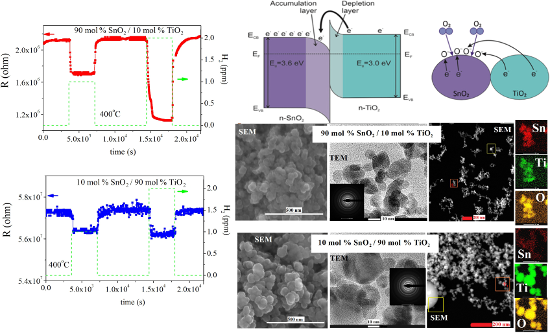
- /ST8/03879. B. Lyson-Sypien acknowledges the project of Ministry of Science and Higher Education (“Dean” Grant for Young Scientists) at the Faculty of Computer Science, Electronics and Telecommunications AGH UST.




Graphene–polymer coating for the realization of strain sensors
Beilstein J. Nanotechnol. 2017, 8, 21–27, doi:10.3762/bjnano.8.3
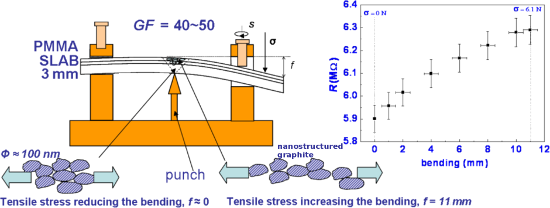
- by using the follow relation [11]: where f is the displacement induced by the applied force F. E is the Young modulus and Ics the moment of inertia of the cross section. The lengths l and b are defined in Figure 2. In our case a force of 6 N is enough to induce a slat deflection f = 10 mm, that





