Search results
Search for Nick Young broadcast journalist thesis French Battalion Drum in Full Text gives 220 result(s) in Beilstein Journal of Nanotechnology. Showing first 200.
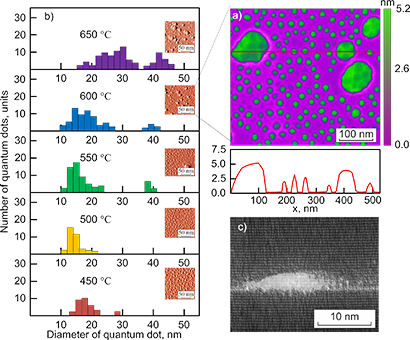
Obtaining and doping of InAs-QD/GaAs(001) nanostructures by ion beam sputtering
Beilstein J. Nanotechnol. 2017, 8, 12–20, doi:10.3762/bjnano.8.2
- financially supporting this work the Russian Foundation for Basic Research [grant number 15-08-08263_a, grant number 16-38-60127 mol_a_dk]. The reported study was also funded by the Grant of the President of Russian Federation for young PhD [project MK-5115.2016.8].


Cubic chemically ordered FeRh and FeCo nanomagnets prepared by mass-selected low-energy cluster-beam deposition: a comparative study
Beilstein J. Nanotechnol. 2016, 7, 1850–1860, doi:10.3762/bjnano.7.177
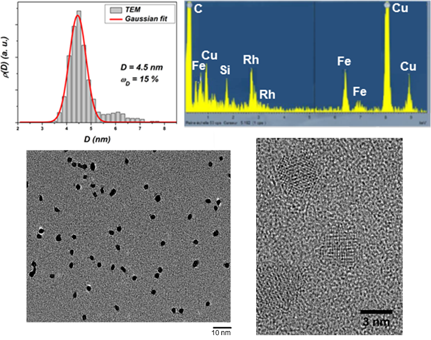
- -FeCo nanoparticles were measured with AXD after annealing at 500 °C for 2 h. The measurements were performed on the BM02-D2am French CGR beamline at the ESRF (Grenoble, France) at an X-ray energy fixed at 7.108 keV. The incidence angle was optimized after calibrations so as to have a good compromise
- from the french Synchrotron SOLEIL on the DEIMOS beamline for their respective investment in FeRh and FeCo XMCD measurements. Support is acknowledged from both GDR CNRS 3182 and COST-STSM-MP0903 on Nanoalloys. All cluster samples were prepared in the PLYRA platform while SQUID measurements were


Effective intercalation of zein into Na-montmorillonite: role of the protein components and use of the developed biointerfaces
Beilstein J. Nanotechnol. 2016, 7, 1772–1782, doi:10.3762/bjnano.7.170
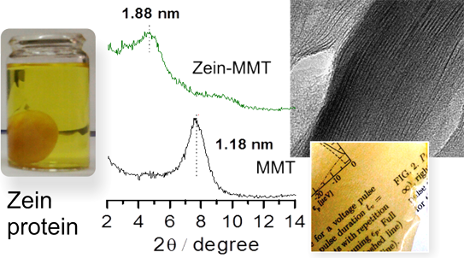
- behavior was observed for pure zein and starch films, and in these cases glycerol was added as plasticizer in order to use them as reference. The Young´s modulus of the Z/Z-MMT_S2 film is 1.2 GPa, about 2.5 times higher than that of the unmodified film of zein (0.5 GPa), being analogous to that reported by




Prediction of the mechanical properties of zeolite pellets for aerospace molecular decontamination applications
Beilstein J. Nanotechnol. 2016, 7, 1761–1771, doi:10.3762/bjnano.7.169
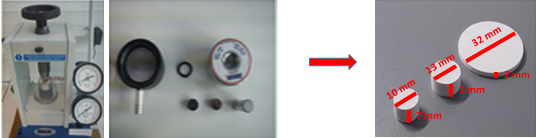
- water and volatile organic compounds thanks to their great adsorption abilities [3]. The French Space Agency (CNES) studied zeolites for the adsorption of volatile organic compounds in satellites [4][5][6][7][8]. Zeolites are aluminosilicate materials with micropores. They are the result of a
- acknowledge the financial support from the French Space Agency (CNES) and the Region Alsace.


Thickness-modulated tungsten–carbon superconducting nanostructures grown by focused ion beam induced deposition for vortex pinning up to high magnetic fields
Beilstein J. Nanotechnol. 2016, 7, 1698–1708, doi:10.3762/bjnano.7.162
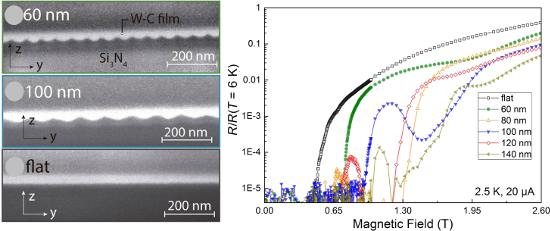
- through program Nanofrontmag-CM (S2013/MIT-2850) and by EU (Cost MP-1201 and FP7-PEOPLE-2013-CIG 618321). I. G. Serrano acknowledges Abengoa Research Company for providing a thesis fellowship. I. G. acknowledges the European Research Council (ERC-2015-STG-679080), FBBVA and Axa Research Funds. Critical


Biomechanics of selected arborescent and shrubby monocotyledons
Beilstein J. Nanotechnol. 2016, 7, 1602–1619, doi:10.3762/bjnano.7.154
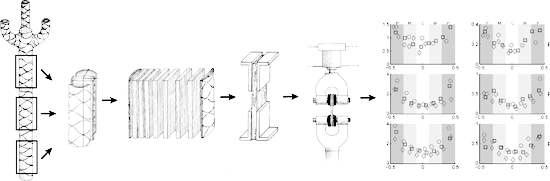
- Young’s modulus of the stems, and that this entails markedly smaller branching angles. We also hypothesize that the high values of the axial Young’s modulus of Dracaena surculosa in rather young ontogenetic stages (median of axial Young’s modulus: 2.5217 GPa) are similar to the comparatively high
- stiffness in young palms that are mechanically “overbuilt” as documented in [8] as they cannot increase their flexural stiffness by secondary growth. This is also supported by the higher stress necessary for rupturing young branches of F. insignis [10], which lacks secondary growth as well. We assume that
- other monocots such as Dracaena fragrans, D. marginata or D. reflexa exhibit comparatively low Young’s moduli in young ontogenetic stages (median of axial Young’s modulus: 0.1799 GPa, 0.1235 GPa and 1.2090 GPa, respectively) due to their ability of secondary thickening. It allows for an increase in



Development of adsorptive membranes by confinement of activated biochar into electrospun nanofibers
Beilstein J. Nanotechnol. 2016, 7, 1556–1563, doi:10.3762/bjnano.7.149
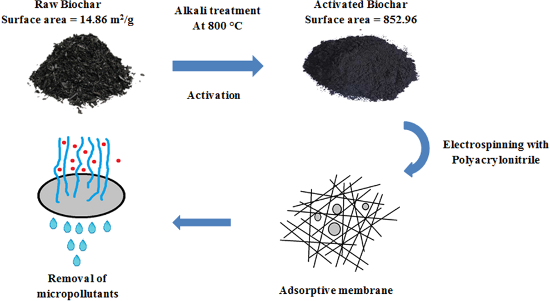
- = 32%) and with a rotary drum collector (length = 25 cm, diameter = 10 cm). The flow rate, electric field strength and collector rotational speed were 1.2 mL/h, 1.1 kV/cm and 400 rpm, respectively. The needle gauge was 22 and the distance of needle tip to the center of collecting drum was 18 cm. The
- of activated biochar are illustrated in Figure 2. Generally, the nanofibers were uniform in shape and size and the moderate speed of the rotational drum led to the formation of randomly oriented fibers, which is in favor of membrane fabrications due to required mechanical strength in all directions




An efficient recyclable magnetic material for the selective removal of organic pollutants
Beilstein J. Nanotechnol. 2016, 7, 1447–1453, doi:10.3762/bjnano.7.136
- ‘Ministère de la Recherche et des Nouvelles Technologies’, CNRS (Centre National de la Recherche Scientifique), the ‘Région Basse-Normandie’ and the European Union (FEDER funding). The authors acknowledge the financial support of the french Agence Nationale de la Recherche (ANR), through the program


Three-gradient regular solution model for simple liquids wetting complex surface topologies
Beilstein J. Nanotechnol. 2016, 7, 1377–1396, doi:10.3762/bjnano.7.129

- interfacial tension γ according to the Young–Laplace equation [17]: ΔP and γ can be considered constant for a droplet (neglecting small curvature corrections, the deformation due to gravity and the near surface contributions expressed in the disjoining pressure), thus J should also be constant [13]. This
- materials that show hydrophobic contact angles and to differentiate between air entrapment and contact line pinning using a modelling approach. Macroscopic approaches such as solving the Young–Laplace equation [26][27], minimizing the availability [28], or using geometry and energy [12] to find the droplet
- shape, do not take molecular details into account, and often require the contact angle as input parameter. Furthermore, air entrapment and coalescence [29] cannot be obtained by solving the Young–Laplace equation, and surfaces with re-entrant curvatures give impossible solutions [29]. Phase field


![[Graphic 10]](/bjnano/content/inline/2190-4286-7-129-i31.png?max-width=637&scale=1.18182) and standard deviation as a function of the cavity diameter d (in...
and standard deviation as a function of the cavity diameter d (in...

![[Graphic 20]](/bjnano/content/inline/2190-4286-7-129-i41.png?max-width=637&scale=1.18182) and the corresponding fluctuations (measured along the x-direction) indica...
and the corresponding fluctuations (measured along the x-direction) indica...

![[Graphic 28]](/bjnano/content/inline/2190-4286-7-129-i49.png?max-width=637&scale=1.18182) and the corresponding standard deviation as measure of variation in the ...
and the corresponding standard deviation as measure of variation in the ...

![[Graphic 39]](/bjnano/content/inline/2190-4286-7-129-i60.png?max-width=637&scale=1.18182) and standard deviation as function of cut-off fraction c for fixed ...
and standard deviation as function of cut-off fraction c for fixed ...
Viability and proliferation of endothelial cells upon exposure to GaN nanoparticles
Beilstein J. Nanotechnol. 2016, 7, 1330–1337, doi:10.3762/bjnano.7.124
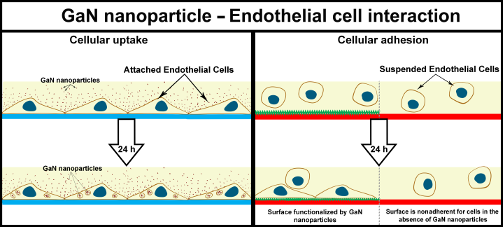
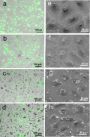
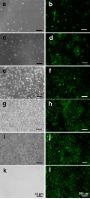
- nanoparticles. Acknowledgements We are grateful to the German Academic Exchange Service for a scholarship for doctoral candidates and young researchers at Hannover Medical School given to Tudor Braniste. This research was partly supported by the Supreme Council for Research and Technological Development of the



Fabrication and characterization of branched carbon nanostructures
Beilstein J. Nanotechnol. 2016, 7, 1260–1266, doi:10.3762/bjnano.7.116
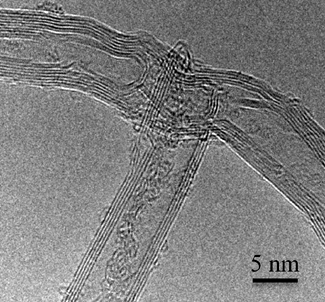
- used in this research were Baytubes© C 150P (Lot-No E0009AA007, Drum-No 033), supplied by Bayer Material Science A.G. (Leverkusen, Germany). Preparation of b-MWCNTs Commercial MWCNTs were heated in air to 500 °C for 2 h to give the “stage I”-modified MWCNTs. Then a small amount of these were sonicated


Manufacturing and investigation of physical properties of polyacrylonitrile nanofibre composites with SiO2, TiO2 and Bi2O3 nanoparticles
Beilstein J. Nanotechnol. 2016, 7, 1141–1155, doi:10.3762/bjnano.7.106
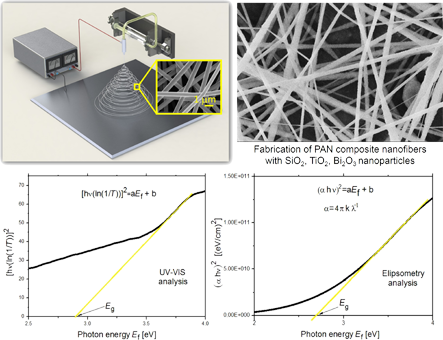
- composite nanofibres obtained by Ji Sun Im, Min Il Kim and Young-Seak Lee [36]. This leads to a significant increase in the specific surface area of the composite mats related to receiving more efficient photocatalyst materials. It is anticipated that the Bi2O3-reinforced composite PAN nanofibres produced



Photocurrent generation in carbon nanotube/cubic-phase HfO2 nanoparticle hybrid nanocomposites
Beilstein J. Nanotechnol. 2016, 7, 1075–1085, doi:10.3762/bjnano.7.101
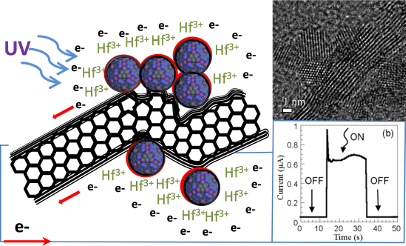
- acknowledge the Estonian Research Council (grant PUT431), the European Regional Development Fund project TK134 (TAR16019) and MENESR and MAEDI French ministries (Parrot program n°33787YJ), the Norwegian Research Council, and the Estonian Road Map infrastructure NAMUR project for financial support to this work.


Reconstitution of the membrane protein OmpF into biomimetic block copolymer–phospholipid hybrid membranes
Beilstein J. Nanotechnol. 2016, 7, 881–892, doi:10.3762/bjnano.7.80
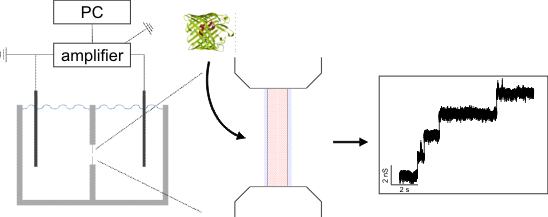
- . Isolation of OmpF Native OmpF protein was purified from Escherichia coli strain BE BL21(DE3)omp6 [9], lacking both LamB and OmpC [6][10]. Briefly, cells from a one liter culture were resuspended in 50 mM Tris-HCl buffer (pH 7.5) containing 2 mM MgCl2 and DNAse and broken by passing through a French press



Optical absorption signature of a self-assembled dye monolayer on graphene
Beilstein J. Nanotechnol. 2016, 7, 862–868, doi:10.3762/bjnano.7.78
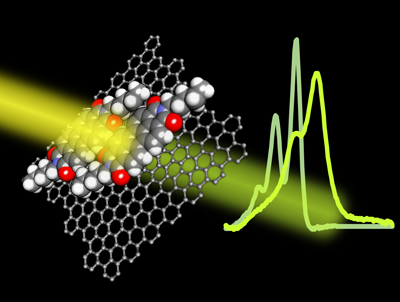
- overseen by the French National Research Agency (ANR), grant number ANR-13-BS10-0006, and a PhD grant (SLL) from Triangle de la physique from the Paris-Saclay Campus, project SAMPLE.



Comparative kinematical analyses of Venus flytrap (Dionaea muscipula) snap traps
Beilstein J. Nanotechnol. 2016, 7, 664–674, doi:10.3762/bjnano.7.59

- . Moreover, opening kinematics of young and adult Dionaea snap traps reveal that reverse snap buckling is not performed, corroborating the assumption that growth takes place on certain trap lobe regions. Our findings are discussed in an evolutionary, biomechanical, functional–morphological and biomimetic
- we observed during the above tests, investigated the snapping motions of seedlings and, furthermore, the opening kinematics of a young and an adult snap trap. Results Raw data, analytical procedures and detailed results are presented in Supporting Information File 1 (raw data), Supporting Information
- ) implemented as a feature already in young traps. It remains to be investigated if this is morphologically manifested in a lesser lobe curvature and/or lesser lobe thickness. Both parameters are known to strongly influence the snap-buckling behavior [8]. For calculating the theoretical speed of hydraulic


First-principles study of the structure of water layers on flat and stepped Pb electrodes
Beilstein J. Nanotechnol. 2016, 7, 533–543, doi:10.3762/bjnano.7.47
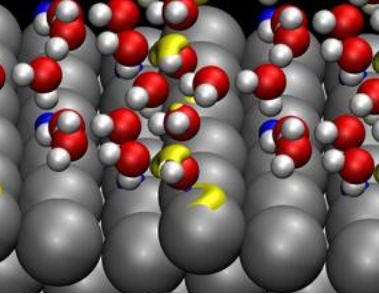
- presented in this work have been done in the framework of the doctoral thesis of Xiaohang Lin [14], and first preliminary results with respect to water structures on flat Pb surfaces were recently reported [15]. Furthermore, structural and vibrational properties of water on stepped metal surfaces at finite


Active multi-point microrheology of cytoskeletal networks
Beilstein J. Nanotechnol. 2016, 7, 484–491, doi:10.3762/bjnano.7.42

- microrheological methods [12][17]. A closer look on the impact of inhomogeneities in networks detected with a similar technique as described here can be found in [18]. Parts of this work were already published in the doctoral thesis of Tobias Paust [19] and in a preliminary communication on the arXiv preprint


Fabrication of hybrid nanocomposite scaffolds by incorporating ligand-free hydroxyapatite nanoparticles into biodegradable polymer scaffolds and release studies
Beilstein J. Nanotechnol. 2015, 6, 2217–2223, doi:10.3762/bjnano.6.227
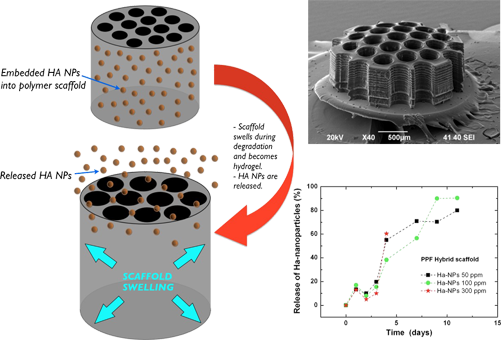
- also proved that these scaffolds did not cause immune rejection [21]. A constant release of HA NPs during scaffold degradation may vastly improve the healing process. Also, certain tuning capabilities emerge with PPF:DEF resins when fabrication parameters are changed [22][23]: The stiffness/Young


Nanostructured superhydrophobic films synthesized by electrodeposition of fluorinated polyindoles
Beilstein J. Nanotechnol. 2015, 6, 2078–2087, doi:10.3762/bjnano.6.212
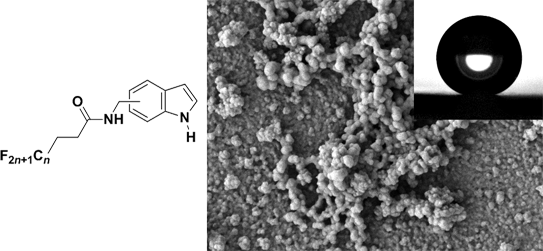
- with each polymer and determine the contact angles (θY) for each probe liquid. These contact angles are dependent on the solid–vapor (γSV), solid–liquid (γSL) and liquid–vapor (γLV) surface tensions following the Young equation [35] (cos θY = (γSV − γSL)/γLV). The smooth substrates were obtained by




Surface engineering of nanoporous substrate for solid oxide fuel cells with atomic layer-deposited electrolyte
Beilstein J. Nanotechnol. 2015, 6, 1805–1810, doi:10.3762/bjnano.6.184
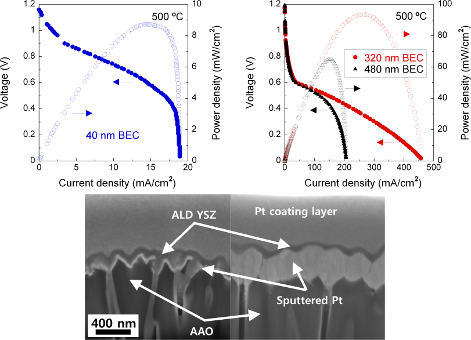
- Sanghoon Ji Waqas Hassan Tanveer Wonjong Yu Sungmin Kang Gu Young Cho Sung Han Kim Jihwan An Suk Won Cha Graduate School of Convergence Science and Technology, Seoul National University, Iui-dong, Yeongtong-gu, Suwon 443-270, South Korea Department of Mechanical Engineering, Seoul National


The Nanomaterial Data Curation Initiative: A collaborative approach to assessing, evaluating, and advancing the state of the field
Beilstein J. Nanotechnol. 2015, 6, 1752–1762, doi:10.3762/bjnano.6.179
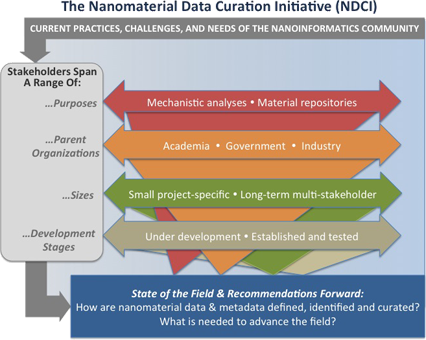
- science and a maturing sub-field of most data-driven academic domains, is increasingly a topic of interest within the nanomaterial research and associated nanoinformatics communities [10]. The methods, protocols and parameters guiding data generation within this young area of science are developing in
Atomic force microscopy as analytical tool to study physico-mechanical properties of intestinal cells
Beilstein J. Nanotechnol. 2015, 6, 1457–1466, doi:10.3762/bjnano.6.151
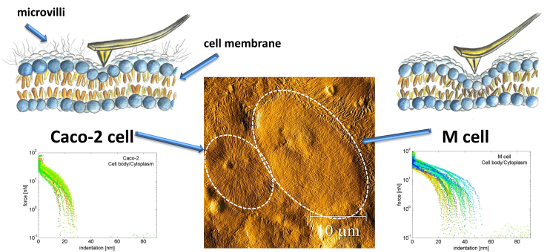
- ) compared to Caco-2 cells (30 nm). Basically, the Hertz model has been validated for indentation analysis of cell mechanical properties, providing a single parameter called the Young´s modulus of the cell. However, this model assumes that the tested sample is homogenous, linear elastic, isotropic and


Using natural language processing techniques to inform research on nanotechnology
Beilstein J. Nanotechnol. 2015, 6, 1439–1449, doi:10.3762/bjnano.6.149
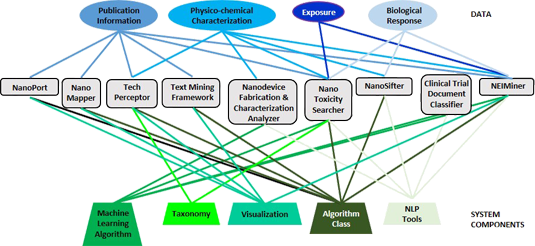
- purification control in 2005–2006, to plasma-enhanced and thermal CVD in 2007–2010. CVD is the dominant commercial synthesis approach and catalyzed CVD with fluidized bed has been used by Bayer to synthesize Baytubes [29]. Competitor analysis revealed overlap between Sony and an individual researcher, Young
Can molecular projected density of states (PDOS) be systematically used in electronic conductance analysis?
Beilstein J. Nanotechnol. 2015, 6, 1247–1259, doi:10.3762/bjnano.6.128
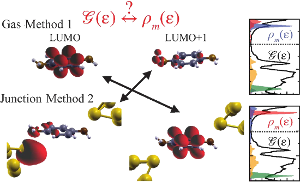
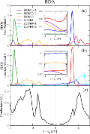
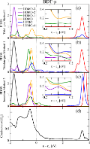
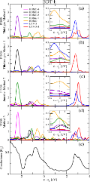
- catholique de Louvain (CISM/UCL), by the Consortium des Équipements de Calcul Intensif en Fédération Wallonie Bruxelles (CÉCI), and by the French GENCI supercomputing center (Project i2012096-655). Electronic density isosurfaces (red) of the HOMO−1, HOMO, LUMO and LUMO+1 molecular orbitals of BDA as obtained