Shaping the future of nanotechnology

Dr. Thies Büscher, Kiel University, Germany
Dr. Yui Sasaki, The University of Tokyo, Japan
Dr. Hao Lu, Beijing University of Technology, China
The Beilstein Journal of Nanotechnology (BJNANO) aims to strengthen the visibility, reach and inclusiveness of early career researchers in the field of nanotechnology and nanoscience with the initiation of the Early Career Advisory Board (ECAB). As one step to achieve this goal, the symposium Shaping the Future of Nanotechnology (which will take place in October 27–29, 2026), organized by the inaugural ECAB, aims to promote networking and provide a platform uniting both early career and senior researchers. Along these lines, this thematic issue, emerging from the Shaping the Future of Nanotechnology Beilstein Symposium, showcases one of the multiple efforts of the inaugural ECAB in bridging the gap among different scientific communities in nanoscience and nanotechnology.
The objective of this thematic issue is to combine contributions from established and early career scientists working on various aspects of nanotechnology and nanoscience to amalgamate leading directions in this field. Scientists of all experience levels are invited to submit their work to this series and contribute original research articles, reviews, letters and perspectives. Especially early career researchers are encouraged to contribute and showcase their work. Submissions are also welcome from researchers wishing to contribute original papers on these topics but unable to attend the symposium.
The scope of this series ranges across the broad spectrum of nanotechnology and nanoscience, including, but not limited to:
- Biological and bioinspired structures: research on materials and phenomena in biological systems, basic research on the properties of biological nanostructures, translational biomimetic approaches and application of bioinspired technology
- Composition/structure/-property correlations: atomic-, nano-, and micro-scale materials design, multi-scale modeling for structure evolution, preparation and processing of nanostructured materials, characterization techniques for nanostructures, mechanical behavior and functional performance evaluation methods
- Nanomaterials and their device applications: design of nanomaterials, nanodevice development, and their applications, including bio/chemical sensing and therapy.
- Nanostructured materials for biocatalysis: development of nanostructured materials that show enzymatic function, or interact with enzymes and tune their activity for various applications.
Submission deadline: October 31, 2026.
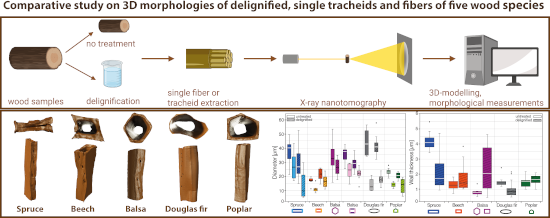
Comparative study on 3D morphologies of delignified, single tracheids and fibers of five wood species
- Helen Gorges,
- Felicitas von Usslar,
- Cordt Zollfrank,
- Silja Flenner,
- Imke Greving,
- Martin Müller,
- Clemens F. Schaber,
- Chuchu Li and
- Stanislav N. Gorb
Beilstein J. Nanotechnol. 2026, 17, 239–250, doi:10.3762/bjnano.17.16


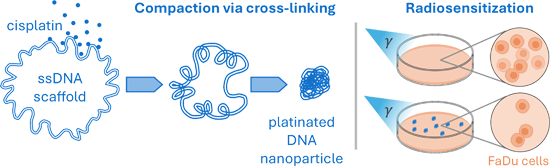
Facile synthesis of platinated DNA nanoparticles with radiosensitizing potential
- Leo Sala,
- Tomas Perecko,
- Antonín Kaňa and
- Jaroslav Kočišek
Beilstein J. Nanotechnol. 2026, 17, 1117–1127, doi:10.3762/bjnano.17.76


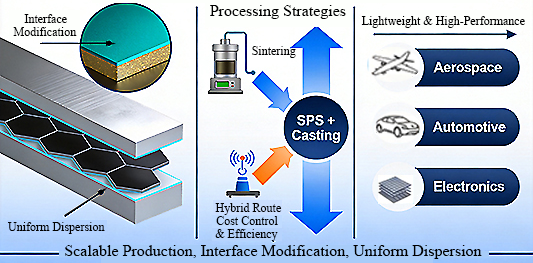
High-performance graphene/aluminum composites: progress and challenges from an industrial perspective
- Shuai GuoLiang,
- Pan LinXia and
- Ma HaiLin
Beilstein J. Nanotechnol. 2026, 17, 1257–1271, doi:10.3762/bjnano.17.86