

A legacy in motion: Mildred S. Dresselhaus and the future of nanoscience
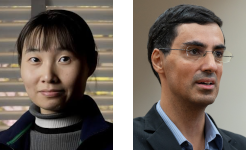
Prof. Jing Kong, Massachusetts Institute of Technology, USA
Prof. Mario Hofmann, National Taiwan University, Taiwan
Prof. Mildred S. Dresselhaus (1930–2017) helped define the scientific language of modern nanoscience. Her work showed that controlling dimensionality, structure, and interactions among electrons, phonons, and light could unlock properties that do not exist in bulk materials. Her impact reached from carbon allotropes and optical spectroscopy to nanoscale transport, and energy materials — fields that now underpin some of the most ambitious directions in materials research.
The next decade offers exciting opportunities to extend this legacy into territories that are only beginning to emerge. New capabilities in materials synthesis, ultrafast and nanoscale characterization, computation, and artificial intelligence are making it possible to ask questions that were previously beyond reach. This collection will bring together leading researchers to define those questions, highlight unresolved challenges, and articulate a vision for the future of nanoscience inspired by the breadth, rigor, and imagination of Millie’s work.
Contributions in the form of perspective articles that review the state-of-the-art and discuss open problems are invited in, but not limited to, the following areas:
- Raman and optical spectroscopy of low-dimensional materials
- Carbon nanotubes: from structure to controlled synthesis and devices
- Graphene and other 2D materials, including heterostructures and moiré systems
- Intercalation in graphite and 2D materials
- Low-dimensional and nanostructured thermoelectrics
- Phonons, electron–phonon coupling, and nanoscale thermal transport
- Topological materials
- Nanoscale defect characterization and engineering
- Nanocarbons for energy and the environment
Submission deadline: February 28, 2027