


This search combines search strings from the content search (i.e. "Full Text", "Author", "Title", "Abstract", or "Keywords") with "Article Type" and "Publication Date Range" using the AND operator.
Beilstein J. Org. Chem. 2026, 22, 838–856, doi:10.3762/bjoc.22.66
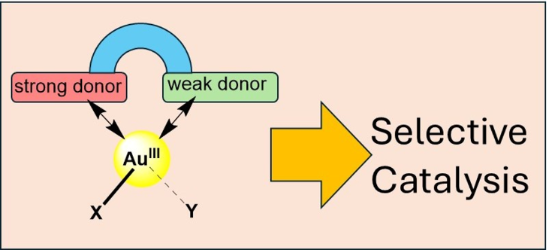
Graphical Abstract
Scheme 1: Assessment of ligand influence by kinetic competition experiments.
Scheme 2: Ligand types employed in the stabilisation of gold(III) complexes.
Scheme 3: Au(III) π- and σ-complexes stabilised by C^N^C and C^N chelate ligands [28-32] and an example of a gold(II...
Scheme 4: Gold(III) C^C chelate complexes.
Figure 1: Examples of photoemissive gold(III) pyrazine complexes. Dr. J. Fernandez-Cestau is gratefully ackno...
Scheme 5: Gold hydride complexes supported by tridentate pincer ligands and corresponding1H NMR chemical shif...
Scheme 6: Gold(III) hydride formation by oxygen transfer.
Scheme 7: Heterolytic H–H bond cleavage by cationic Au(III) complexes [32,56].
Scheme 8: Gold(III) models of the water-gas shift reaction [30].
Scheme 9: Gold(III) hydride complexes supported by C^C and C^N chelate ligands [32,50].
Scheme 10: O2 insertions into Au–H bonds.
Scheme 11: Alkyne, alkene and isocyanide hydroauration by a bimolecular gold radical mechanism [49,65,66].
Scheme 12: Reactions of (C^C)Au–H with DMAD [50].
Scheme 13: Alkyne hydroauration by a bimolecular Au(III)–Au(I)-assisted process [69].
Scheme 14: Gold(III) π-allyl complexes.
Scheme 15: Outer-sphere mechanism of ethylene insertion into Au–O bonds [20,84].
Scheme 16: Catalytic acetylene functionalisation [86,87].
Scheme 17: Examples of alkene insertions into Au–C bonds [88,89].
Scheme 18: Examples of β-H elimination and chain walking processes in (C^P)-ligated gold alkyls [90].
Scheme 19: Mechanism of alkyne hydroarylation with (C^P) gold catalysts [92].
Scheme 20: Vinylic triflate esters by gold-catalysed nucleophilic attack on alkynes [94].
Scheme 21: Gold-catalysed and gold-free steps in the formation of Heck-type olefins [97,99].



