This search combines search strings from the content search (i.e. "Full Text", "Author", "Title", "Abstract", or "Keywords") with "Article Type" and "Publication Date Range" using the AND operator.
Beilstein J. Org. Chem. 2026, 22, 955–981, doi:10.3762/bjoc.22.75
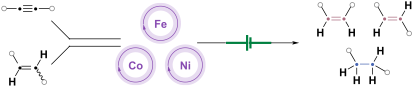
Graphical Abstract
Figure 1: A design for electroorganic synthesis.
Figure 2: Modes of transition-metal-catalyzed electrochemical reduction of unsaturated C–C bonds.
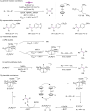
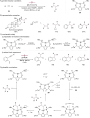
Scheme 1: Electroreductive iron catalysis for alkyne semihydrogenation enabled by a cobaltocene redox mediato...
Scheme 2: Electrochemical reduction of unactivated alkenes via iron catalysis.
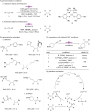
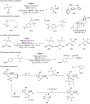
Scheme 3: Cobalt-catalyzed e-HAT for the reduction of alkynes.
Scheme 4: Dual cobalt catalyses for Z-selective semihydrogenation of alkynes.
Scheme 5: Electrochemical cobalt-catalyzed semideuteration of alkynes.
Scheme 6: Electrochemical cobalt catalysis for E-selective semihydrogenation of alkynes.
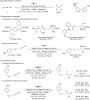
Scheme 7: Concerted proton–electron transfer-driven electrocatalytic reduction of alkenes.
Scheme 8: Electrochemical deuteration of alkenes via HAT using Co–H.
Scheme 9: Electrocatalytic reduction of alkynes by hydride transfer via PCET.
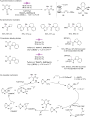
Scheme 10: Ni–H-free electrocatalytic semihydrogenation of alkynes by nickel catalysis.
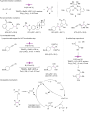
Scheme 11: Ligand-based proton and electron transfer enabling electrocatalytic semihydrogenation of alkynes.
Scheme 12: Proton-modulated electrochemical Ni–H formation for the hydrogenation of alkynes.
Scheme 13: Nickel-catalyzed electrochemical semireduction of terminal alkynes.
Scheme 14: Full hydrogenation of alkynes via nickel hydride electrocatalysis.
Scheme 15: Ni–H-mediated electrochemical reduction of alkynes to alkanes.
Scheme 16: Electrochemical nickel-catalyzed hydrogenation of alkenes.
Scheme 17: Electrochemical Ni–H formation and hydrogenation of alkenes using a bifunctional ligand.
Scheme 18: Nickel hydride electrocatalysis for the hydrogenation of alkenes.