Search results
Search for "confinement" in Full Text gives 38 result(s) in Beilstein Journal of Organic Chemistry.
Nanoreactors for green catalysis
Beilstein J. Org. Chem. 2018, 14, 716–733, doi:10.3762/bjoc.14.61
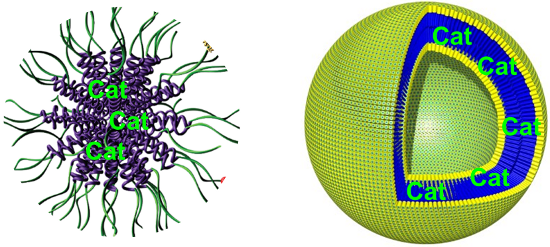
- for continuous processing. The main issue that has to be solved in such set-up is the tolerability of the catalyst to water (its solubility, its activity, etc.) [55]. A strategy to overcome this problem is the inclusion and confinement of the homogeneous catalysts into a host nano-architecture [56
- of catalysts in a nanoreactor facilitates one-pot tandem reactions that, in most cases, require two or more incompatible catalysts [22][57]. Catalyst confinement leads to a high local concentration of the substrate at the active site, which results in higher reaction rates and better conversion [9
- -assembled nanoreactors are macromolecular architectures that are non-covalently assembled from their constituent building units [58][59]. Such nanoreactors allow for physical confinement of catalysts, shielding them from their surroundings [60]. Compartmentalization of catalysts in supramolecular


Recent advances on organic blue thermally activated delayed fluorescence (TADF) emitters for organic light-emitting diodes (OLEDs)
Beilstein J. Org. Chem. 2018, 14, 282–308, doi:10.3762/bjoc.14.18
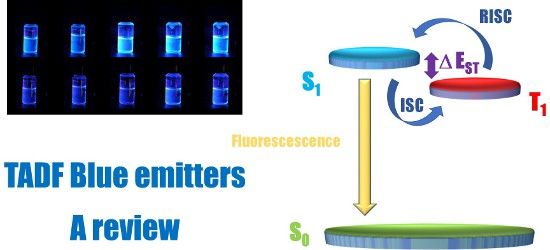
- , optimization of the device stacking, an appropriate choice of the host as well as the materials in the adjacent layers, an adequate dopant concentration, and the efficient confinement of excitons within the emissive layer are primordial parameters to elaborate high performance OLEDs while maintaining the color
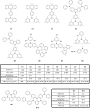
- ° between the donor unit and the nearby phenylene linker for T29 and T30 was confirmed by quantum chemical calculations. Resulting from the almost perfect orthogonality, a good confinement of the electronic density of the two orbitals was obtained with a HOMO level predominantly located on the donor and a




Continuous-flow processes for the catalytic partial hydrogenation reaction of alkynes
Beilstein J. Org. Chem. 2017, 13, 734–754, doi:10.3762/bjoc.13.73
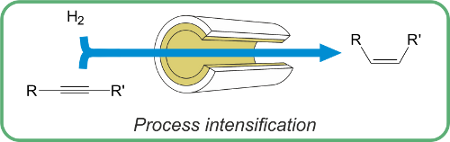
- , selective liquid phase flow processes for the fine-chemicals synthesis, including partial hydrogenations, usually requires a more intimate contact with the heterogeneous catalyst to be efficient. One example is the so-called "confinement effect" found in mesoporous catalytic materials [77][78]. Catalytic








Interactions between photoacidic 3-hydroxynaphtho[1,2-b]quinolizinium and cucurbit[7]uril: Influence on acidity in the ground and excited state
Beilstein J. Org. Chem. 2017, 13, 203–212, doi:10.3762/bjoc.13.23
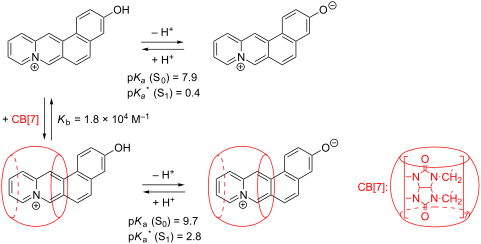
- restrictions of the molecular movement of the guest ligand provided by confinement of the latter inside the host cavity. Nevertheless, the titrations show that the binding process depends on the pH of the solution (Figure 7), indicating the interference of the prototropic equilibrium (see below) with the host


Diels–Alder reactions in confined spaces: the influence of catalyst structure and the nature of active sites for the retro-Diels–Alder reaction
Beilstein J. Org. Chem. 2016, 12, 2181–2188, doi:10.3762/bjoc.12.208

- and selectivity is the special confinement of the reactants and the presence of catalytic active sites, [15][16] by use of microporous materials doped with metals. While pore dimensions and topology of the microporous materials can affect the selectivity of the reaction, their activity can be strongly
- framework and extra framework composition of mesoporous materials and zeolite could be used to control the selectivity of the DAR of cyclopentadiene and p-benzoquinone. In the present work, a series of large pore, pure silica zeolites (in which rate enhancement can only occur by spatial confinement) and the
- . The effect of confinement of the reactant within the pores of the catalyst can decrease the entropy of the activated complex [17][18][19][20][21][22][23][24][25][26][29][30] producing not only an increase of the reaction rate but also a modification of the selectivity. To study this effect, we have


Ru complexes of Hoveyda–Grubbs type immobilized on lamellar zeolites: activity in olefin metathesis reactions
Beilstein J. Org. Chem. 2015, 11, 2087–2096, doi:10.3762/bjoc.11.225
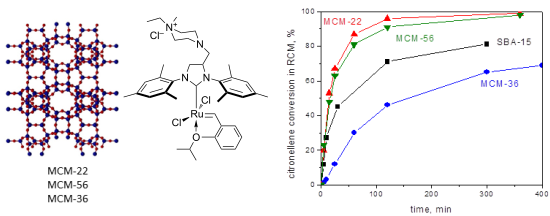
- restrictions in coordination of bulky molecules; we can speculate about some confinement in the coordination sphere of Ru in HGIIN+Cl−/MCM-22 (partial immersion of HGIIN+Cl− into support cavities and/or other deformation of the coordination sphere as a result of immobilization). When the initiation passed with


Anomalous diffusion of Ibuprofen in cyclodextrin nanosponge hydrogels: an HRMAS NMR study
Beilstein J. Org. Chem. 2014, 10, 2715–2723, doi:10.3762/bjoc.10.286
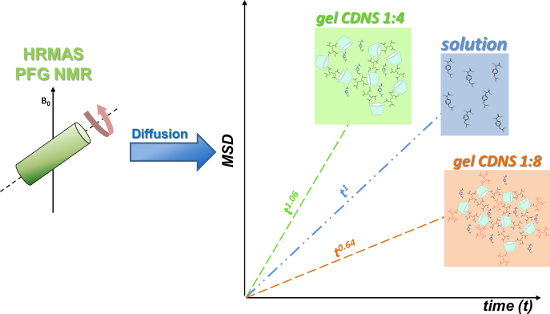
- dynamic regimes is triggered by the polymer structure. CDNSEDTA 1:4 is characterized by a nanoporous structure able to induce confinement effects on IP, thus causing subdiffusive random motion. CDNSEDTA 1:8 is characterized not only by nanopores, but also by dangling EDTA groups ending with ionized COO
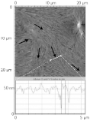
- )2 to achieve sufficient contrast. The picture clearly illustrates the porous morphology of the material and the structural heterogeneities in the pore size distribution. Confinement effects are expected to drive the diffusion process from normal to subdiffusive behaviour and interaction with the
- observed on IP in CDNSEDTA 1:8 can be rationalized as a complex balance of the confinement effects and the electrostatic acceleration, with the latter dominating on the former. As a final remark, we mention that the pH variations occurring during the preparative steps affording the drug-loaded hydrogels


Continuous flow nitration in miniaturized devices
Beilstein J. Org. Chem. 2014, 10, 405–424, doi:10.3762/bjoc.10.38
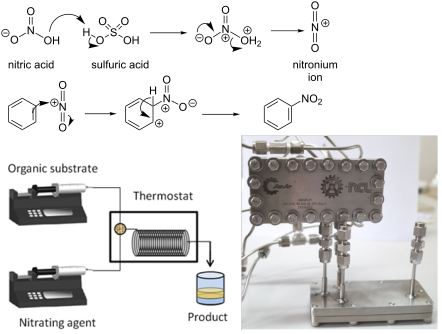
- -dimethyl-4-nitropyrazole (31) and 3-ethyl-4-nitropyrazole (32) were obtained with nitrating mixture and were expected to show detonating properties under severe confinement (Scheme 9). This flow synthesis did not allow the pressure inside the reactor to undergo rapid variations in a short time, thereby


Spin state switching in iron coordination compounds
Beilstein J. Org. Chem. 2013, 9, 342–391, doi:10.3762/bjoc.9.39




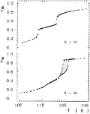

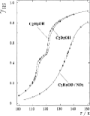


![[Graphic 1]](/bjoc/content/inline/1860-5397-9-39-i3.png?max-width=637&scale=1.18182) ) modes versus the anion volu...
) modes versus the anion volu...


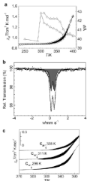


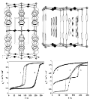


Miniemulsion polymerization as a versatile tool for the synthesis of functionalized polymers
Beilstein J. Org. Chem. 2010, 6, 1132–1148, doi:10.3762/bjoc.6.130
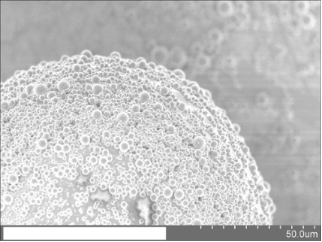
- faster at neutral pH values and higher molecular weight polymers were produced in miniemulsion compared to solution polymerization as a result of the confinement effect. The same group carried out a similar study with the copolymerization of 2-acrylamido-2-methyl-1-propanesulfonic acid and 2
- surfactant, cubic nanoparticles were produced instead of the spherical shells (Figure 9). Only irregular structures were obtained in control experiments performed in water, i.e., without oil nanodroplets. The authors deduced that the initial confinement of the coordination polymerization hence played a






Hybrid biofunctional nanostructures as stimuli-responsive catalytic systems
Beilstein J. Org. Chem. 2010, 6, 922–931, doi:10.3762/bjoc.6.98
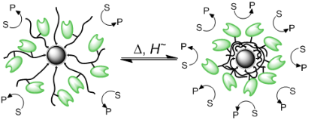
- of an active catalyst, and ideally can be limited, if necessary, to a geometrical confinement. By controlling the catalytic activity of a particulate carrier by a switchable stimulus, the reaction rate of the catalysed process can be significantly accelerated or slowed down. One promising stimulus in




![[Graphic 1]](/bjoc/content/inline/1860-5397-6-98-i6.png?max-width=637&scale=0.1536366) ).
).


Self-assembled ordered structures in thin films of HAT5 discotic liquid crystal
Beilstein J. Org. Chem. 2010, 6, No. 51, doi:10.3762/bjoc.6.51
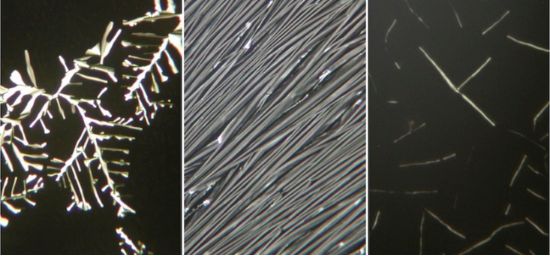
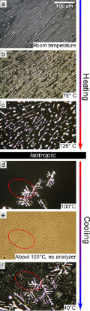
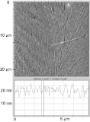
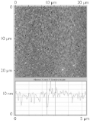
- important observation is that the large-scale order is retained. The increase in the temperature range of the ordered state is an effect of the confinement of the molecules into a very thin structure, analogous to the observations made in liquid crystal confined in electrospun polymeric microtubules [14
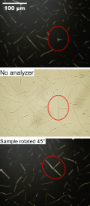
- ]. Moreover, the spatial confinement gives also stabilization of the alignment. Indeed, after heating the spin-coated sample to the isotropic phase and then cooling it to the LC state, the original alignment was preserved and the texture appeared unchanged from the initial state, in contrast to the





Coaxial electrospinning of liquid crystal-containing poly(vinylpyrrolidone) microfibres
Beilstein J. Org. Chem. 2009, 5, No. 58, doi:10.3762/bjoc.5.58
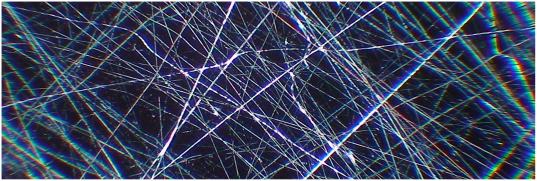
- (vinylpyrrolidone) with the liquid crystal 4-cyano-4′-octylbiphenyl in its smectic phase as core material could be produced. The encapsulation leads to remarkable confinement effects on the liquid crystal, inducing changes in its phase sequence. We conducted a series of experiments to determine the effect of
- application of electric and/or magnetic fields, on the other the strong confinement that can be achieved by the process can affect the LC phase sequence [14]. Electrospinning offers a cheap and simple way of studying such confinement effects systematically. In this work we present our results on composites of
- thermogram of bulk 8CB for comparison. The effect of confinement on the LC phase sequence can be clearly seen. In the fibres the clearing peak is broadened and shifted towards higher temperatures compared to the bulk LC, but between the different fibres the clearing point variations are small. The smectic to



![[Graphic 1]](/bjoc/content/inline/1860-5397-5-58-i1.png?max-width=637&scale=1.18182) in...
in...