


Search results
Search for "modified nucleosides" in Full Text gives 27 result(s) in Beilstein Journal of Organic Chemistry.
Synthesis of coumarin or ferrocene labeled nucleosides via Staudinger ligation
Beilstein J. Org. Chem. 2006, 2, No. 23, doi:10.1186/1860-5397-2-23
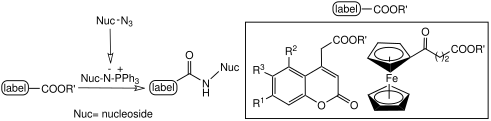
- starting compounds for preparation of modified nucleosides are azidonucleosides. In general, organic azides are valuable, energy-rich and flexible intermediates, which can react very differently under various reaction conditions. [13] They can react at N1 with electrophiles (carbon electrophiles, protons
- desired modified nucleosides 11a-c and 12a-c in good yields (Table 1). 4-Methyl derivatives of the corresponding coumarin-4-acetic acids were only minor byproducts in these reactions. The isolated yields of polar products were negatively influenced by lengthy separation by flash chromatography. The
- new molecule with promising fluorescent and electrochemical properties. The isolated yields of products depend on the structure of azidonucleoside and carboxylic acids. A detailed study of the kinetics of the Staudinger ligation with nucleoside substrates is in progress. Background Modified


The first salen- type ligands derived from 3',5'-diamino- 3',5'-dideoxythymidine and -dideoxyxylothymidine and their corresponding copper(II) complexes
Beilstein J. Org. Chem. 2006, 2, No. 17, doi:10.1186/1860-5397-2-17
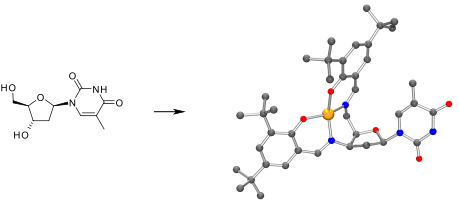
- catalytic reactions, demonstrating that modified nucleosides could act as chiral ligands for transition metal ions. This approach opens up a new class of metal complexes containing ligands based on nucleoside derivatives. The wide variety in this type of ligands in terms of their structural diversity such


Other Beilstein-Institut Open Science Activities



