


Search results
Search for "IR" in Full Text gives 1117 result(s) in Beilstein Journal of Organic Chemistry. Showing first 200.
On the photoluminescence in triarylmethyl-centered mono-, di-, and multiradicals
Beilstein J. Org. Chem. 2025, 21, 964–998, doi:10.3762/bjoc.21.80
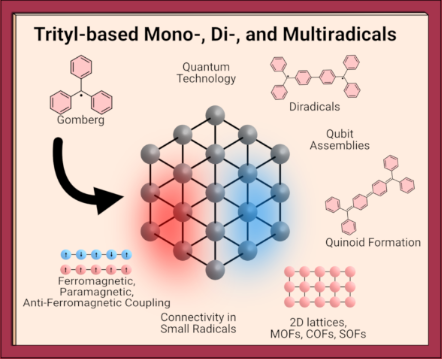
- into the near-IR (λem = 780 nm, ϕ = 0.8% in toluene). While the ϕ of TTM-TTM is low, no photoluminescence has been reported for PTM-PTM. ΔEST of TTM-TTM is at −1.22 kcal mol−1 indicating a singlet ground state as well; however, the value is larger than for PTM-PTM, requiring heating to observe









Studies on the syntheses of β-carboline alkaloids brevicarine and brevicolline
Beilstein J. Org. Chem. 2025, 21, 955–963, doi:10.3762/bjoc.21.79

- publications [19][23][24] confirmed the structure with IR and MS data, or by reactivity. Herein, we report the full set of assigned 1H and 13C NMR data for both the base and the dihydrochloride salt. In the course of our efforts devoted to elaborating a new and efficient synthesis of brevicarine (2), we
- request/cif. Supporting Information File 6: ORTEP diagram of compound 31, synthetic procedures, IR, 1H, 13C, 19F and 2D NMR spectra of compounds 2, 5, 6, 24–28 and 30–32. Supporting Information File 7: Crystallographic information file of compound 31. Supporting Information File 8: Checkcif file for


Recent advances in controllable/divergent synthesis
Beilstein J. Org. Chem. 2025, 21, 890–914, doi:10.3762/bjoc.21.73

- achieved selective synthesis of either enantiomer of a target product by controlling the reaction duration (Scheme 13) [42]. When performing the asymmetric intermolecular allylic amination of 6-hydroxyisoquinoline (49) with tert-butyl(1-phenylallyl)carbonate ((rac)-50) using an Ir catalyst derived from [Ir
- in the absence of a Brønsted acid additive, the opposite enantiomer 52 was obtained. Mechanistically, an initial kinetic resolution (KR) of (rac)-50 occurs via an Ir-catalyzed asymmetric allylic amination. Due to the higher reactivity of (S)-50, it reacts with 6-hydroxyisoquinoline within 6 minutes
- cycloaddition reactions with substituted furans as diene component to produce the corresponding epoxy-cycloaddition adducts. The authors developed an Ir/Sc tandem catalytic reaction to convert these adducts into polysubstituted 3-haloisoquinolines 99 in one pot. After obtaining isoquinoline compounds 99 with




Dicarboxylate recognition based on ultracycle hosts through cooperative hydrogen bonding and anion–π interactions
Beilstein J. Org. Chem. 2025, 21, 884–889, doi:10.3762/bjoc.21.72
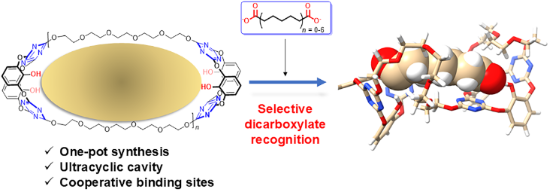
- . Synthesis of ultracycles. Supporting Information Supporting Information File 4: Experimental details and characterization data (including 1H NMR, 13C NMR, IR, and HRMS of precursor compounds and ultracycles, X-ray data for B4aH, theoretical calculations, and NMR titration data). Funding Financial support


Data accessibility in the chemical sciences: an analysis of recent practice in organic chemistry journals
Beilstein J. Org. Chem. 2025, 21, 864–876, doi:10.3762/bjoc.21.70

- about many standard formats [73]. Open formats in NMR, mass spectrometry, UV–vis-, IR, and Raman spectroscopy have been recently reviewed [74]. Often a very simple first step is to export coordinate spectroscopic data to CSV, and there are numerous online tools for conversion of proprietary to open file
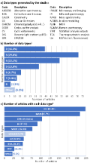
- community risks becoming left behind without urgent cultural change. Journal data policies for the study timeframe, 01 February – 31 March 2023. ‘All data’ refers to: spectroscopic data (NMR, IR, UV–vis, Raman, circular dichroism and mass spectrometry), chromatography (GC, HPLC, SEC), physical data (m.p





Light-enabled intramolecular [2 + 2] cycloaddition via photoactivation of simple alkenylboronic esters
Beilstein J. Org. Chem. 2025, 21, 854–863, doi:10.3762/bjoc.21.69
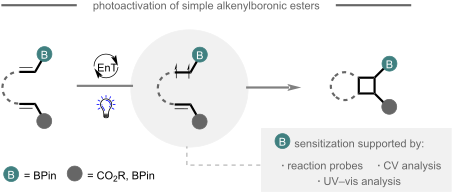
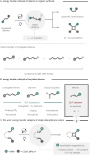
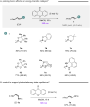
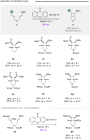
- demonstrated the efficient sensitization of an alkene-containing four boron substituents using Ir(ppy)3 as a suitable sensitizer in the presence of styrene, indicating a prominent role of the adjacent p-orbital [51]. While simple alkenylboronic esters have been employed as triplet diradical quenchers to
- interactions to achieve directionality (E→Z), synonymous with conventional photocatalyzed isomerization processes [19], it serves as a rapid reaction probe to support sensitization via the generation of a photostationary state equilibrium. The use of Ir(ppy)3 (Table 1, entry 1), an efficient sensitizer for the



Acyclic cucurbit[n]uril bearing alkyl sulfate ionic groups
Beilstein J. Org. Chem. 2025, 21, 717–726, doi:10.3762/bjoc.21.55
- and 150 or 100 MHz for 13C. Melting points were measured on a Meltemp apparatus in open capillary tubes and are uncorrected. IR spectra were measured on a Thermo Nicolet NEXUS 670 FT/IR spectrometer by attenuated total reflectance (ATR) and are reported in cm−1. Mass spectrometry was performed using a
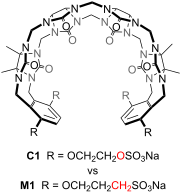
- high vacuum to yield C1 as a white solid (0.3444 g, 68% yield). Mp > 300 °C; IR (ATR, cm−1): 3456 (w), 1720 (m), 1472 (m), 1378 (w), 1226 (m), 1101 (s), 1023 (m), 972 (w), 790 (w); 1H NMR (400 MHz, D2O) 6.71 (s, 4H), 5.67 (d, J = 15.4 Hz, 2H), 5.57 (d, J = 15.8 Hz, 4H), 5.46 (d, J = 8.9 Hz, 2H), 5.42




Asymmetric synthesis of fluorinated derivatives of aromatic and γ-branched amino acids via a chiral Ni(II) complex
Beilstein J. Org. Chem. 2025, 21, 659–669, doi:10.3762/bjoc.21.52
- (HREIMS) were measured on a MAT 711 (Varian MAT, Bremen, Germany). Electron energy for EI was set to 70 eV. Infrared spectra (IR) were measured on an ALPHA II (Bruker, Billerica, USA) spectrometer. Characteristic absorption bands are given in wave numbers (cm−1). Qualitative thin-layer chromatography (TLC


Recent advances in allylation of chiral secondary alkylcopper species
Beilstein J. Org. Chem. 2025, 21, 639–658, doi:10.3762/bjoc.21.51
- terminus. In search of complementary approaches, other transition metals including W [9], Mo [10], Ru [11][12], Rh [13][14][15], and Ni [16][17] have been explored. Among these alternatives, Ir catalysis emerged as a particularly powerful complement to Pd catalysis. The field of iridium-catalyzed allylic
- phosphoramidite ligands significantly advanced this field, with contributions from numerous research groups including Hartwig, Helmchen, Carreira, Alexakis, and You [19]. In general, soft nucleophiles that typically possess conjugate acids with pKa values less than 25 have been utilized in most Pd and Ir


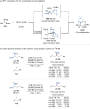


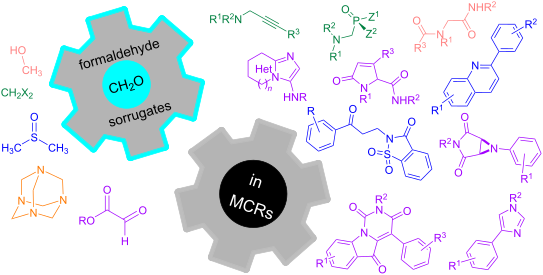
Formaldehyde surrogates in multicomponent reactions
Beilstein J. Org. Chem. 2025, 21, 564–595, doi:10.3762/bjoc.21.45
- for the formation of intermediates. Gao et al. studied the generation of metal acetylide A by IR spectroscopy [65]. When subsequent additions of 1 equiv FeCl3 were made in a solution of alkyne and TMG, the C–H stretch peak at 3277 cm−1 started to decrease as the temperature increased from 30 to 100 °C


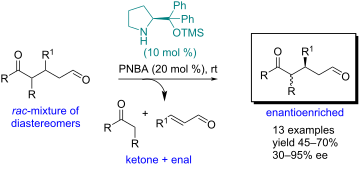
Organocatalytic kinetic resolution of 1,5-dicarbonyl compounds through a retro-Michael reaction
Beilstein J. Org. Chem. 2025, 21, 473–482, doi:10.3762/bjoc.21.34
- –240 mesh). Chiral HPLC analysis was performed using different chiral columns. IR spectra were recorded on an FTIR instrument. High-resolution mass spectra were performed by positive electrospray ionization using a quadrupole-time-of-flight detector (ESI+-Q-TOF) instrument. All compounds were purchased


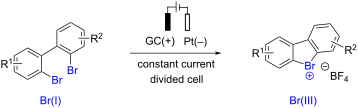
Electrochemical synthesis of cyclic biaryl λ3-bromanes from 2,2’-dibromobiphenyls
Beilstein J. Org. Chem. 2025, 21, 451–457, doi:10.3762/bjoc.21.32
- -tetrafluorobenzene as an internal standard. Isolated yields are given in parentheses. A: Background and iR drop-corrected CVs of 5 mM 4a at different scan rates (solvent: HFIP, working electrode: glassy carbon, supporting electrolyte: 0.1 M TBA-BF4). B: Plot of the peak current densities (jp) vs v0.5. C


Synthesis, structure, ionochromic and cytotoxic properties of new 2-(indolin-2-yl)-1,3-tropolones
Beilstein J. Org. Chem. 2025, 21, 358–368, doi:10.3762/bjoc.21.26
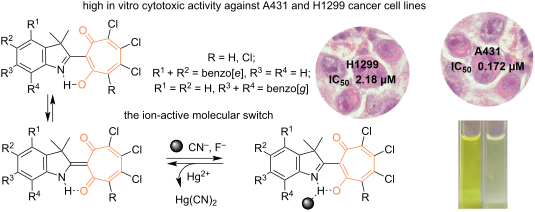
- 1,2-benzoquinone and o-chloroanil, respectively [1][25]. The structures of compounds 7 and 8 obtained by methods A and B were confirmed by 1H NMR, IR spectroscopy and mass spectrometry (Supporting Information File 2). A distinctive feature of the 1H NMR spectra of 7 in CDCl3 is the signal of the
- and DMSO-d6. The signals were referenced to the signals of residual proton signals of corresponding deutero-solvents. IR spectra were recorded on a Varian Excalibur 3100 FTIR instrument using the attenuated total internal reflection technique. Mass spectra were obtained on a Finnigan Mat Incos 50
- , 98%, Alfa Aesar) and tetrachloro-o-benzoquinone (o-chloranil, 3) (97%, ACROS organics) were used as the starting reagents. NMR and IR spectra were recorded on the equipment of the Center for Collective Usage “Molecular Spectroscopy” of Southern Federal University. X-ray diffraction study The unit




Synthesis of new condensed naphthoquinone, pyran and pyrimidine furancarboxylates
Beilstein J. Org. Chem. 2025, 21, 340–347, doi:10.3762/bjoc.21.24
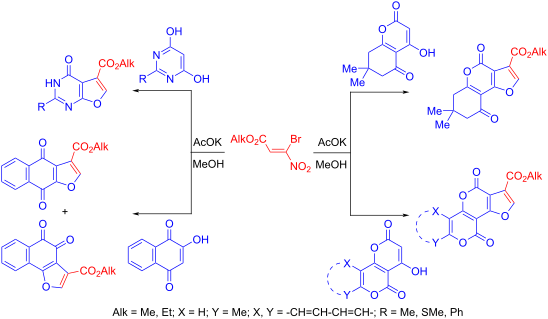
- IR spectra of compounds 5a–6d containing an alkoxyfuropyran fragment shows that in the case of methyl esters 5a, 6a, and 6c the absorption band of the alkoxycarbonyl function is shifted to a lower frequency region (1714–1721 cm−1), while ethyl esters 5b, 6b, and 6d are characterized by higher
- . In turn, in the IR spectra (KBr) of compounds 7a–f, absorption bands of the ester fragment in the region of 1714–1750 cm−1 and absorption bands of the carbonyl group of the amide fragment in the region of 1674–1688 cm−1 are observed, which suggests the existence of these compounds in the solid phase
- expands the possibilities of further transformation and obtaining new compounds on their basis. Experimental General information IR spectra were recorded on a Shimadzu IRPrestige-21 FT-IR spectrometer for samples in KBr pellets over 400–4000 cm−1 range. The electronic absorption spectra were recorded on a


Red light excitation: illuminating photocatalysis in a new spectrum
Beilstein J. Org. Chem. 2025, 21, 296–326, doi:10.3762/bjoc.21.22

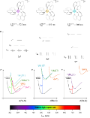
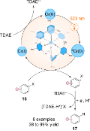
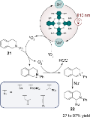
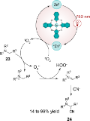
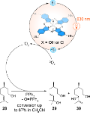
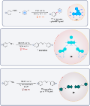
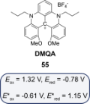
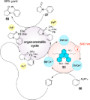
- and mechanistic investigations of the near-IR-photocatalyzed aza-Henry reaction, the authors have proposed either a single-electron transfer or an energy transfer mechanism. Additionally, the reaction displayed an unexpected sensitivity to the light wavelength used. Employing a higher-energy light















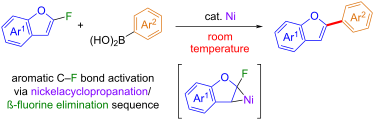
Nickel-catalyzed cross-coupling of 2-fluorobenzofurans with arylboronic acids via aromatic C–F bond activation
Beilstein J. Org. Chem. 2025, 21, 146–154, doi:10.3762/bjoc.21.8
- spectrometer. Chemical shift values are given in ppm relative to internal Me4Si (for 1H NMR: δ = 0.00 ppm), CDCl3 (for 13C NMR: δ = 77.0 ppm), C6F6 (for 19F NMR: δ = 0.0 ppm), and H3PO4 (for 31P NMR: δ = 0.0 ppm). IR spectra were recorded on a Horiba FT-730 spectrometer. Mass spectra were measured on a JEOL
- Hz, 1H), 7.49–7.46 (m, 2H), 7.35 (dd, J = 7.7, 7.6 Hz, 1H), 7.16 (d, J = 7.6 Hz, 1H), 2.44 (s, 3H); 13C NMR (126 MHz, CDCl3) δ 155.6, 152.3, 138.5, 130.5, 130.4, 129.1, 128.8, 128.7, 127.6, 126.2, 125.3, 125.1, 124.6, 124.5, 123.4, 121.9, 112.3, 100.3, 21.5; IR (KBr): 3051, 1606, 1487, 1387, 1280
- the Institute for Solid State Physics, the University of Tokyo (1H, 13C, and 19F NMR spectrometer, mass spectroscopy system, and IR spectroscopy system in Mori Laboratory). Funding This work was financially supported by JSPS KAKENHI Grant Number JP21K05066 in Grant-in-Aid for Scientific Research (C



Emerging trends in the optimization of organic synthesis through high-throughput tools and machine learning
Beilstein J. Org. Chem. 2025, 21, 10–38, doi:10.3762/bjoc.21.3
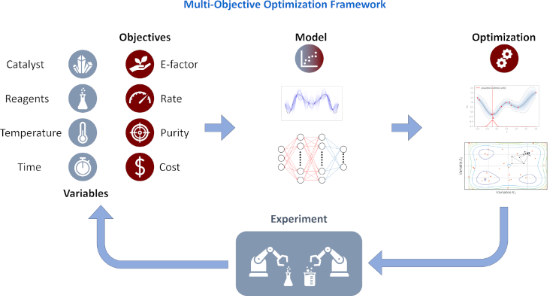
- chromatographic spectra and to automatically assign the peaks to reagents or products depending on the decrease or increase in peak intensity over time. In addition to monitoring the evolution of the reaction, the IR spectral data was processed in real time. This was to ensure the complete consumption of acid
- . [70] assembled four complementary PATs, including in-line NMR, UV–vis, IR, and online ultra-high-performance liquid chromatography (UHPLC) to meticulously monitor the intricate three-step linear synthesis of the drug mesalazine (18, Figure 7) with a 1.6 g⋅h−1 throughput. In the first step, the
- and timely data analysis, facilitating seamless real-time monitoring of the hydrolysis of 16. The final hydrogenation step was monitored by an in-line IR probe. The spectral data was processed using a partial least squares regression model and quantified. An online UHPLC was used to analyze the final


Synthesis, characterization, and photophysical properties of novel 9‑phenyl-9-phosphafluorene oxide derivatives
Beilstein J. Org. Chem. 2024, 20, 3299–3305, doi:10.3762/bjoc.20.274
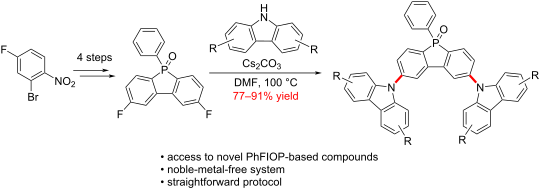
- available 2-bromo-4-fluoro-1-nitrobenzene, featuring a noble-metal-free system, mild reaction conditions, and a good yield, especially for the final Cs2CO3-facilitated nucleophilic substitution (77–91% yield). The characterization data obtained from IR and NMR spectroscopy (1H, 13C, 19F, and 31P) as well as
- 2–7 was performed by NMR spectroscopy, which confirmed the synthetic outcomes (Figures S1–S11, Supporting Information File 1). The structures of compounds 7 were further confirmed by HRMS and IR analyses (Figures S12–S18, Supporting Information File 1). In addition, the chemical structure of 7-H was




Synthesis of acenaphthylene-fused heteroarenes and polyoxygenated benzo[j]fluoranthenes via a Pd-catalyzed Suzuki–Miyaura/C–H arylation cascade
Beilstein J. Org. Chem. 2024, 20, 3290–3298, doi:10.3762/bjoc.20.273
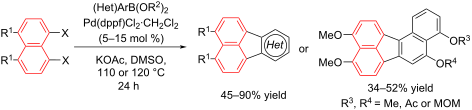
- reaction cascade starting from diarylalkynes 8, which involves indole formation/peri-C–H annulation and N-dealkylation reactions to afford acenaphthylene-fused indole products 9 (Scheme 1b) [41]. Recently, Takeuchi and co-workers reported an effective Ir-catalyzed [2 + 2 + 2] cycloaddition between 1,8


Intramolecular C–H arylation of pyridine derivatives with a palladium catalyst for the synthesis of multiply fused heteroaromatic compounds
Beilstein J. Org. Chem. 2024, 20, 3256–3262, doi:10.3762/bjoc.20.269
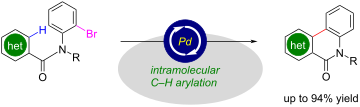
- , 126.3, 123.8, 122.7, 118.3, 115.4, 43.3, 31.9, 29.5, 29.3, 27.3, 27.1, 22.7, 14.2; IR (ATR): 2959, 2929, 2856, 1661, 751 cm−1; HRMS–DART+ (m/z): [M + H]+ calcd for C24H27N2O, 359.2123; found, 359.2134. Structures of multiply fused heterocyclic compounds composed of pyridine rings. Synthesis of C–H


Ceratinadin G, a new psammaplysin derivative possessing a cyano group from a sponge of the genus Pseudoceratina
Beilstein J. Org. Chem. 2024, 20, 3215–3220, doi:10.3762/bjoc.20.267
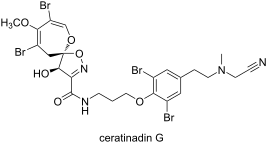
- existence of a substituted benzenoid chromophore was suggested by the UV absorption maximum at 258 nm. The presence of hydroxy and/or amino groups and a carbonyl group was indicated by IR absorptions at 3337 cm−1 and 1671 cm−1, respectively. The analysis of the HSQC spectrum, along with the 1H and 13C NMR
- cyano group in compound 1 [13][14][15]. In the IR spectrum of 1, an absorption attributed to the stretching vibration of the C≡N bond was observed at 2234 cm−1, although its intensity was very weak (Figure S8 in Supporting Information File 1). It is known that when an atom with an electron-withdrawing
- inductive effect is attached to the carbon bearing the cyano group, the intensity of the absorption derived from the cyano group in the IR spectrum decreases significantly. This phenomenon has been reported, particularly in compounds where halogen or oxygen atoms are bonded to the carbon bearing the cyano


Advances in radical peroxidation with hydroperoxides
Beilstein J. Org. Chem. 2024, 20, 2959–3006, doi:10.3762/bjoc.20.249
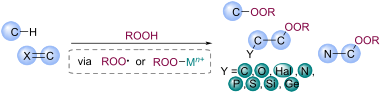
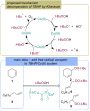
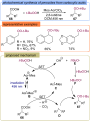
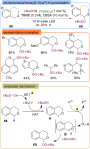
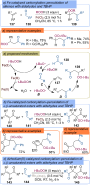
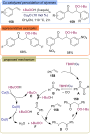
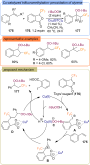
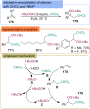
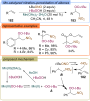
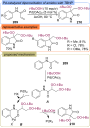
- recombination of radicals F and D leads to the product 67. Photochemical peroxidation of isochromans and other benzylic C(sp3)–H substrates 68 with TBHP was developed using Ir(ppy)3 as the photocatalyst and Bronsted acid as an additive (Scheme 25) [68]. Visible light irradiation of [IrIII(ppy)3] to give the
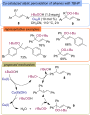
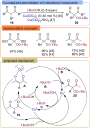
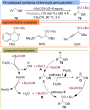
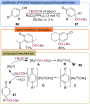
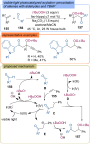
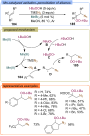
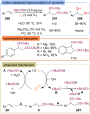
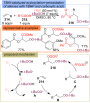
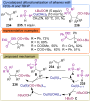
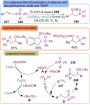
- –peroxidation of alkenes 155 with TBHP and aldehydes 156 through visible-light photocatalysis was developed using fac-Ir(ppy)3 as the photoredox catalyst (Scheme 49) [113]. Under visible light irradiation, the excited state Ir(III)* is generated, and the single electron transfer of Ir(III)* with TBHP results in
- tert-butoxy radical A. Generated Ir(IV) can produce tert-butylperoxy radical D from TBHP. Hydrogen atom abstraction from aldehyde 156 with tert-butoxy radical A leads to acyl radical B, which adds to alkene 155 to form the C-centered radical C. Two pathways are then possible for the formation of the





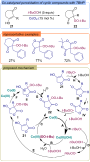


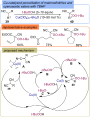


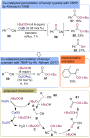
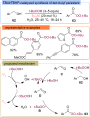

















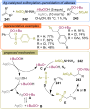


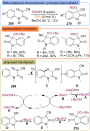


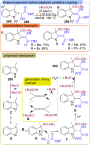

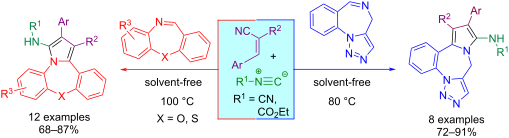
Synthesis of pyrrole-fused dibenzoxazepine/dibenzothiazepine/triazolobenzodiazepine derivatives via isocyanide-based multicomponent reactions
Beilstein J. Org. Chem. 2024, 20, 2870–2882, doi:10.3762/bjoc.20.241
- , 117.1 (CAr), 91.1 (CN), 56.8, 29.4, 20.9 (CAliphatic), respectively. In its mass spectrum, the calculated value matched the found value m/z 419 calculated for [M]+ C28H25N3O. In the IR spectrum, the absorption peak index in 2213 is related to the CN group. For final confirmation, the derivative 4h was
- analysis, mass spectrum, and IR are consistent with the structure (for details see Supporting Information File 1). Finally, a single crystal X-ray analysis of compound 6a was performed, confirming the structure (Figure 4). The proposed mechanism for an isocyanide-based multicomponent domino reaction for
- on a Bruker Avance spectrometer at 300.13 MHz and 75.47 MHz, respectively. IR spectra were created on a Thermo Nicolet Nexus 470 FT-IR spectrometer in cm−1. Mass spectra with an HP (Agile Technologies) 5975C Mass Selective Detector were used to confirm the mass of the synthesized products. The PL






Synthesis of tricarbonylated propargylamine and conversion to 2,5-disubstituted oxazole-4-carboxylates
Beilstein J. Org. Chem. 2024, 20, 2827–2833, doi:10.3762/bjoc.20.238

- . Ltd. and purified by distillation. 1H and 13C{1H} NMR spectra were recorded on a JEOL JMN-ECZ400S spectrometer (400 MHz and 100 MHz, respectively) using TMS as internal standard. The assignments of the 13C{1H} NMR signals were reaffirmed by DEPT experiments. IR spectra were recorded with a JASCO FT/IR
- ), 84.9 (C), 82.6 (C), 63.8 (CH2), 61.0 (C), 21.6 (CH3), 14.0 (CH3); IR (KBr, ATR) vmax: 1754, 1672, 1477, 1281, 1214, 1071, 751 cm−1; HRMS–APCI-TOF (m/z): [M + H]+ calcd for C23H24NO5, 394.1649; found, 394.1672. When other alkynes and N,O-acetals were used, the experiments were conducted in the same way
- ), 128.5 (CH), 128.3 (C), 128.1 (CH), 126.8 (CH), 126.2 (CH), 123.4 (C), 60.9 (CH2), 31.6 (CH2), 20.2 (CH3), 13.3 (CH3); IR (KBr, ATR) vmax: 1735, 1710, 1178, 1087, 1054, 720 cm−1; HRMS–APCI-TOF (m/z): [M + H]+ calcd for C20H20NO3, 322.1438; found, 322.1458. When other propargylamines were used, the


C–C Coupling in sterically demanding porphyrin environments
Beilstein J. Org. Chem. 2024, 20, 2784–2798, doi:10.3762/bjoc.20.234
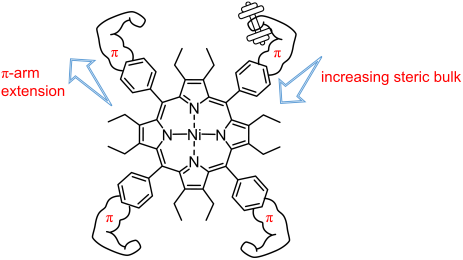
- borylation of porphyrin 13 to yield 46. Mean geometrical parameters of OET-meta/para-ArylPP and out-of-plane and in-plane distortion magnitudes. Supporting Information Supporting Information File 9: Experimental methods, synthetic procedures, 1H, 11B and 13C NMR, VT-NMR, UV–vis, IR, HRMS (m/z)-APCI and HRMS





