


Search results
Search for "esters" in Full Text gives 936 result(s) in Beilstein Journal of Organic Chemistry. Showing first 200.
3,3'-Linked BINOL macrocycles: optimized synthesis of crown ethers featuring one or two BINOL units
Beilstein J. Org. Chem. 2025, 21, 1719–1729, doi:10.3762/bjoc.21.134
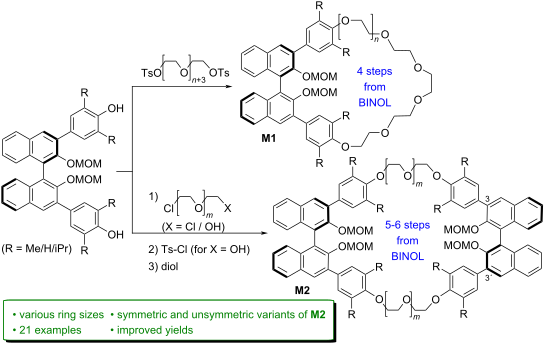
- the approach via Suzuki coupling, we employed the previously reported BINOL-diiodide 1 [52], which was reacted with bisboronic acids (see Figure 3a). Here we chose bisboronic esters 75/6/7/8 which feature dimethylphenyl groups that are linked via penta/hexa/hepta/octaethylene glycol chains (throughout


Approaches to stereoselective 1,1'-glycosylation
Beilstein J. Org. Chem. 2025, 21, 1700–1718, doi:10.3762/bjoc.21.133
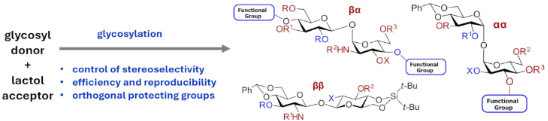
- -configuration on the glycosyl acceptor side was “retained” from the 1,2-orthoester progenitor. The nature of the protecting groups proved to be critical for the glycosylation outcome: the use of bulkier benzoyl esters, as in the phenyl 1,2-orthoester 19, led to a lower yield (36%) of the 1,1'-linked product 20


Influence of the cation in hypophosphite-mediated catalyst-free reductive amination
Beilstein J. Org. Chem. 2025, 21, 1661–1670, doi:10.3762/bjoc.21.130
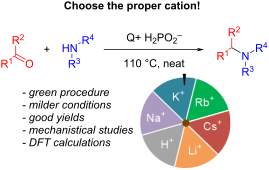
- synthesis of esters of phosphonous or alkylphosphinic acids [33][34][35]. Only a single application of cesium hypophosphite was shown in the literature. CsH2PO2 was prepared in situ and used for formation C–P bond by radical addition to unsaturated carboxylic acids [36 ]To summarize the above, it is crucial


Photocatalysis and photochemistry in organic synthesis
Beilstein J. Org. Chem. 2025, 21, 1645–1647, doi:10.3762/bjoc.21.128
- of alkenylboronic esters using energy transfer catalysis [26]. Gualandi and co-workers leveraged a combination of photoredox and HAT catalysis to realize the intramolecular nucleophilic amidation of alkenes with β-lactams [27]. Further, Luridiana and colleagues developed a method for the alkylation

General method for the synthesis of enaminones via photocatalysis
Beilstein J. Org. Chem. 2025, 21, 1535–1543, doi:10.3762/bjoc.21.116
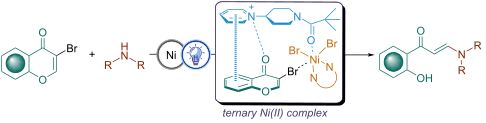
- the reactivity of unsaturated esters towards an aza-Michael addition is the use of transition metal complexes as catalysts/promoters [40][41][42]. Considering this background, we reasoned that Ni(II) could be a suitable catalyst for the amination of unsaturated systems. Initial investigations were




Calcium waste as a catalyst in the transesterification for demanding esters: scalability perspective
Beilstein J. Org. Chem. 2025, 21, 1520–1527, doi:10.3762/bjoc.21.114
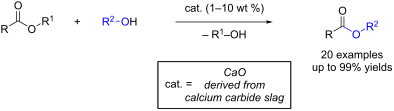
- Anton N. Potorochenko Konstantin S. Rodygin Institute of Chemistry, Saint Petersburg State University, 7/9 Universitetskaya nab., St. Petersburg, 199034, Russia 10.3762/bjoc.21.114 Abstract Esters are valuable compounds in fine organic synthesis and industry. The significant growth in the demand
- for esters requires the development of scalable production methods. Heterogeneous CaO-based catalysts for the production of esters by transesterification are promising catalytic systems for the production of these desired compounds. In this work, the application of calcium carbide slag, a byproduct of
- acetylene production, was investigated. The catalyst was obtained by calcination of calcium carbide slag at 600 °C (CS600) and characterized by XRD and FTIR analysis. The transesterification reactions were carried out with primary alcohols, producing fatty acid alkyl esters in 51–99% yields, depending on


High-pressure activation for the solvent- and catalyst-free syntheses of heterocycles, pharmaceuticals and esters
Beilstein J. Org. Chem. 2025, 21, 1374–1387, doi:10.3762/bjoc.21.102
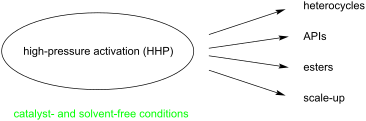
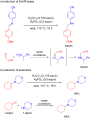
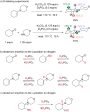
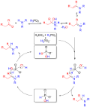
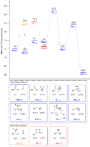
- -products. A computational study accompanies the experimental data to interpret the outcome of the reactions. Keywords: acetaminophen; acetylsalicylic acid; benzimidazoles; catalyst-free synthesis; cyclization; esters; high hydrostatic pressure; pyrazoles; Introduction Non-traditional activation methods


Oxetanes: formation, reactivity and total syntheses of natural products
Beilstein J. Org. Chem. 2025, 21, 1324–1373, doi:10.3762/bjoc.21.101
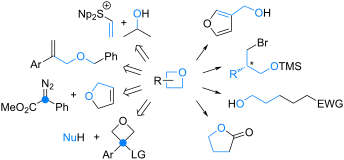
- base [5]. In fact, its hydrogen-bond-accepting ability is even stronger than that of the other 3-, 5- and 6-membered cyclic ethers, as well as the carbonyls of aldehydes, ketones, esters and carbonates [6][7][8]. The only better carbonyl-based hydrogen-bond acceptors are amides, carbamates and ureas [9
- additions and hydrolyses (in case of esters and amides), as well as epimerisations at the α-carbons, oxetanes are stable to such chemical transformations. In case of the gem-dimethyl group, which is commonly used to block metabolically labile sites at the expense of raising lipophilicity, bridging the two
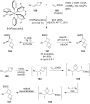
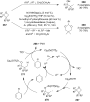
- from esters of functionalised arylacetic acid 5 or 6 and involves two separate protocols: first, a metallacarbene, which undergoes the insertion, is generated from the corresponding diazo precursor formed either in flow via hydrazone oxidation (PS-TsNIK packed column), or in batch mode via diazo








Recent advances in oxidative radical difunctionalization of N-arylacrylamides enabled by carbon radical reagents
Beilstein J. Org. Chem. 2025, 21, 1207–1271, doi:10.3762/bjoc.21.98
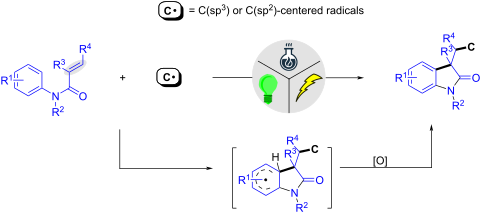
- different alkyl substituents at the α-position of the 1,3-dicarbonyl compounds, including functionalized alkyl chains with alkenyl, alkynyl, and aryl groups, all of which were compatible with the reaction conditions. Interestingly, when α-alkylmalonic esters were employed instead of malonate amide moieties
- agents, indicating the feasibility of the protocol (81d,e). The method was further extended to substrates bearing functional groups, such as esters, nitriles, and silanes, all of which were well-tolerated under the optimized conditions (81f–i). Expanding the substrates to include N-allyl-N
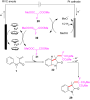
- , revealing broad functional group tolerance. A series of N-arylacrylamides bearing electron-donating and electron-withdrawing substituents on the aryl ring were well tolerated, affording the desired oxindoles 88a–e in moderate to high yields. Additionally, various radical precursors, including α-bromo esters












Synthetic approach to borrelidin fragments: focus on key intermediates
Beilstein J. Org. Chem. 2025, 21, 1135–1160, doi:10.3762/bjoc.21.91
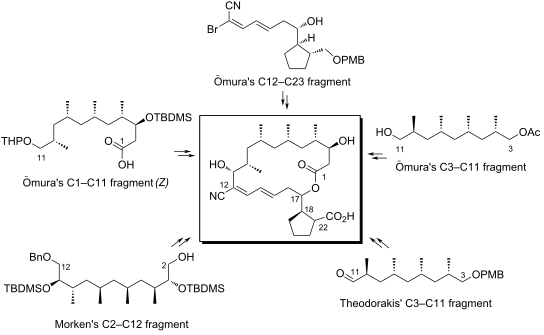
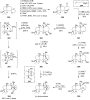
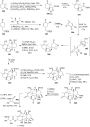
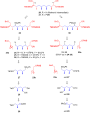
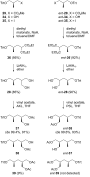
- alternative route was also proposed for synthesizing 21 from compound 30, which was derived from ent-29. Notably, epoxides 23a and 23b were obtained via Sharpless epoxidation of (E)-2-butenol. Uguen and co-workers began their synthesis by reducing Roche esters 29 and ent-29 to their respective primary
- over 25 steps in 11% overall yield. On the other hand, the efficiency of the process was emphasized by the authors on the utilization of Roche esters 29 and ent-29 to prepare stereochemically pure sulfones 27 and ent-27, respectively. Moreover, the use of the trityl protecting group facilitated a
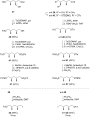
- for borrelidin, streamlining the synthesis process. The retrosynthetic analysis by Laschat and co-workers is described in Scheme 12. The target molecule 82 was envisioned to be derived from esters 83 or 86, depending on the chosen synthetic pathway. In route A, ester 83 was designed to originate from








A versatile route towards 6-arylpipecolic acids
Beilstein J. Org. Chem. 2025, 21, 1104–1115, doi:10.3762/bjoc.21.88
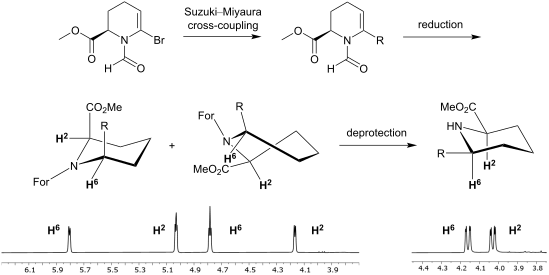
- . The formyl group can be cleaved under acidic conditions to yield the esters (2R,6S)-11. Treatment of the solution with LiOH at pH 9–10 and at 40 °C leads to saponification of the methyl ester (Scheme 5c and Scheme 6). Conclusion In conclusion, we present a straightforward and efficient method for the





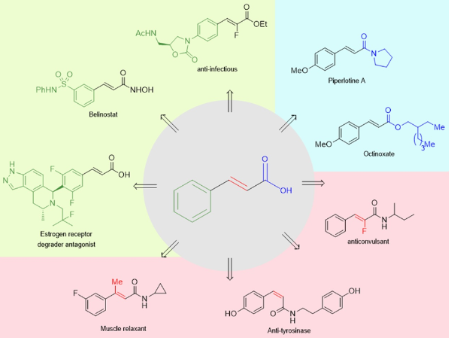
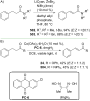
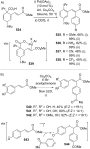
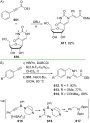
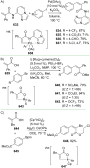
Recent advances in synthetic approaches for bioactive cinnamic acid derivatives
Beilstein J. Org. Chem. 2025, 21, 1031–1086, doi:10.3762/bjoc.21.85
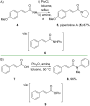
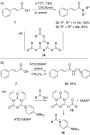
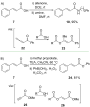
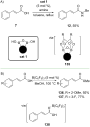
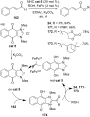
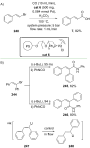
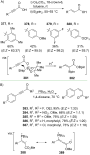
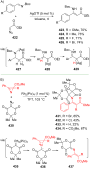
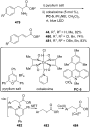
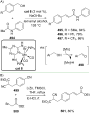
- pentafluoropyridine (PFP) via in situ formation of an active acid fluoride 48 to afford the corresponding amides 13 and 47 in moderate yields (Scheme 15) [47]. In addition, the amidation process could be scaled up to a gram scale to give 47 in 90% yield. Maruoka and co-workers (2021) converted cinnamic esters into
- trimethylsulfoxonium iodide (TMSOI) with DMSO-d6, resulting in CH3/CD3 exchange. Furthermore, Chisholm and co-workers (2019) synthesized bulky cinnamate esters 61–64 utilizing a trichloroacetimidate-based alkylating agent in moderate to excellent yields via carbocation 65 formation upon trichloroacetamide release
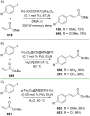
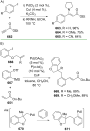
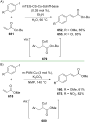
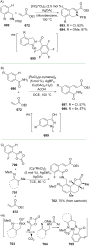
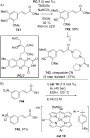
- with a catalytic base has also been applied to prepare cinnamate esters. For example, Heller and co-workers (2021) synthesized the ester 141 catalyzed by DBU which functioned as a Brønsted base for the alcohol (Scheme 43A) [81]. Impressively, the method could be scaled up to a multigram scale








































Pd-Catalyzed asymmetric allylic amination with isatin using a P,olefin-type chiral ligand with C–N bond axial chirality
Beilstein J. Org. Chem. 2025, 21, 1018–1023, doi:10.3762/bjoc.21.83
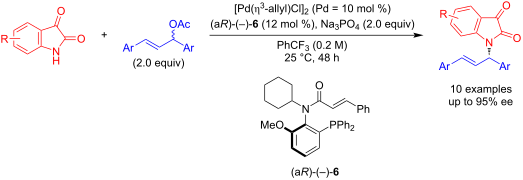
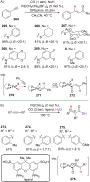
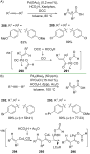
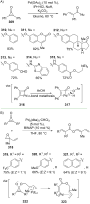
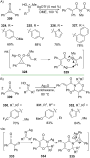
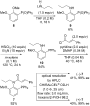
- asymmetric allylic amination of allylic esters with isatin derivatives 11 as nucleophiles. The reaction proceeds efficiently, yielding the products (S)-13 with good-to-high enantioselectivity. A scale-up reaction was also successfully conducted at a 1 mmol scale. Additionally, when malononitrile was added to
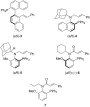
- amination of allyl esters using isatin as a nucleophile. In this reaction, bisphosphine-type ligands such as BINAP and SEGPHOS derivatives, as well as P,N-type ligands like oxazoline-type ligands, were utilized as chiral ligands [26]. On the other hand, several groups have recently reported new chiral
- chirality, such as N-alkyl-N-cinnamyl-type chiral ligands 4 [28][29] and 5 [30], and a P,olefin-type chiral ligand 6 [31] with a cinnamoyl group instead of a cinnamyl group. In particular, the chiral ligand 6 is effective in the Pd-catalyzed asymmetric allylic substitution reaction of allylic esters with




Cu–Bpin-mediated dimerization of 4,4-dichloro-2-butenoic acid derivatives enables the synthesis of densely functionalized cyclopropanes
Beilstein J. Org. Chem. 2025, 21, 877–883, doi:10.3762/bjoc.21.71
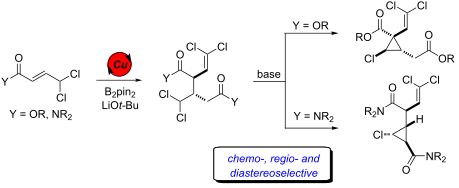
- (Scheme 3a). Based on the well accepted metathesis reaction of Cu(I) alkoxides with B2pin2 and the reactivity of the resulting Cu–Bpin complex towards α,β-unsaturated esters and hydrocarbons [8][9][10][11][12][13][14][15], we hypothesized that the first step of the reaction may deal with the insertion of
- organoboron compound with CuOt-Bu and subsequent SN2’-selective allylic alkylation of 1. The densely functionalized structure of these dimerization products offers a versatile synthetic handle for further chemoselective functionalization. Considering the presence of two enolizable esters together with the


Light-enabled intramolecular [2 + 2] cycloaddition via photoactivation of simple alkenylboronic esters
Beilstein J. Org. Chem. 2025, 21, 854–863, doi:10.3762/bjoc.21.69
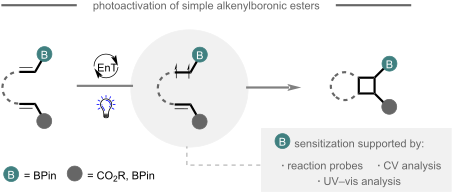
- energy sensitizers, would represent an attractive platform for future reaction design. Here, we disclose the photoactivation of simple alkenylboronic esters established using alkene scrambling as a rapid reaction probe to identify a suitable catalyst and boron motif. Cyclic voltammetry, UV–vis analysis
- demonstrated the efficient sensitization of an alkene-containing four boron substituents using Ir(ppy)3 as a suitable sensitizer in the presence of styrene, indicating a prominent role of the adjacent p-orbital [51]. While simple alkenylboronic esters have been employed as triplet diradical quenchers to
- identify a suitable catalyst and boron residue, while control reactions and mechanistic studies support the proposed sensitization. The platform enables direct access to mono- and vicinal cyclobutylboronic esters that could be effectively derivatized to demonstrate their potential in synthesis. Results and



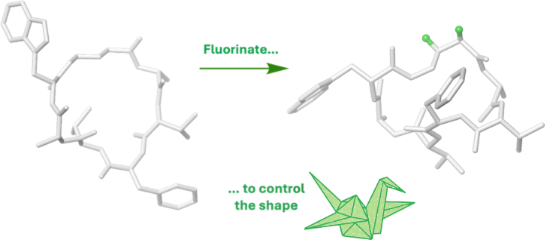
Origami with small molecules: exploiting the C–F bond as a conformational tool
Beilstein J. Org. Chem. 2025, 21, 680–716, doi:10.3762/bjoc.21.54
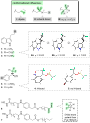
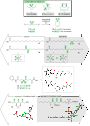
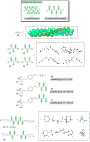
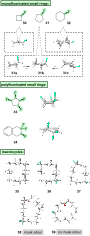
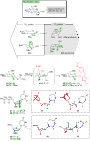
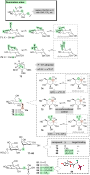
- ., to generate an ester), the gauche O–C–C–F conformation is favoured over anti more strongly than was seen for the parent alcohol (e.g., energy difference between gauche and anti = 1.0 kcal·mol−1 for esters; 0.3 kcal·mol−1 for alcohols) [109]. This is likely due to enhanced hyperconjugation effects in
- 8) that adds to the hyperconjugation and intramolecular H-bonding phenomena [96]. The conformational effects of fluorination in these two derivatives (i.e., esters and protonated alcohols) have been little exploited to date in the design of functional molecules [111]. However, one standout example








Recent advances in allylation of chiral secondary alkylcopper species
Beilstein J. Org. Chem. 2025, 21, 639–658, doi:10.3762/bjoc.21.51
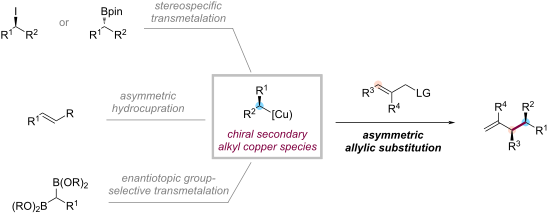
- transmetalation sequence (Scheme 6). For secondary boronic esters, Morken and co-workers conducted a systematic investigation to develop an efficient activation strategy [47]. Computational studies using DFT revealed an important relationship between the length of the boron–carbon bonds and the corresponding
- investigation into whether such moderate activation strategies could facilitate copper-mediated coupling reactions of sterically demanding alkylboronic esters under mild conditions. After thorough reaction optimization, t-BuLi emerged as the superior activating agent, outperforming other organolithium compounds
- consistent stereochemical outcome highlight its practical utility. Their subsequent work with chiral tertiary boronic esters 25 revealed an effective strategy for constructing quaternary stereogenic centers through allylic substitution reactions (Scheme 8) [48]. By employing in situ-generated


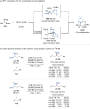


Entry to 2-aminoprolines via electrochemical decarboxylative amidation of N‑acetylamino malonic acid monoesters
Beilstein J. Org. Chem. 2025, 21, 630–638, doi:10.3762/bjoc.21.50
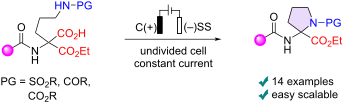
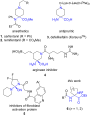
- also suitable as nucleophiles for the cyclization into 2-aminoproline and 2-aminopipecolic acid derivatives 6 (Figure 2, reaction 3). The starting disubstituted malonic esters are readily available by C-alkylation of inexpensive and readily available diethyl acetamidomalonate, followed by



Formaldehyde surrogates in multicomponent reactions
Beilstein J. Org. Chem. 2025, 21, 564–595, doi:10.3762/bjoc.21.45
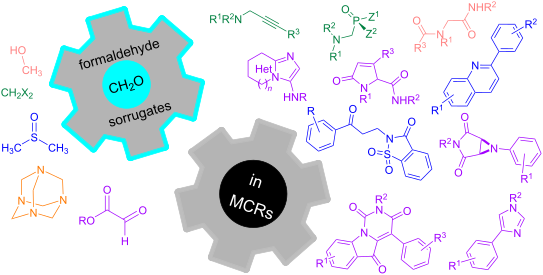
- esters of indazoles 26. In all these multicomponent reactions DMSO was applied to install a C1-bridge between two structural units that already have a heterocycle moiety incorporated. Dihalomethanes Dihalomethanes are good solvents for several organic syntheses. Their low boiling points and polar non


Binding of tryptophan and tryptophan-containing peptides in water by a glucose naphtho crown ether
Beilstein J. Org. Chem. 2025, 21, 541–546, doi:10.3762/bjoc.21.42
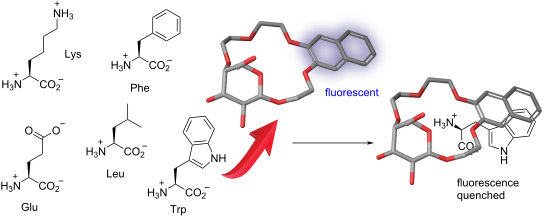
- binding of tryptophan is therefore important for diagnostic and medicinal applications. Recently, we reported a glucose naphtho crown ether which is a chemoselective receptor for the esters of aromatic amino acids, in particular tryptophan, in water. Herein, we demonstrate that the same compound also
- aqueous media is limited (Figure 1a–c) [13][14][15][16][17][18]. In particular, receptors which bind tryptophan residues in peptides are rare [19][20]. Recently, we developed a glucose-based naphtho crown ether 1 (Figure 1d) which binds amino acid methyl esters with aromatic side chains chemoselectively
- in water [21]. Crown ether 1 is particularly suited for the sensing of Trp methyl ester, which it binds with a higher affinity than the Phe and Tyr esters. Additionally, the binding of Trp-OMe results in a highly efficient fluorescence quenching of the naphthalene unit in the receptor. Herein, we


Organocatalytic kinetic resolution of 1,5-dicarbonyl compounds through a retro-Michael reaction
Beilstein J. Org. Chem. 2025, 21, 473–482, doi:10.3762/bjoc.21.34
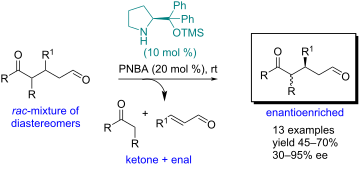
- processes with low catalyst loading. It involves the kinetic resolution of alcohols, amines, and esters using chiral phosphoric acids [6][7][8][9][10][11][12][13] and sulfoximines with enals using chiral N-heterocyclic carbene (NHC) catalysts [14]. Additionally, these processes have been conducted using


Electrochemical synthesis of cyclic biaryl λ3-bromanes from 2,2’-dibromobiphenyls
Beilstein J. Org. Chem. 2025, 21, 451–457, doi:10.3762/bjoc.21.32
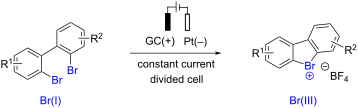
- ]. In addition, cyclic diaryl λ3-bromanes have been successfully employed as halogen-bonding organocatalysts in Michael addition [8] and their chiral variants were efficient in catalyzing enantioselective Mannich reactions of ketimines with cyanomethyl coumarins [9] and malonic esters [10]. These


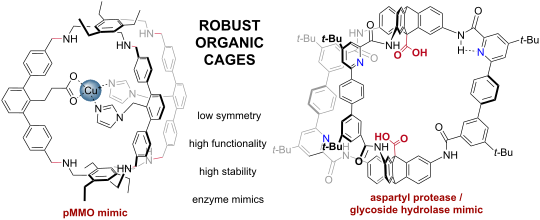
Beyond symmetric self-assembly and effective molarity: unlocking functional enzyme mimics with robust organic cages
Beilstein J. Org. Chem. 2025, 21, 421–443, doi:10.3762/bjoc.21.30
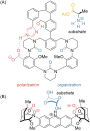
- combinations of macrocyclic cavities adorned with functional groups (Figure 3A) [97][98]. These grand “set-piece” enzyme models typically showed only modest catalytic enhancements for enzyme-relevant reactions like the hydrolysis of activated esters, and so mostly contributed to the view that enzymes do not
- work simply by bringing substrates arbitrarily close to a potentially reactive group [99][100]. One rare but important exception is Breslow’s use of two tethered cyclodextrins to locate hydrophobic ester substrates next to a metal ion. Breslow’s catalyst accelerates the hydrolysis of esters and




The effect of neighbouring group participation and possible long range remote group participation in O-glycosylation
Beilstein J. Org. Chem. 2025, 21, 369–406, doi:10.3762/bjoc.21.27
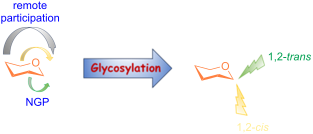
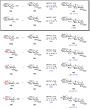
- it to obtain significant stereoselective glycosylation products in good yields. Acetyl and benzoyl protection: The total synthesis of oligosaccharides has seen numerous illustrations of the participating role of the acyl esters. Citing a few references in order to elaborate the mechanistic protocol
- in machine-assisted oligosaccharide synthesis. 4-Acetoxy-2,2-dimethylbutanoyl (ADMB) esters were reported by Ensley and co-workers [108] having similar properties with the pivalate group. The facile removal of the C-2-ADMB group with a catalytic quantity of diazabicycloundecane (DBU) in methanol at




Synthesis of new condensed naphthoquinone, pyran and pyrimidine furancarboxylates
Beilstein J. Org. Chem. 2025, 21, 340–347, doi:10.3762/bjoc.21.24
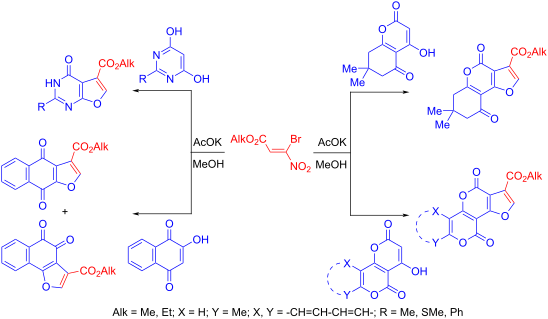
- IR spectra of compounds 5a–6d containing an alkoxyfuropyran fragment shows that in the case of methyl esters 5a, 6a, and 6c the absorption band of the alkoxycarbonyl function is shifted to a lower frequency region (1714–1721 cm−1), while ethyl esters 5b, 6b, and 6d are characterized by higher
- frequency values (1725–1731 cm−1). This observation may be due to the position of the ester fragment relative to the heterocyclic system. The analysis of the results of X-ray diffraction analysis shows that the torsion angle C(10)–C(3)–C(16)–O(17) of methyl esters 5a and 6c is −0.8(2), and 5(2)°, and of
- ethyl esters 5b and 6b is −15.6(2) and −11.5(2)°, respectively, indicating that in the case of methyl esters, the alkoxycarbonyl fragment is less out of plane, causing a greater conjugation with the furan fragment. The possibility of exhibiting fluorescent properties was investigated for tetracyclic





