Search results
Search for "flow" in Full Text gives 720 result(s) in Beilstein Journal of Organic Chemistry. Showing first 200.
Ceratinadin G, a new psammaplysin derivative possessing a cyano group from a sponge of the genus Pseudoceratina
Beilstein J. Org. Chem. 2024, 20, 3215–3220, doi:10.3762/bjoc.20.267
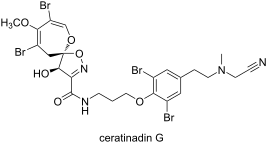
- MeCN/H2O/TFA 45:55:0.1; flow rate 2.5 mL/min; UV detection at 254 nm), yielding psammaplysin F (2, tR 14 min, 6.9 mg, 0.0056% wet weight) and ceratinadin G (1, tR 56 min, 0.4 mg, 0.00032% wet weight). Ceratinadin G (1): colorless amorphous solid; [α]D27 −71.0 (c 0.02, MeOH); UV (MeOH) λmax, nm: 207 (ε


Discovery of ianthelliformisamines D–G from the sponge Suberea ianthelliformis and the total synthesis of ianthelliformisamine D
Beilstein J. Org. Chem. 2024, 20, 3205–3214, doi:10.3762/bjoc.20.266
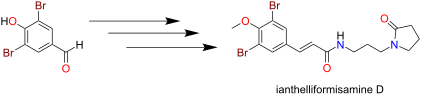
- run over 50 min at a flow rate of 9 mL/min; 60 fractions (60 × 1 min) were collected and resulted in the purification of the known sterol, aplysterol (8, 0.9 mg, tR 12–13 min, 0.009% dry wt). The extraction and isolation process described above was repeated twice more (identical scale) to obtain


![[Graphic 1]](/bjoc/content/inline/1860-5397-20-266-i2.svg?max-width=637&scale=1.18182)
![[Graphic 2]](/bjoc/content/inline/1860-5397-20-266-i3.svg?max-width=637&scale=1.18182)
![[Graphic 3]](/bjoc/content/inline/1860-5397-20-266-i4.svg?max-width=637&scale=1.18182)

![[Graphic 4]](/bjoc/content/inline/1860-5397-20-266-i5.svg?max-width=637&scale=1.18182)
![[Graphic 5]](/bjoc/content/inline/1860-5397-20-266-i6.svg?max-width=637&scale=1.18182)

Germanyl triazoles as a platform for CuAAC diversification and chemoselective orthogonal cross-coupling
Beilstein J. Org. Chem. 2024, 20, 3198–3204, doi:10.3762/bjoc.20.265
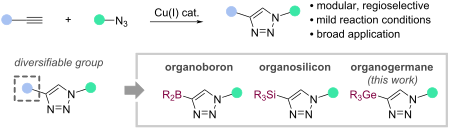
- azide precursors and the formation of a single 1,4-disubstituted triazole product, the copper-catalysed azide–alkyne cycloaddition (CuAAC) remains the archetypal click reaction (Scheme 1) [5]. The reaction has shown applicability on small and large scale, as well as under flow conditions [6], and



Advances in the use of metal-free tetrapyrrolic macrocycles as catalysts
Beilstein J. Org. Chem. 2024, 20, 3085–3112, doi:10.3762/bjoc.20.257
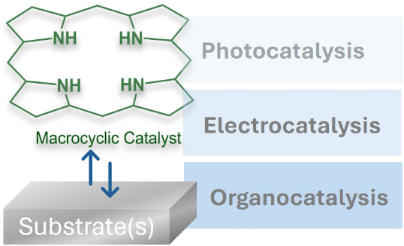
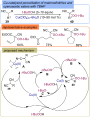
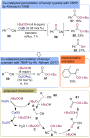
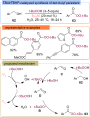
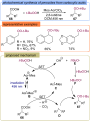
- of enol acetates with aryldiazonium salts [93]. The excitation of the porphyrin macrocycles by light irradiation initiated the catalytic cycle, generating aryl radicals from the diazonium salts, similar to findings by Gryko and co-workers. They explored both batch and continuous-flow photocatalysis
- using these systems, achieving improved yields of up to 92%. Notably, a multigram-scale experiment was successfully performed, producing 3.03 g of the desired product under continuous-flow conditions. In 2020, de Oliveira and co-workers published a review covering the field of metal-free porphyrin


Advances in radical peroxidation with hydroperoxides
Beilstein J. Org. Chem. 2024, 20, 2959–3006, doi:10.3762/bjoc.20.249
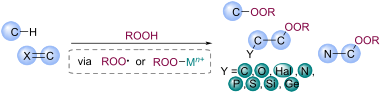
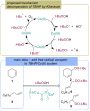
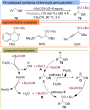
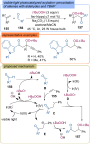
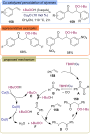
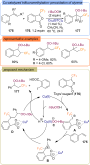
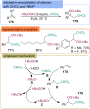
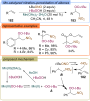
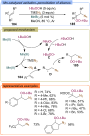
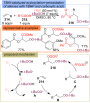
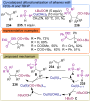
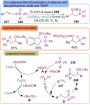
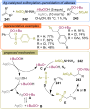
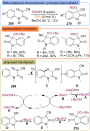
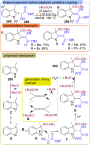
- ) [51]. The corresponding peroxides 30 are enough stable under the reaction conditions and were isolated in high yields (Scheme 12). Flow-modification of the 2-oxoindole peroxidation method using nanoparticles of iron oxide as the catalyst was proposed [52]. The summarized proposed reaction pathway is































Applications of microscopy and small angle scattering techniques for the characterisation of supramolecular gels
Beilstein J. Org. Chem. 2024, 20, 2608–2634, doi:10.3762/bjoc.20.220

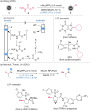
- , and flow [62]. Sample environments can also be as simple as a capillary at ambient conditions. Without a need for the sample environment to be under vacuum, as is required for some microscopy techniques as previously discussed, SAS allows for volatile solvent systems to be characterised. In addition
- rheology alone cannot provide. By using rheo-SANS, the structural order of the micelle solutions could be determined under flow. Worm-like micelles can align under shear, however, it was shown that under sufficiently high strain a plateau in viscosity is reached before again undergoing shear-thinning under


A review of recent advances in electrochemical and photoelectrochemical late-stage functionalization classified by anodic oxidation, cathodic reduction, and paired electrolysis
Beilstein J. Org. Chem. 2024, 20, 2500–2566, doi:10.3762/bjoc.20.214
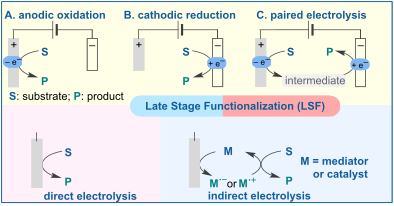
- gaining increasing interest in both academia and industry due to its numerous advantages and potential applications [1][2]. Electrochemical methods can reduce costs and waste generation by eliminating the need for chemical oxidants or reductants, and they can be safely and easily scaled up in flow
- of ¹³¹I-labeled compounds. For example, the late-stage iodoamination of cytisine, amoxapine, and fluoxetine hydrochloride was achieved with yields of 65%, 87%, and 73%, respectively. Additionally, this transformation was successful for gram-scale synthesis via batch and flow chemistry, indicating
- C–H hydroxylation process by combining continuous flow chemistry and electrochemistry (Scheme 8) [16]. The surface modification of electrodes can lead to improved reactivity and selectivity. In this regard, Li and coworkers developed electron-deficient W2C nanocrystal-based electrodes to enhance the


























Visible-light-mediated flow protocol for Achmatowicz rearrangement
Beilstein J. Org. Chem. 2024, 20, 2493–2499, doi:10.3762/bjoc.20.213
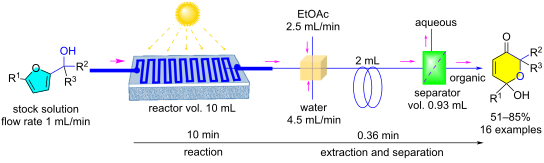
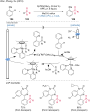
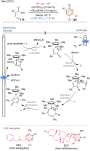
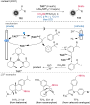
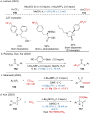
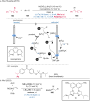
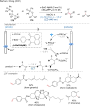
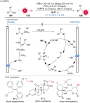
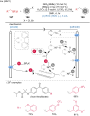
- and development of a visible light-assisted modular photo-flow reactor with a seamlessly integrated post-synthetic work-up procedure enabling the efficient synthesis of dihydropyranones from furfuryl alcohols. The reaction uses sun light as green energy source, and the novel photo-flow reactor
- platform developed with an integrated system enabling a downstream process in a time and labor-efficient manner which facilitates the Achmatowicz rearrangement, resulting in a fast (10 min) formation of the dihydropyranone products. Keywords: Achmatowicz reaction; flow chemistry; furfuryl alcohols
- et al. [22] have demonstrated a combined use of flow and batch processes involving an electrochemical flow cell for the oxidation of furfuryl alcohols and subsequently utilizing the crude electrolysis mixture for hydrolysis in a traditional batch process to get the rearranged Achmatowicz product. As



Machine learning-guided strategies for reaction conditions design and optimization
Beilstein J. Org. Chem. 2024, 20, 2476–2492, doi:10.3762/bjoc.20.212

- , pressure, and solvent choice, thus it polishes and trims the suggested routes. As a result, CASP tools have attracted commercial interest and stimulated the development of integrated robotic platforms for automated flow synthesis [9][10][11]. However, as Coley et al. [12] pointed out, there are still
- , telescoped flow sequences [206][207][208] or one-pot batch synthesis [209] emphasize the use of chemically compatible reagents and solvents in each reaction step to minimize intermediate purification steps. Volk et al. [210] developed AlphaFlow, which utilizes reinforcement learning as an optimization


Homogeneous continuous flow nitration of O-methylisouronium sulfate and its optimization by kinetic modeling
Beilstein J. Org. Chem. 2024, 20, 2408–2420, doi:10.3762/bjoc.20.205
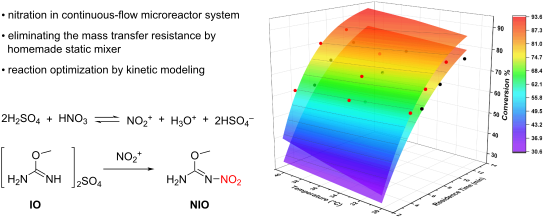
- its control difficult and risky. In this paper, a homogeneous continuous flow microreactor system was developed for the nitration of O-methylisouronium sulfate under high concentrations of mixed acids, with a homemade static mixer eliminating the mass transfer resistance. In addition, the kinetic
- 94%, initial reactant concentration of 0.5 mol/L, reaction temperature of 40 °C, molar ratio of reactants at 4.4:1, and a residence time of 12.36 minutes. Keywords: continuous flow; kinetic modeling; nitration; reaction optimization; static mixer; Introduction The demand for high-quality
- reaction process of O-methylisouronium sulfate to improve the reaction efficiency and intrinsic safety. In recent years, continuous flow microreactors have been recognized due to their excellent mass and heat transfer performance, precise control over reaction parameters, and intrinsic safety [5][6][7][8


![[Graphic 1]](/bjoc/content/inline/1860-5397-20-205-i17.svg?max-width=637&scale=1.18182)


Tandem diazotization/cyclization approach for the synthesis of a fused 1,2,3-triazinone-furazan/furoxan heterocyclic system
Beilstein J. Org. Chem. 2024, 20, 2342–2348, doi:10.3762/bjoc.20.200

- conditions and do not demonstrate nitrate tolerance. Nitric oxide (NO) is a signaling molecule that plays a key role in numerous physiologic and pathologic processes. Thus, NO regulates blood flow and tissue oxygenation, so disruption of the production and transport of NO in the vascular system leads to


Catalysing (organo-)catalysis: Trends in the application of machine learning to enantioselective organocatalysis
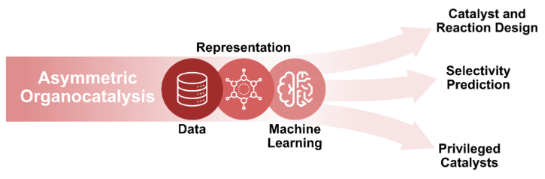
Beilstein J. Org. Chem. 2024, 20, 2280–2304, doi:10.3762/bjoc.20.196


Electrochemical allylations in a deep eutectic solvent
Beilstein J. Org. Chem. 2024, 20, 2217–2224, doi:10.3762/bjoc.20.189
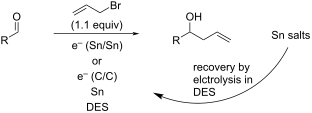
- , but its effective realization is limited by the need for both a solvent as well as a supporting electrolyte to allow for the flow of current through the reaction. Although some imaginative options have been reported, they tend to be quite limited in scope. Room temperature ionic liquids (RTILs) were

Factors influencing the performance of organocatalysts immobilised on solid supports: A review
Beilstein J. Org. Chem. 2024, 20, 2129–2142, doi:10.3762/bjoc.20.183
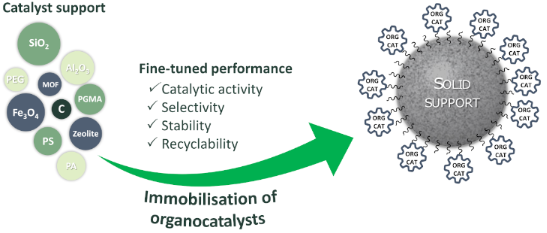
- need to diffuse to the active sites on the solid support. Diffusion limitations can decrease the effective concentration of reactants at the catalytic sites, resulting in lower reaction rates compared to the homogeneous catalyst. Thus, optimising reactor design, including appropriate mixing and flow
- the conjugate addition of propanal (22) and trans-β-nitrostyrene (11) catalysed by a simple solid-supported peptidic catalyst 24 using a continuous flow reactor. To overcome the diffusion limitations, elevated pressure was applied. Increasing the pressure from atmospheric to 60 bar resulted in a 12
- . Additionally, the selection of the appropriate solvent is critical. To mitigate diffusion limitation, it is important to ensure appropriate mixing and flow characteristics and adequate concentration of reactants and catalytic units. Flow chemistry can be easily combined with solid-supported organocatalysis


Multicomponent syntheses of pyrazoles via (3 + 2)-cyclocondensation and (3 + 2)-cycloaddition key steps
Beilstein J. Org. Chem. 2024, 20, 2024–2077, doi:10.3762/bjoc.20.178

- solution and in the solid state [127]. Furthermore, even sugar-functionalized pyrazoles have been accessed by this approach [128], and it was readily implemented in a continuous flow reactor [129]. Besides traditional Sonogashira catalyst systems, highly reactive and reusable immobilized Pd-complexes, such




Development of a flow photochemical process for a π-Lewis acidic metal-catalyzed cyclization/radical addition sequence: in situ-generated 2-benzopyrylium as photoredox catalyst and reactive intermediate
Beilstein J. Org. Chem. 2024, 20, 1973–1980, doi:10.3762/bjoc.20.173
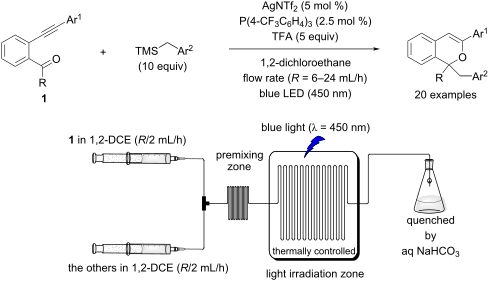
- Abstract A flow photochemical reaction system for a π-Lewis acidic metal-catalyzed cyclization/radical addition sequence was developed, which utilizes in situ-generated 2-benzopyrylium intermediates as the photoredox catalyst and electrophilic substrates. The key 2-benzopyrylium intermediates were
- generated in the flow reaction system through the intramolecular cyclization of ortho-carbonyl alkynylbenzene derivatives by the π-Lewis acidic metal catalyst AgNTf2 and the subsequent proto-demetalation with trifluoroacetic acid. The 2-benzopyrylium intermediates underwent further photoreactions with
- benzyltrimethylsilane derivatives as the donor molecule in the flow photoreactor to provide 1H-isochromene derivatives in higher yields in most cases than the batch reaction system. Keywords: 2-benzopyrylium; flow chemistry; isocromene; photochemical reaction; π-Lewis acidic metal; Introduction Flow chemistry has


Negishi-coupling-enabled synthesis of α-heteroaryl-α-amino acid building blocks for DNA-encoded chemical library applications
Beilstein J. Org. Chem. 2024, 20, 1922–1932, doi:10.3762/bjoc.20.168
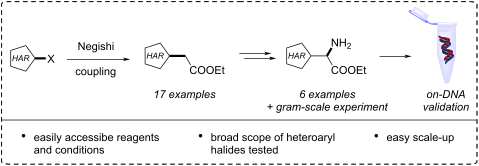
- ; flow chemistry; Negishi; on-DNA chemistry; Introduction DNA-encoded chemical library (DEL) technology is a powerful tool for hit identification [1][2]. DELs are chemically synthesized libraries in which every member is covalently attached to a unique DNA sequence serving as a molecular “barcode” [3
- , Alcazar et al. developed continuous flow protocols for both the generation of alkylzinc halides and for the subsequent Negishi cross-coupling reaction [40][41][42][43][44]. We successfully adapted Alcazar’s protocols for the synthesis of otherwise challenging heteroaryl–alkyl connections (see Table S1 in
- of recently approved drugs by the FDA [31]. Fezolinetant (an NK3 receptor antagonist) and quizartinib (FLT3 inhibitor) are just a couple of examples among the drugs reaching the market in the last year. As shown in Scheme 2, ethyl (bromozinc)acetate (1a) was synthesized in flow by pumping a solution


2-Heteroarylethylamines in medicinal chemistry: a review of 2-phenethylamine satellite chemical space
Beilstein J. Org. Chem. 2024, 20, 1880–1893, doi:10.3762/bjoc.20.163
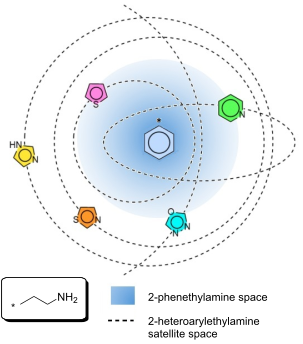
- 2-aminoethylpyrrole (Scheme 7) hits were elaborated and tested in a stopped-flow CO2 hydrase assay. Comparing this pyrrole family with original histamine inferred a decrease in selectivity towards the hCA VII isoform, while activity was not affected significantly. Tryptamine derivatives, i.e




The Groebke–Blackburn–Bienaymé reaction in its maturity: innovation and improvements since its 21st birthday (2019–2023)
Beilstein J. Org. Chem. 2024, 20, 1839–1879, doi:10.3762/bjoc.20.162
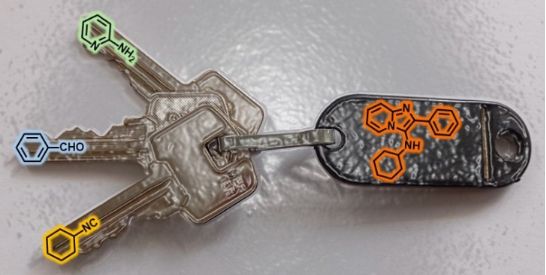
- -free conditions. Although some new metal or Brønsted acid catalysts have been reported in the last few years, the main innovations can be found in the use of organic catalysts, enzymes, and compartmentations. A few reports on the in situ generation of reactants and on the reaction conducted under flow
- ]. In 2021, Poole et al. [34] reported the first GBB reaction performed under flow conditions. The method proved to be robust, efficient and scalable, and showed a broad functional group tolerance. A commercial apparatus was used and two stock solutions (the first consisting of the amines (1 equiv), the
- performed under flow conditions afforded the desired product also when the corresponding batch reaction failed. The authors provided no comment on whether the imine could already be formed in the stock solution before pumping into the reaction coil. A multigram synthesis was also performed, affording a GBB






Synthesis of polycyclic aromatic quinones by continuous flow electrochemical oxidation: anodic methoxylation of polycyclic aromatic phenols (PAPs)
Beilstein J. Org. Chem. 2024, 20, 1746–1757, doi:10.3762/bjoc.20.153
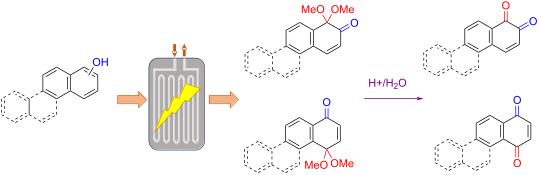
- trap the phenoxonium cation formed in the oxidation as an acetal, that later were hydrolysed to the quinone. Formation of hydrogen gas as the cathode reaction caused challenges in the flow cell and were overcome by recycling the reaction mixture through the cell at increased flow rate several times
- estitmation of the HOMO/LUMO energies to shed more light on this transformation. The easy separation of the supporting electrolyte from the product will allow recycling and makes this a green transformation. Keywords: acetal formation; cyclic voltammetry; flow electrochemistry; green oxidation; polycyclic
- alternative to classical synthesis [25][26][27][28]. Electrochemical oxidation reactions are further used to emulate enzymatic oxidations of drugs and explore potential metabolites [29][30][31]. Electrochemical flow systems provide fast electrosynthesis with low cell resistance, large electrode area, and good




Supramolecular assemblies of amphiphilic donor–acceptor Stenhouse adducts as macroscopic soft scaffolds
Beilstein J. Org. Chem. 2024, 20, 1590–1603, doi:10.3762/bjoc.20.142
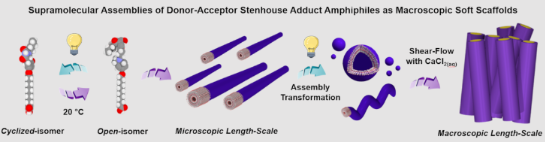
- applying the shear-flow method, negatively charged nanofibers of DA11 were assembled into a macroscopic soft scaffold when the solution was ejected into a shallow pool of calcium chloride solution (150 mM, Figure 4a). The high binding affinity between calcium ions and carboxylate groups enabled charge
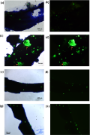
- prepared by ejecting 5.0 wt % DAn solutions onto a bioinert glass-bottomed Petri dish by the shear-flow method, rinsing with PBS, and incubating with human-bone-marrow-derived mesenchymal stem cells (hBM-MSCs) at 37 °C and 5% CO2 for 3 days. hBM-MSCs have demonstrated importance in controlled
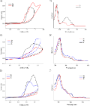
- (150 mM) before white-light irradiation and (b) DA11, (d) DA7, and (f) DA6 after white-light irradiation for 60 min. Macroscopic soft DAn scaffolds fabricated by the shear-flow method. Images taken during fluorescence microscopy. Photographs of freshly prepared (a) DA11, (c) DA10, (e) DA7, and (g) DA6




Electrocatalytic hydrogenation of cyanoarenes, nitroarenes, quinolines, and pyridines under mild conditions with a proton-exchange membrane reactor
Beilstein J. Org. Chem. 2024, 20, 1560–1571, doi:10.3762/bjoc.20.139
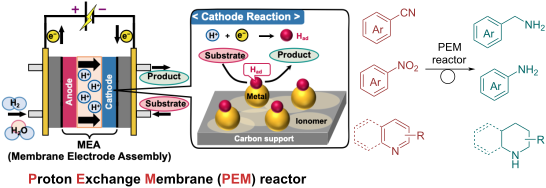
- reactions. As PEM reactors are flow reactors, they have an advantage over batch reactors in terms of continuous production. Several reductive transformations taking advantage of the characteristics of the PEM reactor have been reported in recent years. For example, Atobe et al. reported the electrocatalytic
- suppress hydrogen generation, we varied the flow rate of the reaction solution (Table 4). The reaction time was set to 2.5 h (2.25 mmol, 8.3 F mol–1) and the flow rate of the reaction solution was changed from 0.25 to 1.0 mL min−1. As expected, increasing the flow rate increased the current efficiency and
- yield of 5a. With 0.75 mL min−1 of flow rate, 5a was obtained in 88% yield with 62% of current efficiency (Table 4, entry 3). In contrast to the previous report on electrocatalytic hydrogenation of nitrobenzene using a PEM reactor [21], cyclohexylamine was not observed in each reaction. Next, the scope


Benzylic C(sp3)–H fluorination
Beilstein J. Org. Chem. 2024, 20, 1527–1547, doi:10.3762/bjoc.20.137

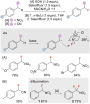
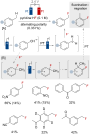
- continuous flow system (Figure 26) [71]. The authors were able to demonstrate rapid benzylic fluorination of 13 substrates, requiring residence times below 30 min. The use of photoexcited aryl ketones was further expanded in 2016 by Lectka and co-workers who reported the use of 5-dibenzosuberenone as a
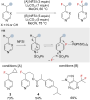
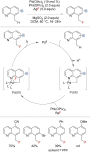
- fluorination in continuous flow. Photochemical phenylalanine fluorination in peptides. Decatungstate-photocatalyzed versus AIBN-initiated selective benzylic fluorination. Benzylic fluorination using organic dye Acr+-Mes and Selectfluor. Palladium-catalysed benzylic C(sp3)–H fluorination with nucleophilic








Synthesis of cyclic β-1,6-oligosaccharides from glucosamine monomers by electrochemical polyglycosylation
Beilstein J. Org. Chem. 2024, 20, 1421–1427, doi:10.3762/bjoc.20.124

- was further washed with aqueous 1 M HCl solution and dried over Na2SO4. Then, the solvent was removed under reduced pressure, and the crude product (220 mg) was purified with recycling preparative gel permeation chromatography equipped with two series-connected JAIGEL-2HH columns (eluent: CHCl3, flow


Introduction of peripheral nitrogen atoms to cyclo-meta-phenylenes
Beilstein J. Org. Chem. 2024, 20, 1207–1212, doi:10.3762/bjoc.20.103
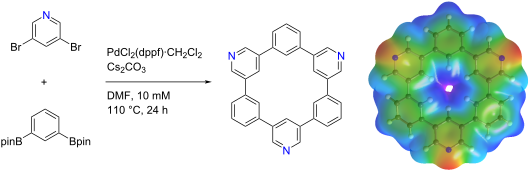
- overnight to give 3a in 6% yield (272 mg, 0.592 mmol) after the extraction. The latter was purified by silica gel short path and GPC (column: YMC-GPC T30000-40 + T4000-40 + T2000-40, eluent: CHCl3, flow rate: 30 mL/min) to give 3a in 1% yield (52.8 mg, 0.115 mmol) and 3b in 3% yield (118 mg, 0.193 mmol). In