


Search results
Search for "heterocyclic" in Full Text gives 992 result(s) in Beilstein Journal of Organic Chemistry. Showing first 200.
Oxetanes: formation, reactivity and total syntheses of natural products
Beilstein J. Org. Chem. 2025, 21, 1324–1373, doi:10.3762/bjoc.21.101
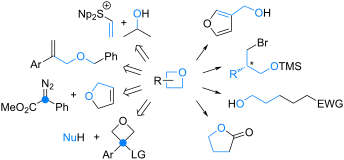
- chemistry; natural products; oxetane; reactivity; synthesis; Introduction Oxetanes are 4-membered heterocyclic compounds containing one oxygen atom whose discovery dates back to the 1870s when the first synthesis of the parent, unsubstituted oxetane was reported by Reboul [1]. Over the next 100 years, it
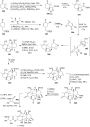
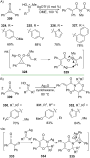
- enantioselectivities. In 2018, Scheidt and colleagues disclosed the first N-heterocyclic carbene (NHC)-catalysed [2 + 2] annulation between trifluoromethyl ketones and γ-substituted allenoates (Scheme 25a) [68]. The resulting 2-alkylideneoxetane products 95 were generally obtained in >90% yields and good








Recent advances in oxidative radical difunctionalization of N-arylacrylamides enabled by carbon radical reagents
Beilstein J. Org. Chem. 2025, 21, 1207–1271, doi:10.3762/bjoc.21.98
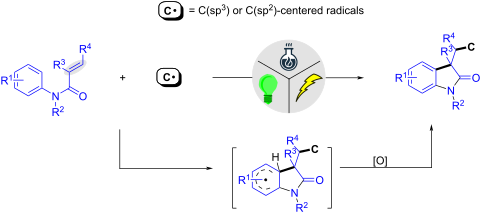
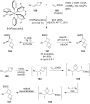
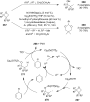
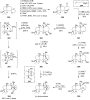
- for constructing quaternary carbon centers in oxindoles via an N-heterocyclic carbene (NHC)-catalyzed intermolecular Heck-type alkyl radical addition and annulation reaction (Scheme 47) [28]. The reaction proceeds through a redox-neutral mechanism, where the NHC catalyst serves a dual role as both a












A multicomponent reaction-initiated synthesis of imidazopyridine-fused isoquinolinones
Beilstein J. Org. Chem. 2025, 21, 1161–1169, doi:10.3762/bjoc.21.92
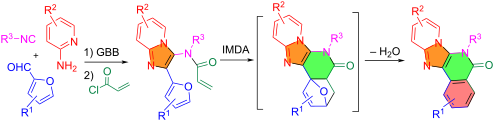
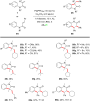
- modifications of MCRs could generate novel and complex molecular scaffolds [1][2][3][4][5][6][7][8]. Some MCR adducts generated from Ugi, Passerini, Gewald, Biginelli, and Groebke–Blackburn–Bienaymé (GBB) reactions have been modified to form chemically diverse heterocyclic scaffolds with potential biological
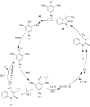
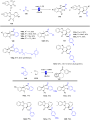
- reaction followed by the cleavage of the alkyl group to give intermediate II as a free amine. Annulation of II with CDI gave product B which is an HIV reverse transcriptase inhibitor (Scheme 1B) [17]. We have reported a three-component [3 + 2] cycloaddition followed by IMDA reaction for making heterocyclic
- group on the imidazopyridine moiety have direct electronic impact on the IMDA reaction. This integrated reaction process provided a new avenue for the preparation of heterocyclic scaffolds with potential biological activity. Experimental General procedure for the synthesis of intermediates 4 and 6 The




Recent advances in synthetic approaches for bioactive cinnamic acid derivatives
Beilstein J. Org. Chem. 2025, 21, 1031–1086, doi:10.3762/bjoc.21.85
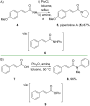
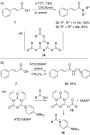
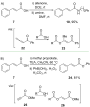
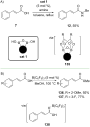
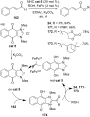
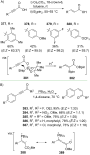
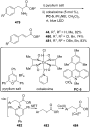
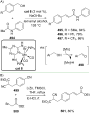
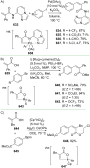
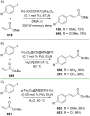
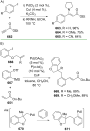
- -workers (2019) reported an enantioselective esterification via oxidative N-heterocyclic carbene (NHC)-catalyzed phthalaldehyde activation to form azolium ester intermediate 147 to give the chiral phthalidyl ester 146 with excellent enantiomeric ratio (Scheme 45B) [85]. Additionally, the reaction capacity
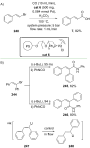
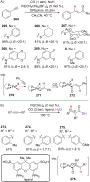
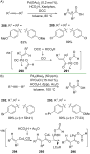
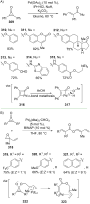
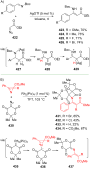
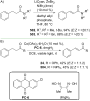
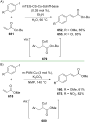
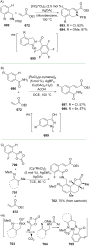
- based on C–C bond activations have been explored. For instance, Ravikumar and co-workers (2021) employed diphenylcyclopropenone (309) to synthesize the corresponding esters 310–313 and amides 314 and 315. The reaction was catalyzed by Pd/N-heterocyclic carbene via oxidative Pd insertion into the C–C








































Synthesis of pyrrolo[3,2-d]pyrimidine-2,4(3H)-diones by domino C–N coupling/hydroamination reactions
Beilstein J. Org. Chem. 2025, 21, 1010–1017, doi:10.3762/bjoc.21.82
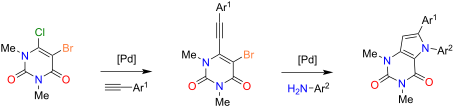
- . Keywords: alkynes; catalysis; cyclizations; domino reactions; heterocycles; Introduction Pyrimidines and purines are one of the most important heterocyclic compounds with prevalent biological functions. Both are found in nucleosides and their corresponding polymeric DNA and RNA, and hence are vital for
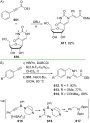
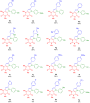
- instance, deazapurines represent heterocyclic fused pyrimidine bases which have found special attention, due to their widespread occurrence in natural alkaloids exhibiting various biological properties. For example, cadeguomycin (A), tubercidin (B), and toyocamycin (C) show antibiotic properties, while



Recent total synthesis of natural products leveraging a strategy of enamide cyclization
Beilstein J. Org. Chem. 2025, 21, 999–1009, doi:10.3762/bjoc.21.81
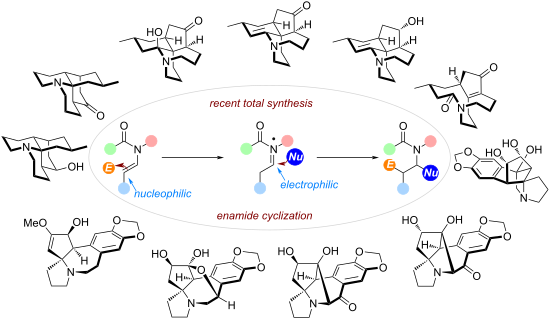
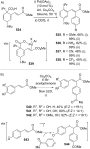
- was utilized to transform enamine 18 and propargyl ester 19 into 1-azaspiro[4.4]nonane 20 with high diastereoselectivity. Notably, the combination of an N-heterocyclic carbene gold catalyst and a silver salt AgSbF6 was found to be essential in guaranteeing the reactivity of the alkyne partner
- of the resulting acyliminium [30]. Unlike the monocyclization, which involves deprotonation of the acyliminium ion, the success of this polycyclization relies on the interception of the acyliminium ion by an aryl nucleophile, resulting in the formation of N-heterocyclic fused[6,6,5]tricycles




Silver(I) triflate-catalyzed post-Ugi synthesis of pyrazolodiazepines
Beilstein J. Org. Chem. 2025, 21, 915–925, doi:10.3762/bjoc.21.74
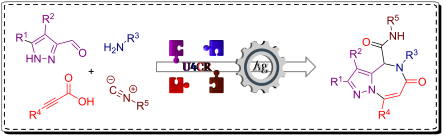
- ; pyrazolodiazepines; silver catalysis; Ugi reaction; Introduction Synthetic chemists are continuously involved in the development of methodologies for accessing new heterocyclic scaffolds that resemble naturally occurring products and biologically active molecules [1][2]. Nitrogen heterocycles draw particular
- heterocyclic peptidomimetics through various post-MCR transformations [28][29][30][31][32]. The construction of benzodiazepine cores has also been extensively explored through various post-Ugi transformations. In 2009, Torroba and co-workers developed a strategy towards β-turn mimetic benzo[e][1,4]diazepines 6
- formation of the tricyclic triazolo[1,5-a][1,4]benzodiazepine scaffold 10 (Scheme 1b) [39]. Triple bond-containing Ugi adducts showed a great promise for the assembly of various seven-membered nitrogen-containing heterocyclic cores through transition-metal-catalyzed alkyne hydroarylations [40][41][42][43




Chitosan-supported CuI-catalyzed cascade reaction of 2-halobenzoic acids and amidines for the synthesis of quinazolinones
Beilstein J. Org. Chem. 2025, 21, 839–844, doi:10.3762/bjoc.21.67
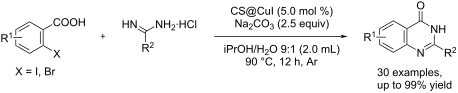
- catalytic efficiency (up to 99% yield). Keywords: chitosan-supported CuI catalyst; cyclization reaction; mild conditions; quinazolinone; Introduction Quinazolinones are not only a key core of nitrogen-containing benzo heterocyclic compounds found in many natural products and bioactive molecules [1][2][3


Substituent effects in N-acetylated phenylazopyrazole photoswitches
Beilstein J. Org. Chem. 2025, 21, 830–838, doi:10.3762/bjoc.21.66

- classical azobenzenes. Heterocyclic rings offer, for example, enhanced polarity, electron pairs for metal coordination [27], better water-solubility, and variable pKa [28][29]. Special attention has been given to 5-membered N-heterocyclic azobenzenes, which not only maintain the azobenzenes properties but
- mechanism is one of the fastest relaxation mechanism for heterocyclic azobenzenes (typically for most of the azo dyes [45]). However, the nature of the mechanism is still a matter of current debate, and additional factors, such as the presence of tautomerizable groups [46][47], and the involvement of the


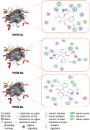
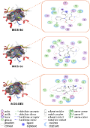
4-(1-Methylamino)ethylidene-1,5-disubstituted pyrrolidine-2,3-diones: synthesis, anti-inflammatory effect and in silico approaches
Beilstein J. Org. Chem. 2025, 21, 817–829, doi:10.3762/bjoc.21.65

- single-crystal X-ray diffraction [19]. According to a previous publication, the condensation between pyrrolidine-2,3-diones and an amine as nucleophile normally occurred at the 3-position of nitrogen-containing heterocyclic ring which results in the corresponding enamine product [18]. However, the
- -position of that heterocyclic core in compound 5e resulted in a dramatic increase in the NO inhibitory capability. More importantly, all studied compounds 5a–e did not show cytotoxicity to macrophage cells; 90.35–95.74% cells survived at the concentration of 100 µM of 5a–e (Table S3 in Supporting


Synthesis and photoinduced switching properties of C7-heteroatom containing push–pull norbornadiene derivatives
Beilstein J. Org. Chem. 2025, 21, 807–816, doi:10.3762/bjoc.21.64
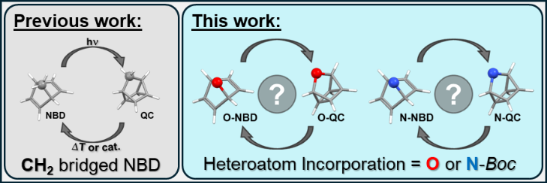
- considering the carbon-based scaffold as superior regarding their properties, while also highlighting some unique properties exhibited by heterocyclic derivatives [21]. C7-substituted NBD species have been scarcely investigated in terms of their switching behavior but have been employed as synthetic
- incorporating larger heteroatoms in the bridge moiety, we anticipate a bathochromic shift that would facilitate absorption match with the solar emission spectrum. Results and Discussion Synthesis The library of new heterocyclic NBD molecules synthesized and investigated in this study is presented in Scheme 1
- a subsequent Suzuki cross-coupling reaction with (4-(diphenylamino)phenyl)boronic acid was performed. The reaction conditions were adapted from prior experiments with C-NBD1 [40] and further refined for the heterocyclic analogues. Optimal results were achieved using K2CO3, Pd(OAc)2 and RuPhos with


Recent advances in the electrochemical synthesis of organophosphorus compounds
Beilstein J. Org. Chem. 2025, 21, 770–797, doi:10.3762/bjoc.21.61
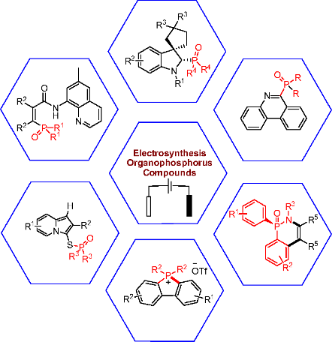
- have a low oxidation potential and can be oxidized quickly to act as a catalyst (Scheme 5). Acridines are important nitrogen-containing heterocyclic compounds used as the building block for preparing medicinally active compounds. The conjunction of phosphorus with acridine increases its biological
- . Various phenols, including those with electron-neutral, electron-donating, and electron-withdrawing groups, were efficiently converted into the target products in high yields. Phenols containing condensed aromatic and heterocyclic rings were also identified as suitable starting materials. The reaction


New advances in asymmetric organocatalysis II
Beilstein J. Org. Chem. 2025, 21, 766–769, doi:10.3762/bjoc.21.60
- ´s quaternary ammonium salts provided the corresponding substituted azlactones comprising a quaternary stereogenic center with the highest enantiomeric purity [21]. A contribution by Chowdhury and Dubey further underscored the importance of heterocyclic moieties in chiral compounds. Their article

Copper-catalyzed domino cyclization of anilines and cyclobutanone oxime: a scalable and versatile route to spirotetrahydroquinoline derivatives
Beilstein J. Org. Chem. 2025, 21, 749–754, doi:10.3762/bjoc.21.58
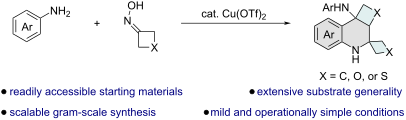
- moderate to good yields. Subsequently, we investigated the scope of cyclobutanones and their analogues in the domino cyclization to access structurally diverse spirotetrahydroquinoline derivatives (Scheme 2). Heterocyclic analogues incorporating oxygen or sulfur atoms within the four-membered ring proved


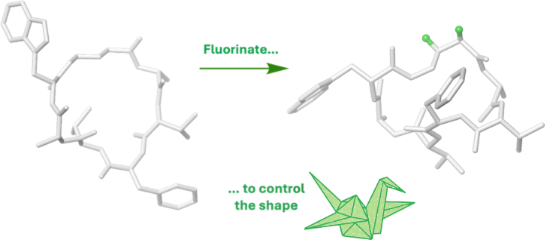
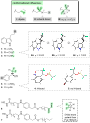
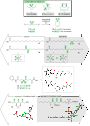
Origami with small molecules: exploiting the C–F bond as a conformational tool
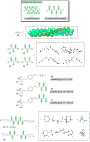
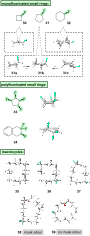
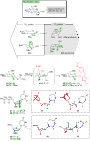
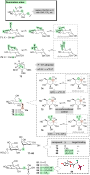
Beilstein J. Org. Chem. 2025, 21, 680–716, doi:10.3762/bjoc.21.54








Recent advances in allylation of chiral secondary alkylcopper species
Beilstein J. Org. Chem. 2025, 21, 639–658, doi:10.3762/bjoc.21.51
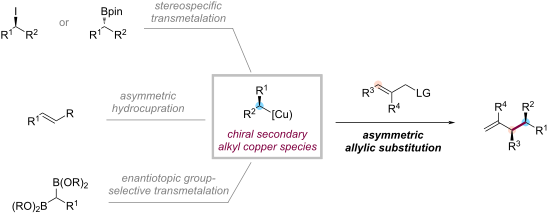
- their exploration of phosphoramidite ligands with various organometallic nucleophiles [24][25]. The field was further advanced by the research group of Hoveyda, who made substantial contributions by introducing bidentate N-heterocyclic carbene (NHC)-based chiral ligands, achieving high selectivity with




Sequential two-step, one-pot microwave-assisted Urech synthesis of 5-monosubstituted hydantoins from L-amino acids in water
Beilstein J. Org. Chem. 2025, 21, 596–600, doi:10.3762/bjoc.21.46
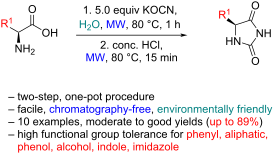
- exceptional functional group tolerance, accommodating phenyl, aliphatic, phenol, alcohol, heterocyclic, and sulfide groups. This scalable, rapid, and eco-friendly strategy offers a promising avenue for the efficient synthesis of hydantoins, aligning with green chemistry principles and expanding the
- -donating protic group close to the reaction center. Good yields (70–71%) of hydantoins containing heterocyclic groups, such as indole (H2c) and imidazole (H2d) were also achieved. This demonstrates potential application of this protocol in the synthesis of pharmacologically active hydantoin compounds. The
- acids as precursors and achieves yields of 34–89%, with a broad functional group tolerance for phenyl, aliphatic, phenol, alcohol, heterocyclic, and sulfide groups. By eliminating highly reactive and moisture-sensitive reagents, our method improves practicality and safety, while microwave irradiation


Formaldehyde surrogates in multicomponent reactions
Beilstein J. Org. Chem. 2025, 21, 564–595, doi:10.3762/bjoc.21.45
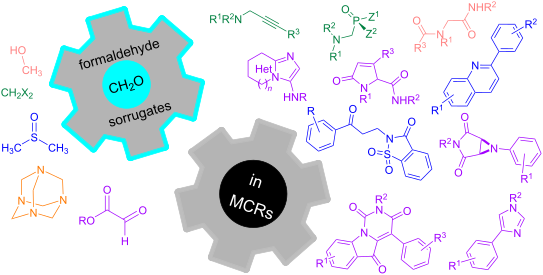
- . Synthesis of heteroaromatic systems One of the most powerful applications of MCRs is the synthesis of heterocyclic compounds and several reports in recent years showed the advantages of using this tool as a synthetic strategy to generate complex molecular scaffolds with medicinal relevance [25][26][27]. In
- multicomponent reactions where formaldehyde per se cannot react. For example, in the Groebke–Blackburn–Bienaymé (GBB) multicomponent reaction, a three-component reaction of heterocyclic amidines 39, aldehydes 40 and isocyanides 41 under acidic catalysis generates heterobicyclic products 42 through a [4 + 1


Study of the interaction of 2H-furo[3,2-b]pyran-2-ones with nitrogen-containing nucleophiles
Beilstein J. Org. Chem. 2025, 21, 556–563, doi:10.3762/bjoc.21.44
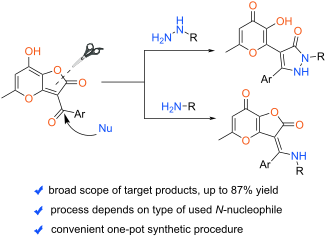
- unambiguously confirmed by X-ray diffraction. Keywords: allomaltol; enamines; 2H-furo[3,2-b]pyran-2-ones; pyrazol-3-ones; recyclization; Introduction Substituted furan-2(5H)-ones (butenolides) are widely used as precursors for the preparation of diverse types of heterocyclic compounds possessing various
- structure of used N-nucleophile various types of a heterocyclic system can be obtained. A large number of examples of reactions with substituted amines have been reported in the literature. Generally, this process includes opening of the furanone ring followed by cyclization to the pyrrolone moiety [6][7][8
- process with hydrazine derivatives is known in the literature. Therefore, the study of recyclizations of heterocyclic systems containing the 3-acylfuran-2(5H)-one core under action of various hydrazines is of a great interest. Ongoing our research in the field of allomaltol chemistry in the present


Organocatalytic kinetic resolution of 1,5-dicarbonyl compounds through a retro-Michael reaction
Beilstein J. Org. Chem. 2025, 21, 473–482, doi:10.3762/bjoc.21.34
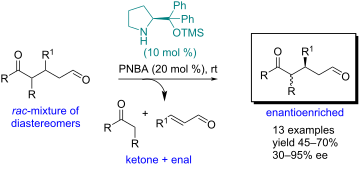
- processes with low catalyst loading. It involves the kinetic resolution of alcohols, amines, and esters using chiral phosphoric acids [6][7][8][9][10][11][12][13] and sulfoximines with enals using chiral N-heterocyclic carbene (NHC) catalysts [14]. Additionally, these processes have been conducted using


New tandem Ugi/intramolecular Diels–Alder reaction based on vinylfuran and 1,3-butadienylfuran derivatives
Beilstein J. Org. Chem. 2025, 21, 444–450, doi:10.3762/bjoc.21.31
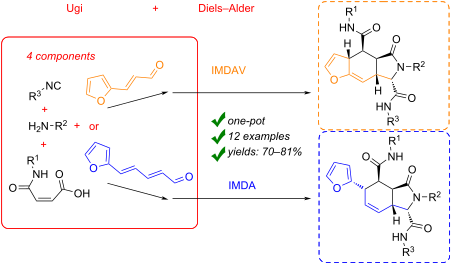
- environmentally friendly synthetic strategies, especially one-pot multicomponent and tandem reactions, are key to modern organic and medicinal chemistry [1][2][3][4][5][6][7] and have proven to be successful in generating diverse heterocyclic scaffolds, as highlighted in a recent book [8]. Multicomponent




Unraveling aromaticity: the dual worlds of pyrazole, pyrazoline, and 3D carborane
Beilstein J. Org. Chem. 2025, 21, 412–420, doi:10.3762/bjoc.21.29
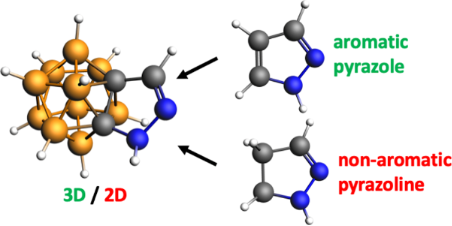
- ; Introduction Pyrazoles and 1,2-diazoles are five-membered aromatic heterocyclic compounds that have garnered significant attention in recent years [1][2][3]. While these compounds are rarely found in nature, they exhibit a wide range of biological activities, making them highly useful in pharmaceutical
- , whereas the boron cage is aromatic, the heterocyclic ring is clearly non-aromatic, with MCI that amount to 0.002, 0.000 and 0.003 a.u., respectively (Figure 4). At difference, based on NICS, these heterocycles should be considered aromatic (−8.5, −7.1, and −8.3 ppm, respectively). However, we have


Synthesis, structure, ionochromic and cytotoxic properties of new 2-(indolin-2-yl)-1,3-tropolones
Beilstein J. Org. Chem. 2025, 21, 358–368, doi:10.3762/bjoc.21.26
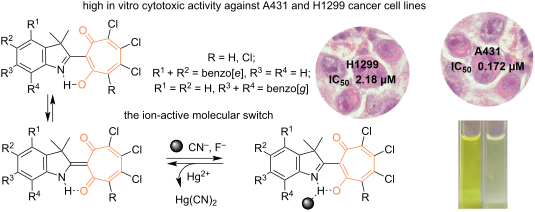
- ; Introduction 1,2-Benzoquinones represent unique building blocks for various classes of heterocyclic systems. Their structure depends on the reactivity of the initial heterocycles and 1,2-benzoquinones, as well as on the reaction conditions. In the series of 2-methylquinolines [1], 2-methylquinoxalines [2], 2
- is to obtain heterocyclic indole compounds conjugated with a 1,3-tropolone moiety. The variability of the products of acid-catalyzed reactions in the series of 2,3,3-trimethylindolenine with 1,2-benzoquinone derivatives depends on the nature of the substituents in the 1,2-benzoquinone. Thus, the
- 2-(indolin-2-yl)-1,3-tropolones [5]. Unlike the cross-aldol reaction of o-chloranil with methyl ketones [13][14][15], which is always accompanied by the removal of one of the chlorine atoms from the seven-membered ring, the acid-catalyzed reaction between methylene-active heterocyclic compounds and




Synthesis, characterization, antimicrobial, cytotoxic and carbonic anhydrase inhibition activities of multifunctional pyrazolo-1,2-benzothiazine acetamides
Beilstein J. Org. Chem. 2025, 21, 348–357, doi:10.3762/bjoc.21.25
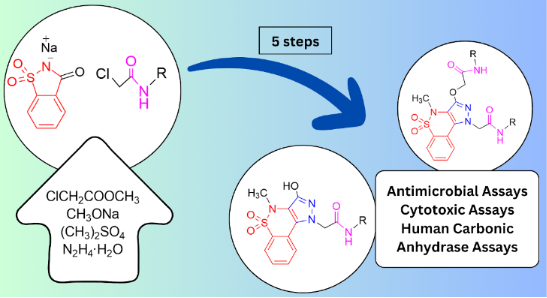
- [4]. Notable previous efforts include the synthesis of benzothiazine scaffolds connected to other heterocyclic moieties such as piperazine [5], triazole [6][7], hydantoin [8], and pyrazole moieties [9][10]. Very few examples of pyrazolobenzothiazines presenting an amide moiety are published. This
- Klebe’s research group in 2007 [40]. A literature survey revealed that various heterocyclic compounds especially benzenesulfonamides can be best CAIs [41][42][43]. These CAIs are used to treat different pathological conditions like epilepsy [44], glaucoma [45], diabesity [46], obesity [47], neuropathic

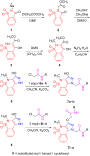

Synthesis of new condensed naphthoquinone, pyran and pyrimidine furancarboxylates
Beilstein J. Org. Chem. 2025, 21, 340–347, doi:10.3762/bjoc.21.24
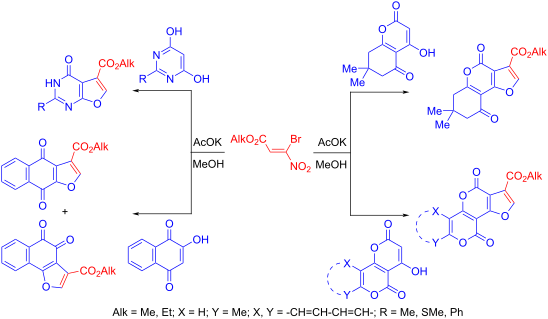
- -d]pyrano[4,3-b]pyran-, furo[2',3':4,5]pyrano[3,2-c]chromene-, and furo[2,3-d]pyrimidine carboxylates were obtained from the reactions of alkyl 3-bromo-3-nitroacrylates with representatives of carbo- and heterocyclic CH-acids under simple conditions, without the use of organocatalysts. The structures
- heterocyclic structures leads to the production of new types of heterocyclic compounds with practical useful properties [1][2][3][4][5][6]. Representatives of the naphthofuran series exhibit anticancer [7] and antiinfectious activity [8]. Anticancer properties have also been found in representatives of the
- furancarboxylates based on the interaction of alkyl 3-bromo-3-nitroacrylates [31] with carbo- and heterocyclic CH-acids of the naphthoquinone, pyran, and pyrimidine series. Results and Discussion We have proposed a synthesis of dihydronaphthofuran-3-carboxylates based on the interaction of alkyl 3-bromo-3





