


Search results
Search for "purification" in Full Text gives 1653 result(s) in Beilstein Journal of Organic Chemistry. Showing first 200.
Effect of a photoswitchable rotaxane on membrane permeabilization across lipid compositions
Beilstein J. Org. Chem. 2025, 21, 2498–2512, doi:10.3762/bjoc.21.192
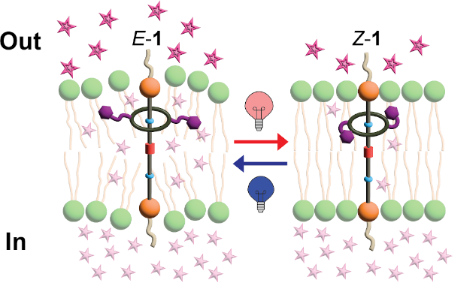
- egg yolk phosphatidylcholine (EYPC), Dipalmitoylphosphatidylcholine (DPPC), and cholesterol, all obtained from Avanti Lipids. All buffer solutions were prepared using Milli-Q Water from a Barnstead™ Water Purification System. Molecular biology grade dimethyl sulfoxide was used for stock solutions of




Ex-situ generation of gaseous nitriles in two-chamber glassware for facile haloacetimidate synthesis
Beilstein J. Org. Chem. 2025, 21, 2465–2469, doi:10.3762/bjoc.21.188
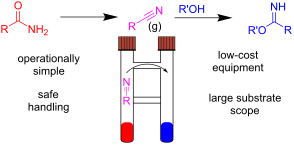
- is not easily done as the system is now under pressure. The chamber was then opened to release excess gas (on small scale) and the product in chamber B can be obtained by concentration and purification. The use of other bases than DBU, was also investigated. Similar to the synthesis of
- , as described by Schmidt [24]. The acetylated glucosyl trifluoroacetimidate 4 was synthesized in 66% yield (Figure 2). The slightly higher isolated yield is reflecting the higher stability of the product and hence an easier purification. The two-chamber method clearly works for the generation of
- were obtained when using purification by “dry column vacuum chromatography” [28], which allowed separation of anomers. In the seminal paper by Schmidt [29] dichloroacetimidates were also synthesized. They were described as too unreactive to be viable alternatives to the trichloro analogs. The synthesis


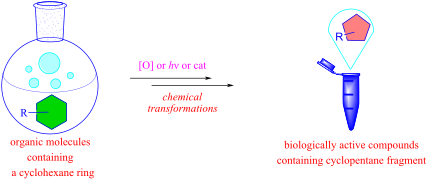
Transformation of the cyclohexane ring to the cyclopentane fragment of biologically active compounds
Beilstein J. Org. Chem. 2025, 21, 2416–2446, doi:10.3762/bjoc.21.185
- 90% yield to (+)-stephadiamine (71). The authors noted that the identification of the structure of (+)-stephadiamine (71) was carried out without purification of the reaction mixture due to its instability on a silica gel column under acidic or basic conditions. Zhang et al. [47] proposed an


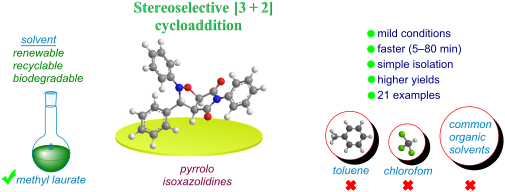
The high potential of methyl laurate as a recyclable competitor to conventional toxic solvents in [3 + 2] cycloaddition reactions
Beilstein J. Org. Chem. 2025, 21, 2389–2415, doi:10.3762/bjoc.21.184
- purification techniques [62][63][64]. Synthesis of pyrrolo-isoxazolidines utilizing nitrosoarenes via the multicomponent strategy is indeed feasible [65][66]. In a similar manner, Chakraborty obtained diastereomer products, primarily in cis configuration, from the cycloaddition reaction of a fluoro or a furyl
- Chemistry, this study did not employ column chromatography for the isolation and purification of the products of interest from the reaction mixture. Otherwise, the yield of the reaction conducted in a castor oil medium would be similar to that of the other reactions. Furthermore, the rapid realization of
- potential environmental or health implications. Experimental All reagents and solvents were purchased from Merck (Merck, Darmstadt, Germany), Sigma-Aldrich (St. Louis, MO), or Acros Organics (Thermo Fisher Scientific, Geel, Belgium) and used without further purification. Thin-layer chromatography was






Rotaxanes with integrated photoswitches: design principles, functional behavior, and emerging applications
Beilstein J. Org. Chem. 2025, 21, 2345–2366, doi:10.3762/bjoc.21.179

- acridane photoswitch directly into a crown ether macrocycle [82]. However, the synthesis proceeded with very low yield, and the small amount of rotaxane obtained was immediately converted to the acridinium form during purification. Attempts to regenerate the acridane were unsuccessful. Nevertheless, the


Insoluble methylene-bridged glycoluril dimers as sequestrants for dyes
Beilstein J. Org. Chem. 2025, 21, 2302–2314, doi:10.3762/bjoc.21.176
- and were used without further purification. H2 was synthesized according to a previously published procedure [39]. NMR spectra were measured on commercial spectrophotometers at 400 MHz for 1H and 100 MHz for 13C in trifluoroacetic acid with a capillary tube containing deuterated water (D2O) for



A chiral LC–MS strategy for stereochemical assignment of natural products sharing a 3-methylpent-4-en-2-ol moiety in their terminal structures
Beilstein J. Org. Chem. 2025, 21, 2243–2249, doi:10.3762/bjoc.21.171
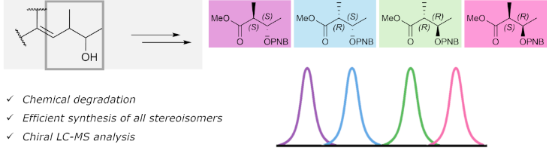
- the volatility of 13, the crude solution obtained after the workup (quenching and phase separation) was directly used in the subsequent reaction without purification. Esterification of (2S,3S)-13 with p-nitrobenzoyl chloride (PNBCl) afforded PNB ester (2S,3S)-8 in 45% yield for two steps


Pd-catalyzed dehydrogenative arylation of arylhydrazines to access non-symmetric azobenzenes, including tetra-ortho derivatives
Beilstein J. Org. Chem. 2025, 21, 2234–2242, doi:10.3762/bjoc.21.170
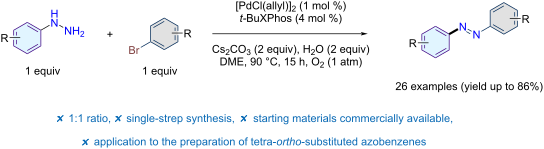
- avoiding excess reagent, and simplifies purification and scale-up. With the most suitable reaction conditions in hand, the substrate scope was examined. First, the reactivity of different aryl bromides with phenylhydrazine (1a) to form non-symmetric azobenzene was explored (Scheme 1). Most of the


Thiadiazino-indole, thiadiazino-carbazole and benzothiadiazino-carbazole dioxides: synthesis, physicochemical and early ADME characterization of representatives of new tri-, tetra- and pentacyclic ring systems and their intermediates
Beilstein J. Org. Chem. 2025, 21, 2220–2233, doi:10.3762/bjoc.21.169
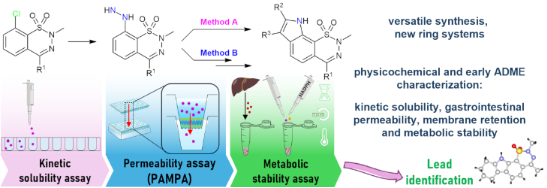
- KGaA, Darmstadt, Germany), adjusting the pH with HCl. Water for buffer and eluent preparation were provided by a Millipore Milli-Q water purification system. Kinetic aqueous solubility assay. All compounds were dissolved in DMSO to make stock solutions at 10 mM concentration. In the case of 7i, 7j, and
- to LC–MS). Pure (E)-7h was obtained by purification using flash chromatography (hexane–EtOAc). Yield: 45 mg (40%), colorless crystals. Mp 138–139 °C (EtOH); 1H NMR (600 MHz, DMSO-d6) δ 9.54 (br s, 1H), 7.80 (d, J = 8.6 Hz, 1H), 7.62 (m, 2H), 7.57 (m, 2H), 7.54 (m, 3H), 6.71 (d, J = 7.7 Hz, 1H), 3.47
- ). Pure (Z)-7h was obtained by purification using flash chromatography (hexane–EtOAc). Yield: 17 mg (15%), pale yellow crystals. Mp 145–146 °C (EtOH); 1H NMR (600 MHz, DMSO-d6) δ 9.38 (br s, 1H), 7.84 (d, J = 8.5 Hz, 1H), 7.69 (m, 1H), 7.59 (m, 2H), 7.55 (m, 3H), 6.81 (d, J = 7.7 Hz, 1H), 6.77 (t, J = 5.2


A m-quaterphenyl probe for absolute configurational assignments of primary and secondary amines
Beilstein J. Org. Chem. 2025, 21, 2211–2219, doi:10.3762/bjoc.21.168
- used without further purification. Melting points were obtained with a Mel-Temp capillary apparatus and were not corrected. IR spectra were obtained as KBr disks on a JASCO FT/IR-410 spectrophotometer. The FAB mass spectra were recorded using a JEOL 600H mass spectrometer. 1H and 13C{1H} NMR spectra


Synthesis of triazolo- and tetrazolo-fused 1,4-benzodiazepines via one-pot Ugi–azide and Cu-free click reactions
Beilstein J. Org. Chem. 2025, 21, 2202–2210, doi:10.3762/bjoc.21.167
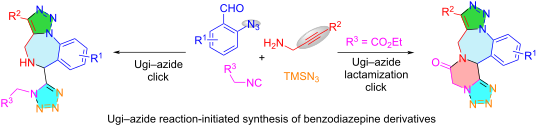
- . After evaporation of the solvent MeOH, the residue was redissolved in 2 mL of MeCN and heated at 130 °C for 2 h in a sealed vial to give product 7a in 90% yield after purification via Cu-free intramolecular click reaction (Scheme 3C) [46]. This Cu-free intramolecular cyclization provides key practical


Multicomponent reactions IV
Beilstein J. Org. Chem. 2025, 21, 2082–2084, doi:10.3762/bjoc.21.163
- intermediate purification, work-up, or solvent exchange. Domino processes [3] are characterized by the simultaneous presence of all reactants from the outset, whereas sequential reactions permit the controlled addition of components while maintaining the same reaction conditions. Consecutive processes, in turn
α-Ketoglutaric acid in Ugi reactions and Ugi/aza-Wittig tandem reactions
Beilstein J. Org. Chem. 2025, 21, 2021–2029, doi:10.3762/bjoc.21.157
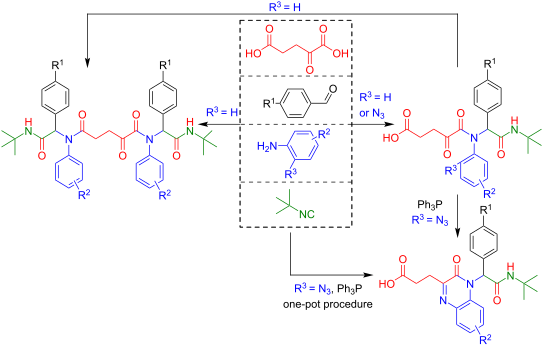
- further purification after filtration. The use of starting components containing highly reactive groups, for example, an azide group, in the Ugi reaction provides opportunities for various post-cyclizations to obtain nitrogen-containing heterocyclic systems with potential biological activity [18]. To


Photochemical reduction of acylimidazolium salts
Beilstein J. Org. Chem. 2025, 21, 1973–1983, doi:10.3762/bjoc.21.153
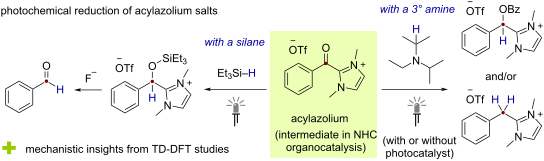
- higher reduction potential of this comparatively electron-rich compound. Purification of the crude reaction mixture from 1 by column chromatography allowed for the isolation of pure product 5 as a colorless oil in 59% yield. A control reaction performed under the same conditions in the dark resulted only


Rhodium-catalysed connective synthesis of diverse reactive probes bearing S(VI) electrophilic warheads
Beilstein J. Org. Chem. 2025, 21, 1924–1931, doi:10.3762/bjoc.21.150
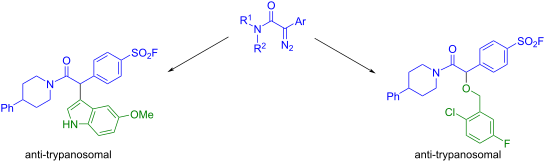
- diverse co-substrates. A high-throughput approach was used to identify promising substrate/co-substrate/catalyst combinations which were then prioritised for purification by mass-directed HPLC to yield a total of thirty reactive probes. The structural diversity of the probe set was increased by the
- reactions, a product with molecular weight consistent with O–H insertion into water was also observed. For these 18 substrate/co-substrate combinations, the reaction with the highest estimated yield was selected for mass-directed purification (Table 2). In total, 23 intermolecular reaction products were
- tag (C17 and C18) were used. The reactions were assembled from stock solutions, with some variation in stock concentrations to improve solubility. After 24 h, the reaction products were analysed by LC–MS, and promising reactions selected for mass-directed purification. Seven additional intermolecular


Synthesis, biological and electrochemical evaluation of glycidyl esters of phosphorus acids as potential anticancer drugs
Beilstein J. Org. Chem. 2025, 21, 1909–1916, doi:10.3762/bjoc.21.148
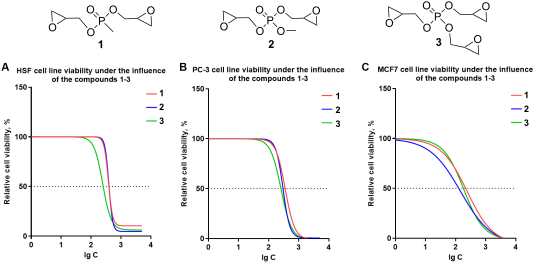
- (O)Cl3 and glycidol were purchased from suppliers and used without additional purification. Synthesis of diglycidyl methylphosphonate (1). A 500 mL flask with 200 mL of dichloromethane, equipped with a mechanical stirrer, was cooled to −30 °C. Then, 2 equiv of glycidol (21.4 g, 0.289 mol) and 4.2


Preparation of spirocyclic oxindoles by cyclisation of an oxime to a nitrone and dipolar cycloaddition
Beilstein J. Org. Chem. 2025, 21, 1890–1896, doi:10.3762/bjoc.21.146
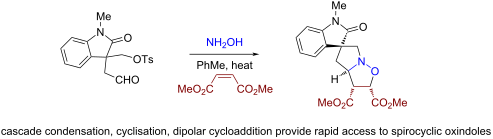
- bridged azabicyclic ring system found in alstonoxine A and related alkaloids. Experimental Chemicals described were obtained from commercial suppliers and were used without further purification. Solvents were obtained from a Grubbs dry solvent system. Thin-layer chromatography was performed on Merck


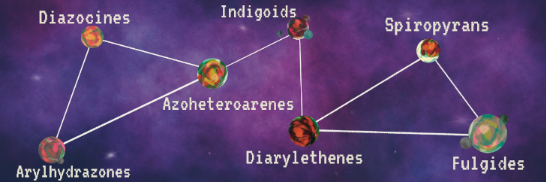
Photoswitches beyond azobenzene: a beginner’s guide
Beilstein J. Org. Chem. 2025, 21, 1808–1853, doi:10.3762/bjoc.21.143




Preparation of a furfural-derived enantioenriched vinyloxazoline building block and exploring its reactivity
Beilstein J. Org. Chem. 2025, 21, 1737–1741, doi:10.3762/bjoc.21.136

- MeOH with acetic acid as an additive. This is a step toward the large scale synthesis of enantioenriched vinyloxazolines 6 from biomass-derived furfural, however, several challenges remain such as replacing LiClO4 as electrolyte at the oxidation step and avoiding chromatography for purification


Convenient alternative synthesis of the Malassezia-derived virulence factor malassezione and related compounds
Beilstein J. Org. Chem. 2025, 21, 1730–1736, doi:10.3762/bjoc.21.135
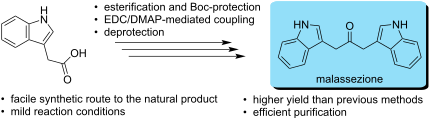
- nitrogen source followed by thin-layer chromatography and reversed-phase (RP)-HPLC to isolate and purify the compound from a complex mixture of indole alkaloids [11], (ii) prepared by aerobic incubation of indole-3-pyruvic acid at pH 7.4, 37 °C for 24 h followed by isolation and purification using RP-HPLC
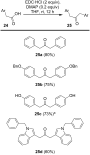
- easier purification. The N-Boc-protected indole-3-acetic acid was subsequently treated with N-ethyl-N′-(3-dimethylaminopropyl)carbodiimide (EDC) [29] in the presence of DMAP to generate the N,N′-Boc-protected malassezione (23). Use of EDC greatly facilitated the purification since the resulting urea
- derivative was easily removed with aqueous washes, thereby obviating the need for column purification to remove the more hydrophobic dicyclohexylurea obtained when DCC was employed to facilitate the reaction. Subsequent removal of the Boc groups with TFA furnished malassezione (1) in an overall yield of ca


Synthesis of optically active folded cyclic dimers and trimers
Beilstein J. Org. Chem. 2025, 21, 1603–1612, doi:10.3762/bjoc.21.124
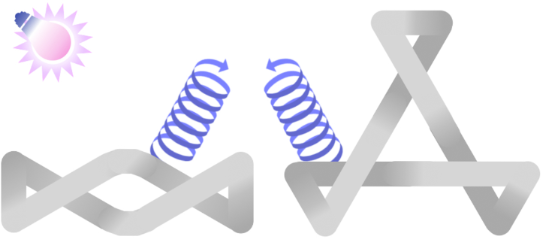
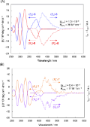
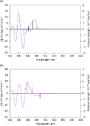
- with CHCl3 as a solvent at room temperature. Circularly polarized luminescence (CPL) spectra were recorded on a JASCO CPL-300 with CHCl3 as a solvent at room temperature. Materials Commercially available compounds used without purification are as follows: Pd2(dba)3, SPhos (2-dicyclohexylphosphino-2',6
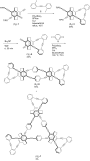
- , respectively. Dimer (Sp)-6 (6.8 mg, 0.0062 mmol, 16%) was isolated from the first fraction by recyclable HPLC (CH2Cl2 as an eluent) as a light yellow solid. Trimer (Sp)-7 was isolated from the second fraction by recyclable HPLC (CH2Cl2 as an eluent). Further purification of (Sp)-7 was carried out using chiral



Chemical synthesis of glycan motifs from the antitumor agent PI-88 through an orthogonal one-pot glycosylation strategy
Beilstein J. Org. Chem. 2025, 21, 1587–1594, doi:10.3762/bjoc.21.122

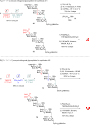
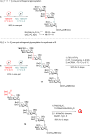
- comparison with previous, traditional, and time-consuming synthesis of PI-88 glycan components, the one-pot glycan assembly strategy has some advantages, including: 1) acceleration of glycan synthesis, 2) avoidance of purification of intermediates during glycosylation intervals, and 3) reduction of chemical
- all Bz groups with 1 M NaOH (dioxane/MeOH/H2O, room temperature). The monophosphorylated trisaccharide 1 was obtained in 60% overall yield over two steps from 12 after purification over a SephadexTM LH-20 column. It was noted that the switch of deprotection sequences (first Bz groups, second Bn and



Thermodynamic equilibrium between locally excited and charge transfer states in perylene–phenothiazine dyads
Beilstein J. Org. Chem. 2025, 21, 1577–1586, doi:10.3762/bjoc.21.121
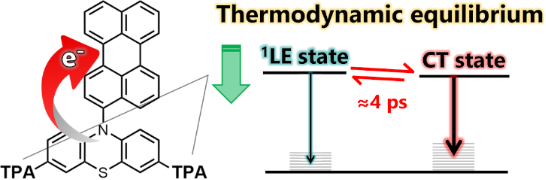
- -catalyzed cross-coupling reactions between bromo-substituted perylene or phenothiazine precursors and appropriate donor or linker units, followed by purification via column chromatography and gel permeation chromatography (Figures S18–S21 in Supporting Information File 1). The details of the syntheses are




Facile synthesis of hydantoin/1,2,4-oxadiazoline spiro-compounds via 1,3-dipolar cycloaddition of nitrile oxides to 5-iminohydantoins
Beilstein J. Org. Chem. 2025, 21, 1552–1560, doi:10.3762/bjoc.21.118

- cycloaddition (32CA) of nitrile oxides with 5-iminohydantoins (Figure 1). The proposed method involves the use of readily available starting materials, avoids chromatographic purification of the final products which are obtained in good yields. We have also tested the cytotoxicity of some synthesized spiro
- triethylamine hydrochloride. This method has proven to be simple and effective in most cases, with the exception of compound 5g. The moderate solubility of this compound in diethyl ether led to partial precipitation from the reaction mixture. It is worth noting that chromatographic purification is also possible



Azide–alkyne cycloaddition (click) reaction in biomass-derived solvent CyreneTM under one-pot conditions
Beilstein J. Org. Chem. 2025, 21, 1544–1551, doi:10.3762/bjoc.21.117
- . Its purification was performed by vacuum distillation (18–20 mmHg, 114–116 °C) and stored under argon before subsequent use. The purity (>99.99%) was checked by 1H and 13C NMR spectroscopy. 1H NMR (300 MHz, CDCl3, TMS) δ 5.10 (s, 1H, CH), 4.71 (s, 1H, CH), 4.05 (d, J = 7.3 Hz, 1H, CH), 3.96 (t, J





