Search results
Search for "toluene" in Full Text gives 1213 result(s) in Beilstein Journal of Organic Chemistry. Showing first 200.
Wittig reaction of cyclobisbiphenylenecarbonyl
Beilstein J. Org. Chem. 2025, 21, 1454–1461, doi:10.3762/bjoc.21.107
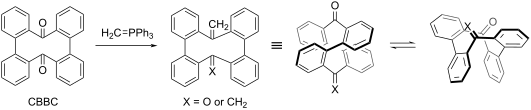
- slightly preferred at room temperature with approximately a 3:2 ratio of figure-eight and bathtub conformations. We have also estimated the activation barriers of the interconversion of 3 and 5 between the figure-eight and bathtub conformations by measuring VT 1H NMR spectra in toluene-d8 because the



Advances in nitrogen-containing helicenes: synthesis, chiroptical properties, and optoelectronic applications
Beilstein J. Org. Chem. 2025, 21, 1422–1453, doi:10.3762/bjoc.21.106
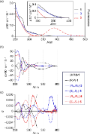
- same group reported a stable push–pull [7]helicene diimide (compound 55) that exhibited notable chiroptical performance, with |gabs| and |glum| values of 1.12 × 10⁻² and 5.0 × 10⁻³, respectively, in toluene [70]. Furthermore, compound 55 demonstrated solvent-dependent fluorescence and CPL behavior
- , and 60c – featuring 2,1,3-thiadiazole termini [75] (Table 20). Among them, compound 60c exhibited pronounced CPL activity in toluene (|glum| = 0.04, ΦF = 3%), demonstrating the efficacy of terminal heterocycle incorporation for boosting chiroptical performance. In 2024, Babu and co-workers developed

Tautomerism and switching in 7-hydroxy-8-(azophenyl)quinoline and similar compounds
Beilstein J. Org. Chem. 2025, 21, 1404–1421, doi:10.3762/bjoc.21.105
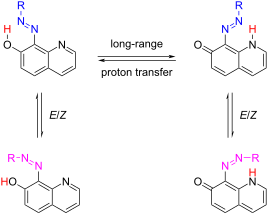
- tautomer, which means that the switching would not be clean. According to relative energies and relative Gibb’s free energies, collected in Table 1, compound 1 should co-exist as a three component (E, KE and KK) tautomeric mixture in both toluene and acetonitrile. If the relative energies are taken into
- account in toluene E and KE are approximately equal as amount with a small presence (≈10%) of KK. The change of the solvent to acetonitrile does not change much the situation for the relatively equally polar E and KE, but leads to substantial stabilization of the more polar KK. The use of the relative
- molar fraction roughly between 60 and 70%). The relative energy between 3E and 3KE, given in Table 1, is 0.25 kcal/mol (60% E and 40% KE) in toluene, which very well corresponds to the experiment bearing in mind that toluene is slightly more polar and could stabilize the more polar KE tautomer. The




Oxetanes: formation, reactivity and total syntheses of natural products
Beilstein J. Org. Chem. 2025, 21, 1324–1373, doi:10.3762/bjoc.21.101
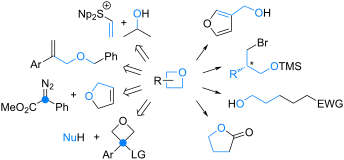
- alcohols 13 and a binary Al/TBAB catalyst (Scheme 5) [40]. The reaction is carried out in toluene upon mild heating, providing the bicyclic products in high to excellent yields. Both electron-rich and electron-poor phenyls as well as aliphatic chains worked well, however, increased temperature and catalyst








A multicomponent reaction-initiated synthesis of imidazopyridine-fused isoquinolinones
Beilstein J. Org. Chem. 2025, 21, 1161–1169, doi:10.3762/bjoc.21.92
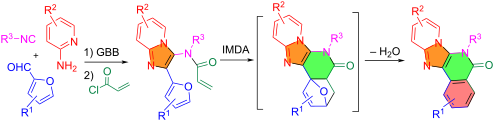
- in 1,2-dichlorobenzene at 180 °C for 4 h, which gave 8a in 85% conversion and 82% isolated yield (Table 1, entry 3). Other solvents like toluene and xylene gave minimal or no product. Different combinations of temperature and reaction time couldn’t improve the yield. Among the various Lewis acids




Investigations of amination reactions on an antimalarial 1,2,4-triazolo[4,3-a]pyrazine scaffold
Beilstein J. Org. Chem. 2025, 21, 1126–1134, doi:10.3762/bjoc.21.90
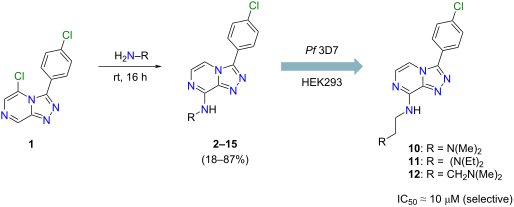
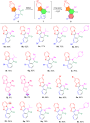
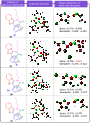
- et al. for 5-position halogenated scaffolds [10]. Several different triazolopyrazine compounds bearing chlorine, bromine or iodine at the 5-position, gave no ipso-substituted (5-substituted) products when refluxed in toluene with phenethylamine, with all major products being substituted at the 8
- good yield with this straightforward methodology (and without the need for toluene reflux), and to determine the distribution of products obtained for this synthetic approach, by exhaustive analysis of reaction mixtures by HPLC, MS and NMR. Ultimately, 14 aminated derivatives of 5-chloro-3-(4
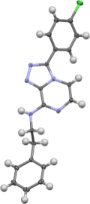
- column chromatography (and additionally by HPLC for the toluene reaction), the reactions also gave comparable yields of compound 2 (70% for toluene/silica and 82% for only phenethylamine at room temperature). Only the tele-substituted product was observed in either reaction mixture, consistent with




Gold extraction at the molecular level using α- and β-cyclodextrins
Beilstein J. Org. Chem. 2025, 21, 1116–1125, doi:10.3762/bjoc.21.89
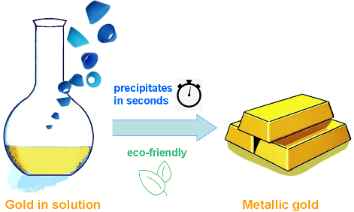
- , led to the quick formation of co-precipitates when added to aqueous solutions of β-CD and KAuBr4 (both at 5 mM): dibutyl carbitol, isopropyl ether, chloroform, dichloromethane, hexane, benzene, and toluene [51]. The most effective one was dibutyl carbitol (DBC), which caused 99.7% precipitation when


Salen–scandium(III) complex-catalyzed asymmetric (3 + 2) annulation of aziridines and aldehydes
Beilstein J. Org. Chem. 2025, 21, 1087–1094, doi:10.3762/bjoc.21.86
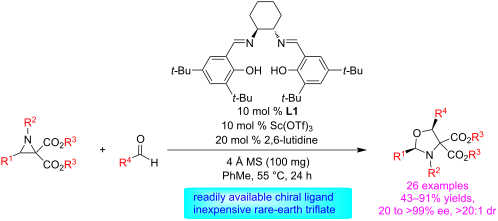
- The reaction of diethyl 3-phenyl-1-(4-toluenesulfonyl)aziridine-2,2-dicarboxylate (1a) and benzaldehyde (2a) was first selected as a model reaction to optimize the reaction conditions (Table 1). When aziridine 1a (0.2 mmol) and aldehyde 2a (0.3 mmol) in dried toluene (1 mL) were stirred at 10 °C for
- yield of 60%, but the enantioselectivity decreased to 90% (Table 1, entry 18). Solvent screening indicated that toluene was the best choice (Table 1, entries 18–21). Because Sc(OTf)3 is moisture sensitive and the reaction is obviously impacted by the quality of Sc(OTf)3, Sc(OTf)3 was strictly dried at
- 220 °C for 2 h under an oil pump vacuum and used in further optimizations in toluene with or without simultaneously dried molecular sieves. When the reaction was conducted at 55 °C for 24 h, product 3aa was obtained in 61% yield and 98%ee in the presences of MS and in 49% yield and 97% ee without MS



On the photoluminescence in triarylmethyl-centered mono-, di-, and multiradicals
Beilstein J. Org. Chem. 2025, 21, 964–998, doi:10.3762/bjoc.21.80
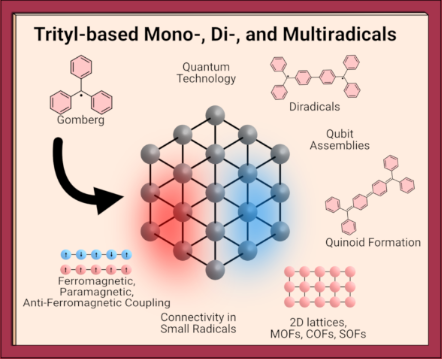
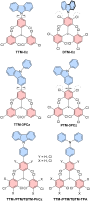
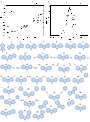
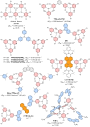
- be true for donor functionalization of Cz-BTM. Attachment of an acridine-derived donor to the para-position of one of the phenyl units in the BTM subunit, boosts the ϕ to 55% (in toluene) [67]. Quantum chemical calculations corroborate that the CT excited state is much more pronounced in acridine
- -Mes1 has only a ϕ of 1% in toluene) and will not by itself induce a strong charge transfer as potent donors like Cz do. In DTM-Cz, the rotationally restricted Cz produces such a CT state even in its ground state, in solvents of high polarity [47]. However, upon excitation of TTM-Mes3 one of the mesityl
- groups twists further out of the plane of the TTM, while the other two units acquire a more planarized structure with the central TTM unit. These DFT results show that also TTM-Mes3 performs symmetry breaking upon excitation, which leads to a substantial ϕ of 23% (in toluene) [82]. Summary: donor









Silver(I) triflate-catalyzed post-Ugi synthesis of pyrazolodiazepines
Beilstein J. Org. Chem. 2025, 21, 915–925, doi:10.3762/bjoc.21.74
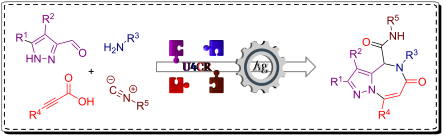
- heteroannulation leading to the pyrazolo[1,5-a][1,4]diazepine scaffold. Our initial choice was to investigate the use of silver(I) triflate (AgOTf) as a catalyst in toluene, given its previously demonstrated efficiency in various transformations involving the activation of triple bonds towards nucleophilic attack
- by nitrogen nucleophiles [59][60]. When the reaction was conducted with 5 mol % of AgOTf in toluene at 80 °C for 20 hours, pyrazolo[1,5-a][1,4]diazepine 16a was obtained in 46% yield, while complete conversion of the starting material 15a was not achieved (Table 1, entry 1). Increasing the
- loading to 20 mol % resulted in an additional improvement in the yield of 16a in both toluene and dioxane (Table 1, entries 12 and 13). The best result was achieved using 20 mol % of AgOTf in dioxane, with the reaction conducted at 90 °C for 7 hours furnishing 16a in an excellent 94% yield (Table 1, entry


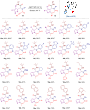


Recent advances in controllable/divergent synthesis
Beilstein J. Org. Chem. 2025, 21, 890–914, doi:10.3762/bjoc.21.73

- reaction between aryl iodides 45 and phosphoramides 46 under varying solvent conditions of toluene (PhMe) and acetonitrile (MeCN), based on their studies of the Catellani reaction (Scheme 12) [41]. This method exhibited a broad substrate scope for both aryl iodides and phosphoramides, and enabled


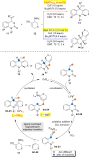


Cu–Bpin-mediated dimerization of 4,4-dichloro-2-butenoic acid derivatives enables the synthesis of densely functionalized cyclopropanes
Beilstein J. Org. Chem. 2025, 21, 877–883, doi:10.3762/bjoc.21.71
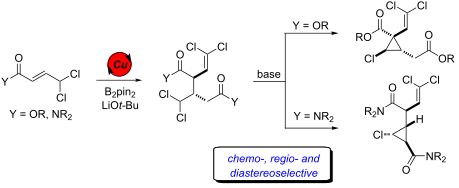
- (1) and B2pin2 (Table 1). By using NaOt-Bu as base and toluene as solvent, the Cu/SIMes catalyst provided compound 2 as single reaction product, albeit in low yield and with low diastereoselectivity (Table 1, entry 1). Lowering the amount of B2pin2 to 1 equivalent was found to be beneficial (Table 1


Chitosan-supported CuI-catalyzed cascade reaction of 2-halobenzoic acids and amidines for the synthesis of quinazolinones
Beilstein J. Org. Chem. 2025, 21, 839–844, doi:10.3762/bjoc.21.67
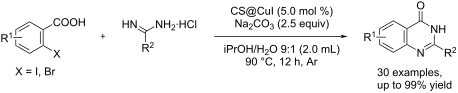
- nonprotonated solvents such as THF and toluene were used, the yields were relatively low (Table 1, entries 1 and 2, 39 and 27% yields), indicating poor catalytic activity in these solvents. In contrast, using proton solvents (MeOH, iPrOH and H2O) led to improved yields (Table 1, entries 3−5, 51−60% yields


Substituent effects in N-acetylated phenylazopyrazole photoswitches
Beilstein J. Org. Chem. 2025, 21, 830–838, doi:10.3762/bjoc.21.66

- in toluene to access higher temperatures (Table 6 and Supporting Information File 1, section 3.7). The Eyring plot for NAc-PAP-CN and NAc-PAP-OMe are depicted in Figure 4. Counterintuitively, the calculated thermodynamic data of the transition states show, within the error margin, similar values of
- LED in CH3CN.a Overview over thermal half-lifes for NAc-PAPs in CH3CN at 30 °C. Eyring analysis of NAc-PAP-CN and NAc-PAP-OMe determined in toluene (for details see Supporting Information File 1, section 3.7). Supporting Information Supporting Information File 46: Materials and methods, analytical


Synthesis and photoinduced switching properties of C7-heteroatom containing push–pull norbornadiene derivatives
Beilstein J. Org. Chem. 2025, 21, 807–816, doi:10.3762/bjoc.21.64
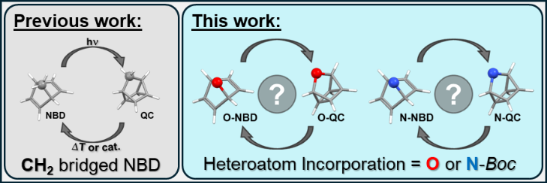
- the corresponding boronic acid in a degassed toluene/H2O mixture (4:1, v/v) which was heated to 80 °C for 18 h (for detailed information see Supporting Information File 1). Using the described procedure, the oxygen containing derivatives O-NBD2 and nitrogen substituted N-NBD2 were successfully
- photoisomer N-UnS2 is completed after 20 minutes, while further irradiation induces photodecomposition. Synthetic procedure towards new X-NBD derivatives C-NBD1, O-NBD1 and N-NBD1. 1-((Bromoethynyl)sulfonyl)-4-methylbenzene was prepared as published before [41]. i) Cyclopentadiene, toluene, rt, 24 h, 92
- %; furan, 45 °C, 24 h, 84%; N-Boc-pyrrol, 90 °C, 68 h, 53%; ii) (4-(diphenylamino)phenyl)boronic acid (1.2 equiv), K2CO3, Pd(OAc)2, RuPhos, 4:1 toluene/H2O, 80 °C , 18 h. Overview of the new NBD derivatives and the isomerization products (QCs) expected upon isomerization. Formation of N-QC1 and N-QC2 could


Copper-catalyzed domino cyclization of anilines and cyclobutanone oxime: a scalable and versatile route to spirotetrahydroquinoline derivatives
Beilstein J. Org. Chem. 2025, 21, 749–754, doi:10.3762/bjoc.21.58
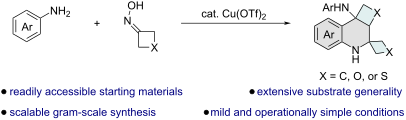
- ) trifluoroacetate (Cu(TFA)2) as the catalyst (20 mol %) under ambient air at 80 °C for 12 hours; the product 3aa was isolated by chromatographic purification (Table 1, entry 1). The use of other solvents, including acetonitrile (MeCN), tetrahydrofuran (THF), toluene, acetone and methanol (MeOH), resulted in


Photochemically assisted synthesis of phenacenes fluorinated at the terminal benzene rings and their electronic spectra
Beilstein J. Org. Chem. 2025, 21, 670–679, doi:10.3762/bjoc.21.53

- common organic solvents. Therefore, the crude 18 was subjected to the Mallory photoreaction without purification. Photoirradiation of diarylethene 18 was performed in the presence of a catalytic amount of I2 in refluxing toluene to afford F87PHEN which was isolated by sublimation under vacuum. Absorption
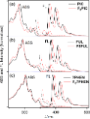
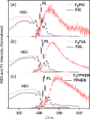
- corresponding parent phenacenes (black lines) in CHCl3. The broken lines show long-wavelength absorption bands at 10-times magnification of the intensity for clarity. Photoluminescence spectra of F8PIC (a), F8FUL (b), and F87PHEN (c) in toluene at 77 K. Electronic spectra of F8PIC (a), F8FUL (b), and F87PHEN (c
- , toluene, reflux; e) tert-BuLi, DMF, THF, −78 °C; f) KOH, 18-crown-6, CH2Cl2, reflux (rt for 8); g) hν, I2, cyclohexane (toluene/THF mixture for 11); h) p-TsOH, acetone, reflux. Synthesis of F8PIC, F8FUL, and F87PHEN. Reagents and conditions: a) KOH, 18-crown-6, CH2Cl2, reflux; b) hν, I2, toluene, rt





Formaldehyde surrogates in multicomponent reactions
Beilstein J. Org. Chem. 2025, 21, 564–595, doi:10.3762/bjoc.21.45
- only when aliphatic disulfides are used because of the higher Lewis basicity of the alkylated sulfur atom, which poisons the copper catalyst. When the reaction was carried out with paraformaldehyde and other solvents (such as DMF, 1,4- dioxane, toluene, and DCE) the yield was very low (between 0–34
- medicinal chemistry [58]. One of the most effective strategies for their synthesis is the addition of alkynes to imines or enamines, which is typically carried out under metal catalysis and elevated temperatures. This process requires the use of high boiling point solvents such as toluene, dimethylformamide


Asymmetric synthesis of β-amino cyanoesters with contiguous tetrasubstituted carbon centers by halogen-bonding catalysis with chiral halonium salt
Beilstein J. Org. Chem. 2025, 21, 547–555, doi:10.3762/bjoc.21.43
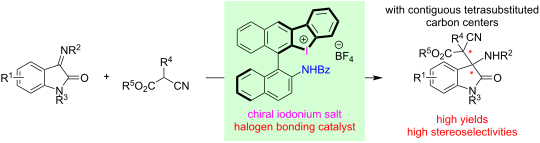
- (Table 1). Solvent screening was carried out, and it was found to strongly affect the product’s stereoselectivity. Non-polar solvents yielded better results, and toluene was found to be optimal (Table 1, entries 1–6). Polar solvents such as acetonitrile prohibited halogen bonding between 9a and the
- 5.0 equivalents of pre-nucleophile and 1.0 equivalent of potassium carbonate in the presence of 1.0 mol % of 9 at 0.025 M of toluene and −40 °C was found to be optimal (Table 1, entries 10–13). Five equivalents of pre-nucleophile are required to obtain higher yields and enantioselectivities. Next, the


Vinylogous functionalization of 4-alkylidene-5-aminopyrazoles with methyl trifluoropyruvates
Beilstein J. Org. Chem. 2025, 21, 533–540, doi:10.3762/bjoc.21.41
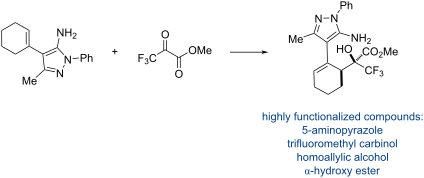
- (Table 1). First, we tried several solvents (dichloromethane, toluene and dichloroethane, entries 1–3 in Table 1) at room temperature, obtaining product 5aaa in yields around 50% with high diastereoselectivity (up to 6:1) after several days. Increasing the temperature to 50 °C (Table 1, entries 4 and 5
- ), reduced the reaction time obtaining similar yields for compound 5aaa. When the reaction was performed at 70 °C in toluene (Table 1, entry 6), after 24 hours, a full conversion of compound 3aa was observed, affording the corresponding alcohol 5aaa in 66% yield and 7:1 dr. Other solvents such as
- trifluoropyruvates. Synthesis of the starting materials 3. Scope of the reaction. Reaction conditions A: 3 (0.2 mmol) and 4 (0.6 mmol) in 2 mL of toluene at 70 °C. Reaction conditions B: 3 (0.2 mmol), 4 (0.6 mmol), and SQ-1 (10 mol %) in 2 mL of toluene at 50 °C. Yields refer to isolated yields after column



Deep-blue emitting 9,10-bis(perfluorobenzyl)anthracene
Beilstein J. Org. Chem. 2025, 21, 515–525, doi:10.3762/bjoc.21.39
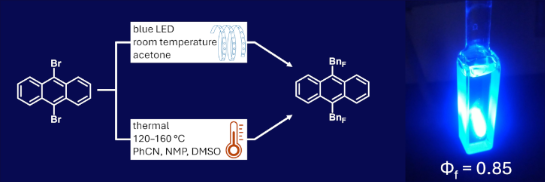
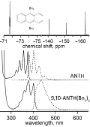
- Barnstead NANOpure Ultrapure Water system, producing water with a final resistance of at least 18 MΩ); and silica gel (Sigma-Aldrich, 70–230 mesh, 60 Å). For HPLC separations: acetonitrile (Fisher Scientific ACS grade); toluene (Fisher Scientific, ACS grade); and heptane (Mallinckrodt Chemicals, ACS grade





Unprecedented visible light-initiated topochemical [2 + 2] cycloaddition in a functionalized bimane dye
Beilstein J. Org. Chem. 2025, 21, 500–509, doi:10.3762/bjoc.21.37
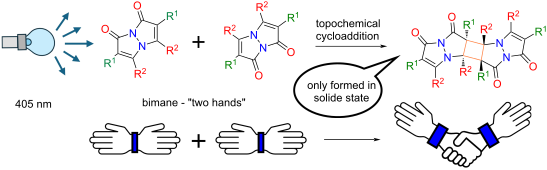
- –0.08. A fluorescence spectrum was then recorded, exciting at 370 nm, using 1 nm excitation and emission slits. The emission was recorded in the range of 370–850 nm. This was done for each solvent: DCM, acetonitrile, and toluene. The quantum yields were calculated by using Me2B in acetonitrile as the
- + 2] photocycloaddition of Cl2B. Parallelogram representation data of the reactive double bonds in a) all Cl2B structures, Me2B, and also syn-(H,Cl)bimane. Steady-state spectroscopic data from Me4B, Me2B, and Cl2B recorded in acetonitrile (ACN), dichloromethane (DCM), and toluene (TOL). Fluorescence


Organocatalytic kinetic resolution of 1,5-dicarbonyl compounds through a retro-Michael reaction
Beilstein J. Org. Chem. 2025, 21, 473–482, doi:10.3762/bjoc.21.34
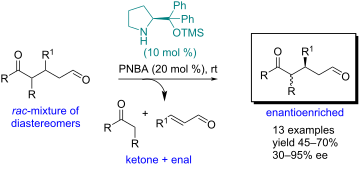
- a greater or lesser extent, in all the solvents tested except in water (Table 1, entry 19), where the mixture remains unchanged after 100 hours. The enantiomeric ratio of the diastereomer anti-1 depends on the solvent used, with toluene (Table 1, entry 22) providing the best results. Finally
- reacts more quickly than the anti-(3S,4R)-1, forming the enamine E (Scheme 4) that participates in the retro-Michael reaction, producing the starting ketone and the enal and enantio-enriching the reaction mixture in anti-(3S,4R)-1. Subsequently, toluene was chosen as the solvent due to its ability to
- provide the highest enantiomeric ratio. The influence of catalyst, co-catalyst, and temperature on the reaction progress and enantioselectivity was further investigated. Different essays using 0.028 M toluene solutions were carried out, and the results are summarized in Table 2. The reaction also occurs


Photomechanochemistry: harnessing mechanical forces to enhance photochemical reactions
Beilstein J. Org. Chem. 2025, 21, 458–472, doi:10.3762/bjoc.21.33
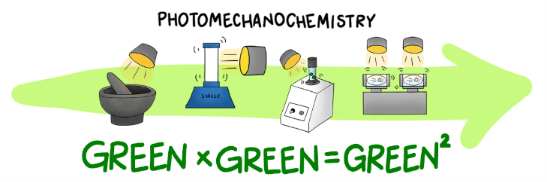
- investigated. When o-terphenyl (10.1) was milled (30 Hz, PTFE balls) and irradiated (λ = 270 nm) in the presence of silica gel (bulking agent), I2 (1 equiv) as an oxidant, and K2CO3 (1 equiv) as a base in the presence of toluene, the expected product 10.2 was obtained in 81% yield after isolation upon 181 h of
- irradiation. The authors claim that toluene acts as a photosensitizer since cyclohexane, which has similar solubilizing power, did not serve well as a LAG agent. The authors demonstrated that nanographenes could be obtained via cyclodehydrochlorination of 10.3 under photomechanochemical conditions as well
- . Also in this case, the addition of toluene was beneficial and excellent yield of the corresponding product (10.2) was observed in 30 h of reaction. As a comparison, the latter reaction required 48 h in solution. Intriguingly, 10.3 could in turn be synthesized via a mechanochemical Suzuki coupling




The effect of neighbouring group participation and possible long range remote group participation in O-glycosylation
Beilstein J. Org. Chem. 2025, 21, 369–406, doi:10.3762/bjoc.21.27
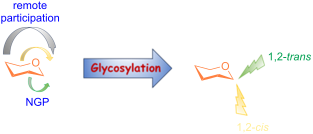
- demonstrated that the use of triflimide (Tf2NH) in solvents like CH2Cl2, acetonitrile or toluene at −78 °C yielded exclusively the 1,2-trans stereoselective glycoside product 105 (protocol A, Scheme 18), while the use of triflic acid (TfOH) in ether as the solvent at ambient temperature conditions (protocol B
- -trans product 114 or 115, while TFE (2,2,2-trifluoroethanol, 116) as acceptor gave the 1,2-cis product 117 or 118 primarily. The exclusive formation of the 1,2-trans and 1,2-cis product was achieved with butanol and TFE, respectively, by correspondingly changing the solvent system to toluene and ether