


Search results
Search for "configuration" in Full Text gives 1071 result(s) in Beilstein Journal of Organic Chemistry. Showing first 200.
A versatile route towards 6-arylpipecolic acids
Beilstein J. Org. Chem. 2025, 21, 1104–1115, doi:10.3762/bjoc.21.88
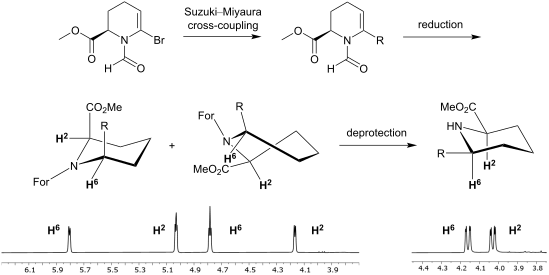
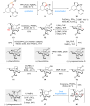
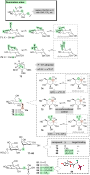
- to investigate how the configuration of the stereocenter in C2 position influences diastereoselectivity. In the first approach, NaBH3CN was used under acidic conditions to reduce the acyliminium intermediate formed from the N-acyl enamine upon protonation at C5, while in the second approach
- kinetically controlled diastereofacial selectivity. The resulting diastereomers are separable by chromatography. 1H NMR was used to assign the configuration of the 2 diastereomers [53][54][55]. Carbon C2 is R-configured, as ᴅ-2-aminoadipic acid (1) was employed as the starting material. The minor diastereomer
- adopts a chair with only gauche couplings for H2 [3J(H2,H3,pro-S) = 5.7 Hz and 3J(H2,H3,pro-R) = 3.6 Hz]. Similarly, the configuration at C6 becomes evident by gauche couplings only between H6 and H5 [3J(H6,H5,pro-S) = 3J(H6,H5,pro-R) = 5.1 Hz] with an axial position for the aryl substituent at C6 as





Supramolecular assembly of hypervalent iodine macrocycles and alkali metals
Beilstein J. Org. Chem. 2025, 21, 1095–1103, doi:10.3762/bjoc.21.87
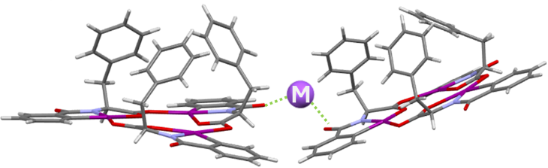
- heteroatoms at axial positions resulting in a three-center four-electron bond [13][14]. In this unique “T” configuration, the bond length between iodine and one of the heteroatoms is influenced by the bond distance of the other heteroatom and is responsible for the stabilization of the hypervalent iodine


Pd-Catalyzed asymmetric allylic amination with isatin using a P,olefin-type chiral ligand with C–N bond axial chirality
Beilstein J. Org. Chem. 2025, 21, 1018–1023, doi:10.3762/bjoc.21.83
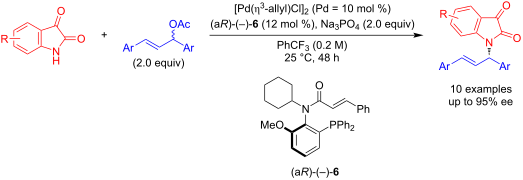
- -catalyzed asymmetric allylic amination of allyl esters with isatin using (aR)-(−)-6 possesses an S-configuration. This stereochemical outcome follows the same reaction mechanism as the Pd-catalyzed asymmetric allylic substitution of allyl esters with indoles using (aR)-(−)-6 [31]. To explore further




Recent total synthesis of natural products leveraging a strategy of enamide cyclization
Beilstein J. Org. Chem. 2025, 21, 999–1009, doi:10.3762/bjoc.21.81
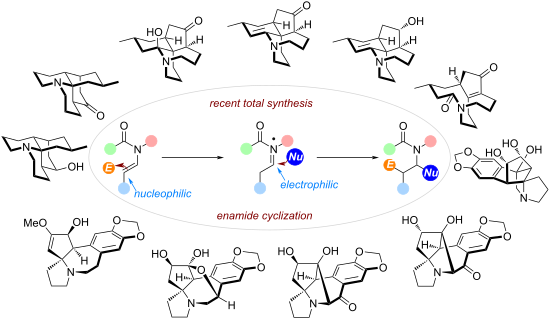
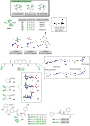
- the reduction of amide-generated ketone 12 after a subsequent Dess–Martin oxidation. Upon treatment of 12 with Co(acac)2 and PhSiH3 in iPrOH at 80 °C, the Mukaiyama hydration of enamide delivered hemiaminal 13. Despite the incorrect configuration of the newly formed hydroxy group, it is considered
- inconsequential due to the reversibility of hemiaminal. Consequently, further reduction of the amide could complete the total synthesis of (+)-fawcettimine with in situ adjustment of the hemiaminal configuration. The incorrect configuration observed in the Mukaiyama hydration also inspired the authors to develop
- cyclization to form products in high yields and excellent enantioselectivities. Notably, only a single diastereomer was produced in each case. The single-crystal X-ray crystallography revealed a cis-configuration for both the alkene and ketone substituents on the enamide, indicating that the intramolecular




On the photoluminescence in triarylmethyl-centered mono-, di-, and multiradicals
Beilstein J. Org. Chem. 2025, 21, 964–998, doi:10.3762/bjoc.21.80
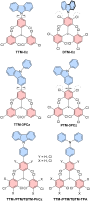
- quinodal electronic structure, diradicals with broken Kekulé-conjugation exhibit much stronger diradical character. In accordance with the above-described nomenclature, these diradicals are termed non-Kekulé diradicals. This tendency of diradicals to form a closed-shell electronic configuration can be
- described using the diradical index y0, which corresponds to a closed-shell system for y0 = 0 and a purely open-shell diradical for y0 = 1. In the open-shell electron configuration, the diradicals can acquire a singlet state with open-shell but antiparallel spins (total electronic spin, S = 0) or a triplet









A convergent synthetic approach to the tetracyclic core framework of khayanolide-type limonoids
Beilstein J. Org. Chem. 2025, 21, 926–934, doi:10.3762/bjoc.21.75
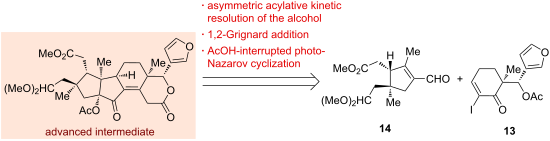
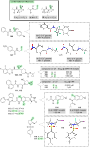
- simultaneously installing the hydroxy group at C30. The latter intermediate could in turn be derived from dienone 11 by an AcOH-interrupted Nazarov cyclization [32][33][34], thereby establishing the B ring with the desired all-cis stereochemical configuration, including the quaternary carbon at C10 and the
- % brsm). Since the newly created configuration at C30 was inconsequential, an intramolecular aldol reaction was directly carried out by treatment with LiHMDS to furnish β-hydroxylactone, which could be converted to dienone 11 through TPAP oxidation. Having secured 11, we proceeded to evaluate the pivotal




Silver(I) triflate-catalyzed post-Ugi synthesis of pyrazolodiazepines
Beilstein J. Org. Chem. 2025, 21, 915–925, doi:10.3762/bjoc.21.74
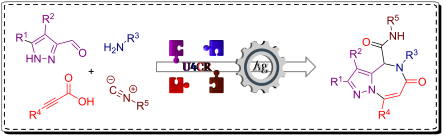
- , obtaining a separable mixture of the major cis and minor trans diastereomers of the sp3-enriched pyrazolodiazepine 17. The relative configuration of the stereocenters in the major cis isomer of 17 was established via scXRD analysis. Both diastereomers of 17 were found to be amenable to chemoselective amide




Cu–Bpin-mediated dimerization of 4,4-dichloro-2-butenoic acid derivatives enables the synthesis of densely functionalized cyclopropanes
Beilstein J. Org. Chem. 2025, 21, 877–883, doi:10.3762/bjoc.21.71
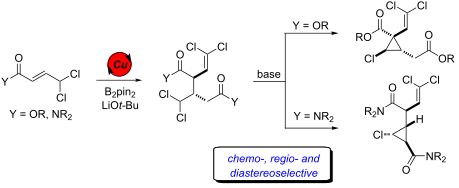
- cases, with SIPr providing the best result (Table 1, entry 11). Under these optimized conditions, product 2 was isolated in 60% yield as a single diastereomer. The relative configuration of 2 was determined by two-dimensional NMR analysis (see Supporting Information File 1 for details). This


Regioselective formal hydrocyanation of allenes: synthesis of β,γ-unsaturated nitriles with α-all-carbon quaternary centers
Beilstein J. Org. Chem. 2025, 21, 800–806, doi:10.3762/bjoc.21.63
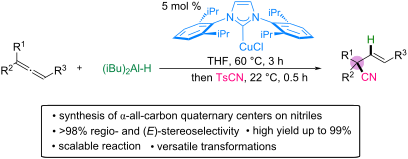
- -system configuration promotes selective functionalization, enabling the synthesis of various complex products through a single transformation [17][18][19]. Therefore, allenes have become versatile intermediates in numerous transition-metal-catalyzed reactions [20][21]. Despite extensive studies on the




Development and mechanistic studies of calcium–BINOL phosphate-catalyzed hydrocyanation of hydrazones
Beilstein J. Org. Chem. 2025, 21, 755–765, doi:10.3762/bjoc.21.59
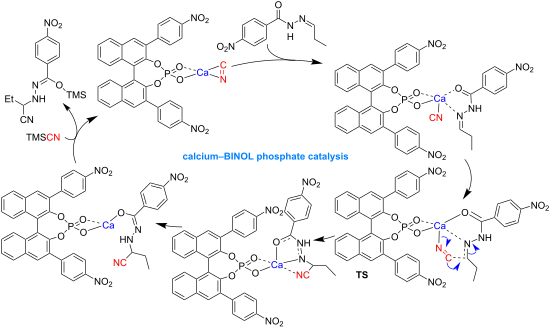
- . Trimethylsilyl cyanide (TMSCN) has been used as a sacrificial cyanide source. We found that isocyanide (rather than cyanide) is a preferred coordination to calcium during the catalytic cycle, while the active catalyst prefers a side-on coordination of cyanide. The configuration-determining step is a
- of 9 (for Z- and E-configuration, and for Re or Si side attack) should be more or less equal and the actual stereoselectivity must hence be determined in later stages of the reaction. Ligand sites in the pre-complex 9 form a pseudo-tetragonal pyramid, with isocyanide at the apex. Atoms in the Ca–NC
- provisioning for the following reaction step. Hydrocyanation hence proceeds facially with a barrier of only 10.2 kcal·mol−1 via the configuration-determining TS 9-10 by attack of isocyanide at the imine carbon of hydrazone. If the configuration-determining step would be also rate limiting, experimental


Orthogonal photoswitching of heterobivalent azobenzene glycoclusters: the effect of glycoligand orientation in bacterial adhesion
Beilstein J. Org. Chem. 2025, 21, 736–748, doi:10.3762/bjoc.21.57
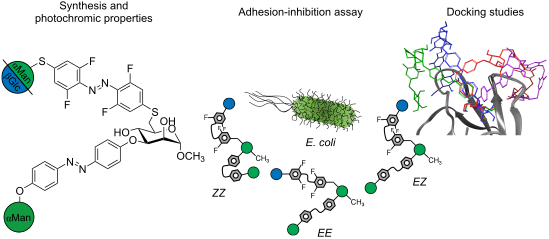
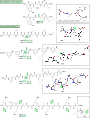
- is dependent on the configuration of the azobenzene photoswitch (E or Z). In both cases, the E isomers exhibit significantly higher RIP(MeMan) values than the Z isomers, approx. two times higher for 4 and approx. three times higher for 5 (cf. Supporting Information File 1, Table S6). The bis


Origami with small molecules: exploiting the C–F bond as a conformational tool
Beilstein J. Org. Chem. 2025, 21, 680–716, doi:10.3762/bjoc.21.54


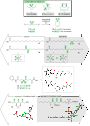
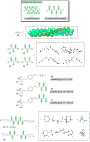
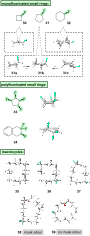


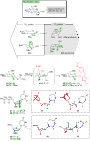




Asymmetric synthesis of fluorinated derivatives of aromatic and γ-branched amino acids via a chiral Ni(II) complex
Beilstein J. Org. Chem. 2025, 21, 659–669, doi:10.3762/bjoc.21.52
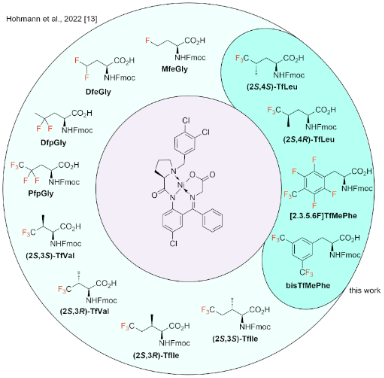
- configuration was determined by analyzing the 1H NMR spectrum in the δ = 2.8–1.7 ppm region, which displayed the characteristic diastereotopic hydrogen atoms of this compound, as previously reported by Biava et al. [15]. Unfortunately, the corresponding (2S,4S)-isomer 12b was intractable for isolation (yield


Entry to 2-aminoprolines via electrochemical decarboxylative amidation of N‑acetylamino malonic acid monoesters
Beilstein J. Org. Chem. 2025, 21, 630–638, doi:10.3762/bjoc.21.50
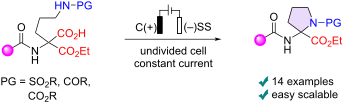
- meantime, an excellent diastereoselectivity (97:3 dr) was achieved in the decarboxylative cyclization of N-mesylamide 9n possessing an S stereogenic center in the α-position to the nitrogen. Unfortunately, the configuration of the newly formed quaternary stereogenic center in 6n could not be established by



Formaldehyde surrogates in multicomponent reactions
Beilstein J. Org. Chem. 2025, 21, 564–595, doi:10.3762/bjoc.21.45
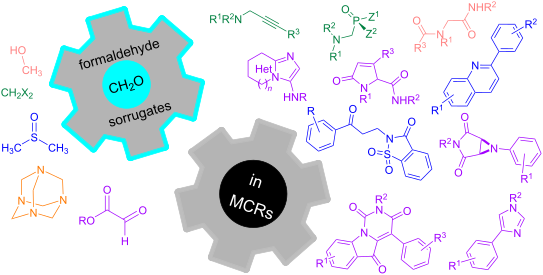
- of an N–C bond, where the stability of the leaving carbocation is the main factor that affects the rate of this step. Next, intermediate 37 is attacked by the phosphorus compound, giving product 35 with retention of the configuration. This mechanism was confirmed when compound 36a was isolated as


Study of the interaction of 2H-furo[3,2-b]pyran-2-ones with nitrogen-containing nucleophiles
Beilstein J. Org. Chem. 2025, 21, 556–563, doi:10.3762/bjoc.21.44
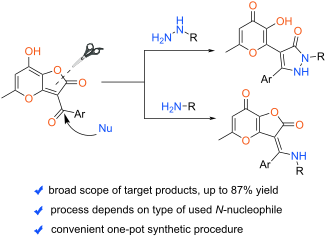
- % yield. Based on X-ray analysis data the synthesized compound 4a is 2H-furo[3,2-b]pyran-2,7(3H)-dione bearing an enamine fragment at the furanone ring (Scheme 2b). It’s interesting to note that prepared product 4a exists in form of the Z-isomer. This configuration is apparently stabilized by an


Vinylogous functionalization of 4-alkylidene-5-aminopyrazoles with methyl trifluoropyruvates
Beilstein J. Org. Chem. 2025, 21, 533–540, doi:10.3762/bjoc.21.41
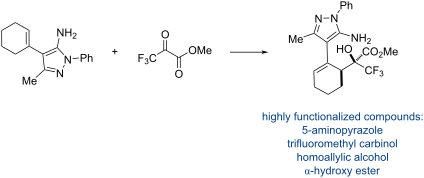
- to determine the role of the squaramide. The relative configuration of the stereogenic centres in compound 5aca was determined by X-ray crystallographic analysis (Scheme 3) [33]; the relative configurations of the other compounds 5 were assigned on the assumption of a uniform mechanistic pathway



Cryptophycin unit B analogues
Beilstein J. Org. Chem. 2025, 21, 526–532, doi:10.3762/bjoc.21.40
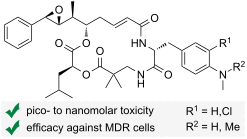
- crystallised in the monoclinic space group P21 with R1 = 0.0285 clearly showing the expected (R)-configuration with a Flack parameter of −0.07(6). Starting from monomethylaniline derivative 7, the synthesis of the final building block was finalised by chlorination [20], Alloc protection and saponification [21



Synthesis of N-acetyl diazocine derivatives via cross-coupling reaction
Beilstein J. Org. Chem. 2025, 21, 490–499, doi:10.3762/bjoc.21.36
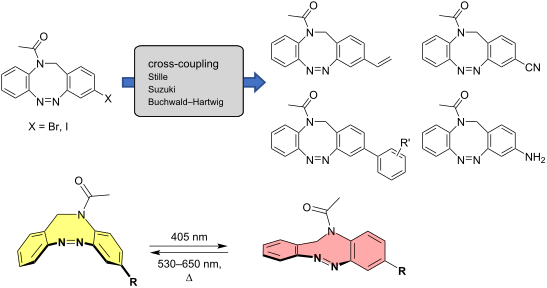
- spectra [1]. Moreover, the ethylene bridge creates a cyclic 8-membered core, inverting the thermodynamically stability in favor of the Z boat conformation compared to parent azobenzene, which has a stable E configuration [1][2][3][4]. Preceding studies including azobenzene-based photopharmacophores showed
- that, in most cases, the sterically demanding Z configuration is biologically inactive, while the stretched E configuration is biologically active [5][6][7]. Because of the inverted thermodynamic stability compared to azobenzene, the stable Z configuration of the diazocine can be administered and
- subsequently activated with light at the site of illness with high spatiotemporal resolution. Thus, collateral damage in the surrounding healthy tissue can be avoided. In addition, the quantitative thermal back-isomerization from the active E to the inactive Z configuration prevents contamination and


Organocatalytic kinetic resolution of 1,5-dicarbonyl compounds through a retro-Michael reaction
Beilstein J. Org. Chem. 2025, 21, 473–482, doi:10.3762/bjoc.21.34
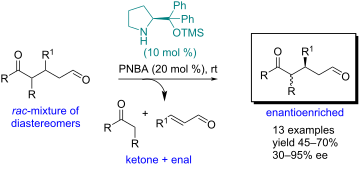
- that the enantiomeric ratio values in Table 5 correspond to the major anti-diastereomer. The absolute configuration of the significant diastereoisomer obtained in the kinetic resolution of compound 3 was established by chemical correlation with (2R,3S)-1,2,3-triphenylpentan-1-one (19), previously
- of 18 with Raney nickel in ethanol at room temperature gave a 3:1 mixture of anti/syn-19. The absolute configuration of anti-19 is (2R,3S), indicating that in the resolution process, the major enantiomer corresponds to the anti-(3S,4R)-5-oxo-3,4,5-triphenylpentanal. Having established that the major


The effect of neighbouring group participation and possible long range remote group participation in O-glycosylation
Beilstein J. Org. Chem. 2025, 21, 369–406, doi:10.3762/bjoc.21.27
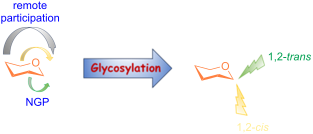
- [48]. The review will primarily be referring to axial or α-glycosides as 1,2-cis glycosides except for mannosides where the term β-mannosides will be used for 1,2-cis-mannoside configuration, respecting the complexity and novelty they bring to the world of synthetic glycochemistry. The spanning of the




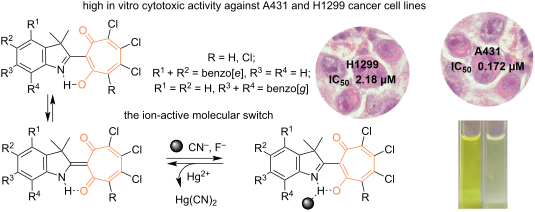
Synthesis, structure, ionochromic and cytotoxic properties of new 2-(indolin-2-yl)-1,3-tropolones
Beilstein J. Org. Chem. 2025, 21, 358–368, doi:10.3762/bjoc.21.26
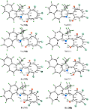
- )-5,6,7-trichloro-1,3-tropolone [5] (dashed lines) at the positions of N(1), C(2) and C(9) atoms (hydrogen atoms removed) (Figure 4). While maintaining the general configuration of the molecular framework, there are minor differences in the details of their structures, manifested in the observed distances




Antibiofilm and cytotoxic metabolites from the entomopathogenic fungus Samsoniella aurantia
Beilstein J. Org. Chem. 2025, 21, 327–339, doi:10.3762/bjoc.21.23
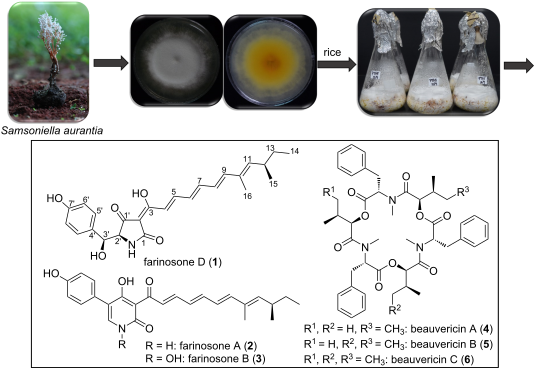
- existence in E configuration. Then, the spin system extends over two overlapping olefinic protons at δH 6.89 (H-6)/6.90 (H-7) proceeding to two olefinic protons at δH 6.38 (dd, J = 15.0, 11.0 Hz, H-8) and 6.56 (d, J = 15.0 Hz, H-9). In addition, the 1H–1H COSY spectrum of 1 (Figure 2) revealed another
- δC 34.2 (C-12) and 29.7 (C-13), respectively. The HMBC correlations (Figure 3) indicated that the side chain in 1 ends as –C(CH3)=CH-CH(CH3)-CH2-CH3 resembling those from farinosones A/B [8] and tenellin derivatives [10][11]. The relative configuration of 1 was elucidated based on its ROESY spectrum
- groups ascribed to H3-14 and H3-15 together with a diastereotopic methylene group at δH 1.25/1.36 (H2-13) confirming the depicted end of the aliphatic sidechain as –C(CH3)=CH-CH(CH3)-CH2-CH3 similar to that in farinosones A/B [8] and tenellin derivatives [10][11]. To establish the absolute configuration


Molecular diversity of the reactions of MBH carbonates of isatins and various nucleophiles
Beilstein J. Org. Chem. 2025, 21, 286–295, doi:10.3762/bjoc.21.21
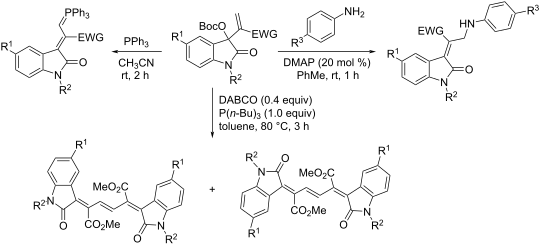
- has an E,E,E-configuration, while the compound 8a has a Z,E,E-configuration. On the basis of the above experiments and the previously published results [42][43][44][45][46][47][48][49][50][51][52], a plausible reaction mechanism was proposed in Scheme 4 to explain the formation of the various oxindole




Three-component reactions of conjugated dienes, CH acids and formaldehyde under diffusion mixing conditions
Beilstein J. Org. Chem. 2025, 21, 262–269, doi:10.3762/bjoc.21.18
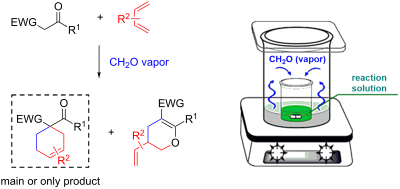
- cyanoacetic ester and acetylacetone. The configuration of the products 4 and 5 was established by bromination of a small amount of these isomeric compounds in CDCl3 (Scheme 6) and subsequent analysis of the mixture by 1H NMR spectroscopy. For the stereoisomers 4, the main product was lactone 22, identified by





