Search results
Search for "lipid" in Full Text gives 159 result(s) in Beilstein Journal of Organic Chemistry.
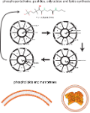
Nanoreactors for green catalysis
Beilstein J. Org. Chem. 2018, 14, 716–733, doi:10.3762/bjoc.14.61
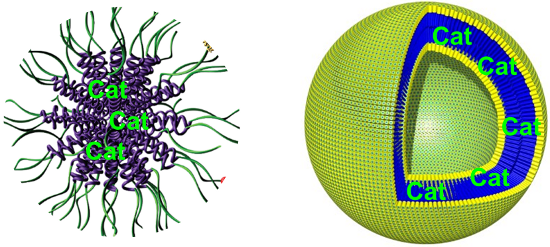
- hydrophobic membrane and as a consequence a higher reaction rate. Dergunov et al. reported on the design of a porous polymeric nanoreactor with a lipid bilayer for coupling reactions [87]. These nanocapsules were loaded with palladium catalysts and successfully used in Suzuki, Sonogashira and Heck cross


Aminosugar-based immunomodulator lipid A: synthetic approaches
Beilstein J. Org. Chem. 2018, 14, 25–53, doi:10.3762/bjoc.14.3
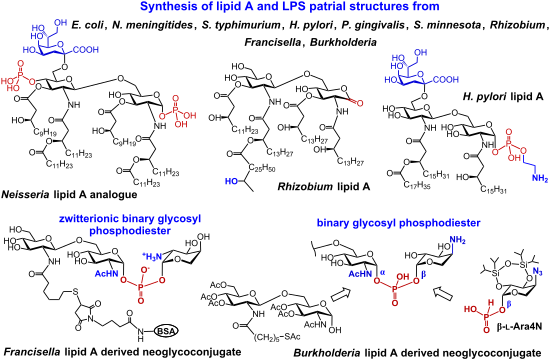
- cytokines, chemokines, prostaglandins and reactive oxygen species which manifest an acute inflammatory response to infection. The “endotoxic principle” of LPS resides in its amphiphilic membrane-bound fragment glycophospholipid lipid A which directly binds to the TLR4·MD-2 receptor complex. The lipid A
- content of LPS comprises a complex mixture of structural homologs varying in the acylation pattern, the length of the (R)-3-hydroxyacyl- and (R)-3-acyloxyacyl long-chain residues and in the phosphorylation status of the β(1→6)-linked diglucosamine backbone. The structural heterogeneity of the lipid A
- isolates obtained from bacterial cultures as well as possible contamination with other pro-inflammatory bacterial components makes it difficult to obtain unambiguous immunobiological data correlating specific structural features of lipid A with its endotoxic activity. Advanced understanding of the




Synthesis of naturally-derived macromolecules through simplified electrochemically mediated ATRP
Beilstein J. Org. Chem. 2017, 13, 2466–2472, doi:10.3762/bjoc.13.243
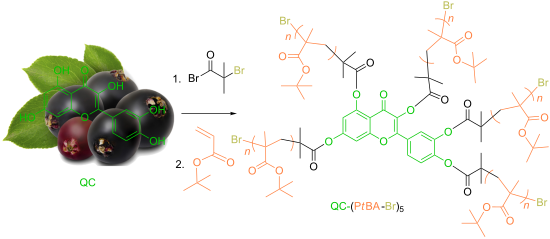
- ions [27]. Quercetin inhibits xanthine oxidase [27][28][29], inhibits lipid peroxidation in vitro [27][28][30], and scavenges oxygen radicals [27][28][31][32][33]. There is a tremendous importance of this antioxidant in the prevention of a range of cardiovascular diseases [27][34][35], cancer [26][27


Enzymatic synthesis of glycosides: from natural O- and N-glycosides to rare C- and S-glycosides
Beilstein J. Org. Chem. 2017, 13, 1857–1865, doi:10.3762/bjoc.13.180
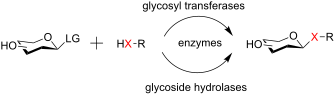
- donor (lipid, nucleotide…) [13]. It is considered that GTs are encoded by 1% of total genes, and over 300 000 representatives of GT superfamily have been classified according to their nucleotide sequence into 103 subfamilies [8]. Depending on the conservation of the anomeric atom stereochemistry of the




The chemistry and biology of mycolactones
Beilstein J. Org. Chem. 2017, 13, 1596–1660, doi:10.3762/bjoc.13.159
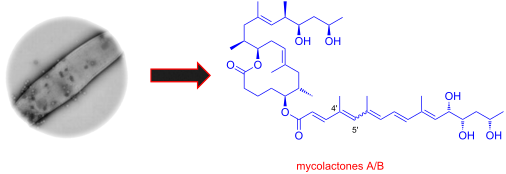
- , based on studies investigating the stability of M. ulcerans extracts towards different chemicals and enzymes [31]. The true nature of the toxin, however, remained elusive until 1998, when Small and co-workers identified a polyketide isolated from acetone-soluble M. ulcerans lipid extracts as the key
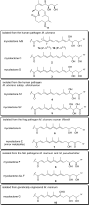
- was the correct one [57]. Besides mycolactone E (6), a minor metabolite (7) with a keto group replacing the hydroxy function at the C13’-position was found in M. ulcerans ecovar liflandii lipid extracts [50][56]. Again, the structure was finally established by Kishi and co-workers using a combination









Chemical systems, chemical contiguity and the emergence of life
Beilstein J. Org. Chem. 2017, 13, 1551–1563, doi:10.3762/bjoc.13.155
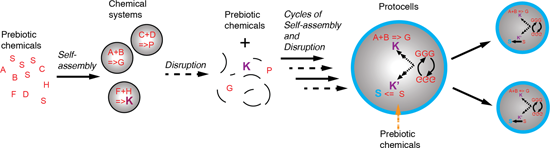
- alternative approaches in relation to the emergence of specific biomolecules and biochemical assemblies. The pursuance of such, normally parallel, approaches has led to the development of hypotheses either called by their chemical embodiment, such the lipid- [5], PAH- (polycyclic aromatic hydrocarbons) [6
- acid monomers has been achieved in this manner: When amphiphile vesicles or liposomes are dried in the presence of solutes on a silicate support, a system of stacked lipid bilayers with intercalated solutes is formed [52]. In this arrangement, the nucleotides are optimally spaced to react and form
- , nor preclude the “re”-dispersion of the lipid phases into dispersed aggregates with encapsulated catalysis products [52]. Chemical systems and chemical contiguity in the dispersed state The chemical systems aspect during the emergence of cell-like entities can also be highlighted once the chemical


A new member of the fusaricidin family – structure elucidation and synthesis of fusaricidin E
Beilstein J. Org. Chem. 2017, 13, 1430–1438, doi:10.3762/bjoc.13.140
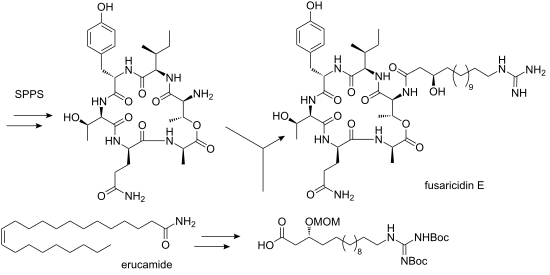
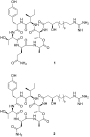
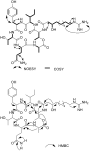
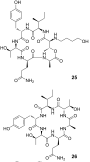
- ; Introduction Fusaricidins are lipid-modified non-ribosomal cyclic hexadepsipeptides containing four D-amino acids and two L-amino acids. All of them carry an L-threonine linked to a unique 15-guanidino-3-hydroxypentadecanoic acid side chain through the N-terminus. This particular ω-functionalized lipid side



Framing major prebiotic transitions as stages of protocell development: three challenges for origins-of-life research
Beilstein J. Org. Chem. 2017, 13, 1388–1395, doi:10.3762/bjoc.13.135
- variety of processes that take place across their boundaries – lipid membranes in/on which highly sophisticated mechanisms of transport and energy transduction reside, making possible the maintenance of the system, as a whole, in open, far-from-equilibrium conditions. In a metaphoric sense, a cell is a
- longer we postpone the appearance of chemical encapsulated systems, the more intractable the problem of compartmentalization will surely become. Indeed, if reaction networks could develop their catalytic efficiency in compartment-free scenarios, their eventual encapsulation within lipid vesicles would
- negative and positive feedback loops (autocatalytic cycles) that can take place within the internal water pool, the presence of closed lipid bilayers strongly restricts the free diffusion of the various soluble species involved, allows the selective passage of precursors and excludes water in limited areas

An improved preparation of phorbol from croton oil
Beilstein J. Org. Chem. 2017, 13, 1361–1367, doi:10.3762/bjoc.13.133
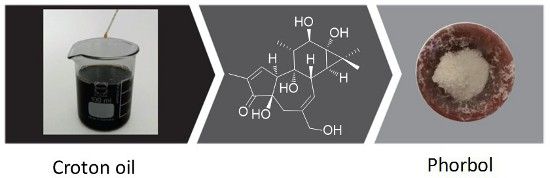
- , since the irritancy of phorbol esters is critically dependent on their acylation profile [6]. However, the native phorboid profile of croton oil is still poorly characterized in terms of analytical profile [24], and the recovery of the native highly lipophilic phorboid esters from the lipid matrix of


BODIPY-based fluorescent liposomes with sesquiterpene lactone trilobolide
Beilstein J. Org. Chem. 2017, 13, 1316–1324, doi:10.3762/bjoc.13.128
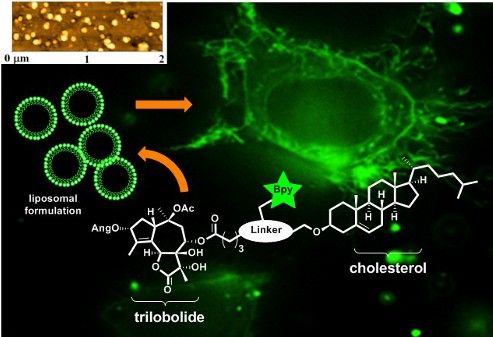
- formulation (ratio 4:4:1:1, respectively). A hydrophobic film prepared by evaporation of a lipid–chloroform solution was hydrated with physiological solution. The desired unilamellar vesicles were obtained by homogenization of the dispersion through a 100 nm pore size polycarbonate filter. Characterization of




Biomimetic molecular design tools that learn, evolve, and adapt
Beilstein J. Org. Chem. 2017, 13, 1288–1302, doi:10.3762/bjoc.13.125
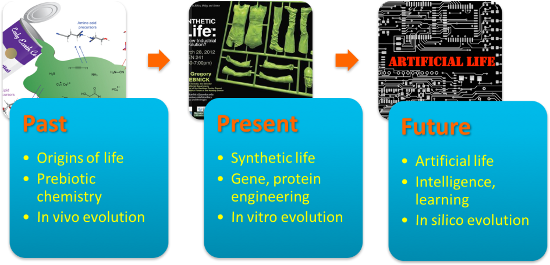
- the sterol and fatty acid biosynthetic pathways were activated in the MSCs, and subsequent experiments validated the model predictions of increased levels of proteins in these pathways and the formation of lipid rafts on the cell membranes. In silico sparse feature selection thus revealed a hitherto




Glycoscience@Synchrotron: Synchrotron radiation applied to structural glycoscience
Beilstein J. Org. Chem. 2017, 13, 1145–1167, doi:10.3762/bjoc.13.114
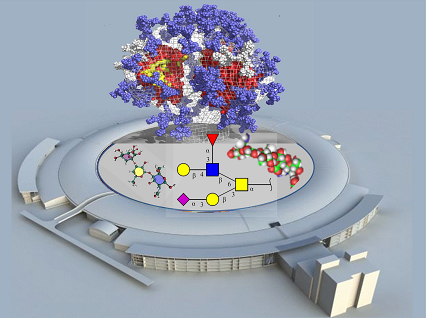
- offers another example of difficulty in terms of single crystal growth. Glycolipids (or lipo-oligosaccharides) comprise a carbohydrate moiety covalently linked to a lipid that confers on them an amphiphilic character, which makes them reluctant to crystallize. One member of the family is tricolorin A (L
- , UDP-Gal, GDP-Man, and the GTs that process them are often referred to as Leloir enzymes. In certain cases, lipid-linked sugars, e.g., dolichol phosphate saccharides and unsubstituted phosphates are also utilized. The transfer of saccharides by GTs is regio-specific and stereo-specific: depending on
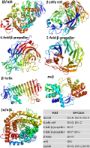
- variants of these folds), namely GT-A and GT-B (Figure 8). Different folds are nevertheless observed for GTs that use lipid phosphate donor substrates. The achievement of the enzyme-transition state complex requires a particular arrangement of the active site that is the result of concomitant protein




From chemical metabolism to life: the origin of the genetic coding process
Beilstein J. Org. Chem. 2017, 13, 1119–1135, doi:10.3762/bjoc.13.111
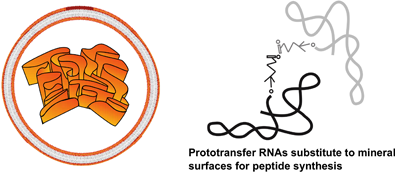
- function associated to this view is that the cell separates between an inside and an outside. In 1935, James Danielli proposed with Hugh Davson that this embodiment was achieved by formation of a bilayer made of amphiphilic lipid molecules [11]. This process is entropy-driven (life belongs to physics, it
- to understand the way proteins interact with membrane lipids, and our knowledge in the domain is still far from complete. There exist many models describing the operation (including ideas about the asymmetry of the bilayer, its local changes and lipid rafts). Work exploring the way proteins are
- membrane differs during states of growth and non-growth. The former implies a constructive function of the membrane. Proteins are the effectors of this function with the key operation of allowing protein insertion within the membrane. Studies investigating spontaneous evolution of lipid vesicles showed



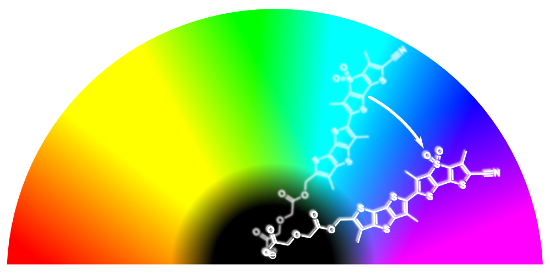
Correlation of surface pressure and hue of planarizable push–pull chromophores at the air/water interface
Beilstein J. Org. Chem. 2017, 13, 1099–1105, doi:10.3762/bjoc.13.109
- ; membrane pressure; membrane probes; monolayers; Introduction Physical triggers are a major regulator of biological processes. The lateral bilayer membrane pressure, e.g., influences the nucleation [1] and shape changes [2] of lipid domains, it gates mechanosensitive pores [3] and globally organizes cell
- directionally into lipid bilayer membranes. In order to use fluorescent flipper mechanophores for biological measurements, it is crucial to understand the exact relation between surface pressure and their spectroscopic properties. In earlier studies [8], the fluorescence was qualitatively determined in
- different lipid environments: the mechanosensitive probes (1.3 mol %) were added to large unilamellar vesicles (LUV) of either DPPC (dipalmitoyl-sn-glycero-3-phosphocholine) or DOPC (dioleoyl-sn-glycero-3-phosphocholine) at different temperatures. The flipper probes in DPPC, but not in DOPC, showed a red


Glyco-gold nanoparticles: synthesis and applications
Beilstein J. Org. Chem. 2017, 13, 1008–1021, doi:10.3762/bjoc.13.100
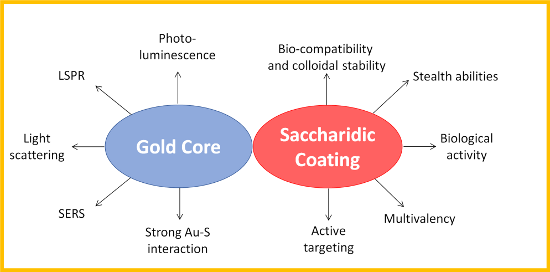
- peanut agglutinin [25]. In this case, the glycosyl residue is not coated on the gold surface by means of a thiol moiety but exploiting the strain-promoted azide–alkyne cycloaddition (SPAAC) to covalently link an azido galactoside on a lipid cyclooctyne. In this manner, the amphiphilic glyco-lipid can be


Aggregation behaviour of a single-chain, phenylene-modified bolalipid and its miscibility with classical phospholipids
Beilstein J. Org. Chem. 2017, 13, 995–1007, doi:10.3762/bjoc.13.99
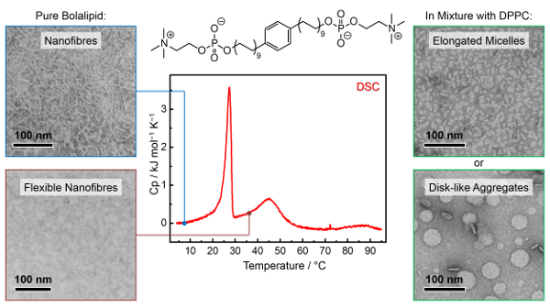
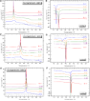
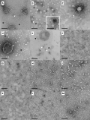
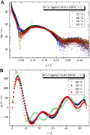
- -C18pPhC18-PC is partially miscible with saturated phosphatidylcholines; however, closed lipid vesicles with an increased thermal stability were not found. Instead, bilayer fragments and disk-like aggregates are formed. Keywords: aggregation behaviour; bolaamphiphiles; bolalipids; membrane lipids; mixing
- [23]. This simplification strategy led in our group to the synthesis of dotriacontane-1,32-diylbis[2-(trimethylammonio)ethylphosphate] (PC-C32-PC) [24][25], the simplest bola model lipid consisting of two phosphocholine (PC) headgroups connected by a long, unmodified C32 alkyl chain. If PC-C32-PC is
- ., DPPC did not result in the formation of stabilized lipid vesicles and elongated micelles as well as bilayer fragments were found instead. We have now synthesized a bolalipid with phenyl modification and a slightly longer alkyl chain, PC-C18pPhC18-PC (Figure 1), to investigate a possible chain length



Use of costic acid, a natural extract from Dittrichia viscosa, for the control of Varroa destructor, a parasite of the European honey bee
Beilstein J. Org. Chem. 2017, 13, 952–959, doi:10.3762/bjoc.13.96
- essential oil were found active against Staphylococcus epidermidis, Streptococcus foecalis and Proteus vulgaris [36]. The methanol extract of the aerial parts of the plant showed antioxidant activity in a study on lipid peroxidation of rat liver microsomes [30]. n-Hexane extracts from air dried D. viscosa


Lipids: fatty acids and derivatives, polyketides and isoprenoids
Beilstein J. Org. Chem. 2017, 13, 793–794, doi:10.3762/bjoc.13.78
- constituents, for energy storage, or as signaling molecules. If the human lipid metabolism is disturbed, this may lead to serious illnesses such as adipositas and its subsequent complications including cardiovascular diseases or diabetes mellitus. Other consequences of a disordered lipid metabolism include
- , sphingolipids and glycolipids. Lipids also constitute important post-translational protein modifications in lipoproteins. The amphiphilic nature of compounds such as phospholipids with a polar headgroup and a long apolar chain results in the spontaneous formation of lipid bilayers in aqueous environments. This
- was likely a crucial process for the origin of life – and certainly still is for all existing living systems that necessarily contain lipid membranes with their interesting and finely balanced biophysical properties. In prokaryotes, these membranes define the outer surface of individual cells, while
Membrane properties of hydroxycholesterols related to the brain cholesterol metabolism
Beilstein J. Org. Chem. 2017, 13, 720–727, doi:10.3762/bjoc.13.71
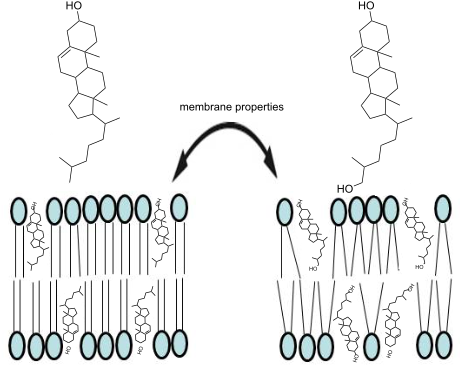
- influence on lipid chain order, membrane permeability and formation of lateral domains. Keywords: cholesterol; fluorescence; hydroxycholesterol; membrane structure; NMR; Introduction Cholesterol is a major component of mammalian cell membranes with various biological functions. It plays a key role in
- maintaining the membrane’s barrier function by increasing the bilayer packing density through condensing the phospholipids. Furthermore, cholesterol is an important player in the dynamic domain structure of the plasma membrane and the formation of lateral lipid domains with relevance to membrane protein
- of a human being [4][6]. Insoluble cholesterol is transported in the blood in small lipoprotein particles of varying density and the rate, at which cholesterol crosses the lipid membrane, is extremely low [7]. To overcome the blood–brain barrier, nature has developed efficient mechanisms to convert


How and why kinetics, thermodynamics, and chemistry induce the logic of biological evolution
Beilstein J. Org. Chem. 2017, 13, 665–674, doi:10.3762/bjoc.13.66
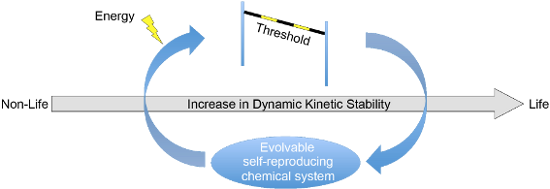
- pathways, a wide range of precursors similar to those found in biochemistry (amino acids, nucleotides and lipid precursors). Conclusion This paper attempts to place life and its emergence within a general physicochemical context. Once it is appreciated that life emerged from inanimate beginnings in a well



Conjecture and hypothesis: The importance of reality checks
Beilstein J. Org. Chem. 2017, 13, 620–624, doi:10.3762/bjoc.13.60
- mononucleotides [22][28][29]. Because the resulting polymers can be encapsulated in lipid vesicles, it has been proposed that the resulting protocells are candidates for combinatorial selection and the first steps of evolution [30]. Conclusion From the above discussion, alternative conjectures have been published
Pd- and Cu-catalyzed approaches in the syntheses of new cholane aminoanthraquinone pincer-like ligands
Beilstein J. Org. Chem. 2017, 13, 564–570, doi:10.3762/bjoc.13.55
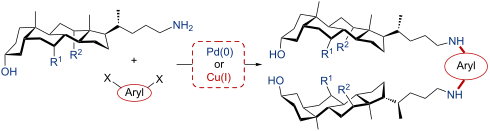
- transport of anions through lipid membranes [19][20][21][22]. Some of similar pincer compounds can be used as receptors for organic molecules; e.g., polyamino derivatives based on cholane skeleton can form complexes with amino acids [23] and pincer-like conjugates of deoxycholic acid and aminopyrene can
- arylaminocholanes and cholane-diaminoanthraquinone derivatives by Pd- and Cu-catalyzed amination. Such compounds not only have cation binding properties, but also might be easily introduced in lipid membranes to form ion channels. Appropriate close location of lipophilic steroid fragments in bis(cholanediamino


Synthesis and evaluation of anti-oxidant and cytotoxic activities of novel 10-undecenoic acid methyl ester based lipoconjugates of phenolic acids
Beilstein J. Org. Chem. 2017, 13, 26–32, doi:10.3762/bjoc.13.4
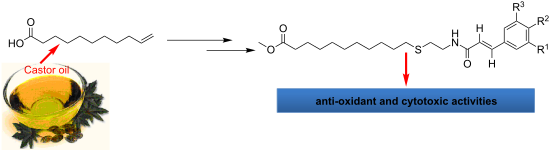
- Naganna Narra Shiva Shanker Kaki Rachapudi Badari Narayana Prasad Sunil Misra Koude Dhevendar Venkateshwarlu Kontham Padmaja V. Korlipara Centre for Lipid Research, CSIR-Indian Institute of Chemical Technology, Uppal Road, Hyderabad 500007, India Academy of Scientific and Innovative Research, New
- phenolics and the lipid involved in one chemical entity [4][5]. Lipids, especially fatty acids and their derivatives are known for their broad spectrum of activity which expands their application in developing new hybrid biomolecules which help in host defenses against potential pathogenic microbes
- compounds could be useful as potential novel lipid derivatives because of the presence of lipophilic chain and the phenolic amide conjugate. Results and Discussion Synthesis 10-Undecenoic acid was chosen as the lipid part as the derivatives of undecenoic acid have been reported to be potent bioactive


Synthesis of multi-lactose-appended β-cyclodextrin and its cholesterol-lowering effects in Niemann–Pick type C disease-like HepG2 cells
Beilstein J. Org. Chem. 2017, 13, 10–18, doi:10.3762/bjoc.13.2
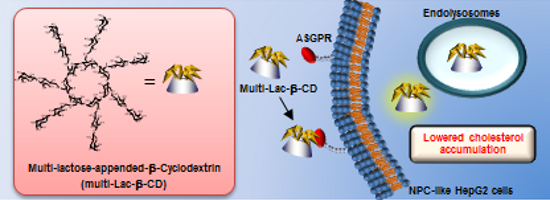
- NPC-like HepG2 cells via asialoglycoprotein receptor (ASGPR)-mediated endocytosis. Keywords: asialoglycoprotein receptor; cholesterol; cyclodextrin; lactose; Niemann–Pick type C disease; Introduction The Niemann–Pick type C (NPC) disease is a lipid storage disorder with the accumulation of membrane





Biochemical and structural characterisation of the second oxidative crosslinking step during the biosynthesis of the glycopeptide antibiotic A47934
Beilstein J. Org. Chem. 2016, 12, 2849–2864, doi:10.3762/bjoc.12.284
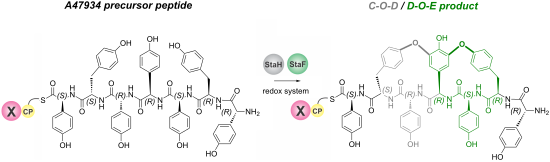
- enables them to bind to the dipeptide terminus of the peptidoglycan precursor lipid II [1][2]. This three-dimensional structure is generated by the high degree of crosslinking exhibited by the glycopeptide antibiotics: in the case of the two most widely known natural examples (vancomycin and teicoplanin