


Search results
Search for "reagent" in Full Text gives 1319 result(s) in Beilstein Journal of Organic Chemistry. Showing first 200.
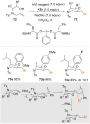
Hypervalent iodine-mediated intramolecular alkene halocyclisation
Beilstein J. Org. Chem. 2024, 20, 3113–3133, doi:10.3762/bjoc.20.258
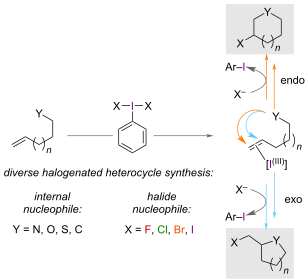
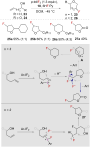
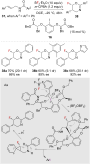
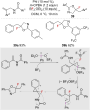
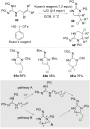
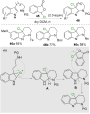
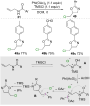
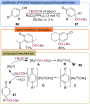
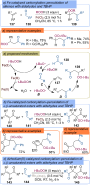
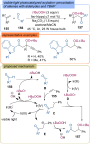
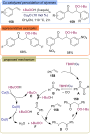
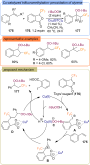
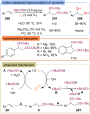
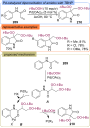
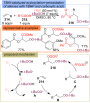
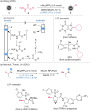
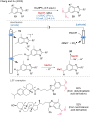
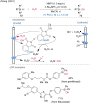
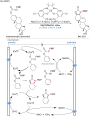
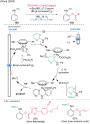
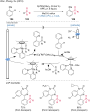
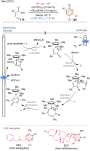
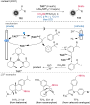
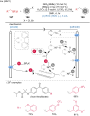
- firstly through the coordination of an alkene by the HVI reagent, which activates it toward intramolecular attack by an internal nucleophile. Following this, substitution of the iodane(III) can occur from the nucleophilic halide in solution to reveal the halo-cyclised product (Figure 2). In this review
- -, stereo-) of the reaction, which is influenced by the type of HVI reagent, the nature of the substrates employed and the proposed mechanism from the authors are all described. The halocyclisation of alkenes to make halogenated carbo or heterocycles is yet to be covered by a review, which is the vacancy
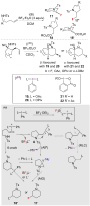
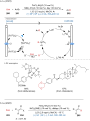
- C‒F bond to give predominantly the trans product, but this pathway competes with a less favourable SN2 nucleophilic attack by fluorine to form the cis product. However, a mechanism entirely mediated by the I(III) HVI reagent, with the Pd(OAc)2 only acting as a Lewis acid to activate the HVI reagent



















Synthesis of the 1,5-disubstituted tetrazole-methanesulfonylindole hybrid system via high-order multicomponent reaction
Beilstein J. Org. Chem. 2024, 20, 3077–3084, doi:10.3762/bjoc.20.256
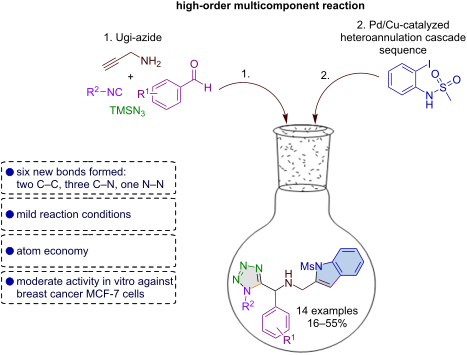
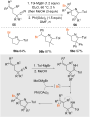
- trifluoroethanol as the solvent and at room temperature [23][24][25][26]. In the initial reaction, propargylamine served as a bifunctional reagent, with the primary amine group participating in the first step and the terminal alkyne promoting the subsequent heteroannulation. (Scheme 2). As observed in our previous
- trifluoroethanol to Et3N for the subsequent catalysis). Thus, this protocol enabled a straightforward and rapid synthesis of highly 2-substituted indoles under mild reaction conditions, highlighting the versatility of propargylamine as a bifunctional reagent in post-Ugi-azide transformations. Our group pioneered
- the application of this reagent as a central building block in the synthesis of hybrid systems via Ugi-azide reactions, including structures based on triazoles-tetrazoles [24][26][27], benzofuran-tetrazoles [23] and indolizines-tetrazoles [25], all of which have significant relevance in medicinal

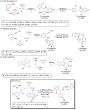
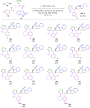


Enantioselective regiospecific addition of propargyltrichlorosilane to aldehydes catalyzed by biisoquinoline N,N’-dioxide
Beilstein J. Org. Chem. 2024, 20, 3069–3076, doi:10.3762/bjoc.20.255
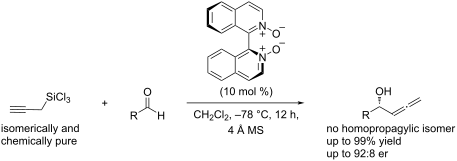
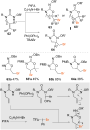
- , these findings underscore the importance of propargyltrichlorosilane as a regiospecific allenylation reagent and bode well for the development of new reactions. As we recently reported [46], we noticed during our initial investigation that propargyltrichlorosilane underwent isomerization to


Cyclodextrin-based rotaxanes for polymer materials: challenge on simultaneous realization of inexpensive production and defined structures
Beilstein J. Org. Chem. 2024, 20, 3026–3049, doi:10.3762/bjoc.20.252
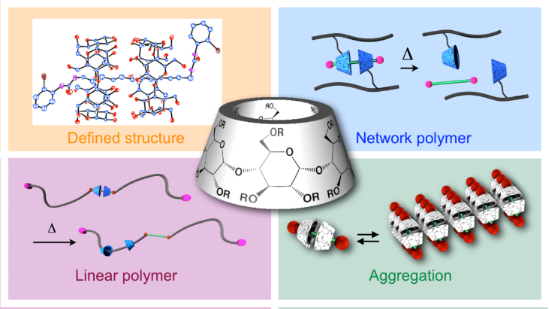
- sulfoxide (DMSO) must be available as CD forms the inclusion complex), (5) the yield of the end-capping reaction must be high, (6) the end-capping reagent and rotaxane must dissolve in the same solvent to facilitate a homogeneous reaction, and (7) the rotaxane must be isolable from the reaction mixture. The
- synthesize the rotaxane. For example, Anderson and co-workers reported the synthesis of γ-CD–based [2]rotaxane via the Suzuki reaction using a dicarboxylic acid end-capping reagent; they reported a 17% yield (Scheme 1C) [39]. To perform an end-capping reaction in water, multiple hydrophilic substituents
- in a high yield. In this reaction, the size of the end-capping agent is the key, as an extremely large reagent does not react well with the amino axle-end groups, whereas an extremely small reagent cannot function as an end-cap. This reaction exhibits the following multiple advantages compared with






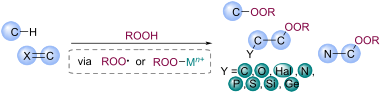
Advances in radical peroxidation with hydroperoxides
Beilstein J. Org. Chem. 2024, 20, 2959–3006, doi:10.3762/bjoc.20.249
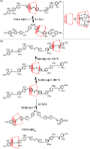
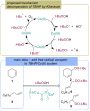
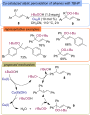
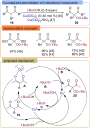
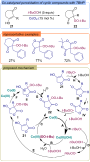
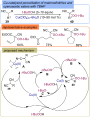
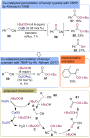
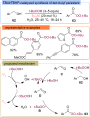
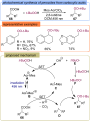
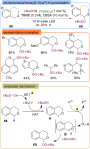
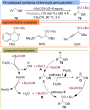
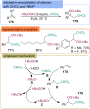
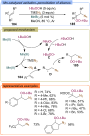
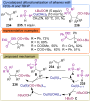
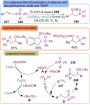
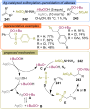
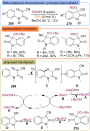
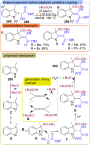
- copper catalysis the complex Cu(II)OO-t-Bu was proposed [122]. The difunctionalization of styrenes 175 with trifluoromethyl and peroxy groups was carried out using Togni reagent II (176) as a CF3-group precursor and the metal organic framework Cu3(BTC)2 as a heterogeneous catalyst (Scheme 54) [123]. The
- reaction mechanism was proposed as an anchored ionic type pathway, rather than the free radical one. First, the Togni reagent forms complex A with the dinuclear paddle-wheel copper nodes of Cu3(BTC)2. Complex A then adds to styrene 175 to form iodonium cation B, which is converted to intermediate D by































Synthesis of fluorinated acid-functionalized, electron-rich nickel porphyrins
Beilstein J. Org. Chem. 2024, 20, 2954–2958, doi:10.3762/bjoc.20.248
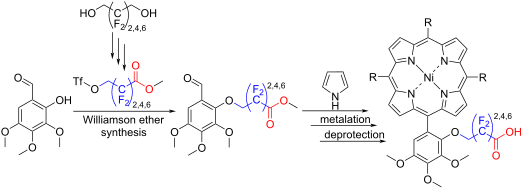
- 4 (65%), 5 (50%), and 6 (40%) by chromatography was straightforward. However, the subsequent oxidation of the alcohol with the usual oxidizing agents (Jones reagent, KMnO4, etc.) was not successful. A radical oxidation with TEMPO, potassium bromide (KBr), sodium hypochlorite (NaOCl), and sodium


Structure and thermal stability of phosphorus-iodonium ylids
Beilstein J. Org. Chem. 2024, 20, 2931–2939, doi:10.3762/bjoc.20.245
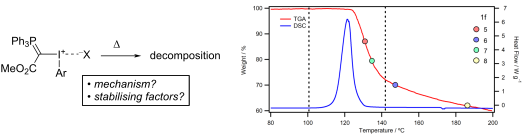
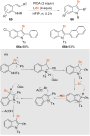
- and potential decomposition pathways will enable the future design and development of new reagents. Keywords: hypervalent iodine; reagent development; structural analysis; thermal stability; thermogravimetric analysis; Introduction Hypervalent iodine(III) reagents have experienced a renaissance in


Recent advances in transition-metal-free arylation reactions involving hypervalent iodine salts
Beilstein J. Org. Chem. 2024, 20, 2891–2920, doi:10.3762/bjoc.20.243

- concentrate on various arylation reactions involving carbon and other heteroatoms, encompassing rearrangement reactions in the absence of any metal catalyst, and summarize advancements made in the last five years. Keywords: arylation reaction; diaryliodonium salts; electrophilic arylation reagent; metal-free




C–H Trifluoromethylthiolation of aldehyde hydrazones
Beilstein J. Org. Chem. 2024, 20, 2883–2890, doi:10.3762/bjoc.20.242
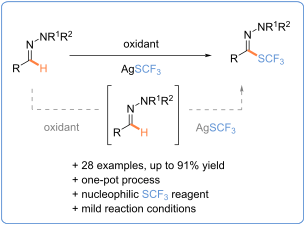
- % yield) using readily available reagents, namely NBS and the nucleophilic reagent AgSCF3. This approach provides a straightforward access to an unprecedented class of trifluoromethylthiolated derivatives. This method offers new avenues for synthesizing a plethora of valuable SCF3-containing molecules
- ). The mixture was stirred until the solubilization of the reagent. Then, recrystallized NBS (58.7 mg, 0.33 mmol, 1.1 equiv) was added, and the reaction mixture was stirred for 5–10 minutes, after which, AgSCF3 (125.0 mg, 0.6 mmol, 2.0 equiv) was added. The reaction was stirred for another 2 hours at


Multicomponent synthesis of α-branched amines using organozinc reagents generated from alkyl bromides
Beilstein J. Org. Chem. 2024, 20, 2834–2839, doi:10.3762/bjoc.20.239
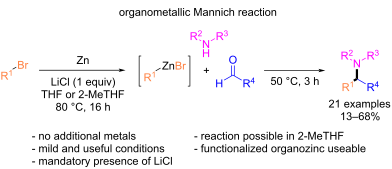
- was obtained with both LiBr (Table 1, entry 4) and LiClO4 (Table 1, entry 6), whereas LiF gave an acceptable yield of organozinc reagent (Table 1, entry 5). Therefore, additional experiments were carried out with LiCl. We first tried to determine whether the use of distilled (Table 1, entry 7) instead


Mechanochemical difluoromethylations of ketones
Beilstein J. Org. Chem. 2024, 20, 2799–2805, doi:10.3762/bjoc.20.235
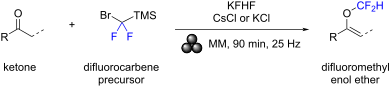
- sodium fluoride catalyst, with simple ketones, which resulted in the formation of difluoromethyl 2,2-difluorocyclopropyl ethers (Scheme 1B). Although the reactions worked well, it is also noteworthy that the use of TFDA as reagent, liberated fluoro(trimethyl)silane (TMSF), carbon dioxide, and ozone


Access to optically active tetrafluoroethylenated amines based on [1,3]-proton shift reaction
Beilstein J. Org. Chem. 2024, 20, 2776–2783, doi:10.3762/bjoc.20.233
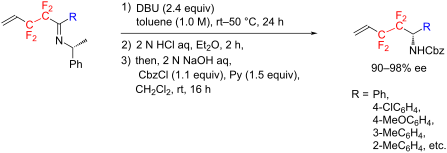
- ]-proton shift reaction of various tetrafluoroethylenated imines. Results and Discussion The preparation of substrates used in this study was as outlined in Scheme 3. Namely, the zinc reagent was prepared from commercially available 3,3,4,4-tetrafluoro-1-butene (18) [33] and reacted with various acid



Copper-catalyzed yne-allylic substitutions: concept and recent developments
Beilstein J. Org. Chem. 2024, 20, 2739–2775, doi:10.3762/bjoc.20.232
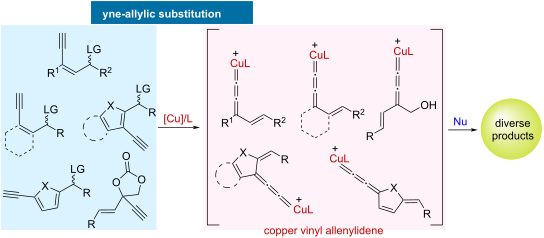
- ). Further control experiments and DFT calculations show that during the catalytic process, tertiary amine directly participates as a nucleophilic reagent to give the ammonium salt, which then releases dimethylaminium to provide the final product (Scheme 12). Chiral allylic sulfone compounds can be easily








Interaction of a pyrene derivative with cationic [60]fullerene in phospholipid membranes and its effects on photodynamic actions
Beilstein J. Org. Chem. 2024, 20, 2732–2738, doi:10.3762/bjoc.20.231

- as a •OH adduct of DMPO (DMPO-OH, Figure 5b(ii)) revealing that electron transfer reaction was also occurring. Using DEPMPO as a spin trapping reagent, detection of O2•– was tried and some radical adducts were detected, but without being clearly identified (Figure 5c(i), (ii)). The reason of the


5th International Symposium on Synthesis and Catalysis (ISySyCat2023)
Beilstein J. Org. Chem. 2024, 20, 2704–2707, doi:10.3762/bjoc.20.227
- carbene (NHC) framework from polysubstituted aminoimidazo[5,1-b]oxazol-6-ium salts, which demonstrated strong catalytic activity in gold-catalyzed alkyne hydration and arylative cyclization reactions [14]. The synthesis of this new carbene involved the use of a novel nitrenoid reagent that was

The scent gland composition of the Mangshan pit viper, Protobothrops mangshanensis
Beilstein J. Org. Chem. 2024, 20, 2644–2654, doi:10.3762/bjoc.20.222
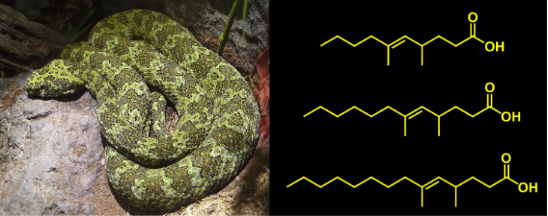
- ) starting from the oxoester 3, which is conveniently available from propenylpiperidine (2) [27] and methyl acrylate [28]. The Wittig reagent 1-methylheptyltriphenylphosphonium iodide (5) was prepared by methylation of the Wittig salt of heptyl iodide (4). A Wittig reaction with 3 afforded an E/Z mixture of


Efficient modification of peroxydisulfate oxidation reactions of nitrogen-containing heterocycles 6-methyluracil and pyridine
Beilstein J. Org. Chem. 2024, 20, 2599–2607, doi:10.3762/bjoc.20.219
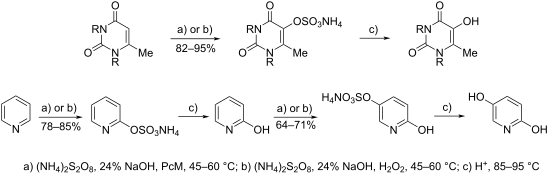
- distilled water, 6-methyluracil (99%, Chemical Line LLC, Russia), pyridine (analytically pure grade, Reakhim LLC, Russia), (NH4)2S2O8 (analytically pure grade, Panreac), NaOH (analytically pure grade, Reakhim LLC, Russia), H2SO4 (reagent grade, LLC Sigma Tech, Russia), dimethyl sulfate (99%, Chemical Line
- LLC, Russia), chloroform (reagent grade, JSC Khimreaktivsnab, Russia) and ethyl alcohol (reagent grade, LLC TD Khimmed, Russia) were used in this work. The phthalocyanine catalysts (Co, FeII, FeIII, Mn, Ni, and Zn phthalocyanines) were synthesized according to the known procedure [44] from


Base-promoted cascade recyclization of allomaltol derivatives containing an amide fragment into substituted 3-(1-hydroxyethylidene)tetronic acids
Beilstein J. Org. Chem. 2024, 20, 2585–2591, doi:10.3762/bjoc.20.217
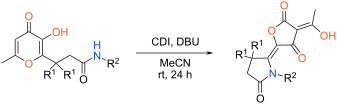
- the nucleophilic activity of the amide nitrogen atom is insufficient for this transformation. In this regard, we hypothesized that application of basic reagent can facilitate this process by generating an anion from the amide moiety. For this purpose, we tested the investigated process using various


A review of recent advances in electrochemical and photoelectrochemical late-stage functionalization classified by anodic oxidation, cathodic reduction, and paired electrolysis
Beilstein J. Org. Chem. 2024, 20, 2500–2566, doi:10.3762/bjoc.20.214
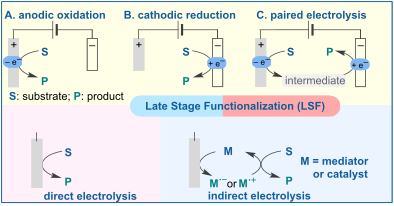
- -free electrochemical method. This route was reported in 2014 by the Baran and Blackmond groups [6]. A commercially available reagent, Zn(SO2CF3)2, was used as the CF3 radical source in the reaction. Additionally, a series of substrates could be difluoromethylated under the reported electrochemical
- agrochemical and pharmaceutical chemistry. In 2019, Jiao and colleagues reported that 1,2-dichloroethane (DCE) could be used as a chlorination reagent for the production of (hetero)aryl chlorides and vinyl chlorides [21]. The reactions were carried out in an undivided cell containing a mixture of DCE in
- oxidation strategy to obtain α-chlorosulfoxides from sulfides using hydrochloric acid as a bifunctional reagent [22]. This strategy accommodates a broad range of substrates and offers high diastereoselectivity and regioselectivity. Several LSF modifications of amino acids and pharmaceutical derivatives


























Machine learning-guided strategies for reaction conditions design and optimization
Beilstein J. Org. Chem. 2024, 20, 2476–2492, doi:10.3762/bjoc.20.212

- rigorously verify the compatibility of each solvent and reagent combination used in reactions and eliminate any potential hazards [218]. Second, in terms of algorithmic approaches, the widely used BO requires initial data to build a probabilistic surrogate model. Although the data might be sourced from


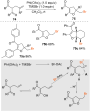
Hypervalent iodine-mediated cyclization of bishomoallylamides to prolinols
Beilstein J. Org. Chem. 2024, 20, 2455–2460, doi:10.3762/bjoc.20.209
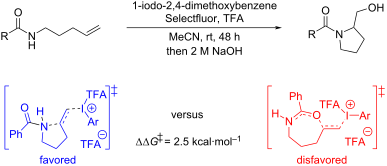
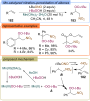
- ]. Iodoethane was also shown to be an effective reagent furnishing the product in up to 56% upon heating to 40 °C (Table 1, entries 11 and 12). It was envisaged that oxidation of iodoethane led to formation of oxidized forms of iodide by C–I-bond cleavage, therefore tetrabutylammonium iodide was utilized to see
- if the result could be replicated and it was (Table 1, entry 13). Finally, the reaction was shown to occur using PIFA (bistrifluoroacetoxyiodobenzene), which is envisaged to be produced in the reaction mixture when using iodobenzene as reagent, and a similar yield was obtained (Table 1, entry 14 vs


Facile preparation of fluorine-containing 2,3-epoxypropanoates and their epoxy ring-opening reactions with various nucleophiles
Beilstein J. Org. Chem. 2024, 20, 2421–2433, doi:10.3762/bjoc.20.206
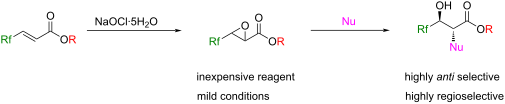
- -to-handle reagent, NaOCl·5H2O. Because very little has been disclosed about the reactivity of such 2,3-epoxyesters, their epoxy ring opening by a variety of nucleophiles was carried out and we succeeded in clarifying these chemo- as well as regioselective processes proceeding via the SN2 mechanism to
- synthesis to get access to the synthetically quite useful compounds like 2a [33][34]. Under such situations, we envisaged that the high electrophilicity of compound 1a would permit the usage of the extraordinarily convenient and mild reagent NaOCl [35][36][37][38] which opens the promising route for the
- (entries 3 vs 1 and 2). The drawback of this sequence was the isolated yield of 2b no more than 70% which was, at least in part, due to the production of the undesired hydrolyzed products from 1b and/or 2b under the alkaline conditions of this epoxidation reagent. This was experimentally proved by the





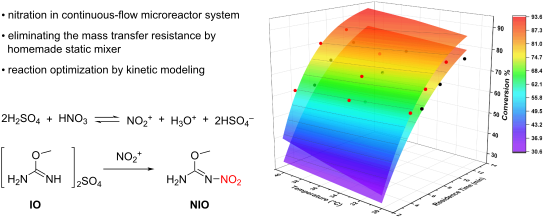
Homogeneous continuous flow nitration of O-methylisouronium sulfate and its optimization by kinetic modeling
Beilstein J. Org. Chem. 2024, 20, 2408–2420, doi:10.3762/bjoc.20.205
- serve as guidance for industrial production. Experimental Materials and methods Chemicals O-Methylisouronium sulfate (IO, 95%) was purchased from Shanghai Yien Chemical Technology Co., Ltd; fuming nitric acid (HNO3, 98.0%) was purchased from Sinopharm Chemical Reagent Co., Ltd.; sulfuric acid (H2SO4
- , 98.0%) was purchased from Sinopharm Chemical Reagent Co., Ltd.; pure water from AR, Hangzhou Wahaha Group Co., Ltd.; all reagents were used without further purification. Sulfuric acid solutions of different mass fractions were prepared with pure water and 98% concentrated sulfuric acid in an ice bath


![[Graphic 1]](/bjoc/content/inline/1860-5397-20-205-i17.svg?max-width=637&scale=1.18182)


Asymmetric organocatalytic synthesis of chiral homoallylic amines
Beilstein J. Org. Chem. 2024, 20, 2349–2377, doi:10.3762/bjoc.20.201
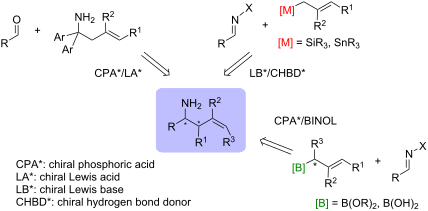
- attributed to the chair-like transition state where the organoboron reagent 1 exchanges one isopropoxy group for one of the BINOL 3 oxygen atoms, whereas the free OH group of the BINOL forms a hydrogen bond to the carbonyl of substrate 2. The flanking phenyl groups on the BINOL facilitate recognition between
- highly enantioselective nucleophilic addition of primary (10), secondary, and even tertiary allylboronates, as well as allenylboronates to a broad set of imines, bearing the N-phosphinoyl group. The new approach allowed the activation of both the substrate and the reagent using aminophenol organocatalyst
- -imine is activated either with a Brønsted or Lewis acid. In both cases, the allyl group of the silane reagent 46 attacks from the Re-face of the imine, leading to the major (R)-enantiomer of 47. Based on the experimental data obtained with the preformed silylated catalyst and preformed imine, the Lewis






Tandem diazotization/cyclization approach for the synthesis of a fused 1,2,3-triazinone-furazan/furoxan heterocyclic system
Beilstein J. Org. Chem. 2024, 20, 2342–2348, doi:10.3762/bjoc.20.200

- extended this approach to amides 5 containing a furazan ring that were obtained via the reaction of readily available 4-amino-3-furazancarboxylic acid 6 with various amines using 2-(1H-benzotriazole-1-yl)-1,1,3,3-tetramethylaminium tetrafluoroborate (TBTU) as a coupling reagent (Scheme 3; see Supporting
- additionally confirmed by X-ray diffraction (see Supporting Information File 1 for details) (Figure 2). To confirm the reaction mechanism, we performed diazotization followed by azo coupling of amide 2a using labeled Na15NO2 as the nitrosating reagent (Scheme 4). As a result, 15N-labeled triazinone 8 was
- conducted a series of studies. Thus, due to the presence of a furoxan fragment, triazinones 1 can act as NO-donors. To assess their NO-release capability, compounds 1 were kept for 1 hour under physiological conditions (pH 7.4, 37 °C), then Griess reagent was added and studied by spectrophotometry (this





