Search results
Search for "catalysts" in Full Text gives 1321 result(s) in Beilstein Journal of Organic Chemistry. Showing first 200.
Hypervalent iodine-mediated cyclization of bishomoallylamides to prolinols
Beilstein J. Org. Chem. 2024, 20, 2455–2460, doi:10.3762/bjoc.20.209
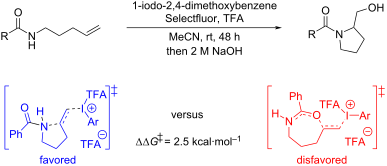
- become increasingly popular in recent years probably due to their useful reactivity, ease of handling, and low toxicity [13]. In particular, hypervalent iodine compounds have been shown to be effective reagents and catalysts for a range of cyclization reactions [14]. In 2015, we reported the iodoarene


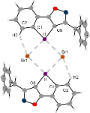
Evaluating the halogen bonding strength of a iodoloisoxazolium(III) salt
Beilstein J. Org. Chem. 2024, 20, 2401–2407, doi:10.3762/bjoc.20.204
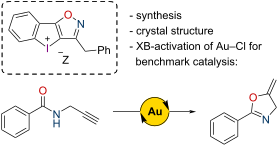
- has been known since the end of the 19th century and their use as aryl-transfer reagents has been widely explored [1][2][3]. The application as Lewis acid catalysts, on the other hand, has only gained interest in the last ten years after a first report by Han and Liu in 2015 on their use as catalysts
- iodolium salts like derivatives 5Z and 6Z (Figure 1) [14][15]. Their benchmark studies showed significant activity differences amongst them and superior performance compared to prototypical iodolium 1Z. Significant upgrades to DAI-based XB catalysts were made in the form of bidentate and dicationic XB
- donors [16][17] from our group as well as of dicationic N-heterocyclic-substituted monodentate catalysts by Nachtsheim [15]. While such compounds are necessary to activate neutral substrates in more challenging reactions, monodentate and monocationic congeners provide sufficient activation in halide




Efficient one-step synthesis of diarylacetic acids by electrochemical direct carboxylation of diarylmethanol compounds in DMSO
Beilstein J. Org. Chem. 2024, 20, 2392–2400, doi:10.3762/bjoc.20.203
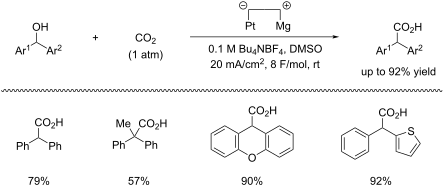
- a carboxy group using carbon dioxide as carboxy source is generally difficult under neutral and mild conditions without the use of metal catalysts and/or ligands. This protocol represents a novel method for synthesizing diarylacetic acids 2 from the corresponding alcohols 1 in one step by using an


Asymmetric organocatalytic synthesis of chiral homoallylic amines
Beilstein J. Org. Chem. 2024, 20, 2349–2377, doi:10.3762/bjoc.20.201
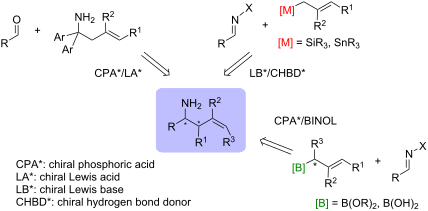
- equimolar chiral controller. However, recent years have witnessed the rise of asymmetric transition-metal catalysts and, importantly, organocatalytic allylation, reshaping the landscape of modern synthetic chemistry. This review explores the latest developments in the asymmetric allylation of imines
- Maraviroc, an HIV-1 drug of the CCR5-receptor antagonists class that was approved by the FDA in 2007. In 2013, a significant work was published by Hoveyda and co-workers [6], who demonstrated that small organic molecules like hindered aminophenol 11 can serve as highly efficient and versatile catalysts in
- . Optimisation of the catalysts structure revealed that the 3-phenanthrylpyrrolidine derivative provided superior yields and selectivities. Notably, the isomeric 9-phenanthrylpyrrolidines remained selective but gave noticeably lower yields. The methyl group, geminal to the phenanthryl, plays an important part in




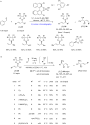


Stereoselective mechanochemical synthesis of thiomalonate Michael adducts via iminium catalysis by chiral primary amines
Beilstein J. Org. Chem. 2024, 20, 2313–2322, doi:10.3762/bjoc.20.198
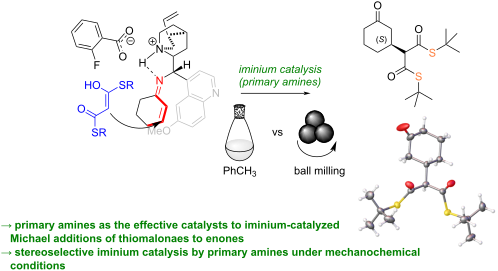
- product with 93% ee after 24 h, while the bifunctional primary amine-thiourea catalysts (system B) required 4 days to provide an adduct with similar enantioselectivity. Prolonged reaction time is in general the innate nature of organocatalytic reactions employing iminium activation approaches. With the
- less documented, they offer prospects for substrate diversification using a more sustainable approach. Efforts to enhance reactivity through nucleophile modifications, such as transitioning from oxoesters to thioesters, show promise in enhancing reaction progress. However, the efficacy of catalysts


Hydrogen-bond activation enables aziridination of unactivated olefins with simple iminoiodinanes
Beilstein J. Org. Chem. 2024, 20, 2305–2312, doi:10.3762/bjoc.20.197
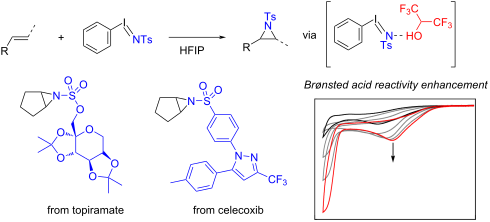
- general, transition metal catalysts are required to effect efficient NGT to unactivated olefins because iminoiodinanes are insufficiently electrophilic to engage in direct aziridination chemistry. Here, we demonstrate that 1,1,1,3,3,3-hexafluoroisopropanol (HFIP) activates N-arylsulfonamide-derived
- catalysts or photochemical procedures have been developed to enable this transformation [7][8][9]. The reactivity of hypervalent iodine reagents can be enhanced via Lewis acid catalysis [10]. For example, PIDA becomes a stronger oxidant upon coordination of BF3·OEt2, enabling chemistry that was not
- Discussion Treatment of cyclohexene (1a) with a stoichiometric amount of simple iminoiodinane such as PhINTs (2a) in CH2Cl2 resulted in <10% conversion to the corresponding N-sulfonylaziridine 3a, which is consistent with the previously reported need for transition metal catalysts to promote nitrene transfer


Catalysing (organo-)catalysis: Trends in the application of machine learning to enantioselective organocatalysis
Beilstein J. Org. Chem. 2024, 20, 2280–2304, doi:10.3762/bjoc.20.196
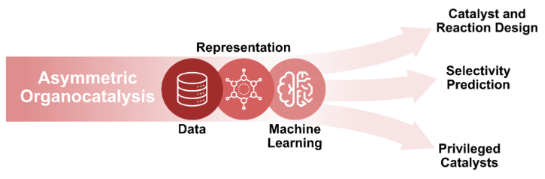
- transformations. Subsequently, we review ML employed for privileged catalysts, before focusing on its application for catalyst and reaction design. Concluding, we give our view on current challenges and future directions for this field, drawing inspiration from the application of ML to other scientific domains
- . Keywords: catalyst design; machine learning; modelling; organocatalysis; selectivity prediction; Introduction Since the beginning of the 21st century, organocatalysts [1] have established themselves as a third group of homogeneous catalysts, next to biocatalysts [2] (enzymes) and transition metal-based
- catalysts [3]. In particular, enantioselective organocatalysis has shown an impressive rise in the last decades, owing to the tunability of catalysts and different modes of activation, enabling a manifold of different transformations [4][5]. The development of the field, driven by many researchers, led to


gem-Difluorination of carbon–carbon triple bonds using Brønsted acid/Bu4NBF4 or electrogenerated acid
Beilstein J. Org. Chem. 2024, 20, 2261–2269, doi:10.3762/bjoc.20.194
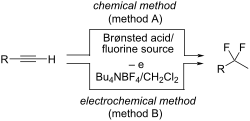
- not directly require the use of hazardous HF reagents and expensive metal catalysts. The simple combination of a Brønsted acid with Bu4NBF4 as the fluorine source as well as a simple electrolysis in Bu4NBF4/CH2Cl2 represent new routes to synthesize CF2-incorporated organic molecules from alkynes



Synthesis and reactivity of the di(9-anthryl)methyl radical
Beilstein J. Org. Chem. 2024, 20, 2254–2260, doi:10.3762/bjoc.20.193
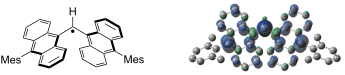
- state yields the monomer radical [16][17][18]. Therefore, aromatic hydrocarbon radicals with Ant units possess both stability and reactivity depending on the conditions, giving them high potential for use as reactive catalysts [22][23] and stimuli-responsive sensors [24][25]. To further investigate this


Heterocycle-guided synthesis of m-hetarylanilines via three-component benzannulation
Beilstein J. Org. Chem. 2024, 20, 2208–2216, doi:10.3762/bjoc.20.188
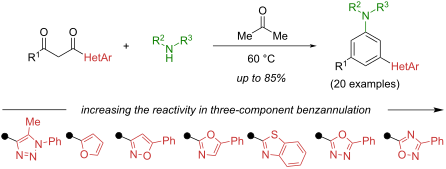
- with aniline resulted in low conversion of 1b even at prolonged reaction times (up to 10 days). The addition of molecular sieves, excess aniline, or acid catalysts did not significantly affect the conversion (Scheme 3). 1,3-Diketones with benzothiazole (1c, σm/σp 0.338/0.390) and oxazole (1d, σm/σp


O,S,Se-containing Biginelli products based on cyclic β-ketosulfone and their postfunctionalization
Beilstein J. Org. Chem. 2024, 20, 2143–2151, doi:10.3762/bjoc.20.184
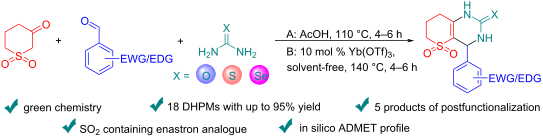
- acidic conditions since such conditions enhance the selectivity, so various catalysts, mainly acidic, were tested for the model Biginelli reaction and the results are shown in Table 1. One of the most effective promoters for this type of reaction is TMSCl [29][30][31] and we also tried to involve TMSCl



Factors influencing the performance of organocatalysts immobilised on solid supports: A review
Beilstein J. Org. Chem. 2024, 20, 2129–2142, doi:10.3762/bjoc.20.183
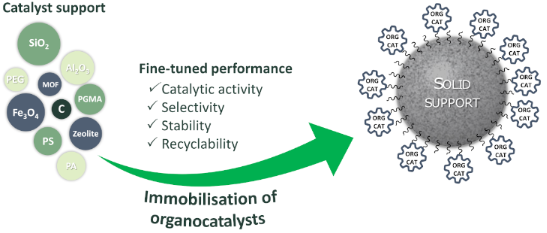
- their place among the efficient and robust catalysts on numerous occasions since the two seminal works [1][2] published in 2000. Since then, organocatalysis has been combined with many other areas of research, such as photocatalysis, electrochemistry and mechanochemistry [3][4][5], while List and
- and an environmental perspective. An efficient catalytic process is characterised by the fact that the catalyst can be easily and, if possible, completely separated from the reaction mixture. Catalysts can be classified into homogeneous and heterogeneous catalysts. In homogeneous catalysis, the
- fine chemical and pharmaceutical industries [9]. The limitation of homogeneous catalysts, however, is their complex, time-consuming and energy-intensive recovery and subsequent recycling. Therefore, synthetic modification of catalysts is a commonly used method to aid their recovery. Obstacles to the


Efficacy of radical reactions of isocyanides with heteroatom radicals in organic synthesis
Beilstein J. Org. Chem. 2024, 20, 2114–2128, doi:10.3762/bjoc.20.182
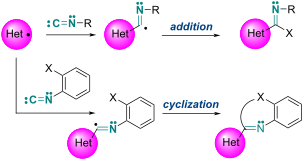
- conditions (as mentiond above), they worked well for the photoinduced radical cyclization of o-diisocyanoarenes (Scheme 18d) [39]. The obtained quinoxaline-2,3-diphosphines 28 are promising ligands for transition metal catalysts such as palladium catalysts. Aza-Bergman cyclization of o-alkynylaryl


Cage-like microstructures via sequential Ugi reactions in aqueous emulsions
Beilstein J. Org. Chem. 2024, 20, 2078–2083, doi:10.3762/bjoc.20.179
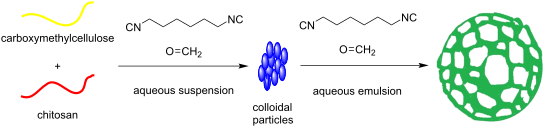
- colloidosomes is the presence of pores, the sizes of which depend on the parameters of the original colloidal particles and the synthetic method [6]. Pores provide controlled permeability of these structures and open up rich opportunities for practical uses as catalysts, sorbents, and carriers of medicinal
- materials have potential to be used as catalysts and sorbents. Further, these materials may be obtained in significant quantities since the method for the production is simple and does not include stages that are difficult to scale up. Thus, the method we have proposed has good prospects for practical


Multicomponent syntheses of pyrazoles via (3 + 2)-cyclocondensation and (3 + 2)-cycloaddition key steps
Beilstein J. Org. Chem. 2024, 20, 2024–2077, doi:10.3762/bjoc.20.178

- the method. Starting from dialdehydes, bridged pyrazoles are accessible. However, one limitation of this strategy is the inability to use aliphatic aldehydes. Various modifications of the transformation using these substrates have been reported, where catalysts and/or conditions are varied. The one
- solvents (DES) [83]. Catalysis can also be achieved using molecular iodine [84], AlCl3 [85], sodium ascorbate [86], and even solid-state and nanoparticle-mediated catalysts like CuO/ZrO2 [87], Fe3O4@Si@MoO2 [88], caspacin-cyclodextrin functionalized magnetite nanoparticles (CPS CD) [89], and Mg-Fe
- hydrolactite catalysts (C-Mg-Al HAT-3) [90]. With β-ketoesters, the method can be extended to a four-component synthesis. Initially, β-ketoesters react with hydrazine to form pyrazolones, while a Knoevenagel reaction between malononitrile and aldehyde simultaneously generates a Michael system. Both




Diastereoselective synthesis of highly substituted cyclohexanones and tetrahydrochromene-4-ones via conjugate addition of curcumins to arylidenemalonates
Beilstein J. Org. Chem. 2024, 20, 2016–2023, doi:10.3762/bjoc.20.177
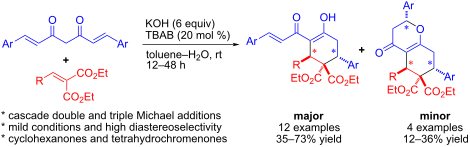
- KOH using TBAB as a suitable phase transfer catalyst in a biphasic medium at room temperature. The scalability of the reaction has also been demonstrated. Our future efforts will involve performing an asymmetric version of this reaction using chiral phase-transfer catalysts and the results will be


1,2-Difluoroethylene (HFO-1132): synthesis and chemistry
Beilstein J. Org. Chem. 2024, 20, 1955–1966, doi:10.3762/bjoc.20.171

- -based catalysts (Fe, Mg, Ca, Ni, Zn, Pd, Li, Na [57] or Pd, Ru [61]). Unsaturated compounds were also applied as starting materials for 1,2-difluoroethylene preparation. Thus, chlorine atoms in 1,2-dichloro-1,2-difluoroethylene (CFO-1112) could be removed through the action of hydrogen and metal


Negishi-coupling-enabled synthesis of α-heteroaryl-α-amino acid building blocks for DNA-encoded chemical library applications
Beilstein J. Org. Chem. 2024, 20, 1922–1932, doi:10.3762/bjoc.20.168
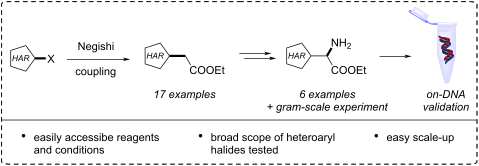
- overall applicability. A different approach for the synthesis of α-amino acids involves the formation of dehydroamino acids and subsequent hydrogenation [13][14]. More recently, there have been reports of techniques that utilize phase transfer catalysts (PTCs) to alkylate glycine derivatives [15][16]. A


Solvent-dependent chemoselective synthesis of different isoquinolinones mediated by the hypervalent iodine(III) reagent PISA
Beilstein J. Org. Chem. 2024, 20, 1914–1921, doi:10.3762/bjoc.20.167
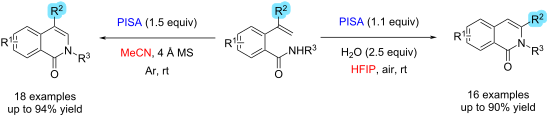
- metal reagents, including cobalt [10], copper [11], rhodium [12][13][14], palladium [15][16][17], silver [18], and gold [19] catalysts, have been reported. However, compared to the widespread use of metal catalysts, the synthesis of isoquinolinone scaffolds mediated by environmentally friendly




Access to 2-oxoazetidine-3-carboxylic acid derivatives via thermal microwave-assisted Wolff rearrangement of 3-diazotetramic acids in the presence of nucleophiles
Beilstein J. Org. Chem. 2024, 20, 1894–1899, doi:10.3762/bjoc.20.164

- diazomonomalonamides under the action of various catalysts which is a very efficient method for preparing β-lactam esters [22][23][24][25]. At the same time, from the point of view of easy variation of the substituent in the exocyclic acyl group (RX), a method allowing the introduction of this moiety at the last step


The Groebke–Blackburn–Bienaymé reaction in its maturity: innovation and improvements since its 21st birthday (2019–2023)
Beilstein J. Org. Chem. 2024, 20, 1839–1879, doi:10.3762/bjoc.20.162
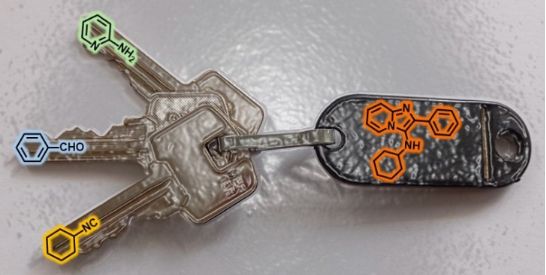
- , however, GBB has different features, either advantageous or not. Certainly, the most negative aspect of the GBB reaction is that, compared with the others, it usually requires more drastic reaction conditions. For this reason, many studies have been carried out aimed at the discovery of new catalysts to
- that time, along with some 30 solvents. The most widely used conditions, however, remained those originally discovered by Groebke, Blackburn and Bienaymé, namely the use of Sc(OTf)3, perchloric acid or p-toluenesulfonic acid as catalysts, and methanol, ethanol or toluene as solvents, or under solvent
- -free conditions. Although some new metal or Brønsted acid catalysts have been reported in the last few years, the main innovations can be found in the use of organic catalysts, enzymes, and compartmentations. A few reports on the in situ generation of reactants and on the reaction conducted under flow






A facile three-component route to powerful 5-aryldeazaalloxazine photocatalysts
Beilstein J. Org. Chem. 2024, 20, 1831–1838, doi:10.3762/bjoc.20.161
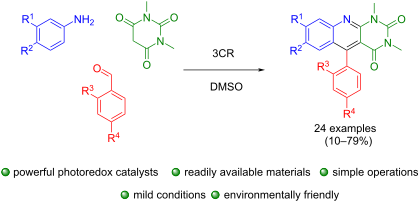
- bearing electron-donating or halogen groups. This practical method is characterised by atom economy and offers a direct route to the introduction of an aryl moiety into the C(5)-position of deazaalloxazines, thereby generating novel catalysts for photoredox catalysis without the need for subsequent
- vary from low to moderate, the reaction starts from commercially available substances and leads to valuable compounds. The procedure is low cost and operationally easy with no need for further purification and opens a new route to the synthesis of powerful, phoredox, flavin-like catalysts, as well as




Hetero-polycyclic aromatic systems: A data-driven investigation of structure–property relationships
Beilstein J. Org. Chem. 2024, 20, 1817–1830, doi:10.3762/bjoc.20.160
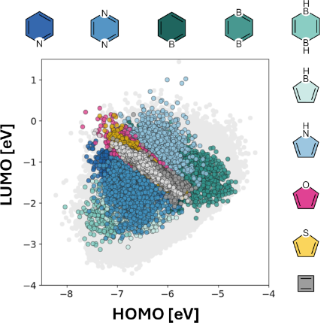
- from ligands for catalysts [2], through pharmaceuticals [3], to organic semiconductors [4][5]. Despite their fundamental and applicative importance to many fields, the vast chemical space of PASs has remained largely unexplored. As a result, the relationships between the arrangement and composition of


Chiral bifunctional sulfide-catalyzed enantioselective bromolactonizations of α- and β-substituted 5-hexenoic acids
Beilstein J. Org. Chem. 2024, 20, 1794–1799, doi:10.3762/bjoc.20.158
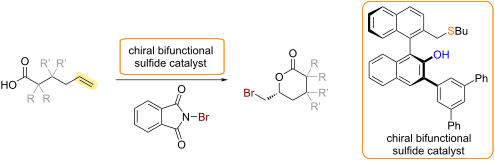
- ; enantioselectivity; halogenation; lactones; organocatalysis; Introduction Catalytic asymmetric halolactonizations of alkenoic acids are powerful methods for the preparation of important chiral lactones in enantioenriched forms [1][2][3][4][5][6][7][8][9][10][11]. A wide variety of chiral catalysts have been applied
- remained a formidable challenge in the field of catalytic asymmetric synthesis (Scheme 1b) [23][24][25]. To address this limitation, we have investigated the use of BINOL-derived chiral bifunctional sulfide catalysts, which were developed by our group [10], in asymmetric bromolactonizations of α
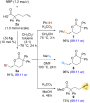
- bifunctional sulfide (S)-1 [26][27][28][29][30][31]. To further demonstrate the utility of our chiral bifunctional sulfide catalysts in challenging halolactonizations, we next turned our attention to the asymmetric bromolactonizations of 5-hexenoic acid derivatives 2 for the synthesis of optically active δ


Chemo-enzymatic total synthesis: current approaches toward the integration of chemical and enzymatic transformations
Beilstein J. Org. Chem. 2024, 20, 1693–1712, doi:10.3762/bjoc.20.151
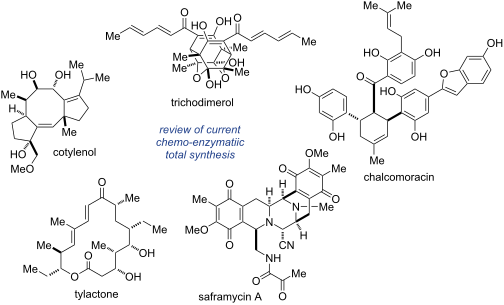
- through directed evolution [11]. P450 catalysis during the oxidation phase enabled the total synthesis of mitrephorone A [12], chevalone A [13], polysin [14], excolide B [15], and gedunin [16]. Fe(II)/2OG-dependent dioxygenases, such as FtmOx1, were employed as versatile catalysts in the synthesis of 13
- novel paradigm for exploiting the inherent specificity and efficiency of enzymatic catalysts within synthetic sequences. The integration of designed substrate analogs that can be transformed by promiscuous enzymes provides a versatile synthetic platform towards natural products and their derivatives. In