Search results
Search for "catalyzed" in Full Text gives 1870 result(s) in Beilstein Journal of Organic Chemistry. Showing first 200.
Emerging trends in the optimization of organic synthesis through high-throughput tools and machine learning
Beilstein J. Org. Chem. 2025, 21, 10–38, doi:10.3762/bjoc.21.3
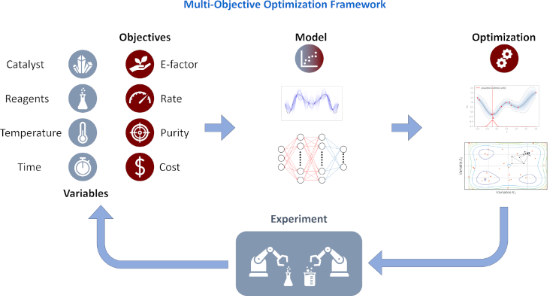
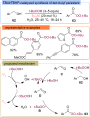
- stirred tank reactor (CSTR) cascade. The platform allowed to showcase the autonomous optimization to find the ideal reaction conditions for Suzuki–Miyaura and photoredox-catalyzed coupling reactions. A plug-and-play, continuous-flow chemical synthesis system (Figure 6a) was intelligently designed by
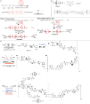
- convenient methodology for global optimization, eliminating the necessity of a theoretical model. A reconfigurable automated flow platform integrating online HPLC monitoring was used for the cobalt-catalyzed aerobic oxidative dimerization of desmethoxycarpacine (6) to carpanone (7) in the presence of oxygen


Synthesis, structure and π-expansion of tris(4,5-dehydro-2,3:6,7-dibenzotropone)
Beilstein J. Org. Chem. 2025, 21, 1–7, doi:10.3762/bjoc.21.1
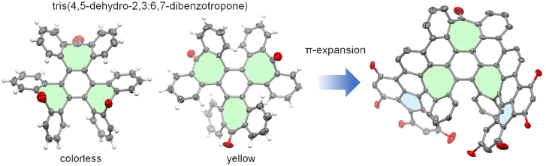
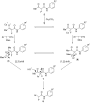
- graphite [22]. It was earlier prepared in Ar matrices [23] or via demetallation of a platinum complex of 4,5-dehydro-2,3:6,7-dibenzotropone [1]. More recently, compound 1 was prepared via Pd-catalyzed cyclotrimerization of 4-bromo-2,3:6,7-dibenzotropone (4 in Scheme 1) [22]. Herein we report an alternative


Synthesis of acenaphthylene-fused heteroarenes and polyoxygenated benzo[j]fluoranthenes via a Pd-catalyzed Suzuki–Miyaura/C–H arylation cascade
Beilstein J. Org. Chem. 2024, 20, 3290–3298, doi:10.3762/bjoc.20.273
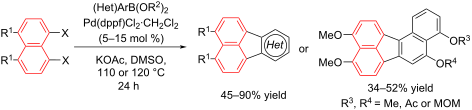
- , Ankara 06800, Türkiye 10.3762/bjoc.20.273 Abstract Acenaphthylene-fused heteroarenes with a variety of five- and six-membered heterocycles such as thiophene, furan, benzofuran, pyrazole, pyridine and pyrimidine were synthesized via an efficient Pd-catalyzed reaction cascade in good to high yields (45–90
- -catalyzed annulation reaction between bromo-chloronaphthalene dicarboximides 6 and heteroarylboronic esters that enabled the syntheses of acenaphthylene-fused thiophene and indole derivatives 7 having donor-acceptor units (Scheme 1a) [40]. In 2021, Jin and co-workers developed an elegant Pd-catalyzed
- reaction cascade starting from diarylalkynes 8, which involves indole formation/peri-C–H annulation and N-dealkylation reactions to afford acenaphthylene-fused indole products 9 (Scheme 1b) [41]. Recently, Takeuchi and co-workers reported an effective Ir-catalyzed [2 + 2 + 2] cycloaddition between 1,8


Giese-type alkylation of dehydroalanine derivatives via silane-mediated alkyl bromide activation
Beilstein J. Org. Chem. 2024, 20, 3274–3280, doi:10.3762/bjoc.20.271
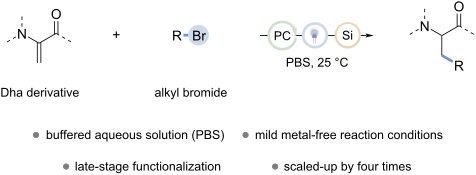
- modification potential by means of polar, metal-, or organo-catalyzed and radical additions [29][30][31][32][33][34][35][36]. As such, Dha derivatives make an excellent candidate for exploring a photochemical Giese-type reaction [37]. To foster a physiological reaction environment, reactions can be conducted



Efficient synthesis of fluorinated triphenylenes with enhanced arene–perfluoroarene interactions in columnar mesophases
Beilstein J. Org. Chem. 2024, 20, 3263–3273, doi:10.3762/bjoc.20.270
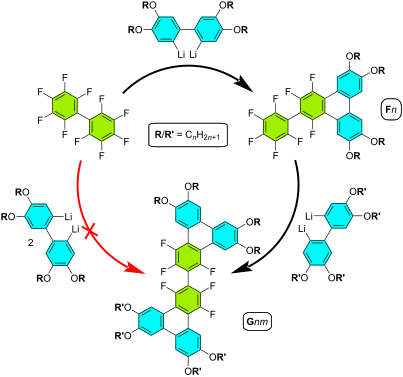
- commercial perfluoroarene chemical blocks and reagents, involving catalyzed C–F-bond activation and cross-coupling reactions, usually requiring precious transition-metal catalysts and tedious synthetic routes [28][29][30][31][32][33][34]. Therefore, low-cost and facile synthetic strategies are desired to




Intramolecular C–H arylation of pyridine derivatives with a palladium catalyst for the synthesis of multiply fused heteroaromatic compounds
Beilstein J. Org. Chem. 2024, 20, 3256–3262, doi:10.3762/bjoc.20.269
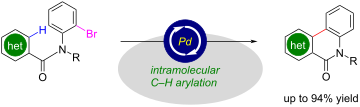
- ; phosphine ligand; pyridine amides; Introduction Transition-metal-catalyzed synthetic reactions have recently attracted much attention in synthetic organic chemistry [1][2]. C–H Arylation reactions catalyzed by a transition metal are of particular interest because these reactions involve rather superior
- fused structure toward a phenanthroline diamide (Phen-2,9-diamide) [23] can be achieved by employing a palladium-catalyzed intramolecular C–H arylation [24][25][26][27][28]. One of the thus obtained products exhibited a remarkable extraction performance for a lanthanide ion, in which a metal-specific
- of the palladium-catalyzed C–H arylation of phenanthroline to other nitrogen-containing heteroaromatic compounds. It is therefore intriguing to demonstrate the advantage of the palladium-catalyzed intramolecular C–H arylation compared to other protocols for the construction of related ring structures


Non-covalent organocatalyzed enantioselective cyclization reactions of α,β-unsaturated imines
Beilstein J. Org. Chem. 2024, 20, 3221–3255, doi:10.3762/bjoc.20.268
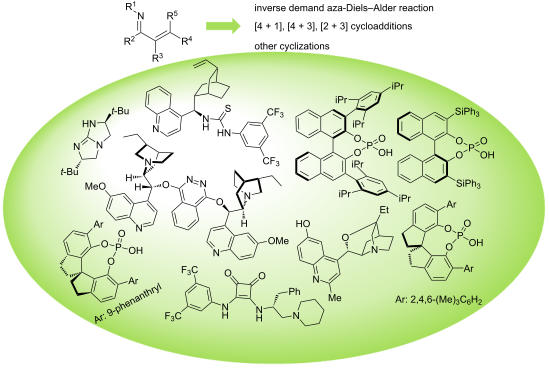
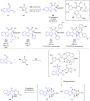
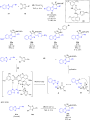
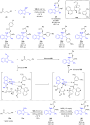
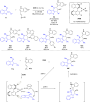
- -heterocycles using various catalytic systems such as chiral metal catalysts, chiral Lewis acids or chiral organocatalysts. This review presents an overview of the recent advances in enantioselective cyclization reactions of 1-azadienes catalyzed by non-covalent organocatalysts. Keywords: α,β-unsaturated
- cyclic derivatives. Conjugated imines are usually synthesized from the corresponding carbonyl precursors by reaction with a sulfonamide in the presence of Lewis acids and a dehydrating agent such as molecular sieves [3]. Also, recently a palladium-catalyzed dehydrogenation of aliphatic imines was
- are employed to promote HOMO-raising and LUMO-lowering of both reactants leading to an enantioselective transformation. In this section, cyclization reactions of α,β-unsaturated imines catalyzed by hydrogen-bond donors, including bifunctional thioureas and squaramides bearing a Brønsted base moiety in









Synthesis of 2H-azirine-2,2-dicarboxylic acids and their derivatives
Beilstein J. Org. Chem. 2024, 20, 3191–3197, doi:10.3762/bjoc.20.264
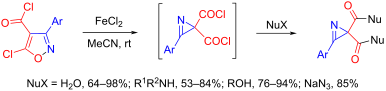
- their amides, esters, and azides by FeCl2-catalyzed isomerization of 3-aryl-5-chloroisoxazole-4-carbonyl chlorides into 3-aryl-2H-azirine-2,2-dicarbonyl dichlorides followed by their reaction with nucleophiles are reported. Two approaches to the preparation of 3-aryl-5-chloroisoxazole-4-carbonyl
- -azirine-2,2-dicarboxylic acid derivative, dimethyl 3-phenyl-2H-azirine-2,2-dicarboxylate, has been reported to date. This compound was prepared by a Rh2(Piv)4-catalyzed isomerization of methyl 5-methoxy-3-phenylisoxazole-4-carboxylate [19]. The described linear synthesis, unfortunately, allows obtaining
- reaction sequences for the synthesis of 3-aryl-5-chloroisoxazole-4-carbonyl chlorides have been developed. These compounds are convenient precursors for the preparation of 2H-azirine-2,2-dicarboxylic acids and their derivatives such as amides, esters and azides, via an Fe(II)-catalyzed room temperature




Synthesis of extended fluorinated tripeptides based on the tetrahydropyridazine scaffold
Beilstein J. Org. Chem. 2024, 20, 3174–3181, doi:10.3762/bjoc.20.262
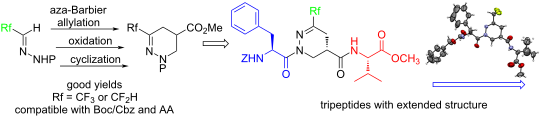
- synthesis of tripeptides incorporating new fluorinated heterocyclic hydrazino acids, based on the tetrahydropyridazine scaffold is described. Starting from simple fluorinated hydrazones, these non-proteinogenic cyclic β-amino acids were easily prepared by a zinc-catalyzed aza-Barbier reaction followed by an
- , Tomilov et al. described the formation of tetrahydropyridazine 3,4,5,6-tetracarboxylic esters in 42% yield upon the decomposition in chloroform at 60 °C of methyl diazoacetate in the presence of pyridine and catalyzed by rhodium(II) acetate (Scheme 1b) [24][25]. More recently, an unusual [4 + 2
- on an intramolecular Michael addition carried out in DMF and catalyzed by 10% of potassium carbonate. As previously observed [37], under these conditions, the 5-endo-trig cyclization was selective and the lactam resulting from the 5-exo-trig cyclization was not observed. Furthermore, in the case of


Multicomponent reactions driving the discovery and optimization of agents targeting central nervous system pathologies
Beilstein J. Org. Chem. 2024, 20, 3151–3173, doi:10.3762/bjoc.20.261
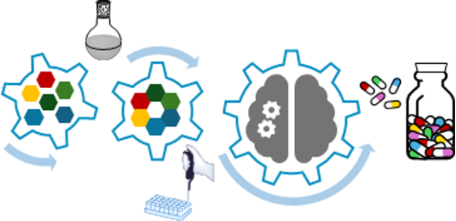
- strategic approach allows precise control of the stereogenic centers at the C3-position during cyclization (Scheme 16). Ugi-4CR/metal-catalyzed reaction: The fusion of MCRs with cross-coupling reactions represents an attractive approach as a result of the increased intricacy and effectiveness [62]. Moreover


Advances in the use of metal-free tetrapyrrolic macrocycles as catalysts
Beilstein J. Org. Chem. 2024, 20, 3085–3112, doi:10.3762/bjoc.20.257
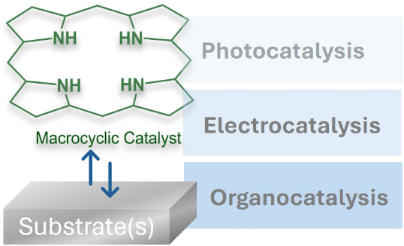
- -catalyzed aziridination of styrene (22) by chloramine-T (23, NaCl=NTs) as a source of nitrene in acetonitrile (Figure 5) [40]. No aziridine product was formed either without any source of copper or in the presence of a different copper salt, such as CuCl, CuCl2·2H2O, or CuOTf. Calix[4]pyrrole itself is
- catalysis of Diels–Alder reaction in aqueous environment catalyzed by TPPS3 53 supramolecular aggregates [67]. The Diels–Alder reaction between cinnamaldehyde (55) and cyclopentadiene (56) proceeds via iminium activation by the zwitterionic hetero-aggregates derived from TPPS3 molecules 53 and a cyclic
- combination of computational and experimental methods to study the electrocatalytic activity of the hydrogen evolution reaction (HER) catalyzed by free base 5,10,15-tris(pentafluorophenyl)corrole (98) [112]. Their work showed that using p-toluenesulfonic acid as the proton source, 98 was able to produce


Synthesis of the 1,5-disubstituted tetrazole-methanesulfonylindole hybrid system via high-order multicomponent reaction
Beilstein J. Org. Chem. 2024, 20, 3077–3084, doi:10.3762/bjoc.20.256
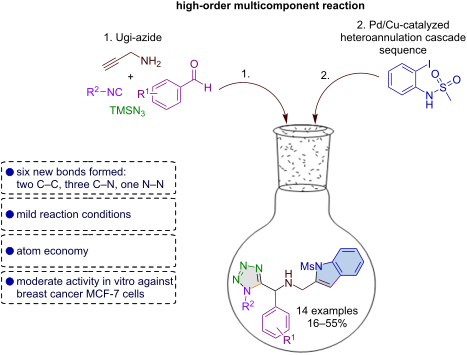
- , 98160, México 10.3762/bjoc.20.256 Abstract A series of 1,5-disubstituted tetrazole-indole hybrids were synthesized via a high-order multicomponent reaction consisting of an Ugi-azide/Pd/Cu-catalyzed hetero-annulation cascade sequence. This operationally simple one-pot protocol allowed high bond-forming
- -indole system 10, in a two-step reaction: Ugi-azide followed by a cyclization reaction catalyzed by AuCl3, in good to high yields [21]. In 2019, Salahi et al. synthesized the series of tetrazole-indoles 15 via an Ugi-azide reaction in moderate to high yields [22]. It is noteworthy that none of the
- synthesis of a novel bis-heterocyclic hybrid, 1,5-disubstituted-tetrazole-indoles. The compounds were achieved through a high-order multicomponent reaction consisting of two sequential processes: an Ugi-azide reaction and a further Pd/Cu-catalyzed heteroannulation (Scheme 1d). Results and Discussion Our



Enantioselective regiospecific addition of propargyltrichlorosilane to aldehydes catalyzed by biisoquinoline N,N’-dioxide
Beilstein J. Org. Chem. 2024, 20, 3069–3076, doi:10.3762/bjoc.20.255
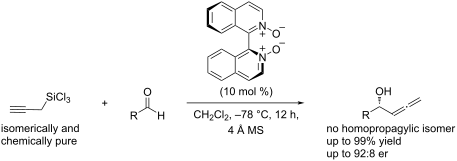
- ][34]. In sharp contrast, propargyltrichlorosilane is configurationally stable and only reacts through the SE2’ mechanism under Lewis base-catalyzed conditions [43][44][45], although it was reported that distillation of propargyltrichlorosilane substantially isomerizes it to the thermodynamically more
- pure propargyltrichlorosilane, it clearly demonstrated that this class of chiral Lewis bases regiospecifically catalyzed the addition of propargyltrichlorosilane to aldehydes, and that these catalysts did not induce the propargyl–allenyl metallotropic rearrangement albeit activating the C–Si bond. Thus
- study, Hoveyda and co-workers proposed a similar mechanism for the isomerization of alkynes to allenes catalyzed by 1,8-diazabicyclo[5.4.0]undec-7-ene [61]. Conclusion In this study, we prepared distilled propargyltrichlorosilane with >99% isomeric purity for the first time, developed its asymmetric


Chemical structure metagenomics of microbial natural products: surveying nonribosomal peptides and beyond
Beilstein J. Org. Chem. 2024, 20, 3050–3060, doi:10.3762/bjoc.20.253

- ) throughout biosynthesis (Figure 5a). The NRP intermediate is passed from one module to the next as BBs are incorporated one at a time into this growing peptide chain. The very last step in NRP biosynthesis – offloading the final product from the enzymatic assembly line – is usually catalyzed by the
- thioesterase (TE) domain and determines the topology of the final NRP product. The TE may release the NRP as a linear peptide or cyclic peptide, and the latter further manifests many possible topologies (Figure 5b). In a nutshell, offloading is a TE-catalyzed nucleophilic attack to release an NRP from the
- NRP is released from the enzymatic assembly line via a thioesterase (TE)-catalyzed nucleophilic attack. Depending on the nature of the nucleophile, this reaction may generate distinct NRP topologies and the five most common types are shown above. b) Cartoon illustration of the five most common NRP


Cyclodextrin-based rotaxanes for polymer materials: challenge on simultaneous realization of inexpensive production and defined structures
Beilstein J. Org. Chem. 2024, 20, 3026–3049, doi:10.3762/bjoc.20.252
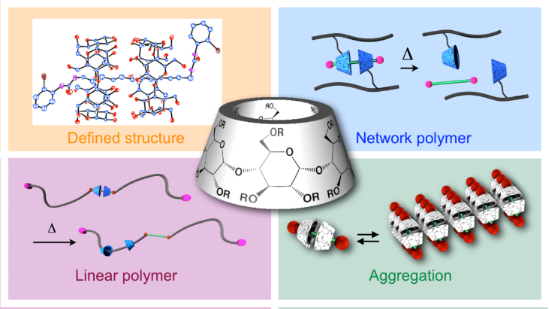
- substitution/addition reactions became the standard for end-capping reactions, although a transition metal–catalyzed cross-coupling reaction has also been used to synthesize CD-based rotaxane. Typically, water-soluble components are prepared, after which the Suzuki coupling reaction in water is used to
- into the polymer system, further modification and structural analyses were performed [48][74]. The axle end was easily modified by bromination of the benzene ring and successive transition metal–catalyzed cross-coupling reaction, such as Suzuki or Sonogashira coupling (Figure 10A). Furthermore, the






Advances in radical peroxidation with hydroperoxides
Beilstein J. Org. Chem. 2024, 20, 2959–3006, doi:10.3762/bjoc.20.249
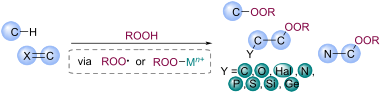
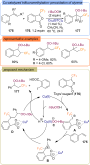
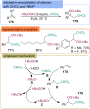
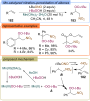
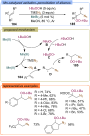
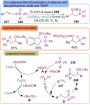
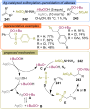
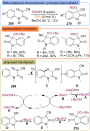
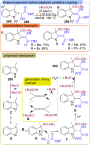
- mainly include: nucleophilic addition or nucleophilic substitution with H2O2 or ROOH [17][18], autoxidation with O2, pericyclic reactions of unsaturated bonds with O3 or O2, and metal-catalyzed peroxidation (Isayama–Mukaiyama hydrosilylperoxidation [19][20], for example) [21][22][23]. As the topic is
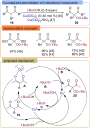
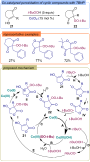
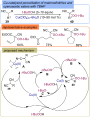
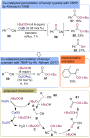
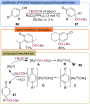
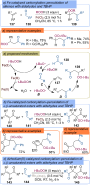
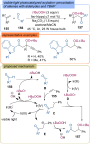
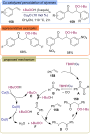
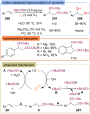
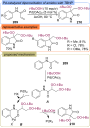
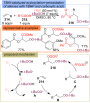
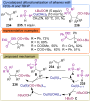
- broad, the present review mainly focused on radical and metal-catalyzed functionalization of C–H bonds or unsaturated bond with hydroperoxides (Scheme 2). The aim of this review is to cover recent studies in which alkylperoxy radicals have been used for the peroxidation of C(sp3) and C(sp2) sites
- in Kwon’s review [34]. Cu-catalyzed oxygen atom transfer with TBHP were discussed in the review [35]. The review by Xiao considered visible light-driven C–C bond cleavage enabled with organic peroxides [36]. This comprehensive review summarizes all ever published studies on radical peroxidation with































Recent advances in transition-metal-free arylation reactions involving hypervalent iodine salts
Beilstein J. Org. Chem. 2024, 20, 2891–2920, doi:10.3762/bjoc.20.243

- overview of arylation of carbon and heteroatom substrates via diaryliodonium salts in metal-free conditions. This review emphasizes the significance and potential of DIASs in contemporary organic chemistry. Review C-Arylation Over the past decade, there has been a surge of interest in metal-catalyzed C
- -arylations utilizing diaryliodonium salts, marked by significant contributions, notably from research teams led by Sanford [53] and Gaunt [54]. The synthesis of carbon–carbon bonds through metal-free approaches serves as a valuable complement to transition-metal-catalyzed couplings. This is particularly
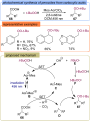
- products. The radical path was considered for the reaction mechanism as on adding TEMPO as radical scavenger the radical trapping adduct was detected by HRMS. Simultaneously with the above work, Murarka and co-workers also reported an organophotoredox-catalyzed stereoselective allylic arylation method for




C–H Trifluoromethylthiolation of aldehyde hydrazones
Beilstein J. Org. Chem. 2024, 20, 2883–2890, doi:10.3762/bjoc.20.242
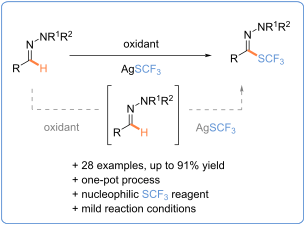
- various transformations [54][55][56][57][58][59][60][61][62][63][64]. In consequence, a large number of transition-metal-catalyzed or radical-mediated processes for C–H functionalization of aldehyde hydrazones has flourished over the years. An ideal scenario for a direct and sustainable synthetic route


C–C Coupling in sterically demanding porphyrin environments
Beilstein J. Org. Chem. 2024, 20, 2784–2798, doi:10.3762/bjoc.20.234
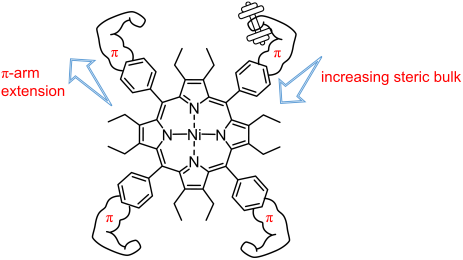
- acids. We report on palladium-catalyzed coupling attempts on the ortho-, meta-, and para-meso-phenyl position of sterically demanding dodecasubstituted saddle-shaped porphyrins. While para- and meta-substitutions could be achieved, ortho-functionalization in these systems remains elusive. Furthermore


Copper-catalyzed yne-allylic substitutions: concept and recent developments
Beilstein J. Org. Chem. 2024, 20, 2739–2775, doi:10.3762/bjoc.20.232
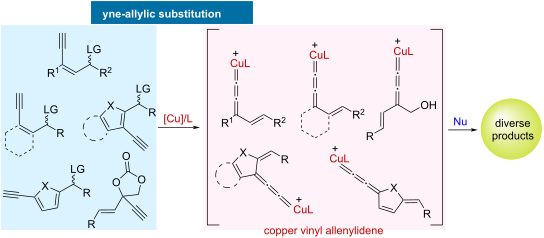
- expand the scope of transition metal-catalyzed substitution reactions. Since its discovery in 2022, copper-catalyzed yne-allylic substitution has undergone rapid development and significant progress has been made using the key copper vinyl allenylidene intermediates. This review summarizes the
- -abundant, inexpensive, relatively stable, and low toxic. Copper-catalyzed asymmetric allylic [1][2][3][4][5][6][7][8][9][10][11][12][13][14][15][16][17][18][19][20][21][22] and propargylic [23][24][25][26][27][28][29][30][31][32] substitutions are effective strategies for constructing new C–C and C
- –heteroatom bonds vicinal to alkenyl or alkynyl groups, which are highly valuable for downstream synthesis. At present, unstabilized nucleophiles [33][34][35][36][37][38][39][40][41][42][43][44][45][46][47][48][49][50][51] are commonly used in Cu-catalyzed allylic substitutions because of the inner-sphere


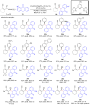


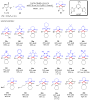


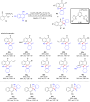


Synthesis of spiroindolenines through a one-pot multistep process mediated by visible light
Beilstein J. Org. Chem. 2024, 20, 2722–2731, doi:10.3762/bjoc.20.230
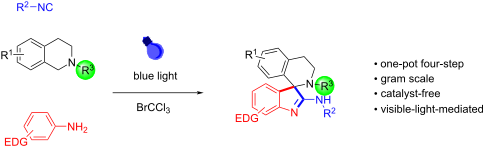
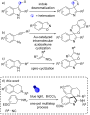
- -catalyzed protocol to obtain spiro[benzo[e][1,3]oxazine-2,3’-indoles] starting from 2-alkynylphenyl azides and 1,2-benzisoxazoles [12] (Scheme 1b). However, all these processes generally involve the preparation of starting materials, often not trivial. On the other hand, in 2018 Aksenov and Rubin reported
- the acid-catalyzed [4 + 1] cycloaddition of commercially available substrates, as indoles and nitroalkenes to give spiro-isoxazoles (Scheme 1c), but acceptable yields were obtained just using nitrostyrenes [13][14]. Despite these examples, the highly efficient construction of structurally diverse





5th International Symposium on Synthesis and Catalysis (ISySyCat2023)
Beilstein J. Org. Chem. 2024, 20, 2704–2707, doi:10.3762/bjoc.20.227
- performance. In their contribution “Metal-catalyzed coupling/carbonylative cyclizations for accessing dibenzodiazepinones: an expedient route to clozapine and other drugs”, Moutayakine and Burke described a new synthetic route for the synthesis of 10,11-dihydro-5H-dibenzo[b,e][1,4]diazepinone (DBDAP
- ) derivatives, which possess recognized pharmacological properties [12]. They used sequential reactions catalyzed by palladium and copper. The process involves an initial amination, which can be carried out via either the Buchwald–Hartwig or the Chan–Lam reaction, followed by a palladium-catalyzed
- -dihydro[1,3]thiazolo[4,5-b]pyridine derivatives that exhibited strong herbicidal activity against commercially significant grass weeds in preemergence greenhouse tests. The synthetic route for this new family of compounds was developed and optimized, involving several reaction steps, included Pd-catalyzed

Transition-metal-free decarbonylation–oxidation of 3-arylbenzofuran-2(3H)-ones: access to 2-hydroxybenzophenones
Beilstein J. Org. Chem. 2024, 20, 2655–2667, doi:10.3762/bjoc.20.223
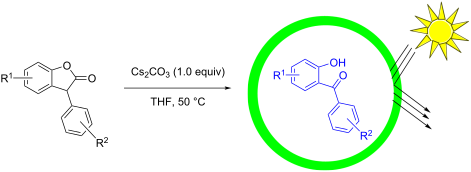
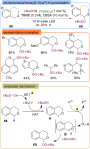
- -hydroxybenzophenones are conventionally prepared via Fries rearrangement of a phenyl ester [10]. Organocatalytic methods have also been reported for the synthesis of 2-hydroxybenzophenones [11]. In addition, several metal-mediated methods for their synthesis have been reported. For example, the Rh-catalyzed
- rearrangement of 2-aryloxybenzaldehydes yielded 2-hydroxybenzophenone [12]. Pd-catalyzed o-hydroxylation of benzophenones gave moderate yield of the title compound, and Br-substituted substrates were found to be not compatible with this method [13]. Various metals (Rh, Cu, Ir etc.) were applied to catalyze the
- oxidative coupling of salicylaldehyde with arylboronic acids to successfully produce 2-hydroxybenzophenones [14]. Recently, a Ni-catalyzed decarbonylation–oxidation of 3-arylbenzofuran-2(3H)-ones emerged as an innovative route to access 2-hydroxybenzophenones [2]. The use of transition metals poses




Efficient modification of peroxydisulfate oxidation reactions of nitrogen-containing heterocycles 6-methyluracil and pyridine
Beilstein J. Org. Chem. 2024, 20, 2599–2607, doi:10.3762/bjoc.20.219
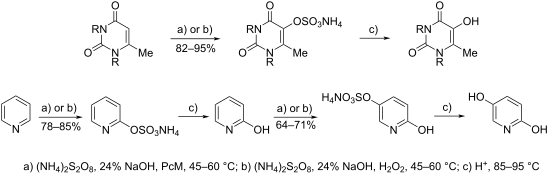
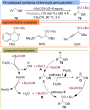
- the amino group is involved in the formation of an intermediate hydroxylamine derivative. Scheme 3 demonstrates a possible reaction mechanism using the example of the peroxydisulfate oxidation of MU and TMU catalyzed by PcM. It is proposed that PcM provides the necessary polarization of peroxydi(mono


Synthesis and cytotoxicity studies of novel N-arylbenzo[h]quinazolin-2-amines
Beilstein J. Org. Chem. 2024, 20, 2592–2598, doi:10.3762/bjoc.20.218
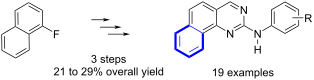
- should allow us to introduce the molecular diversity on the anilino moiety in the last step through a palladium-catalyzed reaction (Scheme 1). Therefore, we prepared first the core structure 3 in two steps from the commercially available fluoronaphthalene 1. Metallation, followed by trapping with DMF