Search results
Search for "intermediate" in Full Text gives 2228 result(s) in Beilstein Journal of Organic Chemistry. Showing first 200.
Sequential two-step, one-pot microwave-assisted Urech synthesis of 5-monosubstituted hydantoins from L-amino acids in water
Beilstein J. Org. Chem. 2025, 21, 596–600, doi:10.3762/bjoc.21.46
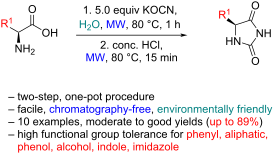
- antibacterial [1], antiviral [2], anticancer [3], anti-inflammatory [4], and anticonvulsant [5]. Hydantoins were traditionally accessed from amino acids by conversion to urea derivatives followed by cyclization (Urech reaction) or from carbonyl compounds through the cyanohydrin intermediate (Bucherer–Bergs) [6
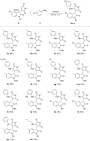
- to give hydantoin H2a with an overall yield of 89%, which indicated complete conversion of the intermediate to the product. Encouraged by the result of the one-pot procedure, we tested the method with amino acids carrying different functional groups on the side chains (Figure 1). Phenol (H2b


Formaldehyde surrogates in multicomponent reactions
Beilstein J. Org. Chem. 2025, 21, 564–595, doi:10.3762/bjoc.21.45
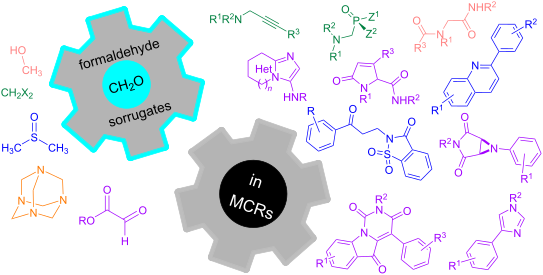
- conversion of DMSO to MMS, a wide range of 4-arylquinolines can be synthesized (Scheme 8, path I) [24]. In this reaction, the persulfate ion generates the thionium ion (MMS), which is trapped by a nucleophilic aniline. The loss of methyl sulfide generates an imine intermediate B, which, in turn, reacts with
- first reacts with the aniline under cobalt(III) catalysis, and the resulting intermediate C then attacks the thionium ion A. Quinolines of general structure II are formed after the loss of methyl sulfide from intermediate D, followed by final cyclization of intermediate E (Scheme 8, path II
- ). Additionally, the Tiwari group developed a metal-free protocol using only K2S2O8 as an oxidant for the activation of DMSO to MMS (Scheme 8, path II) [38]. Under these conditions, an alternative mechanism arises in which the imine intermediate B, formed as previously stated through reaction between the aniline


Study of the interaction of 2H-furo[3,2-b]pyran-2-ones with nitrogen-containing nucleophiles
Beilstein J. Org. Chem. 2025, 21, 556–563, doi:10.3762/bjoc.21.44
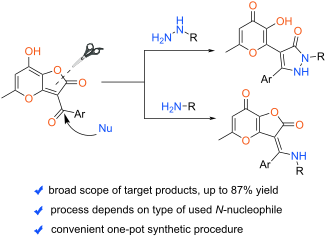
- isolation of intermediate salt 3a. Indeed, the reflux of starting compound 1a with amine 2a in AcOH for 24 h led to formation of product 4a with 62% yield. Using various furanones 1 and amines we attempted to synthesize analogues of compound 4a based on the above procedure. It was found that the presence of
- fragment leads to hemiaminal A. Then, enamine 4 is formed via dehydration of intermediate B. In the case of amines 2 the reaction stops at this stage while for other substrates the further recyclization proceeds. So, the additional NH or OH fragment attacks the lactone moiety leading to intermediate C. The


Asymmetric synthesis of β-amino cyanoesters with contiguous tetrasubstituted carbon centers by halogen-bonding catalysis with chiral halonium salt
Beilstein J. Org. Chem. 2025, 21, 547–555, doi:10.3762/bjoc.21.43
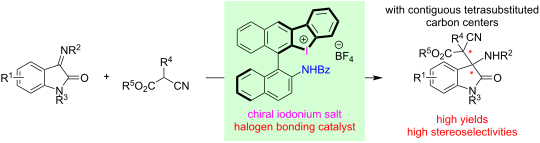
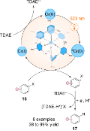
- present reaction, and products 17l and 17m were isolated in high yields with moderate to high stereoselectivities. The plausible reaction mechanism is shown in Figure 3. First, the removal of the acidic proton of the pre-nucleophile by potassium carbonate to form intermediate I, which undergoes cation
- exchange from tetrafluoroborate to the halonium moiety to form chiral ion pair II. Attack of the chiral nucleophilic intermediate II to imine 7 leads to intermediate III. The latter is protonated by in the situ-formed potassium bicarbonate to form the desired product 17, together with the regenerated


Vinylogous functionalization of 4-alkylidene-5-aminopyrazoles with methyl trifluoropyruvates
Beilstein J. Org. Chem. 2025, 21, 533–540, doi:10.3762/bjoc.21.41
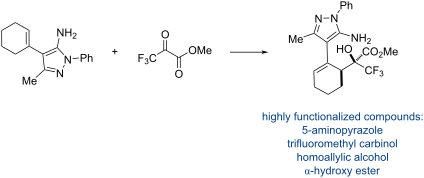
- the double bond to the carbonyl in a relative re-si approach, generating intermediate I, which undergoes a tautomerization to recover the aromatic pyrazole ring. The increased yield observed in some cases with SQ-1 may be attributed to the formation of additional hydrogen bonds that enhance



Synthesis of electrophile-tethered preQ1 analogs for covalent attachment to preQ1 RNA
Beilstein J. Org. Chem. 2025, 21, 483–489, doi:10.3762/bjoc.21.35
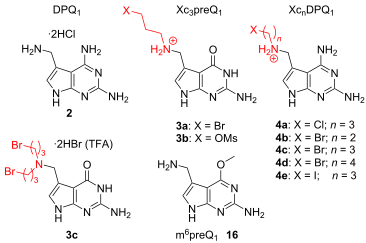
- was observed, and the alcohol intermediate was isolated in pure form. In both cases, quantitative bromination was achieved by heating the compounds in concentrated aqueous hydrobromic acid, which after evaporation afforded the pure compounds 4b–d. To generate iodide 4e, alcohol 11 was isolated and
- 3b in almost quantitative yield. The bis(3-bromopropyl)-modified ligand 3c was generated by heating preQ1 together with bis(3-hydroxypropyl)amine. It is noteworthy that the amine exchange reaction is thought to proceed via a purine methide intermediate [11]. Subsequent treatment of the diol with


Organocatalytic kinetic resolution of 1,5-dicarbonyl compounds through a retro-Michael reaction
Beilstein J. Org. Chem. 2025, 21, 473–482, doi:10.3762/bjoc.21.34
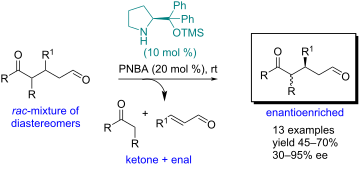
- are reacted in the presence of the catalyst A [25]. This can be explained by considering the principle of microscopic reversibility. In the reversible process, the catalyst forms the same enamine intermediate preferentially formed in the Michael reaction. This means that the adduct anti-(3R,4S)-1
- entry 2 versus entry 6 in Table 2). Furthermore, we studied the effect of using an organic acid as the co-catalyst for forming the enamine intermediate from 1 and for the retro-Michael reaction. We observed that benzoic acid (BA) as a co-catalyst provides a lower er than that achieved with PNBA as a co


Electrochemical synthesis of cyclic biaryl λ3-bromanes from 2,2’-dibromobiphenyls
Beilstein J. Org. Chem. 2025, 21, 451–457, doi:10.3762/bjoc.21.32
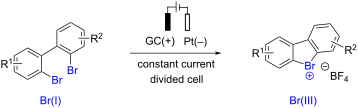
- approach would conceptually differ from previously reported anodic syntheses of cyclic diaryl iodonium compounds, where an electrochemically generated acyclic iodine(III) intermediate undergoes an intramolecular SEAr-type reaction to form the cyclic product [19][20]. Herein, we report on the development of
- moiety would help to stabilize the key λ3-bromane(III) intermediate 5, as demonstrated in the work of Miyamoto et al. [21], thus facilitating its formation in anodic oxidation. The anodic oxidation of 4a under previously published conditions for the synthesis of Br(III) species [16][18] (GC as working
- starts with a single-electron oxidation of 4a on the electrode surface to form cation radical A, in which Br(II) is chelation-stabilized by the carboxyl group [21] and the neighbouring Br substituent [24]. Intermediate A rapidly undergoes irreversible chemical reaction by HFIP coordination to transient


Identification and removal of a cryptic impurity in pomalidomide-PEG based PROTAC
Beilstein J. Org. Chem. 2025, 21, 407–411, doi:10.3762/bjoc.21.28
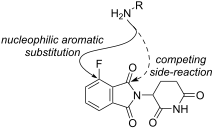
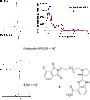
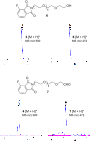
- also be explained by C4 being located near the node of the LUMO. However, SNAr is still favored over glutarimide displacement potentially because the negative charge in the corresponding intermediate is stabilized by an extended conjugation system. In contrast, the negative charge in the carbonyl
- addition intermediate is stabilized by an oxygen atom only. As such, the erosion of 3 by taurine was minimal. Conclusion Nucleophilic aromatic substitution of 4-fluorothalidomide (1) has provided a convenient entry to the IMiD class of PROTAC molecules. Although the yield of the desired product is




The effect of neighbouring group participation and possible long range remote group participation in O-glycosylation
Beilstein J. Org. Chem. 2025, 21, 369–406, doi:10.3762/bjoc.21.27
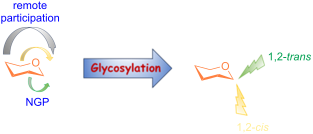
- directions away from the central oxocarbenium ion intermediate in the limiting dissociative process involving diastereomeric ion pairs. Destabilisation and greater reactivity of the oxocarbenium intermediate causes the nucleophilic acceptor moiety to attack in a concerted process following a classical SN2
- evidence of the associative end of the mechanistic spectrum has been shown and supported by Crich et al. [36]. The group has also reported instances wherein the triflate counterion may also act as a strong nucleophile [37] to form a loosely bound covalent glycosyl triflate intermediate further leading to
- in attaining the required stereospecific glycosylation outputs. Apart from the widely convenient stepwise synthesis, recently one-pot glycosylations have also made an important mark which minimise the tedious purification of the intermediate molecules in each step [53][54][55][56][57][58]. In the




Synthesis, structure, ionochromic and cytotoxic properties of new 2-(indolin-2-yl)-1,3-tropolones
Beilstein J. Org. Chem. 2025, 21, 358–368, doi:10.3762/bjoc.21.26
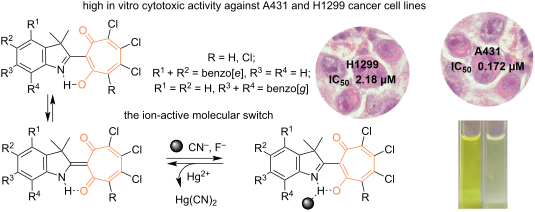
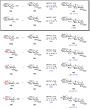
- ). As shown in Scheme 2, in the initial step, the aldol condensation of 2,3,3-trimethylindolenine 2 with o-chloranil (3) leads to the intermediate compounds, 6-(2-hetarylmethylene)-6-hydroxy-2,4-cyclohexadien-1-ones 4. Such intermediates were isolated preparatively and structurally characterized in the




Red light excitation: illuminating photocatalysis in a new spectrum
Beilstein J. Org. Chem. 2025, 21, 296–326, doi:10.3762/bjoc.21.22

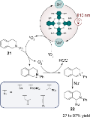
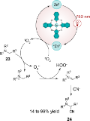
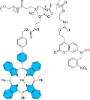
- this review hitherto. This singlet oxygen is generated by the energy transfer from the excited state of the phthalocyanin zinc complexes to molecular oxygen, allowing the oxidation of the N-phenyltetrahydroisoquinoline 21 into a reactive iminium intermediate that subsequently couples with nucleophiles















Molecular diversity of the reactions of MBH carbonates of isatins and various nucleophiles
Beilstein J. Org. Chem. 2025, 21, 286–295, doi:10.3762/bjoc.21.21
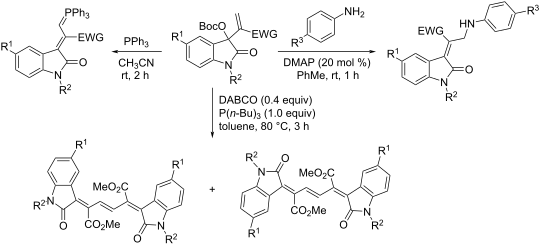
- derivatives. At first, a Lewis base attack at the α-position of the MBH nitrile of isatin resulted in the intermediate A with elimination of carbon dioxide and tert-butoxide ion. Secondly, the product 3 was produced by the SN2 substitution of the Lewis base by the arylamine. When MBH maleimides of isatin were
- used in the reaction, a direct Michael addition of the arylamine to the C=C bond of the maleimide unit and sequential elimination of carbon dioxide and tert-butoxide ion gives the intermediate B, which in turn undergoes an allylic rearrangement to afford the product 5. In this process, no extra
- by the tert-butoxide anion affords the zwitterionic intermediate D. In the case of triphenylphosphine, the similar zwitterionic intermediate D is stable and could be isolated as the product 6. In the case of tri(n-butyl)phosphine, Michael addition of the more activated zwitterionic intermediate D to




Three-component reactions of conjugated dienes, CH acids and formaldehyde under diffusion mixing conditions
Beilstein J. Org. Chem. 2025, 21, 262–269, doi:10.3762/bjoc.21.18
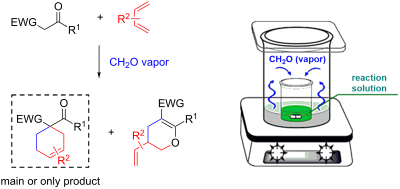
- in a high yield in the presence of ʟ-proline could be explained by the efficient crotonic condensation of formaldehyde and acetylacetone (1), followed by the addition of the second equivalent of diketone 1 to the highly reactive methylidene intermediate. The mild reaction conditions (room temperature
- with ʟ-proline participation is shown in Scheme 4. In the first step, formaldehyde reacts with proline, forming an imine salt 17, which then reacts with the diketone 1. The resulting intermediate 18 eliminates a proton and the anion of ʟ-proline, and then the methylenebenzophenone 20 reacts with
- 9 in toluene for 7 h led to the formation of an equilibrium mixture of these compounds in a ratio of ≈2:1 (Scheme 5). We propose that the reversible transformation of 8 to 9 proceeded via the intermediate formation of zwitterion 21, in which the charges were stabilized by mesomeric effects under


Synthesis of disulfides and 3-sulfenylchromones from sodium sulfinates catalyzed by TBAI
Beilstein J. Org. Chem. 2025, 21, 253–261, doi:10.3762/bjoc.21.17
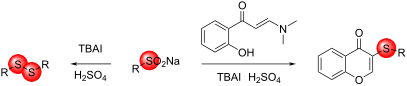
- intermediate in the reaction. When the asymmetric thiosulfonate was used as the substrate, unexpectedly a mixture of three disulfide ethers rather than a single disulfide was obtained under the standard reaction conditions (Scheme 5, reaction 1), which led us to conclude that the reaction might be a process in




Visible-light-promoted radical cyclisation of unactivated alkenes in benzimidazoles: synthesis of difluoromethyl- and aryldifluoromethyl-substituted polycyclic imidazoles
Beilstein J. Org. Chem. 2025, 21, 234–241, doi:10.3762/bjoc.21.15
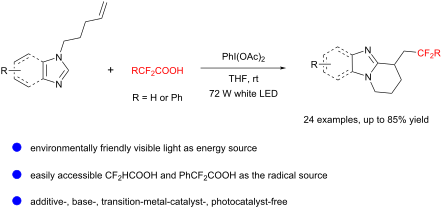
- . Furthermore, terminal olefins with varying chain lengths also reacted successfully, resulting in 5-membered and 7-membered cyclized products (3l–p) with yields between 44% and 66%. The lower yields in these cases might be due to the low reactivity of the intermediate C (Scheme 3), which may have made it less
- with 1a and PhI(OCOCF2H)2, which resulted in the formation of product 3a with an 85% yield. This finding indicated that PhI(OCOCF2H)2 played a crucial role as an intermediate in the reaction. Subsequently, we introduced 3 equivalents of a radical scavenger (either TEMPO or BHT) into the reaction
- exchange between PIDA and CF2HCOOH would generate PhI(OCOCF2H)2 A. Homolysis of A under visible light (72 W white light) produced an iodanyl radical B and a CF2H radical. The CF2H radical regioselectively added to 1a to form intermediate C. Subsequently, intermediate C could be converted into the radical


Streamlined modular synthesis of saframycin substructure via copper-catalyzed three-component assembly and gold-promoted 6-endo cyclization
Beilstein J. Org. Chem. 2025, 21, 226–233, doi:10.3762/bjoc.21.14
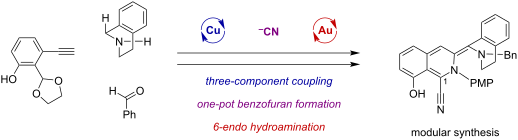
- coupling with gold(I)-mediated 6-endo cyclization streamlines the rapid and modular assembly of the substructure of bis-tetrahydroisoquinoline (THIQ) alkaloids. The design of the key synthetic intermediate bearing a 2,3-diaminobenzofuran moiety allows both gold(I)-mediated regiocontrolled 6-endo
- involvement of a fluorescent intermediate in the cascade synthetic process. Keywords: cascade reactions; copper-catalyzed three-component coupling; gold-mediated 6-endo hydroamination; tandem cyclizations; tetrahydroisoquinoline alkaloids; Introduction The bis-tetrahydroisoquinoline (THIQ) alkaloid family
- cyclization to efficiently construct the pentacyclic intermediate 7, as demonstrated in our previous study [15]. Following the pioneering total synthesis of saframycin A (1) by Fukuyama and co-workers taking advantage of the compatibility of phenolic hydroxy groups with PS-type cyclization [22], other groups


Dioxazolones as electrophilic amide sources in copper-catalyzed and -mediated transformations
Beilstein J. Org. Chem. 2025, 21, 200–216, doi:10.3762/bjoc.21.12
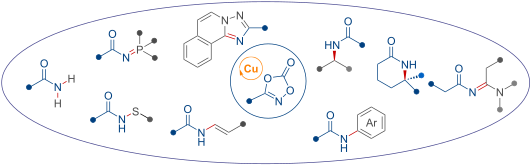
- amidation process of dioxazolones. Dioxazolone 1 binds to the chiral copper complex 3, generating the adduct INT-1. Decarboxylation then occurs, forming the copper nitrenoid intermediate INT-2, subsequently undergoing hydrogen atom transfer in a regioselective manner to afford INT-3. The related acyl
- nitrenoid intermediate was characterized by the same group [75]. Further radical rebound from INT-4 induces the enantioselective C–N bond formation. Finally, the desired product 2 is released from INT-4, regenerating the active chiral copper species to participate in the catalytic cycle. 1.2 C(sp2)–H
- amidation Recently, Cao and co-workers reported the copper-catalyzed synthesis of 1,2,4-triazole derivatives via an N-acyl nitrene intermediate [76]. As illustrated in Scheme 3, dioxazolones 4 and N-iminoquinolinium ylides 5 served as reactive substrates, leading to the formation of various polycyclic 1,2,4


Recent advances in electrochemical copper catalysis for modern organic synthesis
Beilstein J. Org. Chem. 2025, 21, 155–178, doi:10.3762/bjoc.21.9

- achieved by precisely controlling the potential. Additionally, the merging of electrochemistry and transition-metal catalysis offers advantages in controlling substrate activation, intermediate reactivity, and bond formation, as well as facilitating asymmetric transformations. As a result, electrochemical
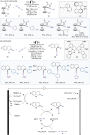
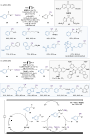
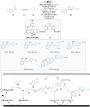
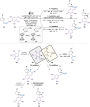
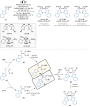
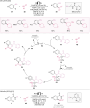
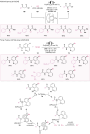
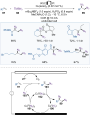
- , and benzamide, however, no relevant competitive oxidation peak was observed with only Cu(OAc)2. These results indicate that Cu(II) intermediate 5 was generated. Based on the mechanistic studies, the authors suggested plausible reaction mechanisms (Figure 4). First, the Cu(II) catalyst coordinates with
- substrate 1 in the presence of a base to form Cu(II) complex 5, which undergoes anodic oxidation to generate Cu(III) intermediate 6. Carboxylate-assisted C–H activation of the benzamide subsequently leads to the formation of Cu(III) species 7. Metalation of the terminal alkyne 2, followed by reductive








Cu(OTf)2-catalyzed multicomponent reactions
Beilstein J. Org. Chem. 2025, 21, 122–145, doi:10.3762/bjoc.21.7

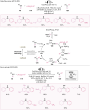
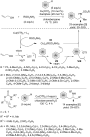
- reaction proceeds through an initial single-electron transfer from NFBS assisted by the active copper species, followed by intermolecular hydrogen-atom transfer from the carbazate. The nitrogen radical intermediate I thus formed is decomposed into the acyl or alkyl radical intermediates II and III
- , respectively. The latter interacts with the alkene generating an alkyl radical IV that converts to the cationic intermediate V by single-electron oxidation by the Cu(II) species. Finally, the attack of the nucleophile leads to the desired products 6. Starting from aryl carbazates, intermediate II, adds
- intermediate VIII. At this stage, the amido–copper complex IX selectively attacks the intermediate providing the 1-aryl-2-sulfonamidopropane 8. This procedure is a valuable alternative to a similar approach for the synthesis of amphetamine derivatives 9 from allyl carbamates that requires excess of Cu(OTf)2 [6






Recent advances in organocatalytic atroposelective reactions
Beilstein J. Org. Chem. 2025, 21, 55–121, doi:10.3762/bjoc.21.6
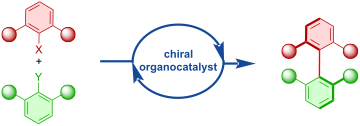
- activation, atroposelective aza-Michael addition, and intramolecular aldol reaction to form the cationic intermediate Int-6. Release of the catalyst C2, reduction with NaBH4, and dehydration with acetic acid leads to the desired product 6. Recently, an organocatalytic atroposelective intramolecular (4 + 2
- intermediate Int-9. As the assumed rate-determining step the intramolecular nucleophilic addition takes place, followed by further cyclization and finally, release of the organocatalyst to form the axially chiral product 9. Various aryl-substituted indolines 9 were obtained in good yields and high enantiomeric
- acylazolium intermediate Int-16 followed by E-selective protonation of Int-17 (Scheme 9). NHC-catalysis also proved useful in the atroposelective construction of triaryl derivatives with two stereogenic axes. Wei, Du, and co-workers developed a synthesis of 1,2-diaxially chiral triarylpyranones 29 via an NHC






Facile one-pot reduction of β-nitrostyrenes to phenethylamines using sodium borohydride and copper(II) chloride
Beilstein J. Org. Chem. 2025, 21, 39–46, doi:10.3762/bjoc.21.4
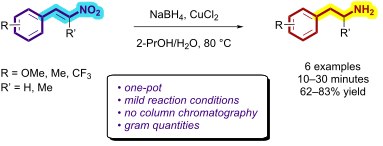
- formation of numerous intermediate species at T = 0, unstable enough to decompose and deliver the desired product (Figure 2). These species were not present in the crude mixture after 15 minutes of stirring. We could speculate that this phenomenon might indicate that the reduction proceeds via Haber or
- Jackson mechanisms (product (a)), which, to date, were only associated to the catalytic hydrogenation of nitrobenzene analogues [35][36][37] (Figure 3). An attempt to identify the higher molecular masses observed by MS was made, and two intermediate structures are proposed in Figure 3. Together with (a


Emerging trends in the optimization of organic synthesis through high-throughput tools and machine learning
Beilstein J. Org. Chem. 2025, 21, 10–38, doi:10.3762/bjoc.21.3
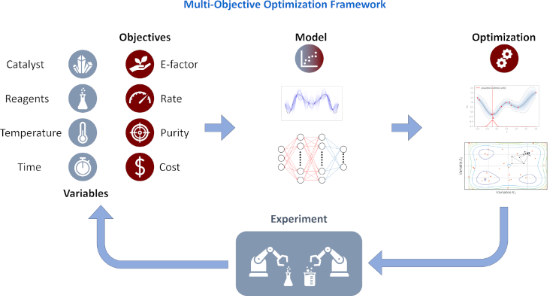
- medium for enhancing the optimization of the Buchwald–Hartwig amination intermediate, which is crucial for synthesizing the drug olanzapine [47]. The reactor setup was integrated with spectroscopic and chromatographic in-line analytical tools, enabling real-time monitoring of products and reaction


Synthesis, structure and π-expansion of tris(4,5-dehydro-2,3:6,7-dibenzotropone)
Beilstein J. Org. Chem. 2025, 21, 1–7, doi:10.3762/bjoc.21.1
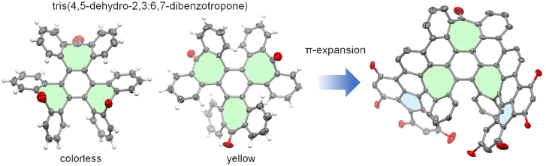
- Barton–Kellogg reaction with 8b under similar conditions gave the episulfide intermediate, which, however, could not be desulfurized with triisopropyl phosphite, trimethyl phosphite or triphenylphosphine to give the corresponding triene. The subsequent Scholl reaction of 10 with DDQ and triflic acid at
- . These findings suggest that the fully fused product 11 may have been formed through a different partially cyclized intermediate rather than directly from compound 3. Slow evaporation of solvent from a solution of 1 in hexane interestingly resulted in the simultaneous formation of both colorless and


Synthesis, characterization, and photophysical properties of novel 9‑phenyl-9-phosphafluorene oxide derivatives
Beilstein J. Org. Chem. 2024, 20, 3299–3305, doi:10.3762/bjoc.20.274
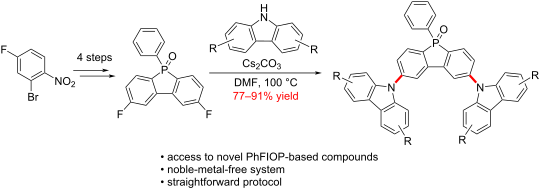
- was achieved in 5 steps starting from commercially available 2-bromo-4-fluoro-1-nitrobenzene (1, Scheme 1 and Scheme 2). For the preparation of the key intermediate 5 (Scheme 1), self-coupling of 1 in the presence of copper followed by reduction of the nitro group generated diamine compound 3 (89
- room temperature. (a) PL spectra of the PhFlOP-based emitters 7 measured in toluene at room temperature. (b) PL spectra of 7-H measured in different solvents at room temperature. Preparation of key intermediate 5. Synthesis of PhFlOP-based molecules 7. Crystal data and structural parameters for 7-H