


Search results
Search for "Tyrian purple" in Full Text gives 3 result(s) in Beilstein Journal of Organic Chemistry.
A new synthesis of Tyrian purple (6,6’-dibromoindigo) and its corresponding sulfonate salts
Beilstein J. Org. Chem. 2026, 22, 167–174, doi:10.3762/bjoc.22.10
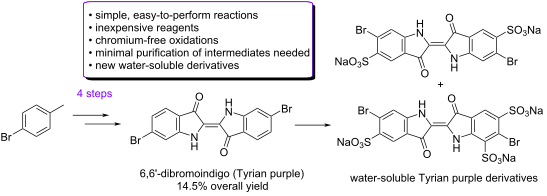
- , known as Tyrian purple. In this work, we report a new strategy for the synthesis of 6,6’-dibromoindigo in four steps from p-bromotoluene in 14.5% overall yield. A key improvement in the reported synthesis is the oxidation of the benzylic methyl group of 4-bromo-2-nitrotoluene to 4-bromo-2
- ; sulfonation; synthesis; Tyrian purple; Introduction Tyrian purple, a reddish-purple dye, has been used for millennia to create vibrant, purple-colored textiles [1]. This coveted dye was produced in small quantities using large numbers of sea snails found in the eastern Mediterranean Sea. The relative rarity
- and expense of the dye resulted in purple clothing being associated with wealth and power [1][2]. More modern analysis indicates that Tyrian purple is composed of several different indigoids, with the predominant being 6,6’-dibromoindigo (1) [3][4]. Since its discovery as the major component of Tyrian


N-Glycosides of indigo, indirubin, and isoindigo: blue, red, and yellow sugars and their cancerostatic activity
Beilstein J. Org. Chem. 2024, 20, 2840–2869, doi:10.3762/bjoc.20.240
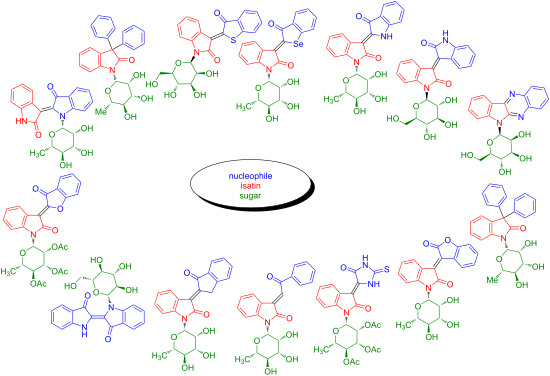
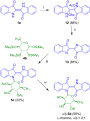
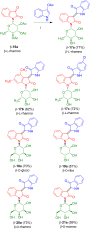
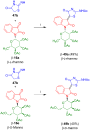
- photophysical materials. While unsubstituted (parent) indigo (1a) is not a natural product, Tyrian purple (also known as Shellfish purple) is present in nature and represents, besides indigo, an important indigo derivative used as a dye for thousands of years [4]. Several types of cancers, Alzheimer's disease


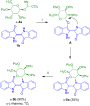
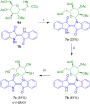








Attempts to prepare an all-carbon indigoid system
Beilstein J. Org. Chem. 2015, 11, 363–372, doi:10.3762/bjoc.11.42

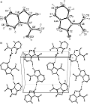
- converted into cross-conjugated organic salts during the color-generating process. This is illustrated by indigo (1, Scheme 1) and its derivatives (e.g., Tyrian purple) and the triphenylmethane-derived carbocations. Starting from the generalized indigoid structure 2, the role of the heteroatoms X and Y can







Other Beilstein-Institut Open Science Activities



