


Search results
Search for "biocide" in Full Text gives 2 result(s) in Beilstein Journal of Organic Chemistry.
Natural resorcylic lactones derived from alternariol
- Joachim Podlech
Beilstein J. Org. Chem. 2024, 20, 2171–2207, doi:10.3762/bjoc.20.187
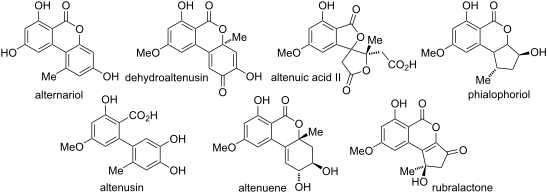
- fumigatus, A. niger, and Candida albicans (zones of inhibition: 16, 15, 12 mm, respectively, at 200 µg/disc) [229], and against Alternaria alternata (MIC: 1 µg/mL) [236]. It irreversibly inactivated Escherichia coli biotin protein ligase opening a potential application as antimicrobial or biocide [237]. It

Graphical Abstract
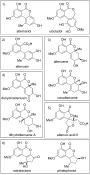
Figure 1: Examples of compounds covered in this review categorized in six sub-classes (see text).
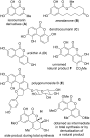
Figure 2: Examples of compounds not covered in this review.

Figure 3: Wrongly assigned and thus obsolete structures (details will be discussed in the respective chapters...

Figure 4: Alternariol with the correct IUPAC numbering and an occasionally used numbering based on the biphen...

Figure 5: Alternariol O-methyl ethers.

Figure 6: Alternariol O-glycosides.

Figure 7: Alternariol O-acetates and O-sulfates.

Figure 8: 2-Hydroxy- and 4-hydroxy-substituted alternariol and its O-methyl ethers.

Figure 9: Chloro- and amino-substituted alternariol and its O-methyl ethers.
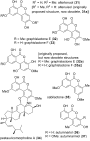
Figure 10: Presumed alternariol derivatives with non-canonical substitution pattern.

Figure 11: Alternariol derivatives with the 1-methyl group hydroxylated.
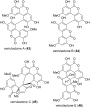
Figure 12: Verrulactones: pseudo-dimeric derivatives of altertenuol and related compounds.

Figure 13: Biaryls formed by reductive lactone opening and/or by decarboxylation.

Figure 14: Altenuene and its diastereomers.

Figure 15: 9-O-Demethylated altenuene diastereomers.

Figure 16: Acetylated and methylated altenuene diastereomers.

Figure 17: Altenuene diastereomers modified with lactic acid, pyruvic acid, or acetone.

Figure 18: Neoaltenuene and related compounds.

Figure 19: Dehydroaltenusin and its derivatives.

Scheme 1: Equilibrium of dehydroaltenusin in polar solvents [278].

Figure 20: Further quinoid derivatives.

Figure 21: Dehydroaltenuenes.

Figure 22: Complex aggregates containing dehydroaltenuene substructures and related compounds.

Figure 23: Dihydroaltenuenes.

Figure 24: Altenuic acids and related compounds.

Figure 25: Cyclopentane- and cyclopentene-fused derivatives.

Figure 26: Cyclopentenone-fused derivatives.

Figure 27: Spiro-fused derivatives and a related ring-opened derivative.

Figure 28: Lactones-fused and lactone-substituted derivatives.

Scheme 2: Biosynthesis of alternariol [324].

Scheme 3: Biosynthesis of alternariol and its immediate successors with the genes involved in the respective ...

Scheme 4: Presumed formation of altenuene and its diastereomers and of botrallin.

Scheme 5: Presumed formation of altenuic acids and related compounds.

Scheme 6: A selection of plausible biosynthetic paths to cyclopenta-fused metabolites. (No stereochemistry is...

Scheme 7: Biomimetic synthesis of alternariol (1) by Harris and Hay [66].

Scheme 8: Total synthesis of alternariol (1) by Subba Rao et al. using a Diels–Alder approach [34].

Scheme 9: Total synthesis of alternariol (1) using a Suzuki strategy by Koch and Podlech [62], improved by Kim et...

Scheme 10: Total synthesis of alternariol (1) using an intramolecular biaryl coupling by Abe et al. [63].

Scheme 11: Total synthesis of altenuene (54) and isoaltenuene (55) by Podlech et al. [249].

Scheme 12: Total synthesis of neoaltenuene (69) by Podlech et al. [35].

Scheme 13: Total synthesis of TMC-264 (79) by Tatsuta et al. [185].

Scheme 14: Total synthesis of cephalosol (99) by Koert et al. [304].
Encapsulation of biocides by cyclodextrins: toward synergistic effects against pathogens
- Véronique Nardello-Rataj and
- Loïc Leclercq
Beilstein J. Org. Chem. 2014, 10, 2603–2622, doi:10.3762/bjoc.10.273
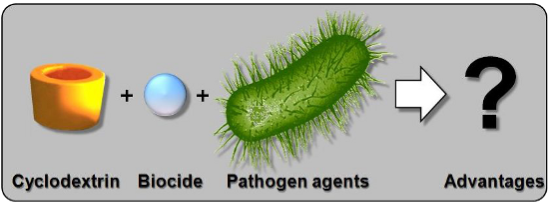
- release antimicrobial agents with time. In this paper, the general features of CDs and their applications in the field of biocides have been reviewed. As the key point is the formation of biocide–CD inclusion complexes, this review deals with this in depth and the advantages of biocide encapsulation are
- highlighted throughout several examples from the literature. Finally, some future directions of investigation have been proposed. We hope that scientists studying biocide applications receive inspiration from this review to exploit the opportunities offered by CDs in their respective research areas. Keywords
- : cyclodextrin; biocide; encapsulation; host–guest chemistry; pathogen; textile; Introduction Since the first reference to cyclodextrins (CDs) in 1891 by Villiers, CD has been of great interest to researchers [1]. Cyclodextrins are composed of several α-D-glucopyranose units linked 1→4 and arranged in a conical

Graphical Abstract

Scheme 1: Principle of resistance mechanisms through selection of the most resistant micro-organism.

Figure 1: Chemical structure of carbendazim.

Scheme 2: Chemical structure of benomyl and its decomposition in aqueous solution.

Figure 2: Chemical structure of enilconazole.

Figure 3: Chemical structure of chloramidophos.

Scheme 3: The complex problem of pentachlorophenol (PCP) degradation.

Figure 4: Chemical structure of DCPE.

Figure 5: Chemical structures of some biocides used in [59].

Figure 6: Chemical structure of miconazole nitrate.

Figure 7: Chemical structures of triclosan and butylparaben.

Figure 8: Chemical structure of ciprofloxacin hydrochloride.

Figure 9: Chemical structure of benzethonium chloride.

Figure 10: Chemical structure of benzalkonium chlorides.

Scheme 4: Multiple equilibria of CD with benzalkonium chloride (BZK) and fluorometholone.

Scheme 5: Competition between co-micellization and biocidal activity observed for didecyldimethylammonium chl...

Scheme 6: Proposed antimicrobial mechanism of encapsulated didecyldimethylammonium chloride by CDs: (1) diffu...

Scheme 7: Inhibition of co-micellization process observed for didecyldimethylammonium chloride, octaethyleneg...

Scheme 8: Schematic representation of biocide release from a chemically cross-linked CD network.

Scheme 9: Proposed Trojan horse mechanism of silver nanoparticles capped by β-CD.

Scheme 10: Proposed mechanism of copper nanoparticles immobilized on carbon nanotube and embedded in water-ins...

Scheme 11: Advantages and drawback of the physicochemical and biopharmaceutical properties of CDs/biocides inc...



