


Search results
Search for "diaryl phosphates" in Full Text gives 2 result(s) in Beilstein Journal of Organic Chemistry.
Synthesis of diaryl phosphates using phytic acid as a phosphorus source
Beilstein J. Org. Chem. 2026, 22, 213–223, doi:10.3762/bjoc.22.15
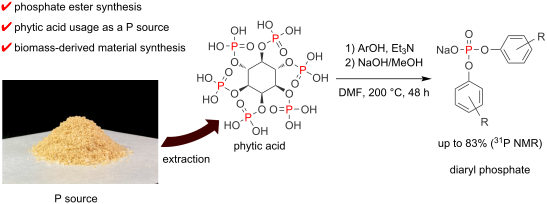
- rely on phosphate rock but instead uses biomass as a phosphorus source. Keywords: diaryl phosphates; phosphate esters; phosphate ester synthesis; phosphorus recovery; phytic acid; Introduction Phytic acid (myo-inositol-1,2,3,4,5,6-hexakisphosphate, Scheme 1) is a phosphorus-rich molecule, which is
- utilization in metal-chelating agents, flame retardants, and catalysts [3][6][7][8][9][10][11][12][13][14]. However, these applications involved the use of either phytic acid itself or its derivatives. Our group has previously reported a method for synthesizing diaryl phosphates using phosphoric acid as the
- utilizing phytic acid as a phosphorus source has not been realized yet. Herein, we examined the syntheses of diaryl phosphates using commercially available phytic acid and phytic acid extracted from rice bran. Results and Discussion Synthesis of diaryl phosphates using commercial phytic acid First




Metal-free synthesis of biarenes via photoextrusion in di(tri)aryl phosphates
Beilstein J. Org. Chem. 2020, 16, 3008–3014, doi:10.3762/bjoc.16.250
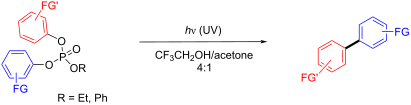
- these cases, the expected phenylated arenes 2j–l were isolated in the 50–64% range. We were then intrigued to extend the scope of the reaction by focusing on a few ethyl diaryl phosphates 3a–e. Gratifyingly, the formation of the symmetric biaryls 4 took place efficiently with the substrates bearing



Other Beilstein-Institut Open Science Activities



