


Search results
Search for "heterologous biosynthesis" in Full Text gives 2 result(s) in Beilstein Journal of Organic Chemistry.
Heterologous biosynthesis of cotylenol and concise synthesis of fusicoccane diterpenoids
Beilstein J. Org. Chem. 2025, 21, 1489–1495, doi:10.3762/bjoc.21.111
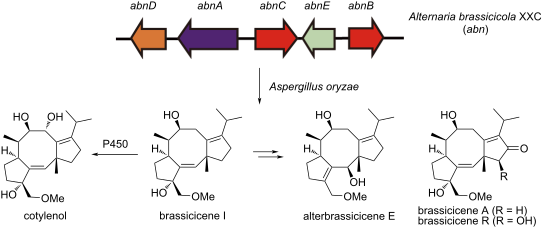
- enzymatic terpene cyclization and chemical synthesis [30][31][32][33]. Briefly, the carbon scaffolds are forged by terpene cyclases, followed by concise chemical transformations to yield the desired natural products. Here, we describe heterologous biosynthesis of cotylenol by engineering the biosynthetic
- diterpenoids, including alterbrassicicene E and brassicicenes A and R in 4 or 5 chemical steps from brassicicene I. This strategy lays the foundation for the preparation of fusicoccane diterpenoids and their analogues for biological studies. Keywords: cotylenol; fusicoccane diterpenoids; heterologous
- biosynthesis; P450 oxidation; synthesis; Introduction Fusicoccanes are a family of 5-8-5 tricyclic diterpenoid natural products that are produced by bacteria, fungi, algae, and plants (Figure 1a) [1][2][3][4][5][6][7]. Fusicoccanes possess a broad range of biological activities, including anticancer, anti


Research progress on the pharmacological activity, biosynthetic pathways, and biosynthesis of crocins
Beilstein J. Org. Chem. 2024, 20, 741–752, doi:10.3762/bjoc.20.68
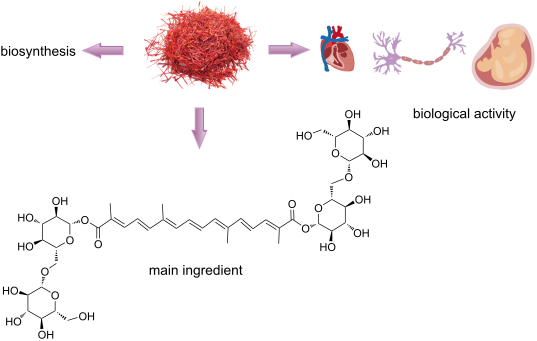
- cell suspension culture, heterologous biosynthesis, and total synthesis [16][17]. Crocins can be obtained from plant cell culture, but the production is prone to epigenetic silencing and toxic intermediates. The chemical synthesis of crocins is challenging due to the presence of numerous chiral centers
- adjusting the molar ratio of CsCCD2-M1 and SynALD in the system, the yield of crocetin (1) reached 5.92 mg/L with a conversion rate of 80.8% [110]. Heterologous biosynthesis of crocins The heterologous production of crocins has been achieved in various hosts, including E. coli, N. benthamiana, and S
- produced crocins were not reported. Heterologous biosynthesis of crocins was also attempted in Nicotiana tabacum and Lycopersicon esculentum [85]. Because CsCCD2L exhibited high CCD activity against zeaxanthin (7), Martí et al. used a virus-driven transduction system to transfer CsCCD2L, PaCrtB (the gene


Other Beilstein-Institut Open Science Activities



