Search results
Search for "machine learning (ML)" in Full Text gives 11 result(s) in Beilstein Journal of Organic Chemistry.
Using generative AI to transform peptide hits into small molecule leads
Beilstein J. Org. Chem. 2026, 22, 672–679, doi:10.3762/bjoc.22.51
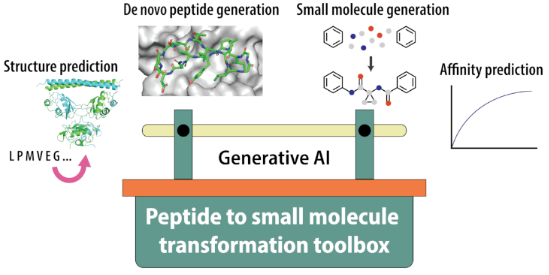
- for small molecule design by leveraging data on peptide binders, and proposes potential opportunities where generative AI and machine learning (ML) tools may augment various stages throughout the pipeline from peptide hit discovery to small molecule lead. Perspective Current workflows for designing


Computational prediction of C–H hydricities and their use in predicting the regioselectivity of electron-rich C–H functionalisation reactions
Beilstein J. Org. Chem. 2026, 22, 603–610, doi:10.3762/bjoc.22.46
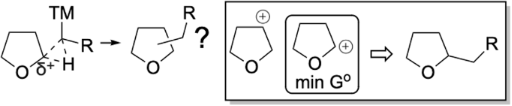
- of 3278 C–H sites across 740 molecules to train a machine learning (ML) model based on CM5 atomic charge descriptors, achieving an MAE of 2.30 kcal/mol and an RMSE of 3.74 kcal/mol relative to QM-computed hydricities. The method was further applied to 250 hydride transfer-like reactions, including C
- host of other reactivity predictors. Keywords: bond dissociation energy; hydricity; hydride affinity; hydride-transfer reactions; machine learning (ML); quantum chemistry (QM); Introduction Bond dissociation energies (BDEs) and pKa values for C–H bonds are often used to rationalise and predict the
- regioselectivity of various C–H functionalisation reactions and machine learning (ML) models have been developed for both properties [1][2][3][4][5]. In contrast, C–H hydricities have received considerably little attention. However, the insertion into, or H-abstraction from, innately electron-rich C–H bonds are


![[Graphic 6]](/bjoc/content/inline/1860-5397-22-46-i8.svg?max-width=637&scale=1.18182)


Data accessibility in the chemical sciences: an analysis of recent practice in organic chemistry journals
Beilstein J. Org. Chem. 2025, 21, 864–876, doi:10.3762/bjoc.21.70

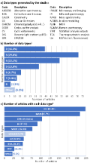
- share their data, to take advantage of recent advances in machine learning (ML) for synthesis planning, reaction optimization, and property prediction [30][31][32]. The discoverability and reusability of data, especially by machines, is central to the ‘FAIR Guiding Principles for scientific data






Emerging trends in the optimization of organic synthesis through high-throughput tools and machine learning
Beilstein J. Org. Chem. 2025, 21, 10–38, doi:10.3762/bjoc.21.3
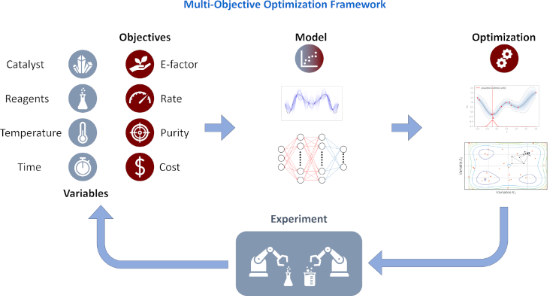
- demands solutions that meet multiple targets, such as yield, selectivity, purity, cost, environmental impact, etc. In recent years, the advancement of artificial intelligence (AI), machine learning (ML), and automation has produced a paradigm shift for chemical synthesis optimization techniques. By


Machine learning-guided strategies for reaction conditions design and optimization
Beilstein J. Org. Chem. 2024, 20, 2476–2492, doi:10.3762/bjoc.20.212

- efficiency and effectiveness of reaction conditions design, and enable novel discoveries in synthetic chemistry. Keywords: data preprocessing; reaction conditions prediction; reaction data mining; reaction optimization; reaction representation; Introduction Machine learning (ML) techniques have been widely


Catalysing (organo-)catalysis: Trends in the application of machine learning to enantioselective organocatalysis
Beilstein J. Org. Chem. 2024, 20, 2280–2304, doi:10.3762/bjoc.20.196
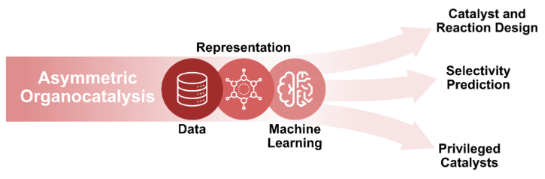
- interest over the last decades. Concurrent to this development, machine learning (ML) has been increasingly applied in the chemical domain to efficiently uncover hidden patterns in data and accelerate scientific discovery. While the uptake of ML in organocatalysis has been comparably slow, the last two


pKalculator: A pKa predictor for C–H bonds
Beilstein J. Org. Chem. 2024, 20, 1614–1622, doi:10.3762/bjoc.20.144
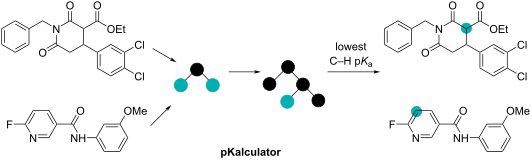
- . As molecular complexity increases, this task becomes more challenging. This paper introduces pKalculator, a quantum chemistry (QM)-based workflow for automatic computations of C–H pKa values, which is used to generate a training dataset for a machine learning (ML) model. The QM workflow is
- (DMSO) using a graph convolutional neural network (GCNN) [3]. Using a mix of experimental and computed pKa data, they achieved a mean absolute error (MAE) of 2.1 pKa units. Lee and co-workers also addressed this problem by creating a general machine learning (ML) model using either a neural network or


![[Graphic 9]](/bjoc/content/inline/1860-5397-20-144-i12.svg?max-width=637&scale=1.3000021)


Navigating and expanding the roadmap of natural product genome mining tools
Beilstein J. Org. Chem. 2022, 18, 1656–1671, doi:10.3762/bjoc.18.178
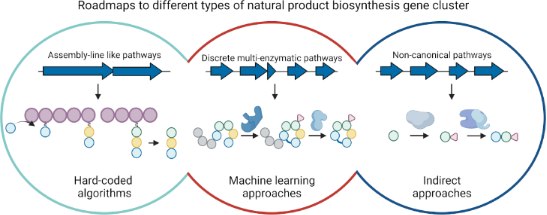
- algorithms based on hard-coded rules to machine learning (ML)-based approaches with regard to the natural product biosynthetic principles they are most suited for. We focus on how the different genome mining tools identify BGCs and highlight their advantages and limitations. Moreover, we will showcase two


Models of necessity
Beilstein J. Org. Chem. 2020, 16, 1649–1661, doi:10.3762/bjoc.16.137
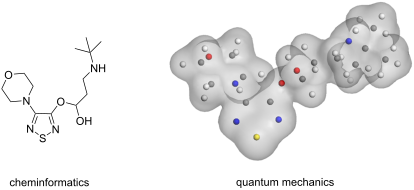
- not always clear to practicing chemists, so that controversial discussions about the merits of alternative models often arise. However, the extensive use of artificial intelligence (AI) and machine learning (ML) in chemistry, with the aim of being able to make reliable predictions, will require that
- molecules suitable for depiction in databases, cheminformatics, machine learning (ML) or artificial intelligence (AI): It is essential for chemists to be able to communicate with each other about molecules. The language of chemistry varies slightly between the organic and inorganic communities. However, it


In silico rationalisation of selectivity and reactivity in Pd-catalysed C–H activation reactions
Beilstein J. Org. Chem. 2020, 16, 1465–1475, doi:10.3762/bjoc.16.122
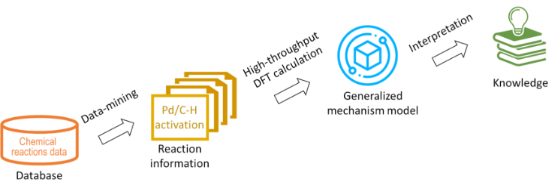
- desired. Recent years have seen the emergence of new methods of research in chemistry and process development, which include high-throughput experiments [3], autonomous self-optimising reactors [4][5][6], as well as predictions of reaction outcomes and of reaction conditions based on machine learning (ML


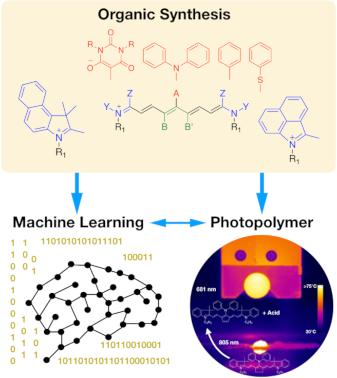
Photophysics and photochemistry of NIR absorbers derived from cyanines: key to new technologies based on chemistry 4.0
Beilstein J. Org. Chem. 2020, 16, 415–444, doi:10.3762/bjoc.16.40